Results by title
482 books match the query '17th century' and 25 start with m
Major Women Writers of Seventeenth-Century England
James Fitzmaurice, Josephine A. Roberts, Carol L. Barash, Eugene R. Cunnar, and Nancy A. Gutierrez, Editors
University of Michigan Press, 1997
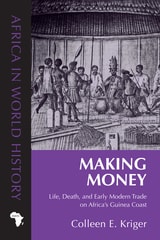
Making Money
Life, Death, and Early Modern Trade on Africa’s Guinea CoastColleen E. Kriger
Ohio University Press, 2017
A new era in world history began when Atlantic maritime trade among Africa, Asia, Europe, and the Americas opened up in the fifteenth century, setting the stage for massive economic and cultural change. In Making Money, Colleen Kriger examines the influence of the global trade on the Upper Guinea Coast two hundred years later—a place and time whose study, in her hands, imparts profound insights into Anglo-African commerce and its wider milieu.
A stunning variety of people lived in this coastal society, struggling to work together across deep cultural divides and in the process creating a dynamic creole culture. Kriger digs further than any previous historian of Africa into the records of England’s Royal African Company to illuminate global trade patterns, the interconnectedness of Asian, African, and European markets, and—most remarkably—the individual lives that give Making Money its human scale.
By inviting readers into the day-to-day workings of early modern trade in the Atlantic basin, Kriger masterfully reveals the rich social relations at its core. Ultimately, this accessible book affirms Africa’s crucial place in world history during a transitional period, the early modern era.
Male Delivery
Reproduction, Effeminacy, and Pregnant Men in Early Modern SpainSherry Velasco
Vanderbilt University Press, 2006
Men were increasingly taking over medical duties--especially surrounding childbirth--usually left to women and, as their medical knowledge increased, they became aware of bodies and behaviors--both male and female--that transgressed gender norms. The anxieties about men who acted in ways seen as increasingly womanly (from acting effeminately to participating in homosexual activity) played out in the character of pregnant Juan Rana.
Then, Velasco turns to Hollywood and asks if we might not use the lessons of Juan Rana to help explain why contemporary America is also fascinated by the idea of male pregnancy--think Arnold Schwarzenegger in Junior--and our increasing anxiety over the changing face of masculinity in our own culture.
Managing Readers
Printed Marginalia in English Renaissance BooksWilliam W. E. Slights
University of Michigan Press, 2001
The recent revolution in the protocols of reading brought on by computer technology has forced questions about the nature of book-based knowledge in our global culture. Managing Readers traces changes in the protocols of annotation and directed reading--from medieval religious manuscripts and Renaissance handbooks for explorers, rhetoricians, and politicians to the elegant clear-text editions of the Enlightenment and the hypertexts of our own time. Developing such concepts as textual authority, generic difference, and reader-response, Slights demonstrates that printed marginalia were used to confirm the authority of the text and to undermine it, to supplement "dark" passages, and to colonize strategic hermeneutic spaces. The book contains twenty-two illustrations of pages from rare-book archives that make immediately clear how distinctive the management of the reading experience was during the first century-and-a-half of printing in England.
William W. E. Slights is Professor of English, University of Saskatchewan. He is also author of Ben Jonson and the Art of Secrecy.
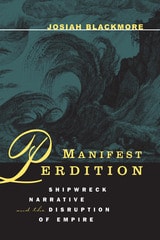
Manifest Perdition
Shipwreck Narrative And The Disruption Of EmpireJosiah Blackmore
University of Minnesota Press, 2002
A new take on a famous collection of shipwreck narratives that places them at the center of resistance to colonialism
Shipwreck, death, and survival; terror, hunger, and salvation—these are the experiences of the passengers onboard merchant Portuguese ships sailing the high seas in the sixteenth and seventeenth centuries. And this is the stuff of the stories committed to print by survivors upon their return to the homeland. These Portuguese shipwreck narratives, rescued for all time in the eighteenth century by Bernardo Gomes de Brito in História Trágico-Marítima (1735-36), or The Tragic History of the Sea, are the subject of Manifest Perdition, a work that reveals their important—and until now, largely ignored—place in literary history.
In this book we see how the dramatic, compelling, and often gory accounts of shipwreck, depicting a world out of control, challenge state-sponsored versions of events in the prevailing historiographic culture. Written during the heyday of Iberian maritime expansion and colonialism, the shipwreck narrative builds an alternative historical record to the vision and reality of empire elaborated by the official chroniclers of the realm. Manifest Perdition presents both theoretical considerations this genre and close readings of several texts, readings that disclose a poetics of the shipwreck text, of how survivors characteristically yet multifariously narrated their world. Included is a study of the medieval Iberian poetic predecessors of the shipwreck tale, as well as an exploration of the Portuguese Inquisition’s attempt to commandeer and steer the reading of the unruly narratives. The book engages issues of literary theory, historiography, and colonialism to portray the Portuguese shipwreck narrative for the first time as both a product of and a resistance to the prolific culture of sixteenth- and seventeenth-century expansionist history.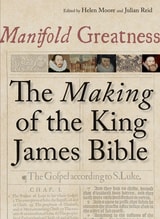
Manifold Greatness
The Making of the King James BibleEdited by Helen Moore and Julian Reid
Bodleian Library Publishing, 2011
Published to commemorate the four hundredth anniversary of the publication of the King James Bible, Manifold Greatness tells the story of the creation and immediate afterlife of the King James translation of the Bible, first published in 1611. Revolutionary at its time, the King James translation quickly became the dominant authorized translation of the Christian Bible in English. There are more than one billion copies in print, making it the best-selling book of all time, and its effect on the English language is incalculable, both in common speech and in literature.
This accessible and richly illustrated visual history contains eighty color illustrations, including images of rare manuscripts, artifacts, and archival material such as the annotated Bodleian Bishops’ Bible of 1602, pages from the Wycliffite and Tyndale Bibles, and an edition of the Bishop’s Bible owned by Elizabeth I. Eight chapters contributed by leading academics in the field discuss the history of biblical translation, the political background of the project, the Oxford Translators—including Henry Savile, John Rainolds, and John Harmar—and their working milieu, the cultural politics, and the reception and influence of the King James Bible up until the 1769 publication of the Oxford Standard Edition, which was the first revision of the original 1611 translation. Also included is a look at the later reception of the King James Bible in America, including a chapter specifically on the King James Bible and the Folger Shakespeare Library.
Manifold Greatness brings together key research and documentation to provide a lively and comprehensive visual account to celebrate one of the most important occasions in publishing and modern religious history.
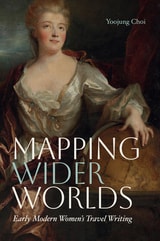
Mapping Wider Worlds
Early Modern Women's Travel WritingYoojung Choi
University of Delaware Press, 2027
Mapping Wider Worlds uncovers how early professional women writers in Britain invented a genre of women’s travel fiction in an era of increased mobility and exploration. As marketplace authorship began to take shape, writers such as Delarivier Manley, Mary Davys, Penelope Aubin, and Eliza Haywood turned to this genre to challenge the link between women’s travel and promiscuity, positioning travel instead as a site of knowledge production and self-discovery. In this book, Yoojung Choi reveals how these women authors not only reshaped cultural attitudes toward women’s mobility, but also redefined professional authorship in the late seventeenth and early eighteenth centuries, preceding and paving the way for travel literature by Lady Mary Wortley Montagu, Hester Piozzi, and Mary Wollstonecraft.
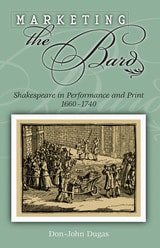
Marketing the Bard
Shakespeare in Performance and Print, 1660-1740Don-John Dugas
University of Missouri Press, 2006
To posterity, William Shakespeare may be the Bard of Avon, but to mid-seventeenth-century theatergoers he was just another dramatist. Yet barely a century later, he was England’s most popular playwright and a household name. In this intriguing study, Don-John Dugas explains how these changes came about and sealed Shakespeare’s reputation even before David Garrick performed his work on the London stage.
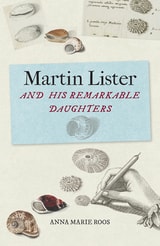
Martin Lister and his Remarkable Daughters
The Art of Science in the Seventeenth CenturyAnna Marie Roos
Bodleian Library Publishing, 2018
Susanna and Anna portrayed the shells of this collection not only as curious and beautiful objects, but also as specimens of natural history, rendering them with sensitivity and keen scientific empiricism. Beautiful in their own right, their illustrations and engravings reveal the early techniques behind scientific illustration and offer fascinating insight into the often hidden role of women in the scientific revolution.
Masculine Births
Milton, Women, and the LawLynne Greenberg
Northwestern University Press, 2026
Examining the legal lives of early modern women through Milton’s literary works
In his History of Britain, John Milton writes, “Laws are Masculin Births . . . nothing [is] more awry from the Law of God and Nature, then that a Woman should give Laws to Men.” In this interdisciplinary study, Lynne Greenberg explores the normative and nonnormative legal lives of early modern women as depicted in Milton’s works—unmarried and married women, mothers, heiresses, widows, and queens—providing cogent overviews of the laws of multiple jurisdictions to offer critical context for each case study. Greenberg explores a wide range of legal-juridical materials and previously unexplored archival and private family documents. As she demonstrates, while Milton’s narratives are at times enmeshed in existing jural paradigms, they also offer resistant responses to marital, custodial, property, inheritance, and criminal laws and even imagine alternative jural paradigms for women. Through Masculine Births: Milton, Women and the Law, Greenberg deftly reveals that Milton both reproduces seventeenth-century legal constructs and gives birth to laws that move us toward greater equality for women.
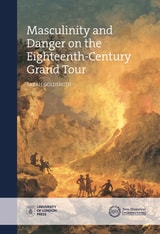
Masculinity and Danger on the Eighteenth-Century Grand Tour
Sarah Goldsmith
University of London Press, 2020
Goldsmith demonstrates that the Grand Tour was a means of constructing Britain’s next generation of leaders. Influenced by aristocratic concepts of honor and inspired by military-style leadership, elite society viewed experiences of danger and hardship as powerfully transformative and therefore as central to constructing masculinity. Scaling mountains, volcanoes, and glaciers, and even encountering war and disease, Grand Tourists willingly tackled a variety of perils. Through her study of these dangers, Goldsmith offers a bold revision of eighteenth-century elite masculine culture and the critical role the Grand Tour played within it.
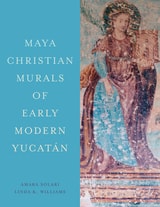
Maya Christian Murals of Early Modern Yucatán
Amara SolariLinda K. Williams
University of Texas Press, 2024
The first study of Christian murals created by indigenous artists in sixteenth and seventeenth century Yucatán.
In the sixteenth and seventeenth centuries, Maya artists painted murals in churches and conventos of Yucatán using traditional techniques to depict iconography brought from Europe by Franciscan friars. The fragmentary visual remains and their placement within religious structures embed Maya conceptions of sacredness beyond the didactic imagery. Mobilizing both cutting-edge technology and tried-and-true analytical methods, art historians Amara Solari and Linda K. Williams reexamine the Maya Christian murals, centering the agency of the people who created them.
The first volume to comprehensively document the paintings, Maya Christian Murals of Early Modern Yucatán collects new research on the material composition of the works, made possible by cutting-edge imaging methods. Solari and Williams investigate pigments and other material resources, as well as the artists and historical contexts of the murals. The authors uncover numerous local innovations in form and content, including images celebrating New World saints, celestial timekeeping, and ritual processions. Solari and Williams argue that these murals were not simply vehicles of coercion, but of cultural “grafting,” that allowed Maya artists to shape a distinctive and polyvocal legacy in their communities.

Mediating Culture in the Seventeenth-Century German Novel
Eberhard Werner Happel, 1647-1690Gerhild Scholz Williams
University of Michigan Press, 2014
Happel primarily lived and worked in the vigorous port city of Hamburg, which was a “media center” in terms of the access it offered to a wide library of books in public and private collections. Hamburg’s port status meant it buzzed with news and information, and Happel drew on this flow of data in his novels. His books deal with many topics of current interest—national identity formation, gender and sexualities, Western European encounters with neighbors to the East, confrontations with non-European and non-Western powers and cultures—and they feature multiple media, including news reports, news collections, and travel writings. As a result, Happel’s use of contemporary source material in his novels feeds our current interest in the impact of the production of knowledge on seventeenth-century narrative. Mediating Culture in the Seventeenth-Century German Novel explores the narrative wealth and multiversity of Happel’s work, examines Happel’s novels as illustrative of seventeenth-century novel writing in Germany, and investigates the synergistic relationship in Happel’s writings between the booming print media industry and the evolution of the German novel.
Medical Misinformation in Early Modern Germany
Christopher Hutchinson
University of Delaware Press, 2026
Medical Misinformation in Early Modern Germany examines how doctors, writers, and printers in sixteenth-century Germany responded to the rapid expansion of print and its implications for medical knowledge. The spread of printed texts generated widespread suspicion about print’s reliability as a conduit of information and led writers to reflect on questions of audience, vernacularity, and medical authority in their responses to disease. The book investigates literary texts alongside popular vernacular medical pamphlets on the major epidemic diseases of the period––plague, syphilis, and the English sweating sickness––to reveal a widespread concern with the impact of printed texts on public health. During the 1529 outbreak of the English sweating sickness, this concern culminated in writers’ use of a “rhetoric of virality,” explicitly comparing the circulation of texts to the spread of disease, as they confronted the parallel contagions of disease and information.
Memory's Library
Medieval Books in Early Modern EnglandJennifer Summit
University of Chicago Press, 2008
In Jennifer Summit’s account, libraries are more than inert storehouses of written tradition; they are volatile spaces that actively shape the meanings and uses of books, reading, and the past. Considering the two-hundred-year period between 1431, which saw the foundation of Duke Humfrey’s famous library, and 1631, when the great antiquarian Sir Robert Cotton died, Memory’s Library revises the history of the modern library by focusing on its origins in medieval and early modern England.
Summit argues that the medieval sources that survive in English collections are the product of a Reformation and post-Reformation struggle to redefine the past by redefining the cultural place, function, and identity of libraries. By establishing the intellectual dynamism of English libraries during this crucial period of their development, Memory’s Library demonstrates how much current discussions about the future of libraries can gain by reexamining their past.

Mexico's Merchant Elite, 1590-1660
Silver, State, and SocietyLouisa Schell Hoberman
Duke University Press, 1991
Through extensive archival research, Hoberman brings to light new data that illuminate the formation, behavior, and power of the merchant class in New Spain. She documents sources and uses of merchant wealth, tracing the relative importance of mining, agriculture, trade, and public office. By delving into biographical information on prominent families, Hoberman also reveals much about the longevity of the first generation’s social and economic achievements.
The author’s broad analysis situates her study in the overall environment in which the merchants thrived. Among the topics discussed are the mining and operation of the mint, Mexico’s political position vis-a-vis Spain, and the question of an economic depression in the seventeenth century.

Milton's Epic Voice
The Narrator in Paradise LostAnne Ferry
University of Chicago Press, 1983
Milton’s Moving Bodies
Marissa Greenberg and Rachel Trubowitz
Northwestern University Press, 2024
A collection of innovative examinations of embodiment in Milton’s oeuvre that challenge assumptions about disciplinary boundaries
This volume brings unprecedented focus to the forms, spaces, and implications of embodied motion in Milton’s writing and its afterlives to explore how and why he privileges the body—human and textual—as a site of dynamic movement. The contributors bring a variety of lenses to Milton’s moving bodies: political history, kinematics, mathematics, cosmology, translation, illustration, anatomies of racialized and disabled bodies, and twenty-first-century pedagogies. From these wide-ranging vantage points, they consider anew Milton’s contributions to the histories of scientific development, global exploration and imperial expansion, migration and diaspora, and translation and adaptation in England, Europe, and the Americas, from the early modern period to today. Milton’s Moving Bodies draws together established and emerging scholars, offering fresh analyses of the poet’s legacy for multiple traditions within and beyond Milton studies.
Mobility and Migration
East Anglian Founders of New England, 1629-1640Roger Thompson
University of Massachusetts Press, 1994
During the 1630s, more than 14,000 people sailed from Britain bound for New England, constituting what has come to be known as the Great Migration. This book offers the most extensive study of these emigrants ever undertaken. Focusing on 2,000 individuals who moved from the five counties of eastern England, it provides historians with important new findings on mobility, family life, kinship networks, and community cohesion.
Roger Thompson reveals the personal experiences and ancestral histories of the emigrants. He follows them across the Atlantic and investigates their lives and achievements in the New World. Distinguising between such groups as gentry, entrepreneurs, artisans, farmers, and servants, he explores whether the migration tended to be a solitary uprooting from a stable and predictable world of familiar neighborhoods or simply a longer move among many relocations.
Thompson also sheds light on the issue of motivation: Were these settlers pulled by the hope of eventual enrichment or of founding a purified society, or were they pushed by intolerance and persecution at home? Did they see New England as a haven of escape or an opportunity to exploit? Did New Englanders seek to replicate “English ways,” preserving traditional culture and society, or did they embrace change and innovation? Mobility and Migration provides a wealth of new evidence for historians of both early modern England and colonial America.
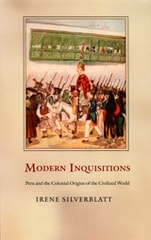
Modern Inquisitions
Peru and the Colonial Origins of the Civilized WorldIrene Silverblatt
Duke University Press, 2004
Drawing on extensive research in Peruvian and Spanish archives, Silverblatt uses church records, evangelizing sermons, and missionary guides to explore how the emerging modern world was built, experienced, and understood by colonists, native peoples, and Inquisition officials: Early missionaries preached about world history and about the races and nations that inhabited the globe; Inquisitors, able bureaucrats, defined who was a legitimate Spaniard as they executed heretics for “reasons of state”; the “stained blood” of Indians, blacks, and descendants of Jews and Moors was said to cause their deficient character; and native Peruvians began to call themselves Indian.
In dialogue with Arendt and other theorists of modernity, Silverblatt shows that the modern world’s underside is tied to its origins in colonialism and to its capacity to rationalize violence. Modern Inquisitions forces the reader to confront the idea that the Inquisition was not only a product of the modern world of the sixteenth and seventeenth centuries, but party to the creation of the civilized world we know today.
Movable Londons
Performance and the Modern CityJulia H Fawcett
University of Michigan Press, 2025
Music and Ideas in the Sixteenth and Seventeenth Centuries
Thomas Mathiesen
University of Illinois Press, 2017

Music at Midnight
The Life and Poetry of George HerbertJohn Drury
University of Chicago Press, 2014
As Drury writes in his preface, Herbert lived “a quiet life with a crisis in the middle of it.” Drury follows Herbert from his academic success as a young man, seemingly destined for a career at court, through his abandonment of those hopes, his devotion to the restoration of a church in Huntingdonshire, and his final years as a country parson. Because Herbert’s work was only published posthumously, it has always been difficult to know when or in what context Herbert wrote his poems. But Drury skillfully places readings of the poems into his narrative at biographically credible moments, allowing us to appreciate not only Herbert’s frame of mind while writing, but also the society that produced it. A sensitive critic of Herbert’s poems as well as a theologian, Drury does full justice to the spiritual dimension of Herbert’s work. In addition, he reveals the occasions of sorrow, happiness, regret, and hope that Herbert captured in his poetry and that led T. S. Eliot to write, “What we can confidently believe is that every poem . . . is true to the poet’s experience.”
Painting a picture of a man torn between worldly ambition and spiritual life, Music at Midnight is an eloquent biography that breathes new life into some of the greatest English poems ever written.
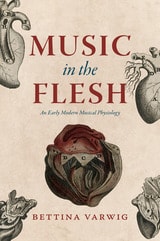
Music in the Flesh
An Early Modern Musical PhysiologyBettina Varwig
University of Chicago Press, 2023
Music in the Flesh reimagines the lived experiences of music-making subjects—composers, performers, listeners—in the long seventeenth century. There are countless historical testimonies of the powerful effects of music upon the early modern body; it is described as moving, ravishing, painful, dangerous, curative, and miraculous while affecting “the circulation of the humors, the purification of the blood, the dilation of the vessels and pores.”
How were these early modern European bodies constituted that music generated such potent bodily-spiritual effects? Bettina Varwig argues that early modern music-making practices challenge our modern understanding of human nature as a mind-body dichotomy. Instead, they persistently affirm a more integrated anthropology, in which body, soul, and spirit remain inextricably entangled. Moving with ease across repertories and regions, sacred and vernacular musics, and domestic and public settings, Varwig sketches a “musical physiology” that is as historically illuminating as it is relevant for present-day performance. This book makes a significant contribution not just to the history of music, but also to the history of the body, the senses, and the emotions, revealing music as a unique access point for reimagining early modern modes of being-in-the-world.
Music, Discipline, and Arms in Early Modern France
Kate van Orden
University of Chicago Press, 2005
The great pressure on French noblemen to take up the life of the warrior gave rise to bellicose art forms such as sword dances and equestrian ballets. Far from being construed as effeminizing, such combinations of music and the martial arts were at once refined and masculine-a perfect way to display military prowess. The incursion of music into riding schools and infantry drills contributed materially to disciplinary order, enabling the larger and more effective armies of the seventeenth century. This book is a history of the development of these musical spheres and how they brought forth new cultural priorities of civility, military discipline, and political harmony. Music, Discipline, and Arms in Early Modern France effectively illustrates the seminal role music played in mediating between the cultural spheres of letters and arms.