64 books match the query '1960-' and 5 start with m
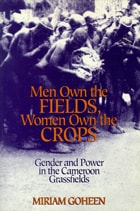
cover of Men Own The Fields, Women Own The Crops: Gender And Power In The Cameroon Grassfields

Men Own The Fields, Women Own The Crops

Gender And Power In The Cameroon Grassfields

Miriam Goheen

University of Wisconsin Press, 1996

Women’s labor—producing both crops and children—has long been the linchpin of male status and power throughout Africa. This book lucidly interprets the intricate relations of gender to state-building in Africa by looking historically at control over production and reproduction, from the nineteenth century to the present. Miriam Goheen examines struggles over power within the Nso chiefdom in the highlands of Western Cameroon, between the chiefdom and the state, and between men and women, as the women increasingly reject traditional marriages.
    Based on a decade of fieldwork, this work tracks the negotiations between chiefs and subchiefs and women and men over ritual power, economic power, and administrative power. Though Nso men obviously dominate their society at both the local level and nationally, women have had power of their own by virtue of their status as women. Men may own the land, for example, but women control the crops through their labor . Goheen explains clearly the place of gender in very complex historical processes, such as land tenure systems, title societies, chieftancy, marriage systems, changing ideas of symbolic capital, and internal and external politics.
    In examining women’s resistance to traditional patterns of marriage, Goheen raises the question of whether such actions truly change the balance of power between the sexes, or whether resistance to marriage is instead fostering the formation of a new elite class, since it is only the better-educated women of wealthier families who can change the dynamic of power and labor within the household.
    The issues raised in this book are not unique to Nso but apply throughout the African subcontinent. Written in a straightforward way with much of the theoretical argument in footnotes, Men Own the Fields, Women Own the Crops marshals important arguments of wide relevance in present-day Africa.
[more]
cover of Mercenaries: An African Security Dilemma

Mercenaries

An African Security Dilemma

Edited by Abdel-Fatau Musah and J. Kayode Fayemi

Pluto Press, 1999
This powerful book critiques mercenary involvement in post-Cold War African conflicts. The contributors investigate the links between the rise in internal conflicts and the proliferation of mercenary activities in the 1990s; the distinction in the methods adopted by Cold War mercenaries and their contemporary counterparts; the convoluted network between private armies; business interests and sustained poverty in Africa’s poorest countries; and the connection between mercenary activities and arms proliferation. Countries discussed include Sierra Leone, Zaire, Angola, Uganda and Congo.
[more]
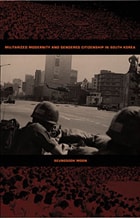
cover of Militarized Modernity and Gendered Citizenship in South Korea

Militarized Modernity and Gendered Citizenship in South Korea

Seungsook Moon

Duke University Press, 2005

This pathbreaking study presents a feminist analysis of the politics of membership in the South Korean nation over the past four decades. Seungsook Moon examines the ambitious effort by which South Korea transformed itself into a modern industrial and militarized nation. She demonstrates that the pursuit of modernity in South Korea involved the construction of the anticommunist national identity and a massive effort to mold the populace into useful, docile members of the state. This process, which she terms “militarized modernity,” treated men and women differently. Men were mobilized for mandatory military service and then, as conscripts, utilized as workers and researchers in the industrializing economy. Women were consigned to lesser factory jobs, and their roles as members of the modern nation were defined largely in terms of biological reproduction and household management.

Moon situates militarized modernity in the historical context of colonialism and nationalism in the twentieth century. She follows the course of militarized modernity in South Korea from its development in the early 1960s through its peak in the 1970s and its decline after rule by military dictatorship ceased in 1987. She highlights the crucial role of the Cold War in South Korea’s militarization and the continuities in the disciplinary tactics used by the Japanese colonial rulers and the postcolonial military regimes. Moon reveals how, in the years since 1987, various social movements—particularly the women’s and labor movements—began the still-ongoing process of revitalizing South Korean civil society and forging citizenship as a new form of membership in the democratizing nation.
[more]
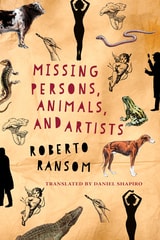
cover of Missing Persons, Animals, and Artists

Missing Persons, Animals, and Artists

Roberto Ransom

Swan Isle Press, 2017

Elegant prose and imaginative ironies bring these compelling short stories to life in this first English-language collection from Mexican author Roberto Ransom. Each of the ten stories is filled with fascinating, yet enigmatic and sometimes elusive characters: an alligator in a bathtub, an invisible toad who appears only to a young boy, the beautiful redheaded daughter of a mushroom collector, a deceased journalist who communicates in code, and even Leonardo Da Vinci himself, meditating on The Last Supper. One of Mexico’s most original writers, Ransom explores these characters’ emotional depths as they move through their fantastical worlds that, while at times unfamiliar, offer brave and profound insights into our own.
           
Missing Persons, Animals, and Artists is the follow-up to Ransom’s highly acclaimed A Tale of Two Lions, praised by Ignacio Padilla as “the best Mexican literary work I have read in recent years. . . . [It] heralds a pen capable of that rarest of privileges in our letters: attaining the comic and profoundly human through a perfect simplicity.”  This collection of short stories has been translated with great care by Daniel Shapiro.
 
[more]
cover of Moral Economies of Corruption: State Formation and Political Culture in Nigeria

Moral Economies of Corruption

State Formation and Political Culture in Nigeria

Steven Pierce

Duke University Press, 2016

Nigeria is famous for "419" e-mails asking recipients for bank account information and for scandals involving the disappearance of billions of dollars from government coffers. Corruption permeates even minor official interactions, from traffic control to university admissions. In Moral Economies of Corruption Steven Pierce provides a cultural history of the last 150 years of corruption in Nigeria as a case study for considering how corruption plays an important role in the processes of political change in all states. He suggests that corruption is best understood in Nigeria, as well as in all other nations, as a culturally contingent set of political discourses and historically embedded practices. The best solution to combatting Nigerian government corruption, Pierce contends, is not through attempts to prevent officials from diverting public revenue to self-interested ends, but to ask how public ends can be served by accommodating Nigeria's history of patronage as a fundamental political principle.
 
 
[more]