Results by title
196 books match the query 'Activism & Social Justice' and 7 start with m
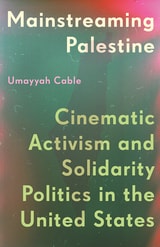
Mainstreaming Palestine
Cinematic Activism and Solidarity Politics in the United StatesUmayyah Cable
University of Minnesota Press, 2025
A history of cinema’s role in popularizing the politics of Palestinian liberation
For decades, Arab American activists and allies have used film, video, and multimedia to mobilize support for the Palestinian cause in the United States. In this detailed history of cinema’s role within the broader solidarity movement, Umayyah Cable analyzes the various strands of cinematic activism that have helped move Palestinian liberation politics from the periphery and into the mainstream.
Cable charts the shifting discourse around Palestine as it has been shaped by grassroots film production and alternative media distribution networks as well as more conventional outlets. Ranging from the circulation of educational filmstrips by the Association of Arab American University Graduates in the 1970s to the treatment of Palestinian solidarity at contemporary Hollywood awards ceremonies and film festivals, Mainstreaming Palestine tells the story of how cinema has promoted Palestinian liberation and solidarity politics. While highlighting various public controversies and struggles against censorship, Cable also acknowledges the drawbacks of the Palestinian cause being subsumed by the mainstream, discussing how activism risks becoming fashionable, undermining the radical potential of the very tools that helped bring it there.
Combining archival research, ethnographic observation and interviews, text analysis, and visual analysis of film, video, and multimedia, Mainstreaming Palestine encourages readers to critically assess the relationship between the politics of liberation and the all-consuming engine of contemporary capitalism. By underscoring the impact of visual media on the evolution of the Palestinian solidarity discourse, this book offers both a treatise on the practical power of cinema and a necessary historicization of an urgent issue in American politics.
Retail e-book files for this title are screen-reader friendly with images accompanied by short alt text and/or extended descriptions.
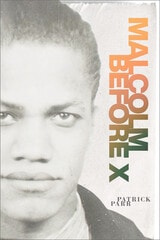
Malcolm Before X
Patrick Parr
University of Massachusetts Press, 2024
A Kirkus Reviews Best Nonfiction Book of 2024
A Spectator Best Book of the Year
Finalist for the 2025 ASALH Book Prize
Drawing upon interviews, correspondence, and nearly 2000 pages of never-before-used prison records, Malcolm Before X is the definitive examination of the prison years of civil rights icon Malcolm X.
In February 1946, when 20-year-old Malcolm Little was sentenced to eight to ten years in a maximum-security prison, he was a petty criminal and street hustler in Boston. By the time he was paroled in August 1952, he had transformed into a voracious reader, joined the Black Muslims, and was poised to become Malcolm X, one of the most prominent and important intellectuals of the civil rights era. While scholars and commentators have exhaustively detailed, analyzed, and debated Malcolm X’s post-prison life, they have not explored these six and a half transformative years in any depth.
Paying particular attention to his time in prison, Patrick Parr’s Malcolm Before X provides a comprehensive and groundbreaking examination of the first twenty-seven years of Malcolm X’s life (1925–1965). Parr traces Malcolm’s African lineage, explores his complicated childhood in the Midwest, and follows him as he moves east to live with his sister Ella in Boston’s Roxbury neighborhood, where he is convicted of burglary and sentenced.
Parr utilizes a trove of previously overlooked documents that include prison files and prison newspapers to immerse the reader into the unique cultures—at times brutal and at times instructional—of Charlestown State Prison, the Concord Reformatory, and the Norfolk Prison Colony. It was at these institutions that Malcolm devoured books, composed poetry, boxed, debated, and joined the Nation of Islam, changing the course of his life and setting the stage for a decade of antiracist activism that would fundamentally reshape American culture.
In this meticulously researched and beautifully written biography, the inspiring story of how Malcolm Little became Malcolm X is finally told.
Materializing Imaginaries in Senegal
Modern African Literature and Global 1968Fatoumata Seck
Duke University Press, 2026
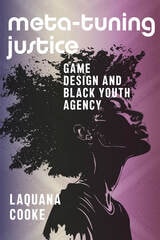
Meta-Tuning Justice
Game Design and Black Youth AgencyLaquana Cooke
University of Massachusetts Press, 2026
Exploring how Black youth are reshaping game design to dismantle stereotypes and spark social change
In the early 2000s, digital gaming rose to cultural and economic prominence. Communities of color, however, and especially Black youth, were largely excluded from gaming culture. The rare Black character in games tended to reinforce stereotypes, while racial bias was often surreptitiously embedded in game design platforms—what decolonial scholars call “whitestream” computing. Progressive game design education initiatives and new technologies have recently begun to dismantle these barriers. Yet, because biases remain, historically excluded young people still need to actively reconfigure these digital spaces to fully develop and convey their own perspectives.
In Meta-Tuning Justice, digital rhetoric scholar Laquana Cooke explores how Black youth express cultural identity and challenge dominant narratives through innovative game design. Cooke introduces the Transformative Constructionist Learning (TCL) paradigm and its core theory of “meta-tuning”—the idea that students are better able to adjust to new challenges through trial-and-error and experimentation in educational environments that correspondingly adjust to their evolving learning needs. In contrast to traditional education practices, which assume the neutrality of technology, Cooke approaches it as a tool for social transformation. Drawing on the TCL paradigm, she explores how the unique cultural algorithms and expressions (like popping and locking dance forms) that inform the programming and designs of Black youth represent a powerful form of resistance and creation.
Through rich ethnographic case studies across multiple educational settings, and with gaming as its experimental center, this book presents a compelling vision of how TCL and meta-tuning can help make technologies more equitable. Cooke’s innovative study offers insights crucial to scholars and practitioners in game studies, Science and Technology Studies, STEM education, and racial equity in digital learning.
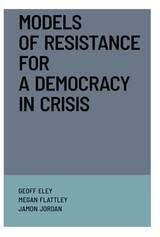
Models of Resistance for a Democracy in Crisis
Geoff Eley
Disobedience Press, 2026
Models of Resistance for a Democracy in Crisis features three historians who examine how political opposition, anti-racist struggle, and artistic intervention serve as vital blueprints for safeguarding our precarious democracy.
Geoff Eley deconstructs Trump-era politics by identifying a dual crisis: the withering of democratic practices and a pervasive cynicism toward government. By analyzing how Germans of the 1930s might have resisted fascism, he reveals the specific forms of opposition needed to uphold democratic accountability today.
Jamon Jordan traces a lineage of anti-racist protest, from the rebellions of the enslaved to the legal and moral defiance of the abolitionist movement. By weaving public tactics, such as demonstrations and boycotts, with the enduring labor of building Black-led institutions and preserving cultural traditions, Jordan reveals a comprehensive framework for contemporary activists.
Megan Flattley examines how artworks challenge repressive regimes. These creative interventions bear witness to traumatic and unjust conditions, use cultural institutions as cover for political action, and stage provocations in public spaces to reveal latent violence and advocate for social change.

Mujeres de Maiz en Movimiento
Spiritual Artivism, Healing Justice, and Feminist PraxisEdited by Amber Rose González, Felicia ‘Fe’ Montes, and Nadia Zepeda
University of Arizona Press, 2024
MdM’s political-ethical-spiritual commitments, cultural production, and everyday practices are informed by Indigenous and transnational feminist of color artistic, ceremonial, activist, and intellectual legacies. Contributors fuse stories of celebration, love, and spirit-work with an incisive critique of interlocking oppressions, both intimate and structural, encouraging movement toward “a world where many worlds fit.”
The multidisciplinary, intergenerational, and critical-creative nature of the project coupled with the unique subject matter makes the book a must-have for high school and college students, activist-scholars, artists, community organizers, and others invested in social justice and liberation.

Music, Research, and Activism
Prospects and Projects in Northern EuropeEdited by Kim Ramstedt, Susanna Välimäki, Sini Mononen, and Kaj Ahlsved
Intellect Books, 2025
Can music research drive social and ecological change? Music, Research, and Activism: Prospects and Projects in Northern Europe argues that it can—and must. This bold collection studies the emerging activist turn in music studies, where researchers and artists engage directly in public debates and cultural movements.
By questioning systemic inequalities in the music industry and exploring the role of music education in an era of climate crisis, the contributors to this volume reflect on how their work can serve eco-social justice. Drawing on their diverse experiences as educators, critics, DJs, producers, and community organizers, they offer a compelling vision of music research as an agent of transformation.
Rooted in the independent research network Suoni, this volume speaks to music scholars and students eager to rethink the role of music in shaping a more equitable world. Engaging and accessible, it challenges us to ask: What does social responsibility look like in music research today?