56 books match the query 'Adaptations' and 7 start with m
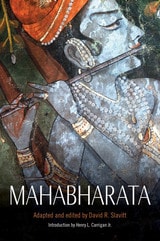
cover of Mahabharata

Mahabharata

Adapted and edited by David R. Slavitt

Northwestern University Press, 2015

Within its 200,000 verse lines in Sanskrit the Mahabharata takes on many roles: epic poem, foundational text of Hinduism, and, more broadly, the engaging story of a dynastic struggle and the passing of an age when man and gods intermingled. David R. Slavitt’s sparkling new edition condenses the epic for the general reader.

At its core, the Mahabharata is the story of the rivalry between the Pandavas and the Kauravas, two related noble families who are struggling for control of a kingdom in ancient northern India. Slavitt’s readable, plot-driven, single-volume account describes an arc from the conception and birth of Bhishma to that hero's death, while also introducing the four goals of life at the center of Hinduism: dharma (righteousness, morality, duty), artha (purpose), kāma (pleasure), and moksa (spiritual liberation). The Mahabharata is engaging, thrilling, funny, charming, and finally awesome, with a range in timbre from the impish naivete of fairy tales to the solemnity of our greatest epics, and this single-volume edition is the best introduction available.
[more]
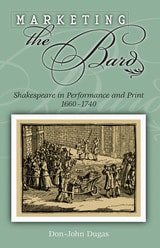
cover of Marketing the Bard: Shakespeare in Performance and Print, 1660-1740

Marketing the Bard

Shakespeare in Performance and Print, 1660-1740

Don-John Dugas

University of Missouri Press, 2006

To posterity, William Shakespeare may be the Bard of Avon, but to mid-seventeenth-century theatergoers he was just another dramatist. Yet barely a century later, he was England’s most popular playwright and a household name. In this intriguing study, Don-John Dugas explains how these changes came about and sealed Shakespeare’s reputation even before David Garrick performed his work on the London stage.
            Marketing the Bard considers the ways that performance and publication affected Shakespeare’s popularity. Dugas takes readers inside London’s theaters and print shops to show how the practices of these intersecting enterprises helped transform Shakespeare from a run-of-the-mill author into the most performed playwright of all time—persuasively demonstrating that by the 1730s commerce, not criticism, was the principal force driving Shakespeare’s cultural dominance.
            Displaying an impressive command of theater and publishing history, Dugas explains why adaptations of Shakespeare’s plays succeeded or failed on the stage and shows that theatrical and publishing concerns exerted a greater influence than aesthetics on the playwright’s popularity. He tells how revivals and adaptations of Shakespeare’s plays while he was relatively unknown fueled an interest in publication—exploited by the Tonson publishing firm with expensive collected editions marketed to affluent readers—which eventually led to competition between pricey collections and cheap single-play editions. The resulting price war flooded the market with Shakespeare, which in turn stimulated stage revivals of even his most obscure plays.
In tracing this curious reemergence of Shakespeare, Dugas considers why the Tonsons acquired the copyright to the plays, how the famous edition of 1709 differed from earlier ones, and what effect its publication had on Shakespeare’s popularity. He records all known performances of Shakespeare between 1660 and 1705 to document productions by various companies and to show how their performances shaped the public’s taste for Shakespeare. He also discloses a previously overlooked eighteenth-century engraving that sheds new light on the price war and Shakespeare’s reputation.
            Marketing the Bard is a thoroughly engaging book that ranges widely over the Restoration landscape, containing a wealth of information and insight for anyone interested in theater history, the history of the book, the origins of copyright, and of course Shakespeare himself. Dugas’s analysis of the complex factors that transformed a prolific playwright into the inimitable Bard clearly shows how business produces and packages great art in order to sell it.
[more]
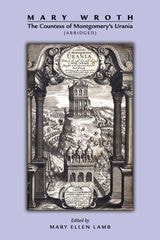
cover of Mary Wroth: The Countess of Montgomery's Urania (Abridged)

Mary Wroth

The Countess of Montgomery's Urania (Abridged)

Edited by Mary Ellen Lamb

Arizona Center for Medieval and Renaissance Studies, 2000
[more]
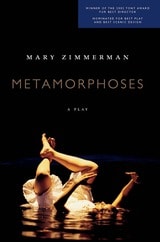
cover of Metamorphoses: A Play

Metamorphoses

A Play

Mary Zimmerman

Northwestern University Press, 2002

A beautiful and deeply humane reanimation of Ovid's myths 

Called by Time the "theater event of the year," Mary Zimmerman's Metamorphoses brings Ovid's tales to stunning visual life. Set in and around a large pool of water onstage, Metamorphoses juxtaposes the ancient and the contemporary in both language and image to reflect the variety and persistence of narrative in the face of inevitable change. Nominated for three 2002 Tony Awards, including "Best Play," Metamorphoses earned Zimmerman a Tony for "Best Direction of a Play."
 

[more]
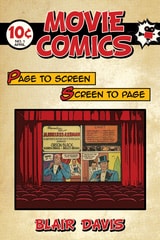
cover of Movie Comics: Page to Screen/Screen to Page

Movie Comics

Page to Screen/Screen to Page

Davis, Blair

Rutgers University Press, 2017
As Christopher Nolan’s Batman films and releases from the Marvel Cinematic Universe have regularly topped the box office charts, fans and critics alike might assume that the “comic book movie” is a distinctly twenty-first-century form. Yet adaptations of comics have been an integral part of American cinema from its very inception, with comics characters regularly leaping from the page to the screen and cinematic icons spawning comics of their own. 
 
Movie Comics is the first book to study the long history of both comics-to-film and film-to-comics adaptations, covering everything from silent films starring Happy Hooligan to sound films and serials featuring Dick Tracy and Superman to comic books starring John Wayne, Gene Autry, Bob Hope, Abbott & Costello, Alan Ladd, and Dean Martin and Jerry Lewis. With a special focus on the Classical Hollywood era, Blair Davis investigates the factors that spurred this media convergence, as the film and comics industries joined forces to expand the reach of their various brands. While analyzing this production history, he also tracks the artistic coevolution of films and comics, considering the many formal elements that each medium adopted and adapted from the other. 
 
As it explores our abiding desire to experience the same characters and stories in multiple forms, Movie Comics gives readers a new appreciation for the unique qualities of the illustrated page and the cinematic moving image.  
 
[more]
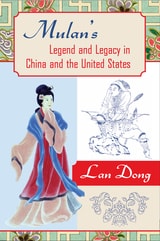
cover of Mulan's Legend and Legacy in China and the United States

Mulan's Legend and Legacy in China and the United States

Authored by Lan Dong

Temple University Press, 2010

Mulan, the warrior maiden who performed heroic deeds in battle while dressed as a male soldier, has had many incarnations from her first appearance as a heroine in an ancient Chinese folk ballad. Mulan’s story was retold for centuries, extolling the filial virtue of the young woman who placed her father's honor and well-being above her own. With the publication of Maxine Hong Kingston’s The Woman Warrior in the late 1970s, Mulan first became familiar to American audiences who were fascinated with the extraordinary Asian American character. Mulan’s story was recast yet again in the popular 1998 animated Disney film and its sequel.

In Mulan’s Legend and Legacy in China and the United States, Lan Dong traces the development of this popular icon and asks, "Who is the real Mulan?" and "What does authenticity mean for the critic looking at this story?" Dong charts this character’s literary voyage across historical and geographical borders, discussing the narratives and images of Mulan over a long time span—from premodern China to the contemporary United States to Mulan’s counter-migration back to her homeland.

As Dong shows, Mulan has been reinvented repeatedly in both China and the United States so that her character represents different agendas in each retelling—especially after she reached the western hemisphere. The dutiful and loyal daughter, the fierce, pregnant warrior, and the feisty teenaged heroine—each is Mulan representing an idea about female virtue at a particular time and place.
[more]
cover of Multi-Mediated Dostoevsky: Transposing Novels into Opera, Film, and Drama

Multi-Mediated Dostoevsky

Transposing Novels into Opera, Film, and Drama

Alexander Burry

Northwestern University Press, 2011

Since their publication, the works of Dostoevsky have provided rich fodder for adaptations to opera, film, and drama. While Dostoevsky gave his blessing to the idea of adapting his work to other forms, he believed that "each art form corresponds to a series of poetic thoughts, so that one idea cannot be expressed in another non-corresponding form." In Multi-Mediated Dostoevsky, Alexander Burry argues that twentieth-century adaptations (which he calls "transpositions") of four of Dostoevsky’s works—Sergei Prokofiev’s opera The Gambler, Leos Janacek’s opera From the Dead House, Akira Kurosawa’s film The Idiot, and Adrzej Wajda’s drama The Devils—follow Dostoevsky’s precept by bringing to light underdeveloped or unappreciated aspects of Dostoevsky’s texts rather than by slavishly attempting to recreate their sources. Burry’s interdisciplinary approach gives his study broad appeal to scholars as well as to students of Russian, comparative literature, music, film, drama, and cultural studies.
[more]