Results by title
78 books match the query 'After' and 2 start with m
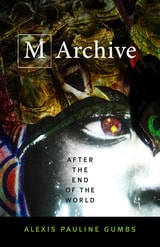
M Archive
After the End of the WorldAlexis Pauline Gumbs
Duke University Press, 2018
Following the innovative collection Spill, Alexis Pauline Gumbs's M Archive—the second book in a planned experimental triptych—is a series of poetic artifacts that speculatively documents the persistence of Black life following a worldwide cataclysm. Engaging with the work of the foundational Black feminist theorist M. Jacqui Alexander, and following the trajectory of Gumbs's acclaimed visionary fiction short story “Evidence,” M Archive is told from the perspective of a future researcher who uncovers evidence of the conditions of late capitalism, antiblackness, and environmental crisis while examining possibilities of being that exceed the human. By exploring how Black feminist theory is already after the end of the world, Gumbs reinscribes the possibilities and potentials of scholarship while demonstrating the impossibility of demarcating the lines between art, science, spirit, scholarship, and politics.
[more]
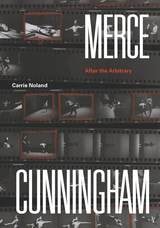
Merce Cunningham
After the ArbitraryCarrie Noland
University of Chicago Press, 2019
One of the most influential choreographers of the twentieth century, Merce Cunningham is known for introducing chance to dance. Far too often, however, accounts of Cunningham’s work have neglected its full scope, focusing on his collaborations with the visionary composer John Cage or insisting that randomness was the singular goal of his choreography. In this book, the first dedicated to the complete arc of Cunningham’s career, Carrie Noland brings new insight to this transformative artist’s philosophy and work, providing a fresh perspective on his artistic process while exploring aspects of his choreographic practice never studied before.
Examining a rich and previously unseen archive that includes photographs, film footage, and unpublished writing by Cunningham, Noland counters prior understandings of Cunningham’s influential embrace of the unintended, demonstrating that Cunningham in fact set limits on the role chance played in his dances. Drawing on Cunningham’s written and performed work, Noland reveals that Cunningham introduced variables before the chance procedure was applied and later shaped and modified the chance results. Chapters explore his relation not only to Cage, but also Marcel Duchamp, Robert Rauschenberg, James Joyce, and Bill T. Jones. Ultimately, Noland shows that Cunningham approached movement as more than “movement in itself,” and that his work enacted archetypal human dramas. This remarkable book will forever change our appreciation of the choreographer’s work and legacy.
Examining a rich and previously unseen archive that includes photographs, film footage, and unpublished writing by Cunningham, Noland counters prior understandings of Cunningham’s influential embrace of the unintended, demonstrating that Cunningham in fact set limits on the role chance played in his dances. Drawing on Cunningham’s written and performed work, Noland reveals that Cunningham introduced variables before the chance procedure was applied and later shaped and modified the chance results. Chapters explore his relation not only to Cage, but also Marcel Duchamp, Robert Rauschenberg, James Joyce, and Bill T. Jones. Ultimately, Noland shows that Cunningham approached movement as more than “movement in itself,” and that his work enacted archetypal human dramas. This remarkable book will forever change our appreciation of the choreographer’s work and legacy.
[more]