Results by title
145 books match the query 'American Studies' and 8 start with m
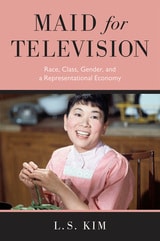
Maid for Television
Race, Class, Gender, and a Representational EconomyL. S. Kim
Rutgers University Press, 2023
Maid for Television examines race, class, and gender relations as embodied in a long history of television servants from 1950 to the turn of the millennium. Although they reside at the visual peripheries, these figures are integral to the idealized American family. Author L. S. Kim redirects viewers' gaze towards the usually overlooked interface between characters, which is drawn through race, class, and gender positioning. Maid for Television tells the stories of servants and the families they work for, in so doing it investigates how Americans have dealt with difference through television as a medium and a mediator.The book philosophically redirects the gaze of television and its projection of racial discourse.
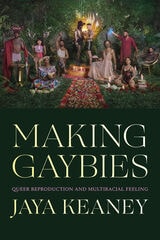
Making Gaybies
Queer Reproduction and Multiracial FeelingJaya Keaney
Duke University Press, 2023
Materializing Democracy
Toward a Revitalized Cultural PoliticsRuss Castronovo and Dana D. Nelson, eds.
Duke University Press, 2002
Covering topics ranging from rights discourse to Native American performance, from identity politics to gay marriage, and from rituals of public mourning to the Clinton-Lewinsky affair, the contributors seek to understand the practices, ideas, and material conditions that enable or foreclose democracy’s possibilities. Through readings of subjects as diverse as Will Rogers, Alexis de Tocqueville, slave narratives, interactions along the Texas-Mexico border, and liberal arts education, the contributors also explore ways of making democracy available for analysis. Materializing Democracy suggests that attention to disparate narratives is integral to the development of more complex, vibrant versions of democracy.
Contributors. Lauren Berlant, Wendy Brown, Chris Castiglia, Russ Castronovo, Joan Dayan, Wai Chee Dimock, Lisa Duggan, Richard R. Flores, Kevin Gaines, Jeffrey C. Goldfarb, Michael Moon, Dana D. Nelson, Christopher Newfield, Donald E. Pease
Melting Pots and Rainbow Nations
Conversations about Difference in the United States and South AfricaJacklyn Cock and Alison Bernstein
University of Illinois Press, 2002
This passionate, intelligent commentary is an invigorating look at the implications of difference and diversity in two contrasting but similar societies: the United States and South Africa. Melting Pots and Rainbow Nations addresses how differences--of gender, race, culture, biology, and sexual orientation--are variously understood and acted on in both countries.
The authors argue that the concepts of difference and diversity, although valuable, are hollow if disconnected from specific social and historical contexts in which power relations create and perpetuate disadvantage. Their thoughtful exploration includes accounts of their own experiences of difference and their perspectives on such pioneering women as Elizabeth Bishop, Frene Ginwala, Audre Lorde, Ruth First, Jane Goodall, and Mamphela Ramphele.
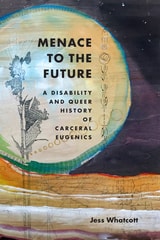
Menace to the Future
A Disability and Queer History of Carceral EugenicsJess Whatcott
Duke University Press, 2024
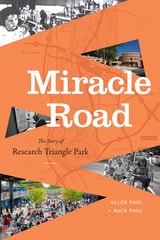
Miracle Road
The Story of Research Triangle ParkAllen Paul and Mack Paul
Duke University Press, 2026
Research Triangle Park in North Carolina (RTP) emerged under the unique circumstances of a poor Southern state that needed to find a way to offset the declining industries of tobacco, furniture, and textiles in the 1950s. Through the sustained commitment of nearby universities, business leaders, and local and state officials, state leaders established the largest science and research park in the United States in an area that was nothing but “possums and pines.” Miracle Road tells this story through the eyes of those at the center of it, like the local black leaders who convinced white officials to desegregate public schools with the justification that it would make the area more appealing to tech companies, or how a chance meeting between the governor and a Danish executive led to North Carolina becoming an epicenter for weight loss drugmakers decades later. Allen Paul and Mack Paul organize the story around major periods in RTP’s growth, showing how RTP came to define the region and the state by the 1990s as well as the major setbacks it encountered in the early 2000s. Breaking down the strategies that led to RTP’s success, like creating new institutions in targeted tech areas to spur activity and factoring quality of life into the regional planning of the area, Miracle Road demonstrates how the story of Research Triangle Park is a fascinating and important case study of urban development in the twenty-first century.
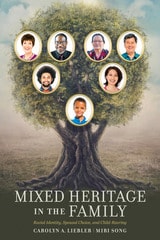
Mixed Heritage in the Family
Racial Identity, Spousal Choice, and ChildrearingCarolyn Liebler
Russell Sage Foundation, 2025
Liebler and Song break new ground by being the first to combine and integrate the study of three aspects of life for people of mixed racial heritage – identity, spouse choice, and childrearing. This integrated approach reveals how complicated racial identification can be, and how it can be expressed in one’s choice of partner or in how one raises their children. The authors draw on census data and interviews with Asian-White, Black-White, and American Indian/Alaska Native-White mixed people to better understand how their identity choices are related to their choice of spouse and how they racially identify and raise their children.
Increasingly, mixed people in the United States are identifying with multiple races. However, the authors find that mixed-race people are not a monolith and that how and why they identify varies considerably between and within each group. They found several common factors that influenced whether mixed-race people choose to identify as biracial, solely White, or solely as a racial minority. These factors include the history of the specific minority race in the U.S., the racial demographics of where they were raised, their social and cultural exposure to their White and non-White backgrounds, their attachment to their racial backgrounds, and how they are seen racially by others.
The way mixed-heritage people identify was closely tied to the race of their spouse. However, having a White spouse did not necessarily mean the mixed-race person felt disconnected from their non-White heritage. White spouses varied in their racial consciousness and their interest in the culture of their mixed-race spouse’s minority ancestry. The spouse’s race, and the nature of racial overlap between the spouses, was also key in the racial upbringing of a mixed-heritage person’s child. In families where the parents share a minority racial heritage, couples lean into their shared ‘family race’, which guides their parenting choices and family life. Many mixed heritage parents found it important to foster racial pride in their children and combat negative racial stereotypes.
Liebler and Song caution against making superficial predictions about the state of race relations in the U.S. based on an increase in the multiracial population. They show that race has not become less salient in the lives of many mixed-race people—American society is not post-racial.
Mixed Heritage in the Family breaks new ground, provides compelling insights in its examination of the lives of mixed-race people, and shows how complicated racial identification can be.
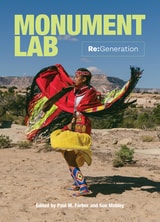
Monument Lab
Re:GenerationEdited by Paul M. Farber and Sue Mobley
Temple University Press, 2026
Monument Lab: Re:Generation presents case studies that travel across America, highlighting local commemorative campaigns dedicated to advancing public memory. Featuring articles and artwork from the country’s leading monument makers, each project includes a framing essay that provides insights into the varied contexts of location, culture, form, and subject matter.
Monument Lab: Re:Generation provides innovative, healing, and practical approaches to the United States’ unreconciled past and divided present facing our nation. In doing so, it invites readers to engage with a broader discourse of monuments and public memory.
Contributors: Thomas J. Adams, Kareal Amenumey, Sháńdíín Brown, Jonathan Jae-an Crisman, Kristen Dorsey, Aruna D'Souza, Mariluz Franco Ortiz, Jacqui Germain, Grace Sanders Johnson, Dani R. Merriman, Deirdre Cooper Owens, Naima Murphy Salcido, Kirk Savage, Clint Smith, Tsione Wolde-Michael, Eric Zimmer, and the editors