Results by title
58 books match the query 'Antislavery movements' and 2 start with m
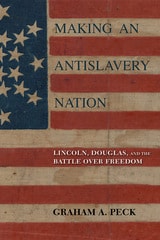
Making an Antislavery Nation
Lincoln, Douglas, and the Battle over FreedomGraham A. Peck
University of Illinois Press, 2020
This sweeping narrative presents an original and compelling explanation for the triumph of the antislavery movement in the United States prior to the Civil War. Abraham Lincoln's election as the first antislavery president was hardly preordained. From the country's inception, Americans had struggled to define slavery's relationship to freedom. Most Northerners supported abolition in the North but condoned slavery in the South, while most Southerners denounced abolition and asserted slavery's compatibility with whites' freedom. On this massive political fault line hinged the fate of the nation.
Graham A. Peck meticulously traces the conflict over slavery in Illinois from the Northwest Ordinance in 1787 to Lincoln's defeat of his archrival Stephen A. Douglas in the 1860 election. Douglas's attempt in 1854 to persuade Northerners that slavery and freedom had equal national standing stirred a political earthquake that brought Lincoln to the White House. Yet Lincoln's framing of the antislavery movement as a conservative return to the country's founding principles masked what was in fact a radical and unprecedented antislavery nationalism. It justified slavery's destruction but triggered the Civil War.
Presenting pathbreaking interpretations of Lincoln, Douglas, and the Civil War's origins, Making an Antislavery Nation shows how battles over slavery paved the way for freedom's triumph in America.
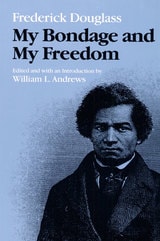
My Bondage and My Freedom
Frederick Douglass
University of Illinois Press, 1988