Results by title
133 books match the query 'Artists' and 8 start with m
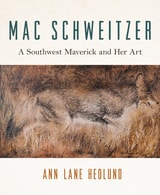
Mac Schweitzer
A Southwest Maverick and Her ArtAnn Lane Hedlund
University of Arizona Press, 2025
Southwest Books of the Year Top Pick
In Tucson during the 1950s, nearly everyone knew, or wanted to know, the southwestern artist Mac Schweitzer. Born Mary Alice Cox in Cleveland, Ohio, in 1921, she grew up a tomboy who adored horses, cowboys, and art. After training at the Cleveland School of Art and marrying, she adopted her maiden initials (M. A. C.) as her artistic name and settled in Tucson in 1946. With a circle of influential friends that included anthropologists, designer-craftsmen, and Native American artists, she joined Tucson’s “Early Moderns,” receiving exhibits, commissions, and awards for her artwork. When she died in 1962, Mac’s artistic legacy faded from public view, but her prize-winning works attest to a thriving career.
Author Ann Lane Hedlund draws from the artist’s letters, photo albums, and published reviews to tell the story of Mac’s creative and adventuresome life. Her watercolors, oil paintings, prints, and sculptures—a diverse body of work never before seen in public—range from naturalistic studies of Sonoran Desert animals to impressionistic landscapes to moody abstractions. A sharp observer of Indigenous life, she sketched and painted scenes of Navajo (Diné), Hopi, O’odham, and Yaqui people and events. These unique portrayals of the Southwest illustrate this saga of a maverick artist rediscovered.
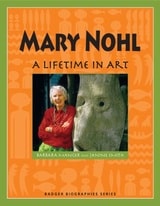
Mary Nohl
A Lifetime in ArtBarbara Manger
Wisconsin Historical Society Press, 2013
LOOK INSIDE THE LIFE — AND HOME — OF LEGENDARY 'OUTSIDER' ARTIST MARY NOHL
"Mary Nohl: A Lifetime in Art" by Barbara Manger and Janine Smith, tells the story of Milwaukee-born artist, Mary Nohl. A prolific and fanciful maker who worked in a variety of media, Nohl was both a mysterious figure and an iconic "outsider" artist. This new addition to the Badger Biographies series captures her life and will capture the imagination of readers, and artists, of all ages.
Nohl didn't just make art — she lived it. From the time she was young, Mary enjoyed making things, from the model airplane that won her a citywide prize to assignments in shop class, where she learned to work with tools.
Her interests in art blossomed during the years she spent training at the Art Institute of Chicago, leading to a lifetime of curiosity and ventures into new artistic media. From pottery to silver jewelry and oil painting to concrete sculpture, Mary explored new ways of making art. Many of her pieces were made from found objects that other people might think of as junk — like chicken bones, bedsprings and sand that she made into concrete.
Nohl, who made her home on the shores of Lake Michigan, decorated the interior of her cottage with bright colors and eye-catching figures in driftwood and glass. During her later years, her home became known as the "Witch's House" — a place of local legend known far beyond Fox Point. Though she died in 2001, Mary's legacy continues. Her art is held at the John Michael Kohler Arts Center in Sheboygan, and her home is listed on the National Register of Historic Places.
The popular Badger Biographies series for young readers explores the lives of famous and not-so-famous figures in Wisconsin history. The Wisconsin Historical Society Press is proud to celebrate the release of this, the 21st book in the series.
Material Witness
The Selected Letters of Fairfield PorterTed Leigh, Editor
University of Michigan Press, 2005
---From the introduction by David Lehman
"In this lifetime of letters, Fairfield Porter reveals the complexity and passion of a protagonist in a novel by Dostoevsky or Henry James."
---Jane Freilicher
Fairfield Porter (1907-75) has been called by poet John Ashbery "perhaps the major American artist of the century." He was also known as a gifted art critic.
Beyond shedding light on his personal views, this collection of Fairfield Porter's letters demonstrates his profound contribution to American art and literature and displays his acumen as a political critic. The letters tell the story of a reserved artist and intellectual, torn between the tensions and pressures he felt among politics, family life, and painting-a man who forged a painting style outside the politically correct artistic perceptions of both left and right.
The collection includes letters from Porter's early travels to the Soviet Union, including a description of an interview with Trotsky, as well as some of his later letters to close friends, including Frank O'Hara, Kenneth Koch, Rod Padgett, Larry Rivers, and James Schuyler, among others. While the letters reveal many sides of the brilliant and independent-minded Porter, they also provide a cultural context for the time period and the circle of artists and poets with whom Porter associated. The letters not only tell a story of the artist himself but are also valuable documents of the political and artistic upheavals of the 1930s, 40s, and 50s.
This rich collection is introduced by poet and critic David Lehman and includes notes by Justin Spring, author of Porter's biography.
Medieval Worlds
Barbarians, Heretics and Artists in the Middle AgesArno Borst
University of Chicago Press, 1992
Clearly interested in the forms of medieval behavior which gave rise to the seeds of modern society, Borst focuses on three in particular that gave momentum to medieval religious, social, and intellectual movements: the barbaric, heretical, and artistic. Borst concludes by reflecting on his own life as a scholar and draws out lessons for us from the turbulence of the Middle Ages.

Memories of Violence
Artists and the Curation of Mnemonic PeaceStefanie Kappler
University of Michigan Press, 2027
In wartime, artists often play an important role in keeping social structures alive and mitigating suffering. Yet art can also be used as a tool for the propagation of violence or the consolidation of an unjust status quo; the brutal iconography used on the murals in Belfast during the Troubles being a prominent example. Memories of Violence investigates the potential of artwork to bring to the fore often-invisible configurations of violence that span across the globe.
Many peace processes fail to address the legacies of violence and to offer meaningful avenues of repair on the part of perpetrators, some of whom are outside the physical space in which violence was, or continues to be, experienced. Stefanie Kappler looks at situations of violence where societies are implicated in and continue to benefit from the legacies of violence, particularly the peace processes of South Africa, Bosnia-Herzegovina, and Northern Ireland. Bringing together Peace and Conflict Studies with Memory Studies, Kappler examines how art offers an opportunity to achieve a mnemonic peace—a memory-oriented peace that acknowledges the complex ways in which historical violence and its legacies are constituted. While recognizing the power structures that limit artists and curators, Memories of Violence reveals how they can play a role in addressing situations of complex implication; amplify the voices that call for acknowledgment, reparations, and solidarity; and suggest avenues for facilitating this process.
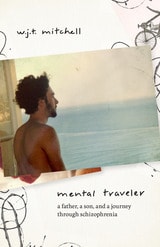
Mental Traveler
A Father, a Son, and a Journey through SchizophreniaW. J. T. Mitchell
University of Chicago Press, 2020
Gabriel Mitchell was diagnosed with schizophrenia at age twenty-one and died by suicide eighteen years later. He left behind a remarkable archive of creative work and a father determined to honor his son’s attempts to conquer his own illness. Before his death, Gabe had been working on a film that would show madness from inside and out, as media stereotype and spectacle, symptom and stigma, malady and minority status, disability and gateway to insight. He was convinced that madness is an extreme form of subjective experience that we all endure at some point in our lives, whether in moments of ecstasy or melancholy, or in the enduring trauma of a broken heart. Gabe’s declared ambition was to transform schizophrenia from a death sentence to a learning experience, and madness from a curse to a critical perspective.
Shot through with love and pain, Mental Traveler shows how Gabe drew his father into his quest for enlightenment within madness. It is a book that will touch anyone struggling to cope with mental illness, and especially for parents and caregivers of those caught in its grasp.
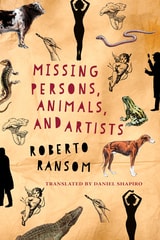
Missing Persons, Animals, and Artists
Roberto Ransom
Swan Isle Press, 2017
Missing Persons, Animals, and Artists is the follow-up to Ransom’s highly acclaimed A Tale of Two Lions, praised by Ignacio Padilla as “the best Mexican literary work I have read in recent years. . . . [It] heralds a pen capable of that rarest of privileges in our letters: attaining the comic and profoundly human through a perfect simplicity.” This collection of short stories has been translated with great care by Daniel Shapiro.
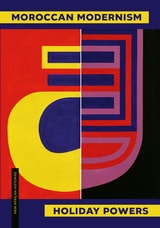
Moroccan Modernism
Holiday Powers
Ohio University Press, 2024
In the years after independence, new art forms and practices flourished at the Casablanca École des beaux-arts, transforming the colonial relic into a wellspring of Moroccan modernism. Casablanca School artists, including Farid Belkahia, Mohammed Chebaa, and Mohammed Melehi, defined the modernist movement in Morocco. Their visual arts activism was displayed at their iconic outdoor exhibition in the Djemaa al-Fna plaza in Marrakech, in their collaborations with the cultural and political journal Souffles, through their radical anticolonial pedagogy, and through their use of abstraction to expand the horizons of postcolonial national culture.
In Moroccan Modernism, Holiday Powers argues that the pedagogy and transnational solidarities of this generation of artists were intrinsic to their broader artistic projects. She advances a novel reading of Moroccan modernism that is rooted in its cosmopolitan national context and in Pan-Africanism and Pan-Arabism, the transnational anticolonial intellectual movements that defined the era.