Results by title
490 books match the query 'Asian' and 34 start with m
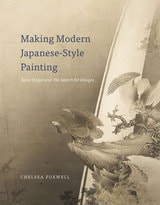
Making Modern Japanese-Style Painting
Kano Hogai and the Search for ImagesChelsea Foxwell
University of Chicago Press, 2015
Chelsea Foxwell sheds light on interlinked trends in Japanese nationalist discourse, government art policy, American and European commentary on Japanese art, and the demands of export. The seminal artist Kano Hogai (1828–88) is one telling example: originally a painter for the shogun, his art eventually evolved into novel, eerie images meant to satisfy both Japanese and Western audiences. Rather than simply absorbing Western approaches, nihonga as practiced by Hogai and others broke with pre-Meiji painting even as it worked to neutralize the rupture.
By arguing that fundamental changes to audience expectations led to the emergence of nihonga—a traditional interpretation of Japanese art for a contemporary, international market—Making Modern Japanese-Style Painting offers a fresh look at an important aspect of Japan’s development into a modern nation.
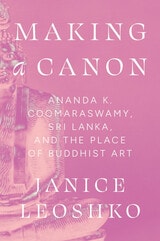
Making a Canon
Ananda K. Coomaraswamy, Sri Lanka, and the Place of Buddhist ArtJanice Leoshko
University of Chicago Press, 2024
An early interpreter of Buddhist art to the West, Ananda Kentish Coomaraswamy laid the foundation of what would become the South Asian visual canon, particularly through his efforts to understand how Buddhist art emerged and developed. In Making a Canon, Janice Leoshko examines how Coomaraswamy’s experience as the director of a mineralogical survey in Sri Lanka shaped his understanding of South Asian art and religion. Along the way, she reveals how Coomaraswamy’s distinctive repetition of Sri Lankan visual images in his work influenced the direction of South Asia’s canon formation and left a lasting impression on our understanding of Buddhist art.
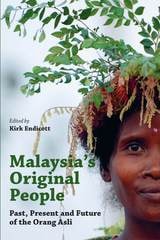
Malaysia's Original People
Past, Present and Future of the Orang AsliEdited by Kirk Endicott
National University of Singapore Press, 2015
The chapters in the present volume provide a comprehensive survey of current understandings of Malaysia’s Orang Asli communities, covering their origins and history, cultural similarities and differences, and they ways they are responding to the challenges posed by a rapidly changing world. The authors, a distinguished group of Malaysian (including Orang Asli) and international scholars with expertise in anthropology, archaeology, biology, education, therapy, geography and law, also show the importance of Orang Asli studies for the anthropological understanding of small-scale indigenous societies in general.
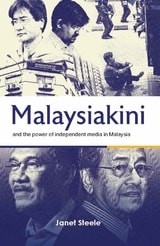
Malaysiakini and the Power of Independent Media in Malaysia
Janet Steele
National University of Singapore Press, 2023
Founded in 1999 by Steven Gan and Premesh Chandran, Malaysiakini was one of many online portals that sprung up in the wake of Reformasi, a period of public protests sparked by Prime Minister Mahathir Mohammad’s 1998 firing of his deputy Anwar Ibrahim. At first, there was no reason to think that Malaysiakini would be anything momentous. However, Malaysiakini wanted to do something much more important than just reporting on Reformasi—its founders intended to bring independent journalism to Malaysia in hopes of changing the country for the better.
Based on more than fifteen years of observation of Malaysiakini's newsroom practices, Malaysiakini and the Power of Independent Media in Malaysia is an intimate portrait of the people and issues behind Malaysia’s only truly independent media outlet. The author illustrates Malaysiakini’s unique mix of idealism in action, studying how sensitive issues such as race, religion, politics, and citizenship are discussed in the newsroom. This attention to the inner workings of one of the most important media institutions in the region yields not only a deep newsroom ethnography but a nuanced, rich history of modern Malaysia.
Malaysian "Bail Outs"?
Capital Controls, Restructuring and RecoveryTranslated by Wong Sook, K.S. Jomo, and Chin Kok Fay
National University of Singapore Press, 2005
Man in a Hurry
Murray MacLehose and Colonial Autonomy in Hong KongRay Yep
Hong Kong University Press, 2024
Man in a Hurry explores the latest available archival materials and re-examines MacLehose’s pivotal governorship in Hong Kong (1971–1982). MacLehose arrived in the challenging 1970s, when there were expectations for social reforms, uneasiness in the relationship between Hong Kong and London, and the 1997 factor looming large. The governor successfully carried out various social reforms and he also handled various major issues, including the anti-corruption campaign, the Vietnamese refugee crisis, and the granting of land lease of the New Territories beyond 1997. Yep unveils the tension and bargaining between the British government and explains how interest of the colony could be asserted, defended, and negotiated. This book is an important study of Hong Kong’s "golden years" when the city’s economy took off. It is a significant contribution to our understanding of how local autonomy was defined.
Manufacturing Modern Japanese Literature
Publishing, Prizes, and the Ascription of Literary ValueEdward Mack
Duke University Press, 2010
Masculinity Besieged?
Issues of Modernity and Male Subjectivity in Chinese Literature of the Late Twentieth CenturyXueping Zhong
Duke University Press, 2000
Before the 1990s onslaught of popular culture decentered the role of intellectuals within the nation, they had come to embody Chinese masculinity during the previous decade. The focus on masculinity in literature had become unprecedented in scale and the desire for “real men” began to permeate Chinese popular culture, making icons out of Rambo and Takakura Ken. Stories by Zhang Xianliang and Liu Heng portraying male anxiety about masculine sexuality are employed by Zhong to show how “marginal” males negotiate their sexual identities in relation to both women and the state. Looking at writers popular among not only the well-educated but also the working and middle classes, she discusses works by Han Shaogong, Yu Hua, and Wang Shuo and examines instances of self-loathing male voices, particularly as they are articulated in Mo Yan’s well-known work Red Sorghum. In her last chapter Zhong examines “roots literature,” which speaks of the desire to create strong men as a part of the effort to create a geopolitically strong Chinese nation. In an afterword, Zhong situates her study in the context of the 1990s.
This book will be welcomed by scholars of Chinese cultural studies, as well as in literary and gender studies.

Mechademia 8
Tezuka’s Manga LifeFrenchy Lunning
University of Minnesota Press, 2013
Known as the “Walt Disney of Japan” it is no surprise that Tezuka Osamu is still the best-known manga creator to Western fans. Current scholarship has uncovered the profound complexity and ambiguity not only of his work but of the man, the artist, and his life—dismantling his position as the god of manga.
Contributors to this volume of Mechademia—a series devoted to creative and critical work on anime, manga, and the fan arts—analyze Tezuka and his complicated approaches toward life and nonlife on earth, as well as his effect on the lives of other manga artists. Using essays and reprints of Japanese manga on Tezuka, this book questions his influence and attitudes toward the nonhuman, evolutionary theory, the aesthetic lineage of contemporary manga, incipient feminism in the reinscription of the nonhuman feminine, the sexual politics of manga bodies, the origins of the moe culture, and the styles of didacticism revealing the digressions of insects and classical modes, among others.
The authors offer varying perspectives on the historical transformations in production, distribution, and reception that gradually integrated and differentiated an overlapping series of markets and readerships in the postwar era. Divided into four sections that explore different “lives”—“Nonhuman Life,” “Media Life,” “A Life in Manga,” and “Everyday Life”—Mechademia 8 serves as a prehistory of the impersonal politics of the present while tracing Tezuka’s legacy.
Contributors: Akatsuka Fujio; Anno Moyoko; Linda H. Chance, U of Pennsylvania; Jonathan Clements; Hideaki Fujiki, Nagoya U; Patrick W. Galbraith; Verina Gfader, U of Huddersfield; Alicia Gibson; G. Clinton Godart, USC; Yorimitsu Hashimoto, Osaka U; Ryan Holmberg; Hikari Hori, Columbia U; Mary A. Knighton, College of William and Mary; Thomas Lamarre, McGill U; Christine L. Marran, U of Minnesota; Natsume Fusanosuke, Gakushuin U, Tokyo; Ōtsuka Eiji, Kobe Design U; Baryon Tensor Posadas; Renato Rivera Rusca, Meiji U; Frederik L. Schodt; Marc Steinberg, Concordia U; Tezuka Osamu; Toshiya Ueno, Wako U, Tokyo; Matthew Young.
Media Culture in Transnational Asia
Convergences and DivergencesHyesu Park
Rutgers University Press, 2020
Metamorphosis
Studies in Social and Political Change in MyanmarEdited by Renaud Egreteau and François Robinne
National University of Singapore Press, 2015
But underlying recent political transitions are other wrenching social changes and shocks, a set of transformations less clearly mapped out. Relations between ethnic and religious groups, in the context of Burma’s political model of a state composed of ethnic groups, are a particularly important “unsolved equation”.
The editors use the notion of metamorphosis to look at Myanmar today and tomorrow—a term that accommodates linear change, stubborn persistence and the possibility of dramatic transformation. Divided into four sections, on politics, identity and ethnic relations, social change in fields like education and medicine, and the evolutions of religious institutions, the volume takes a broad view, combining an anthropological approach with views from political scientists and historians. This volume is an essential guide to the political and social challenges ahead for Myanmar.
Method as Method
Carlos Rojas, special issue editor
Duke University Press, 2020
Contributors. Yomi Braester, Hsiao-hung Chang, Margaret Hillenbrand, Chun-kit Ko, Belinda Kong, Petrus Liu, Laikwan Pang, Christopher Rea, Carlos Rojas, Shuang Shen, Robin Visser, Lorraine Wong
Mexico Mystique
The Coming Sixth World of ConsciousnessFrank Waters
Ohio University Press, 1989
In Mexico Mystique Frank Waters draws us deeply into the ancient but still-living myths of Mexico. To reveal their hidden meanings and their powerful symbolism, he brings to bear his gift for intuitive imagination as well as a broad knowledge of anthropology, Jungian psychology, astrology, and Eastern and esoteric religions. He offers a startling interpretation of the Mayan Great Cycle — our present Fifth World — whose beginning has been projected to 3113 B.C., and whose cataclysmic end has been predicted by 2011 A.D.
Migration and Diaspora
Exegetical Voices of Women in Northeast Asian CountriesHisako Kinukawa
SBL Press, 2014
Engage and explore readings from a multi-religious, globalized, multicultural region
The papers in this collection were presented at the third meeting of the Society of Asian Biblical Studies held at the Sabah Theological Seminary, Malaysia in 2012. The essays represent the work of women/feminist scholars in biblical hermeneutics in this region who have raised questions against traditional, male-centered interpretations, offering distinct perspectives based on their experiences of pain, subjugation, and a forced sacrificial philosophy of life.
Features:
- Articles focused on finding justice for women through dialogue with biblical texts
- Reflections on migration, diaspora, displacement, discrimination, and conditions generated by poverty and systemic oppression
- Five essays from women in China, Japan, and Korea
Minor China
Method, Materialisms, and the AestheticHentyle Yapp
Duke University Press, 2021

Miracle Fever
PoemsMark Anthony Cayanan
Northwestern University Press, 2027
Poetically delving into the spectacle and incredulity of a real-life religious controversy
In the early 1990s, a small town in the Philippines became the epicenter of religious controversy when a teenager claimed to be visited by the Virgin Mary. News of these visions, broadcast over national media, would prompt over a million to flock to the town, hoping to catch a glimpse of the teenager and witness inexplicable events: a statue of the Virgin weeping blood, the sun dancing and throbbing into various fantastic colors, or a bevy of doves appearing overhead during Mass.
Miracle Fever, chronicling the life of this town, is a poetry sequence revolving around these apparitions. Documentary in its scrutiny and distortion of real-life events, novelistic in its plot trajectory, and lyric in its imagistic intensity, Miracle Fever offers a fabulist model of reality, built through poems delivered in the form of dramaticules, timelines, and photo captions. These fugitive presences, bearing out and unsettling the complex ethics of representation that the sequence cleaves to, foreground the element of spectacle surrounding the apparitions and bring new light to the ever-shifting antecedents bound by shared history.
Misers, Shrews, and Polygamists
Sexuality and Male-Female Relations in Eighteenth-Century Chinese FictionKeith McMahon
Duke University Press, 1995
In many examples of rare erotic fiction, and in other works as well-known as Dream of the Red Chamber, Keith McMahon identifies a sexual economy defined by the figures of the "miser" and the "shrew"—caricatures of the retentive, self-containing man and the overflowing, male-enervating woman. Among these and other characters, the author explores the issues surrounding the practice of polygamy, the logic of its overvaluation of masculinity, and the nature of sexuality generally in Chinese society. How does the man with many wives manage and justify his sexual authority? Why and how might he escape or limit this presumed authority, sometimes to the point of portraying himself as abject before the shrewish woman? How do women accommodate or coddle the man, or else oppose, undermine, or remold him? And in what sense does the man place himself lower than the spiritually and morally superior woman?
The most extensive English-language study of Chinese literature from the eighteenth century, this examination of polygamy will interest not only students of Chinese history, culture, and literature but also all those concerned with histories of gender and sexuality.
Mishima
A Vision of the VoidMaguerite Yourcenar
University of Chicago Press, 2001
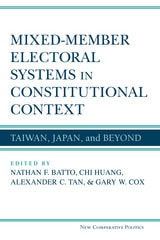
Mixed-Member Electoral Systems in Constitutional Context
Taiwan, Japan, and BeyondEdited by Nathan F. Batto, Chi Huang, Alexander C. Tan, and Gary W. Cox
University of Michigan Press, 2016
The findings presented here demonstrate that the success of electoral reform depends not only on the specification of new electoral rules per se but also on the political context—and especially the constitutional framework—within which such rules are embedded.
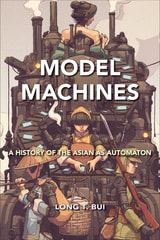
Model Machines
A History of the Asian as AutomatonLong T. Bui
Temple University Press, 2022
In the contemporary Western imagination, Asian people are frequently described as automatons, which disavows their humanity. In Model Machines, Long Bui investigates what he calls Asian roboticism or the ways Asians embody the machine and are given robotic characteristics.
Bui offers the first historical overview of the overlapping racialization of Asians and Asian Americans through their conflation with the robot-machine nexus. He puts forth the concept of the “model machine myth,” which holds specific queries about personhood, citizenship, labor, and rights in the transnational making of Asian/America.
The case studies in Model Machines chart the representation of Chinese laborers, Japanese soldiers, Asian sex workers, and other examples to show how Asians are reimagined to be model machines as a product of globalization, racism, and colonialism. Moreover, it offers examples of how artists and everyday people resisted that stereotype to consider different ways of being human. Starting from the early nineteenth century, the book ends in the present with the new millennium, where the resurgence of China presages the “rise of the machines” and all the doomsday scenarios this might spell for global humanity at large.
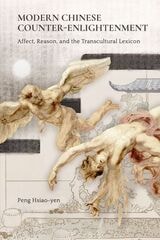
Modern Chinese Counter-Enlightenment
Affect, Reason, and the Transcultural LexiconPeng Hsiao-yen
Hong Kong University Press, 2023
In Modern Chinese Counter-Enlightenment, Peng Hsiao-yen argues that a trend of Counter-Enlightenment had grown from the late Qing to the May Fourth era in the 1910s to the 1920s and continued to the 1940s. She demonstrates how Counter-Enlightenment was manifested with case studies such as Lu Xun’s writings in the late 1900s, the Aesthetic Education movement from the 1910s to 1920s, and the Science and Lifeview debate in the 1920s. During the period, the life philosophy movement, highlighting the epistemic debate on affect and reason, is connected with its counterparts in Germany, France, and Japan. The movement had a widespread and long-term impact on Chinese philosophy and literature. Using the transcultural lexicon as methodology, this book traces how the German term Lebensanschauung (life view), a key concept in Rudolf Eucken’s life philosophy, constituted a global tide of Counter-Enlightenment that influenced the thought of leading Chinese intellectuals in the Republican era. Peng contends that Chinese intellectuals’ transcultural connections with others in the philosophical pursuit of knowledge triggered China’s self-transformation. She successfully reconstructs the missing link in the Chinese theater of the worldwide dialectic of Enlightenment and Counter-Enlightenment.
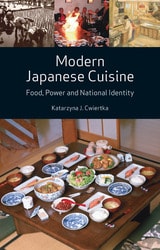
Modern Japanese Cuisine
Food, Power and National IdentityKatarzyna J. Cwiertka
Reaktion Books, 2015
Katarzyna J. Cwiertka demonstrates that key shifts in the Japanese diet were, in many cases, a consequence of modern imperialism. Exploring reforms in military catering and home cooking, wartime food management and the rise of urban gastronomy, Cwiertka shows how Japan’s numerous regional cuisines were eventually replaced by a set of foods and practices with which the majority of Japanese today ardently identify.
The result of over a decade of research, Modern Japanese Cuisine is a fascinating look at the historical roots of some of the world’s best cooking and will provide appetizing reading for scholars of Japanese culture and foodies alike.
Modern Japanese Literary Studies
Seth Jacobowitz and Jonathan E. Abel, Editors
University of Michigan Press, 2026
Modern Tibetan Literature and Social Change
Lauran R. Hartley and Patricia Schiaffini-Vedani, eds.
Duke University Press, 2008
The contributors explore the circumstances that led to the development of modern Tibetan literature, its continuities and breaks with classical Tibetan literary forms, and the ways that writers use forms such as magical realism, satire, and humor to negotiate literary freedom within the People’s Republic of China. They provide crucial information about Tibetan writers’ lives in China and abroad, the social and political contexts in which they write, and the literary merits of their oeuvre. Along with deep social, cultural, and political analysis, this wealth of information clarifies the complex circumstances that Tibetan writers face in the PRC and the diaspora. The contributors consider not only poetry, short stories, and novels but also other forms of cultural production—such as literary magazines, films, and Web sites—that provide a public forum in the Tibetan areas of the PRC, where censorship and restrictions on public gatherings remain the norm. Modern Tibetan Literature and Social Change includes a previously unavailable list of modern Tibetan works translated into Western languages and a comprehensive English-language index of names, subjects, and terms.
Contributors: Pema Bhum, Howard Y. F. Choy, Yangdon Dhondup, Lauran R. Hartley, Hortsang Jigme, Matthew T. Kapstein, Nancy G. Lin, Lara Maconi, Françoise Robin, Patricia Schiaffini-Vedani, Ronald D. Schwartz, Tsering Shakya, Sangye Gyatso (aka Gangzhün), Steven J. Venturino,
Riika Virtanen
Modernism and the Nativist Resistance
Contemporary Chinese Fiction from TaiwanSung-sheng Yvonne Chang
Duke University Press, 1993
Situating her subject in its historical context, Sung-sheng Yvonne Chang traces the connection between Taiwan's Modernists and the liberal scholars of pre-Communist China. She discusses the Modernists' ambivalent relationship with contemporary Taiwan's conservative culture, and provides a detailed critical survey of the strife between the Modernists and the socialistically inclined, anti-Western Nativists. Chang's approach is comprehensive, combining Chinese and comparative perspectives. Employing the critical insights of Raymond Williams, Peter Burger, M. M. Bahktin, and Fredric Jameson, she investigates the complex issues involved in Chinese writers' appropriation of avant-gardism, aestheticism, and various other Western literary concepts and techniques. Within this framework, Chang offers original, challenging interpretations of major works by the best-known Chinese Modernists from Taiwan.
As an intensive introduction to a literature of considerable quality and impact, and as a case study of the global spread of Western literary Modernism, this book will be of great interest to students of Chinese and comparative literature, and to those who wish to understand the broad patterns of twentieth-century literary history.
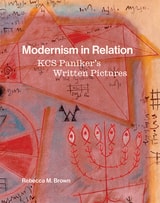
Modernism in Relation
KCS Paniker’s Written PicturesRebecca M. Brown
J. Paul Getty Trust, The, 0
This innovative book reimagines modernism through the illegible scribbles and vibrant colors of southern Indian artist KCS Paniker.
KCS Paniker (1911–1977) is a canonical figure in India’s twentieth-century modernism. He was principal of the Madras School of Art and founder of one of the world’s longest-standing artists’ communities. Yet, even within India, he remains a marginal figure, positioned at the periphery of a dominant art world centered in the north. Paniker’s best-known body of work, the Words and Symbols series (1963–77), calls on us to reconsider how knowledge is produced and disseminated in a postcolonial, decolonizing world. These “written pictures”—paintings filled with symbols, tables, equations, and illegible scribbles—invite decoding, only to undermine the pursuit of wholeness or stable meaning.
Paniker famously called Paul Klee his “guru.” In this book, art historian Rebecca M. Brown explores what that might mean, moving beyond tracing influence and derivation to embrace a fuller sense of artistic relation across geography and time. Featuring over 100 stunning illustrations, Modernism in Relation explores the dynamic, twisting currents of modernism, tracing how Paniker navigated its waters on his own terms—abandoning prescriptions for what modern art should be or what Indian modernism should look like. The book reveals a maker seeking new creative languages, challenging ways of knowing, and exploring the unpredictable, ever-changing nature of relation.
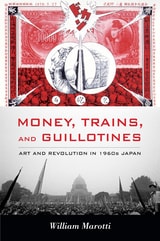
Money, Trains, and Guillotines
Art and Revolution in 1960s JapanWilliam Marotti
Duke University Press, 2013
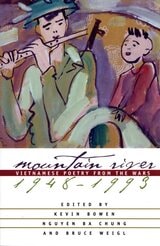
Mountain River
Vietnamese Poetry from the Wars, 1948-1993Kevin Bowen
University of Massachusetts Press, 1998
This landmark bilingual collection presents a comprehensive selection of Vietnamese poetry spanning nearly fifty years of warfare and its aftermath, from the Indochinese War (1946-1954) through the Vietnam War (1961-1975) and into the post-war period. Edited and translated by renowned Vietnam War scholars and poets Kevin Bowen and Bruce Weigl, in collaboration with Vietnamese poet and editor Nguyen Ba Chung, this volume captures the voices of Vietnamese writers who experienced, witnessed, or processed the transformative conflicts that shaped modern Vietnam.
Encompassing poetry from multiple generations, these poems reflect on the diverse responses to conflict: some express patriotic commitment, others grapple with loss and trauma, while many explore the intimate human experiences of war. Mountain River demonstrates how Vietnamese poets drew upon a rich literary tradition while creating new forms of expression to address the unprecedented scale of modern warfare. The result is a collaborative effort that represents a significant achievement in postwar Vietnamese-American literary relations and cross-cultural translation.
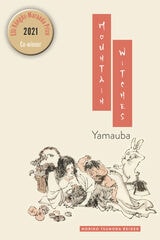
Mountain Witches
YamaubaNoriko T. Reider
Utah State University Press, 2021
Situating the yamauba within the construct of yōkai and archetypes, Noriko T. Reider investigates the yamauba attributes through the examination of narratives including folktales, literary works, legends, modern fiction, manga, and anime. She traces the lineage of a yamauba image from the seventh-century text Kojiki to the streets of Shibuya, Tokyo, and explores its emergence as well as its various, often conflicting, characteristics. Reider also examines the adaptation and re-creation of the prototype in diverse media such as modern fiction, film, manga, anime, and fashion in relation to the changing status of women in Japanese society.
Offering a comprehensive overview of the development of the yamauba as a literary and mythic trope, Mountain Witches is a study of an archetype that endures in Japanese media and folklore. It will be valuable to students, scholars, and the general reader interested in folklore, Japanese literature, demonology, history, anthropology, cultural studies, gender studies, and the visual and performing arts.
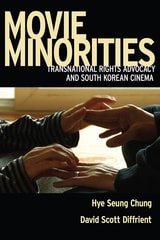
Movie Minorities
Transnational Rights Advocacy and South Korean CinemaHye Seung Chung and David Scott Diffrient
Rutgers University Press, 2021
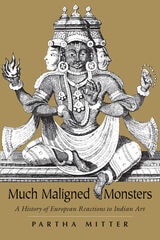
Much Maligned Monsters
A History of European Reactions to Indian ArtPartha Mitter
University of Chicago Press, 1992
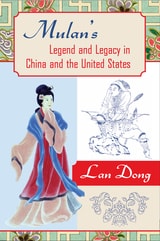
Mulan's Legend and Legacy in China and the United States
Authored by Lan Dong
Temple University Press, 2010
Mulan, the warrior maiden who performed heroic deeds in battle while dressed as a male soldier, has had many incarnations from her first appearance as a heroine in an ancient Chinese folk ballad. Mulan’s story was retold for centuries, extolling the filial virtue of the young woman who placed her father's honor and well-being above her own. With the publication of Maxine Hong Kingston’s The Woman Warrior in the late 1970s, Mulan first became familiar to American audiences who were fascinated with the extraordinary Asian American character. Mulan’s story was recast yet again in the popular 1998 animated Disney film and its sequel.
In Mulan’s Legend and Legacy in China and the United States, Lan Dong traces the development of this popular icon and asks, "Who is the real Mulan?" and "What does authenticity mean for the critic looking at this story?" Dong charts this character’s literary voyage across historical and geographical borders, discussing the narratives and images of Mulan over a long time span—from premodern China to the contemporary United States to Mulan’s counter-migration back to her homeland.
As Dong shows, Mulan has been reinvented repeatedly in both China and the United States so that her character represents different agendas in each retelling—especially after she reached the western hemisphere. The dutiful and loyal daughter, the fierce, pregnant warrior, and the feisty teenaged heroine—each is Mulan representing an idea about female virtue at a particular time and place.

Murder Most Modern
Detective Fiction and Japanese CultureSari Kawana
University of Minnesota Press, 2008
The quintessential international genre, detective fiction often works under the guise of popular entertainment to expose its extensive readership to complex moral questions and timely ethical dilemmas. The first book-length study of interwar Japanese detective fiction, Murder Most Modern considers the important role of detective fiction in defining the country’s emergence as a modern nation-state.
Kawana explores the interactions between the popular genre and broader discourses of modernity, nation, and ethics that circulated at this pivotal moment in Japanese history. The author contrasts Japanese works by Edogawa Ranpo, Unno Juza, Oguri Mushitaro, and others with English-language works by Edgar Allan Poe, Dashiell Hammett, and Agatha Christie to show how Japanese writers of detective fiction used the genre to disseminate their ideas on some of the most startling aspects of modern life: the growth of urbanization, the protection and violation of privacy, the criminalization of abnormal sexuality, the dehumanization of scientific research, and the horrors of total war.
Kawana’s comparative approach reveals how Japanese authors of the genre emphasized the vital social issues that captured the attention of thrill-seeking readers-while eluding the eyes of government censors.
Sari Kawana is assistant professor of Japanese at the University of Massachusetts, Boston.
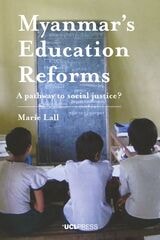
Myanmar's Education Reforms
A pathway to social justice?Marie Lall
University College London, 2020