Results by title
279 books match the query 'Biblical Criticism & Interpretation' and 10 start with m
Matthew within Judaism
Israel and the Nations in the First GospelAnders Runesson
SBL Press, 2020
In this collection of essays, leading New Testament scholars reassess the reciprocal relationship between Matthew and Second Temple Judaism. Some contributions focus on the relationship of the Matthean Jesus to torah, temple, and synagogue, while others explore theological issues of Jewish and gentile ethnicity and universalism within and behind the text.
Matthew’s Parable of the Royal Wedding Feast
A Sociorhetorical InterpretationRuth Christa Mathieson
SBL Press, 2023
Ruth Christa Mathieson’s unique reading of Matthew’s parable of the royal wedding feast (Matt 22:1–14), which concludes with the king’s demand that one of the guests be bound and cast out into the outer darkness, focuses on the means of the underdressed guest’s expulsion. Using sociorhetorical interpretation, Mathieson draws the parable into conversation with early Jewish narratives of the angel Raphael binding hands and feet (1 Enoch; Tobit) and the protocol for expelling individuals from the community in Matt 18. She asserts that readers are invited to consider if the person who is bound and cast out is a danger to the little ones of the community of faith unless removed and restrained.
Metaphor, Morality, and the Spirit in Romans 8
1-17William E. W. Robinson
SBL Press, 2016
Engage compelling arguments that challenge prominent positions in Pauline studies
In this innovative book, William E. W. Robinson takes the reader on a journey through Romans 8:1–17 using Conceptual Metaphor Theory and Conceptual Integration Theory. Robinson delineates the underlying cognitive metaphors, their structure, their function, what they mean, and how Paul’s audiences then and now are able to comprehend their meaning. He examines each metaphor in the light of relevant aspects of the Greco-Roman world and Paul’s Jewish background. Robinson contends that Paul portrays the Spirit as the principal agent in the religious-ethical life of believers. At the same time, his analysis demonstrates that the conceptual metaphors in Romans 8:1–17 convey the integral role of believers in ethical conduct. In the process, he addresses thorny theological issues such as whether Spirit and flesh signal an internal battle within believers or two conflicting ways of life. Finally, Robinson shows how this study is relevant to related Pauline passages and challenges scholars to incorporate these methods into their own investigation of biblical texts.
Features:
- Sustained argument that sheds new light on how Paul communicates with his audiences
- Substantial contribution to current debates about central theological concepts
- Conceptual Metaphor Theory and Conceptual Integration Theory applied to the metaphors in Romans 8:1-17
Migration and Diaspora
Exegetical Voices of Women in Northeast Asian CountriesHisako Kinukawa
SBL Press, 2014
Engage and explore readings from a multi-religious, globalized, multicultural region
The papers in this collection were presented at the third meeting of the Society of Asian Biblical Studies held at the Sabah Theological Seminary, Malaysia in 2012. The essays represent the work of women/feminist scholars in biblical hermeneutics in this region who have raised questions against traditional, male-centered interpretations, offering distinct perspectives based on their experiences of pain, subjugation, and a forced sacrificial philosophy of life.
Features:
- Articles focused on finding justice for women through dialogue with biblical texts
- Reflections on migration, diaspora, displacement, discrimination, and conditions generated by poverty and systemic oppression
- Five essays from women in China, Japan, and Korea

Milton’s Earthly Paradise
A Historical Study of EdenJoseph E. Duncan
University of Minnesota Press, 1972
Milton's Earthly Paradise was first published in 1972. Minnesota Archive Editions uses digital technology to make long-unavailable books once again accessible, and are published unaltered from the original University of Minnesota Press editions.
This study provides a history of the changing interpretations of the first earthly paradise—the garden of Eden—in Western thought and relates Paradise Lost and other literary works to this paradise tradition. The author traces the beginnings of the tradition as they appear in the Bible and in classical literature and shows how these two strains were joined in early Christian and medieval literature. His emphasis, however, is on the relation of Paradise Lost to Renaissance commentary and to other literary works of the period dealing with the paradise story.
Professor Duncan views Paradise Lost as one of many Renaissance works that reveal an untiring effort to understand and explain the first chapters of Genesis. In the rational and humanistic commentary of the Renaissance, he explains, the aim was to provide an interpretation of the literal sense of the Scriptural account that was credible, detailed, and historically valid. He finds that the cumulative influence of the commentary is reflected in Milton's attention to the location of paradise, the emphasis on the natural and the rational in his description of paradise, and in the importance of the typological relationship between the terrestrial and celestial paradises. This illuminating discussion makes it clear that Milton's re-creation of paradise is not only superb poetry but also a penetrating account of the origins of man, involving highly complex and controversial issues.
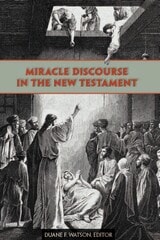
Miracle Discourse in the New Testament
Duane F. Watson
SBL Press, 2012
Mixed Feelings and Vexed Passions
Exploring Emotions in Biblical LiteratureF. Scott Spencer
SBL Press, 2017
A ground-breaking collection exploring the rich array of emotions in biblical literature
An international team of Hebrew Bible and New Testament scholars offers incisive case studies of passions displayed by divine and human figures in the biblical texts ranging from joy, happiness, and trust to grief, hate, and disgust. Essays address how biblical characters' feelings affect their relationship with God, one another, and the world and how these feelings mix together, for good or ill, for flourishing or vexation. Deeply engaged with both ancient and modern contexts, including the burgeoning interdisciplinary study of emotion in the humanities and sciences, these essays break down the artificial divide between reason and passion, cognition and emotion, thought and feeling in biblical study.
Features
- Case studies drawn from multiple genres across the Bible: narrative, prophets, poetry, wisdom, Gospels, and letters
- Helpful select bibliographies of interdisciplinary resources at the end of each essay
- Critical balance between theory and practice and between method and close textual analysis
- Distinctive ancient Hebrew and Greek uses of emotional terms and concepts compared with each other and with evolving understandings in Western culture
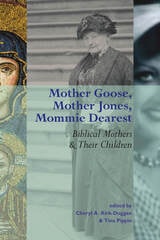
Mother Goose, Mother Jones, Mommie Dearest
Biblical Mothers and Their ChildrenCheryl A. Kirk-Duggan
SBL Press, 2009
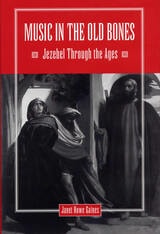
Music in the Old Bones
Jezebel Through the AgesJanet Howe Gaines
Southern Illinois University Press, 1999
An alien, a polytheist from Phoenicia, the biblical Queen Jezebel posed a serious threat to the stability of the Israelites' single male deity. So powerful was this threat that writers through the ages have portrayed her as the incarnation of feminine evil, and her name has become synonymous with the misogynist view of women as seductresses.
Janet Howe Gaines argues that the bride of the Israelite king Ahab became a convenient scapegoat for biblical writers who portrayed her as the primary force behind their nation's apostasy. The biblical account presents the queen as a murderer, as a disruptive force for evil. Despised, the strong-willed Jezebel is still one of the most intriguing women of the Bible.
Music in the Old Bones is a guide to the eternal Jezebel story. The first part of this illustrated study is a detailed analysis that explores the biblical tale from traditional and feminist points of view. Gaines then analyzes the ways authors through the centuries have treated Jezebel. Her unburied bones became misogynist relics for generations of writers who retold her story as a warning about the dangers of rebelling against patriarchal society. From the sermons of John Knox to the novels of Margaret Atwood, from the poetry of Percy Shelley to the ballads of Boyz II Men, from the drama of Racine to the Academy Award-winning film starring Bette Davis, Jezebel has long been the subject of artistic inquiry. Her image as the bad girl of the Bible is still useful to writers. Most exploit her name and evil reputation to enhance their admonitions to women, but a few break away from tradition and openly admire Jezebel's courage and vigor.
Placing the biblical account of Jezebel's doomed reign in the context of its xenophobic writers, Gaines proposes a new and more sympathetic reading of the murdered queen whose body was left to rot in the streets and whose reputation suffered a fate even more egregious. Rather than providing a decent burial for the mangled bones of Jezebel, Gaines seeks to flesh them out and revivify them because, as she demonstrates, "there's music in the old bones yet."
Myth and Scripture
Contemporary Perspectives on Religion, Language, and ImaginationDexter E. Callender, Jr.
SBL Press, 2014
An interdisciplinary collection for scholars and students interested in the connections between myth and scripture
In this collection scholars suggest that using “myth” creates a framework within which to set biblical writings in both cultural and literary comparative contexts. Reading biblical accounts alongside the religious narratives of other ancient civilizations reveals what is commonplace and shared among them. The fruit of such work widens and enriches our understanding of the nature and character of biblical texts, and the results provide fresh evidence for how biblical writings became “scripture.”
Features:
- Essays that explore how myth sheds light on the emergence of scripture
- Examples drawn from the Ancient Near East, Hebrew Bible, New Testament, and Greco-Roman world
- Articles by experts from a range of disciplines