Results by title
66 books match the query 'Biblical teaching' and 4 start with m
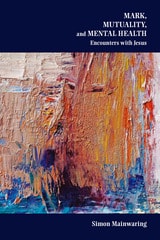
Mark, Mutuality, and Mental Health
Encounters with JesusSimon Mainwaring
SBL Press, 2014
An incitement to re-assess how society relates to persons with poor mental health
Mainwaring explores the societal contexts of those who suffer poor mental health, and in particular the relational dynamics of how identity, agency, and dialogue are negotiated in personal encounters. This work seeks to serve as an experiment, such that interested readers might better understand the dynamics of relational power that pervade encounters with persons with poor mental health.
Features:
- Foucauldian analysis of the relational dynamics of poor mental health used to re-imagine hegemonic relational dynamics
- Close readings of encounters between individual characters to evaluate how mutuality operates in those encounters
- Study of mutuality as it has emerged in mental health literature, feminist theologies, and theologies of disability
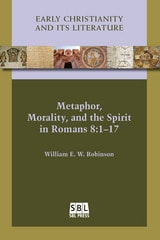
Metaphor, Morality, and the Spirit in Romans 8
1-17William E. W. Robinson
SBL Press, 2016
Engage compelling arguments that challenge prominent positions in Pauline studies
In this innovative book, William E. W. Robinson takes the reader on a journey through Romans 8:1–17 using Conceptual Metaphor Theory and Conceptual Integration Theory. Robinson delineates the underlying cognitive metaphors, their structure, their function, what they mean, and how Paul’s audiences then and now are able to comprehend their meaning. He examines each metaphor in the light of relevant aspects of the Greco-Roman world and Paul’s Jewish background. Robinson contends that Paul portrays the Spirit as the principal agent in the religious-ethical life of believers. At the same time, his analysis demonstrates that the conceptual metaphors in Romans 8:1–17 convey the integral role of believers in ethical conduct. In the process, he addresses thorny theological issues such as whether Spirit and flesh signal an internal battle within believers or two conflicting ways of life. Finally, Robinson shows how this study is relevant to related Pauline passages and challenges scholars to incorporate these methods into their own investigation of biblical texts.
Features:
- Sustained argument that sheds new light on how Paul communicates with his audiences
- Substantial contribution to current debates about central theological concepts
- Conceptual Metaphor Theory and Conceptual Integration Theory applied to the metaphors in Romans 8:1-17
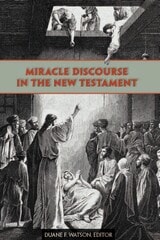
Miracle Discourse in the New Testament
Duane F. Watson
SBL Press, 2012
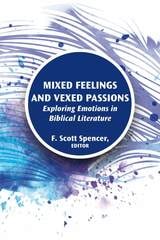
Mixed Feelings and Vexed Passions
Exploring Emotions in Biblical LiteratureF. Scott Spencer
SBL Press, 2017
A ground-breaking collection exploring the rich array of emotions in biblical literature
An international team of Hebrew Bible and New Testament scholars offers incisive case studies of passions displayed by divine and human figures in the biblical texts ranging from joy, happiness, and trust to grief, hate, and disgust. Essays address how biblical characters' feelings affect their relationship with God, one another, and the world and how these feelings mix together, for good or ill, for flourishing or vexation. Deeply engaged with both ancient and modern contexts, including the burgeoning interdisciplinary study of emotion in the humanities and sciences, these essays break down the artificial divide between reason and passion, cognition and emotion, thought and feeling in biblical study.
Features
- Case studies drawn from multiple genres across the Bible: narrative, prophets, poetry, wisdom, Gospels, and letters
- Helpful select bibliographies of interdisciplinary resources at the end of each essay
- Critical balance between theory and practice and between method and close textual analysis
- Distinctive ancient Hebrew and Greek uses of emotional terms and concepts compared with each other and with evolving understandings in Western culture