Results by title
379 books match the query 'Botany' and 10 start with m
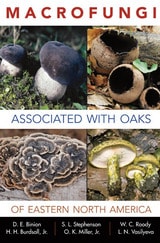
Macrofungi Associated with Oaks of Eastern North America
DENISE E. BINION
West Virginia University Press, 2008
Macrofungi Associated with Oaks of Eastern North America, which was written as a companion to Field Guide to Oak Species of Eastern North America, represents the first major publication devoted exclusively to the macrofungi that occur in association with oak trees in the forests of eastern North America. The macrofungi covered in this volume include many of the more common examples of the three groups—mycorrhizal fungi, decomposers, and pathogens—that are ecologically important to the forest ecosystems in which oaks occur. More than 200 species of macrofungi are described and illustrated via vibrantly colored photographs. Information is given on edibility, medicinal properties, and other novel uses as well. This publication reflects the combined expertise of six mycologists on the macrofungi anyone would be likely to encounter in an oak forest.
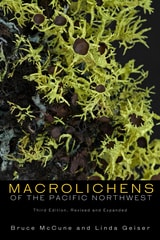
Macrolichens of the Pacific Northwest
Bruce McCune
Oregon State University Press, 2023
A key component in healthy ecosystems, lichens can be found in almost any natural habitat in the Pacific Northwest. This comprehensive guide to the region’s macrolichens is intended for use by beginners as well as specialists: weekend naturalists will be able to identify specimens and recognize the great diversity of lichens, while lichenologists and mycologists will gain greater knowledge of the distribution and abundance of various species.
This revised and expanded edition of Macrolichens of the Pacific Northwest includes includes keys to over 600 species —all the macrolichens known or expected to occur in Oregon and Washington. The keys also provide coverage for lichens of Idaho and Montana, inland to the Continental Divide. Almost all macrolichens known from northern California and southern British Columbia, and from coastal southeast Alaska, are included as well.
Color photographs and detailed descriptions are provided for more than 250 species, emphasizing lichens prevalent in forested ecosystems. The illustrated glossary and introductory material cover the terminology needed to identify macrolichens and provide information on collection and handling. The biology, ecology, and air-quality sensitivity of lichens are discussed. Macrolichens of the Pacific Northwest will prove invaluable to anyone seeking to identify lichens or to better understand these organisms and their vital role in the natural world.
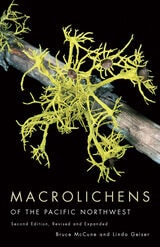
Macrolichens of the Pacific Northwest, Second Ed.
Bruce McCune
Oregon State University Press, 2009
A key component in healthy ecosystems, lichens can be found in almost any natural habitat in the Pacific Northwest. This comprehensive guide to the region’s macrolichens is intended for use by beginners as well as specialists: weekend naturalists will be able to identify specimens and recognize the great diversity of lichens, while lichenologists and mycologists will gain greater knowledge of the distribution and abundance of various species.
This revised and expanded edition of Macrolichens of the Pacific Northwest includes 116 new species and 176 additional illustrations and incorporates an understanding of macrolichens that has advanced tremendously in the past decade.
Macrolichens of the Pacific Northwest includes keys to 113 genera and 586 species of Oregon and Washington macrolichens—all the macrolichens known or expected to occur in the two states. The keys also provide reasonable coverage for lichens of Idaho and Montana, inland to the Continental Divide. Color photographs and detailed descriptions are provided for 246 species, emphasizing lichens prevalent in forested ecosystems.
The illustrated glossary and introductory material cover the terminology needed to identify macrolichens and provide information on collection and handling. The biology, ecology, and air-quality sensitivity of lichens are discussed; regional air-quality sensitivities are provided for 184 species.
Macrolichens of the Pacific Northwest will prove invaluable to anyone seeking to identify lichens or to better understand these organisms and their vital role in the natural world.
Major Evolutionary Transitions in Flowering Plant Reproduction
Edited Spencer C. H. Barrett
University of Chicago Press, 2008
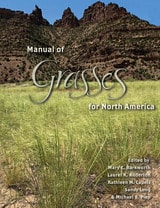
Manual of Grasses for North America
Mary E. Barkworth, Laurel K. Anderton Kathleen M. Capels, Sandy Long, and Michael B. Piep
Utah State University Press, 2007
The Manual of Grasses for North America is designed as a successor to the classic volume by Hitchcock and Chase. It reflects current taxonomic thought and includes keys, illustrations, and distribution maps for the nearly 900 native and 400 introduced species that have been found in North America north of Mexico. In addition, it presents keys and illustrations for several species that are known only in cultivation or are of major agricultural significance, either as progenitors of bread wheat and corn or as a major threat to North American agriculture because of their ability to hybridize with crop species. The Manual is a major reference work for grasses that will retain its value for many years.
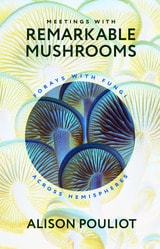
Meetings with Remarkable Mushrooms
Forays with Fungi across HemispheresAlison Pouliot
University of Chicago Press, 2023
A whirlwind journey through fungus frontiers that underscores how appreciating fungi is key to understanding our planet’s power and fragility.
What can we learn from the lives of fungi? Splitting time between the northern and southern hemispheres, ecologist Alison Pouliot ensures that she experiences two autumns per year in the pursuit of fungi—from Australia’s deserts to Iceland’s glaciers to America’s Cascade Mountains. In Meetings with Remarkable Mushrooms, we journey alongside Pouliot, magnifiers in hand, as she travels the world.
With Pouliot as our guide, we smell fire-loving truffles that transform their scent after burning to lure mammals who eat them and, ultimately, spread their spores. We spot the eerie glow of the ghost fungus, a deceptive entity that looks like an edible oyster mushroom but will soon heave back out—along with everything else in your stomach—if you take a bite. And we crawl alongside vegetable caterpillars, which are neither vegetable nor caterpillar but a fungus that devours insects from the inside out.
Featuring stunning color photographs of these mycological miracles, Meetings with Remarkable Mushrooms shows that understanding fungi is fundamental for harmonizing with the natural world.
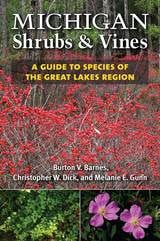
Michigan Shrubs and Vines
A Guide to Species of the Great Lakes RegionBurton V. Barnes, Christopher W. Dick, and Melanie E. Gunn
University of Michigan Press, 2016
Morphologic Encyclopedia of Palynology
An International Collection of Definitions and Illustrations of Spores and PollensGerhard Kremp
University of Arizona Press, 0

Multiplicity in Unity
Plant Subindividual Variation and Interactions with AnimalsCarlos M. Herrera
University of Chicago Press, 2009
Plants produce a considerable number of structures of one kind, like leaves, flowers, fruits, and seeds, and this reiteration is a quintessential feature of the body plan of higher plants. But since not all structures of the same kind produced by a plant are identical—for instance, different branches on a plant may be male or female, leaf sizes in the sun differ from those in the shade, and fruit sizes can vary depending on patterns of physiological allocation among branches—a single plant genotype generally produces a multiplicity of phenotypic versions of the same organ.
Multiplicity in Unity uses this subindividual variation to deepen our understanding of the ecological and evolutionary factors involved in plant-animal interactions. On one hand, phenotypic variation at the subindividual scale has diverse ecological implications for animals that eat plants. On the other hand, by choosing which plants to consume, these animals may constrain or modify plant ontogenetic patterns, developmental stability, and the extent to which feasible phenotypic variants are expressed by individuals.
An innovative study of the ecology, morphology, and evolution of modular organisms, Multiplicity in Unity addresses a topic central to our understanding of the diversity of life and the ways in which organisms have coevolved to cope with variable environments.
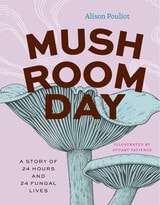
Mushroom Day
A Story of 24 Hours and 24 Fungal LivesAlison Pouliot
University of Chicago Press, 2025
On this mushroom-filled day, ecologist Alison Pouliot tours the world to introduce readers to a fascinating variety of fungi. Each chapter of Mushroom Day introduces a single fungus during a single hour, highlighting twenty-four different species.
In the dark of the night, the green glow of the ghost fungus guides us into the forest to learn about the mysteries of bioluminescence. At dawn, we awaken to find a fairy ring of mushrooms that has appeared overnight like something out of folklore. But we don’t have much time to linger, as we must reach the Italian forest before other porcino hunters forage the morning’s fattest and finest. In the heat of the afternoon, the ripe stench of the stinkhorn might send us out of the woods, while the enticing aroma of the aniseed funnel lures us back in. Late in the evening we spy a fungus known as the witches cauldron and wonder what it might tell us about the future. By the end of our mushroom day, we’ll have glimpsed the diversity of this unique kingdom, met fungus friends that feed and fascinate, and learned how humans can encourage their flourishing.
For each hour, celebrated artist Stuart Patience has depicted these scenes with evocative pen and ink illustrations. Working together to narrate and illustrate these unique moments in time, Pouliot and Patience have created an engaging read that is a perfect way to spend an hour or two—and a true gift for foragers, mycophiles, and anyone who wants to stop and appreciate fungi.