Results by title
69 books match the query 'Capital' and 5 start with m

Making Value
Music, Capital, and the SocialTimothy D. Taylor
Duke University Press, 2024
Measuring Capital in the New Economy
Edited by Carol Corrado, John Haltiwanger, and Daniel Sichel
University of Chicago Press, 2005
In Measuring Capital in the New Economy, Carol Corrado, John Haltiwanger, Daniel Sichel, and a host of distinguished collaborators offer new approaches for measuring capital in an economy that is increasingly dominated by high-technology capital and intangible assets. As the contributors show, high-tech capital and intangible assets affect the economy in ways that are notoriously difficult to appraise. In this detailed and thorough analysis of the problem and its solutions, the contributors study the nature of these relationships and provide guidance as to what factors should be included in calculations of different types of capital for economists, policymakers, and the financial and accounting communities alike.
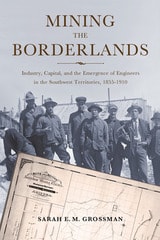
Mining the Borderlands
Industry, Capital, and the Emergence of Engineers in the Southwest Territories, 1855-1910Sarah E. M. Grossman
University of Nevada Press, 2018
At the dawn of the twentieth century, the US-Mexico border was home to some of the largest and most technologically advanced industrial copper mines. This despite being geographically, culturally, and financially far-removed from traditional urban centers of power. Mining the Borderlands argues that this was only possible because of the emergence of mining engineers—a distinct technocratic class of professionals who connected capital, labor, and expertise.
Mining engineers moved easily between remote mining camps and the upscale parlors of east coast investors. Working as labor managers and technical experts, they were involved in the daily negotiations, which brought private US capital to the southwestern border. The success of the massive capital-intensive mining ventures in the region depended on their ability to construct different networks, serving as intermediaries to groups that rarely coincided.
Grossman argues that this didn’t just lead to bigger and more efficient mines, but served as part of the ongoing project of American territorial and economic expansion. By integrating the history of technical expertise into the history of the transnational mining industry, this in-depth look at borderlands mining explains how American economic hegemony was established in a border region peripheral to the federal governments of both Washington, D.C. and Mexico City.

Money, Capital, and Fluctuations
Early EssaysF. A. Hayek
University of Chicago Press, 1984
EDITOR'S INTRODUCTION
INTRODUCTION
1. THE MONETARY POLICY OF THE UNITED STATES AFTER THE RECOVERY FROM THE 1920 CRISIS (1925)
2. SOME REMARKS ON THE PROBLEM OF IMPUTATION (1926)
3. ON THE PROBLEM OF THE THEORY OF INTEREST (1927)
4. INTERTEMPORAL PRICE EQUILIBRIUM AND MOVEMENTS IN THE VALUE OF MONEY (1928)
5. THE FATE OF THE GOLD STANDARD (1932)
6. CAPITAL CONSUMPTION (1932)
7. ON 'NEUTRAL MONEY' (1933)
8. TECHNICAL PROGRESS AND EXCESS CAPACITY (1936)
Two reviews
MARGINAL UTILITY AND ECONOMIC CALCULATION (1925)
THE EXCHANGE VALUE OF MONEY (1929)
NAME INDEX

Moneybags Must Be So Lucky
On the Literary Structure of CapitalRobert P. Wolff
University of Massachusetts Press, 1988