Results by title
282 books match the query 'Caribbean & West Indies' and 11 start with m
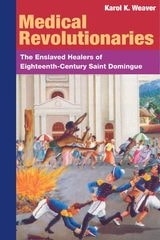
MEDICAL REVOLUTIONARIES
The Enslaved Healers of Eighteenth-Century Saint DomingueKarol K. Weaver
University of Illinois Press, 2006
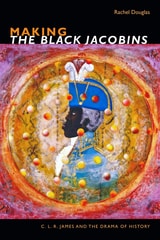
Making The Black Jacobins
C. L. R. James and the Drama of HistoryRachel Douglas
Duke University Press, 2019
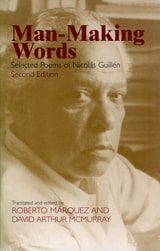
Man-Making Words
Selected Poems of Nicolas GuillenNicolas Guillen
University of Massachusetts Press, 2003
The Cuban poet Nicolás Guillén, who was born in the eastern province of Camagüey in 1902, died in 1989. This new edition of his selected poems, reissued thirty years after its original publication, includes an extensive, new introductory essay by Roberto Márquez, one of the original translators and a leading authority on Caribbean and Latin American literature and culture.
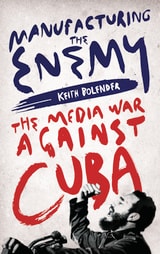
Manufacturing the Enemy
The Media War Against CubaKeith Bolender
Pluto Press, 2019
Memoir of My Youth in Cuba
A Soldier in the Spanish Army during the Separatist War, 1895–1898Dolores J. Walker
University of Alabama Press, 2017
A historically significant memoir offering a firsthand perspective on life, identity, and cultural transformation in nineteenth-century Cuba.
Memoir of My Youth in Cuba: A Soldier in the Spanish Army during the Separatist War, 1895–1898 is a translation of the memoir Memorias de mi juventud en Cuba: Un soldado del ejército español en la guerra separatista (1895–1898) by Josep Conangla. The English edition is based on the Spanish version edited by Joaquín Roy, who found the memoir and was given access to the Conangla family archives. Conangla’s memoir, now available in English, is an important addition to the accounts of Spanish and Cuban soldiers who served in Cuba’s second War of Independence.
Spaniard Josep Conangla was conscripted at the age of twenty and sent to Cuba. In the course of his time there, he reaffirmed his pacifism and support of Cuban independence. The young man was a believer who unfailingly connected his view of events to the Christian humanitarianism on which he prided himself. Conangla’s advanced education and the influence of well-placed friends facilitated his assignment to safe bureaucratic positions during the war, ensuring that he would not see combat. From his privileged position, he was a keen observer of his surroundings. He described some of the decisions he made—which at times put him at odds with the military bureaucracy he served—along with what he saw as the consequences of General Valeriano Weyler’s decree mandating the reconcentración, an early version of concentration camps. What Conangla saw fueled his revulsion at the collusion of the Spanish state and its state-sponsored religion in that policy. “Red Mass,” published six years after the War of Independence and included in his memoir, is a vivid expression in verse of his abhorrence.
Conangla’s recollections of the contacts between Spaniards and Cubans in the areas to which he was assigned reveal his ability to forge friendships even with Creole opponents of the insurrection. As an aspiring poet and writer, Conangla included material on fellow writers, Cuban and Spanish, who managed to meet and exchange ideas despite their circumstances. His accounts of the Spanish defeat, the scene in Havana around the end of the war, along with his return to Spain, are stirring.
Memory, migration and (de)colonisation in the Caribbean and beyond
Edited by Jack Daniel Webb, Roderick Westmaas, Maria del Pilar Kaladeen, and William Tantam
University of London Press, 2019
Migraciones raciales
La ciudad de Nueva York y la política revolucionaria en el Caribe hispánicoJesse Hoffnung-Garskof
Michigan Publishing Services, 2019
A fines del siglo XIX, un grupo pequeño de cubanos y puertorriqueños de ascendencia africana se instaló en las viviendas segregadas de la ciudad de Nueva York. En una sociedad de instrucción y recreo que fundaron en Greenwich Village, estos primeros neoyorquinos afrolatinos aprendieron a ser poetas, periodistas y revolucionarios. Al mismo tiempo, estos individuos—liderados por Rafael Serra, tabaquero, escritor y político; Sotero Figueroa, tipógrafo y editor; y Gertrudis Heredia, una de las primeras mujeres afrodescendientes que estudió en la Clínica de Partos de la Universidad de La Habana--construyeron una red política y articularon un ideal de nacionalismo revolucionario centrado en los proyectos de justicia racial y social. Sus esfuerzos tuvieron una profunda influencia en los escritos del poeta y diplomático José Martí sobre raza y en su apuesta por el liderazgo entre los exiliados cubanos. Desde Nueva York, este grupo también luchó en años posteriores por crear espacios para la participación política negra en la República de Cuba.
En Migraciones raciales, Jesse Hoffnung-Garskof presenta un vívido retrato de estos migrantes revolucionarios quienes habían sido, en gran parte, olvidados, entretejiendo sus experiencias de “migrar siendo negros,” sus relaciones con líderes afro-americanos en la lucha por la igualdad racial en Estados Unidos, y su participación en el desarrollo de los movimientos políticos nacionalistas antillanos. Destacando el papel fundamental de los neoyorquinos afrolatinos en la historia de la política revolucionaria del caribe hispánico, Hoffnung-Garskof ofrece una nueva interpretación del movimiento separatista y de su idea de que Cuba podría convertirse en una nación sin divisiones raciales.
Un modelo de investigación transnacional y comparativa, Migraciones raciales revela las complejidades de las formaciones raciales dentro de las comunidades migrantes y el poder de pequeños grupos de inmigrantes para transformar sus sociedades de origen.
Modern Blackness
Nationalism, Globalization, and the Politics of Culture in JamaicaDeborah A. Thomas
Duke University Press, 2004
Thomas combines historical research with fieldwork she conducted in Jamaica between 1993 and 2003. Drawing on her research in a rural hillside community just outside Kingston, she looks at how Jamaicans interpreted and reproduced or transformed on the local level nationalist policies and popular ideologies about progress. With detailed descriptions of daily life in Jamaica set against a backdrop of postcolonial nation-building and neoliberal globalization, Modern Blackness is an important examination of the competing identities that mobilize Jamaicans locally and represent them internationally.
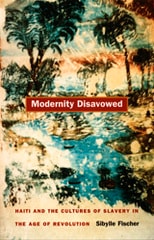
Modernity Disavowed
Haiti and the Cultures of Slavery in the Age of RevolutionSibylle Fischer
Duke University Press, 2004
Fischer draws on history, literary scholarship, political theory, philosophy, and psychoanalytic theory to examine a range of material, including Haitian political and legal documents and nineteenth-century Cuban and Dominican literature and art. She demonstrates that at a time when racial taxonomies were beginning to mutate into scientific racism and racist biology, the Haitian revolutionaries recognized the question of race as political. Yet, as the cultural records of neighboring Cuba and the Dominican Republic show, the story of the Haitian Revolution has been told as one outside politics and beyond human language, as a tale of barbarism and unspeakable violence. From the time of the revolution onward, the story has been confined to the margins of history: to rumors, oral histories, and confidential letters. Fischer maintains that without accounting for revolutionary antislavery and its subsequent disavowal, Western modernity—including its hierarchy of values, depoliticization of social goals having to do with racial differences, and privileging of claims of national sovereignty—cannot be fully understood.
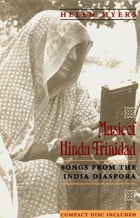
Music of Hindu Trinidad
Songs from the India DiasporaHelen Myers
University of Chicago Press, 1998
Myers details the musical repertory of Felicity, which is based largely on north Indian genres including the traditional Bhojpuri folk songs and drumming styles brought by the first indentured laborers in 1845. In her engaging exploration of the fate of Indian classical music and new popular styles such as Hindi calypso, soca, and chutney, she even finds herself at the ancestral home of Trinidadian V. S. Naipaul in India. Copiously illustrated and accompanied by a compact disk, Music of Hindu Trinidad is a model ethnographic study.
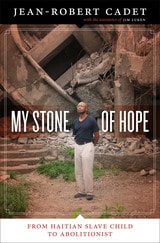
My Stone of Hope
From Haitian Slave Child to AbolitionistBy Jean-Robert Cadet
University of Texas Press, 2011
There are 27 million slaves living in the world today—more than at any time in history. Three hundred thousand of them are impoverished children in Haiti, who "stay with" families as unpaid and uneducated domestic workers, subject to physical, emotional, and sexual abuse. This practice, known locally as restavek ("staying with"), is so widespread that one in ten Haitian children is caught up in this form of slavery.
Jean-Robert Cadet was a restavek in Haiti from the late 1950s until the early 1970s. He told the harrowing story of his youth in Restavec: From Haitian Slave Child to Middle-Class American—a landmark book that exposed ongoing child slavery in Haiti. Now in My Stone of Hope, Cadet continues his story from his early attempts to adjust to freedom in American society to his current life mission of eliminating child slavery through advocacy and education. As he recounts his own struggles to surmount the psychological wounds of slavery, Cadet puts a human face on the suffering that hundreds of thousands of Haitians still endure daily. He also builds a convincing case that child slavery is not just one among many problems that Haiti faces as the Western Hemisphere's poorest nation. Rather, he argues that the systematic abuse of so many of its children is Haiti's fundamental problem, because it creates damaged adults who seem incapable of governing the country justly or managing its economy productively.
For everyone concerned about the fate of Haiti, the welfare of children, and the freedom of people around the globe, My Stone of Hope sounds an irresistible call to action.