Results by title
50 books match the query 'Catholics' and 3 start with m
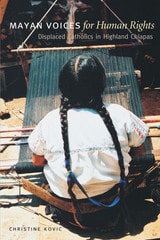
Mayan Voices for Human Rights
Displaced Catholics in Highland ChiapasBy Christine Kovic
University of Texas Press, 2005
In the last decades of the twentieth century, thousands of Mayas were expelled, often violently, from their homes in San Juan Chamula and other highland communities in Chiapas, Mexico, by fellow Mayas allied with the ruling Institutional Revolutionary Party (PRI). State and federal authorities generally turned a blind eye to these human rights abuses, downplaying them as local conflicts over religious conversion and defense of cultural traditions. The expelled have organized themselves to fight not only for religious rights, but also for political and economic justice based on a broad understanding of human rights.
This pioneering ethnography tells the intertwined stories of the new communities formed by the Mayan exiles and their ongoing efforts to define and defend their human rights. Focusing on a community of Mayan Catholics, the book describes the process by which the progressive Diocese of San Cristóbal and Bishop Samuel Ruiz García became powerful allies for indigenous people in the promotion and defense of human rights. Drawing on the words and insights of displaced Mayas she interviewed throughout the 1990s, Christine Kovic reveals how the exiles have created new communities and lifeways based on a shared sense of faith (even between Catholics and Protestants) and their own concept of human rights and dignity. She also uncovers the underlying political and economic factors that drove the expulsions and shows how the Mayas who were expelled for not being "traditional" enough are in fact basing their new communities on traditional values of duty and reciprocity.
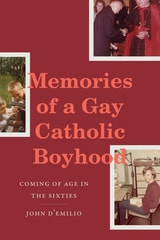
Memories of a Gay Catholic Boyhood
Coming of Age in the SixtiesJohn D'Emilio
Duke University Press, 2022
Memories of a Gay Catholic Boyhood is D’Emilio’s coming-of-age story in which he takes readers from his working-class Bronx neighborhood to an elite Jesuit high school in Manhattan to Columbia University and the political and social upheavals of the late 1960s. He shares his personal experiences of growing up in a conservative, tight-knit, multigenerational family, how he went from considering entering the priesthood to losing his faith and coming to terms with his same-sex desires. Throughout, D’Emilio outlines his complicated relationship with his family while showing how his passion for activism influenced his decision to use research, writing, and teaching to build a strong LGBTQ movement.
This is not just John D’Emilio’s personal story; it opens a window into how the conformist baby boom decade of the 1950s transformed into the tumultuous years of radical social movements and widespread protest during the 1960s. It is the story of what happens when different cultures and values collide and the tensions and possibilities for personal discovery and growth that emerge. Intimate and honest, D’Emilio’s story will resonate with anyone who has had to chart their own path in a world they did not expect to find.
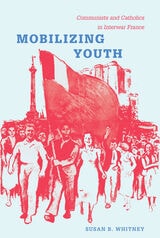
Mobilizing Youth
Communists and Catholics in Interwar FranceSusan B. Whitney
Duke University Press, 2009
Moving back and forth between the constantly shifting tactics devised to mobilize young people and the circumstances of their lives, Whitney gives special consideration to the context in which the youth movements operated and in which young people made choices. She traces the impact of the First World War on the young and on the formulation of generation-based political and religious identities, the role of work and leisure in young people’s lives and political mobilization, the impact of the Depression, the importance of Soviet ideas and intervention in French Communist youth politics, and the state’s attention to youth after the victory of France’s Popular Front government in 1936. Mobilizing Youth concludes by inserting the era’s youth activists and movements into the complicated events of the Second World War.