Results by title
86 books match the query 'Chile' and 7 start with m
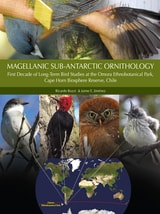
Magellanic Sub-Antarctic Ornithology
First Decade of Long-Term Bird Studies at the Omora Ethnobotanical Park, Cape Horn Biosphere Reserve, ChileRicardo Rozzi
University of North Texas Press, 2014
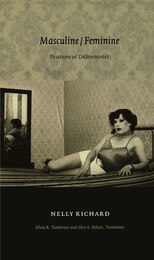
Masculine/Feminine
Practices of Difference(s)Nelly Richard
Duke University Press, 2004
Richard helped to organize the 1987 International Conference on Latin American Women’s Literature in Santiago, one of the most significant literary events to take place under the Pinochet dictatorship. Published in Chile in 1993, Masculine/Feminine develops some of the key issues brought to the fore during that landmark meeting. Richard theorizes why the feminist movement has been crucial not only to the liberation of women but also to understanding the ways in which power operated under the military regime in Chile. In one of her most widely praised essays, she explores the figure of the transvestite, artistic imagery of which exploded during the Chilean dictatorship. She examines the politics and the aesthetics of this phenomenon, particularly against the background of prostitution and shantytown poverty, and she argues that gay culture works to break down the social demarcations and rigid structures of city life. Masculine/Feminine makes available, for the first time in English, one of Latin America’s most significant works of feminist theory.

Memories of Earth and Sea
An Ethnographic History of the Islands of ChiloéAnton Daughters
University of Arizona Press, 2019
Staring in the 1980s, Chiloé was thrust into the global economy when major companies moved into the region to extract wild stocks of fish and to grow salmon and shellfish for export. The archipelago’s economy shifted abruptly from one of subsistence farming and fishing to wage labor in export industries. Local knowledge, traditions, memories, and identities similarly shifted, with young islanders expressing a more critical view of the rural past than their elders.
This book highlights the region’s unique past, emphasizing the generational tensions, disconnects, and continuities of the last half century. Drawing on interviews, field observations, and historical documents, Anton Daughters brings to life one of South America’s most culturally distinct regions.
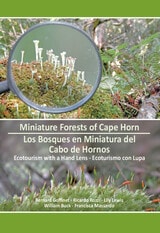
Miniature Forests of Cape Horn
Ecotourism with a Hand LensBernard Goffinet
University of North Texas Press, 2012
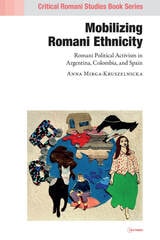
Mobilizing Romani Ethnicity
Romani Political Activism in Argentina, Colombia and SpainAnna Mirga-Kruszelnicka
Central European University Press, 2022
The Roma issue is generally treated as a European matter. Indeed, the Roma are the largest European minority—their presence outside of Europe is a result of various waves of migration over the past four hundred years. Likewise, the stereotypes associated with the Roma—the problematized, stigmatized status of a “Gypsy” as well as the historical and contemporary manifestations of antigypsyism—are also of European origin. This book claims, however, that the perception of Roma being strictly a European issue is flawed, and that re-connecting the Roma issue globally represents an important learning experience and an added value.
The book offers a critical exploration of Romani political activism in Colombia and Argentina, and compares it to that in Spain, narrated from the intimate perspective of Romani actors themselves. By outlining parallel lineages of Romani activism in three countries and on two continents, the author arrives at broad conclusions regarding the nature of ethnic mobilization. Mirga-Kruszelnicka proposes a new synergetic conceptualization of this multidirectional concept as an interplay between political opportunities, mobilizing structures, and frames of identity.
Contributing to the vivid debate about the relationship between the researcher and the researched, the book also includes an original discussion of the positionality of scholars of Romani background.

Monetarism and Liberalization
The Chilean ExperimentSebastian Edwards and Alejandra Cox Edwards
University of Chicago Press, 1991
"The Edwards's book is an indispensable guide to the policy reforms and mistakes that have taken the [Chilean] economy to its present state."—Philip L. Brock, Money, Credit, and Banking
"This book is a 'must' for anybody interested in development economies and the problems of liberalization."—Hansjorg Blochliger, Journal of International Economics
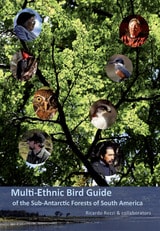
Multi-Ethnic Bird Guide of the Sub-Antarctic Forests of South America
Ricardo Rozzi
University of North Texas Press, 2010