128 books match the query 'Church of Jesus Christ of Latter-day Saints' and 16 start with m

cover of Make Yourselves Gods: Mormons and the Unfinished Business of American Secularism

Make Yourselves Gods

Mormons and the Unfinished Business of American Secularism

Peter Coviello

University of Chicago Press, 2019

From the perspective of Protestant America, nineteenth-century Mormons were the victims of a peculiar zealotry, a population deranged––socially, sexually, even racially––by the extravagances of belief they called “religion.” Make Yourselves Gods offers a counter-history of early Mormon theology and practice, tracking the Saints from their emergence as a dissident sect to their renunciation of polygamy at century’s end.
 
Over these turbulent decades, Mormons would appear by turns as heretics, sex-radicals, refugees, anti-imperialists, colonizers, and, eventually, reluctant monogamists and enfranchised citizens. Reading Mormonism through a synthesis of religious history, political theology, native studies, and queer theory, Peter Coviello deftly crafts a new framework for imagining orthodoxy, citizenship, and the fate of the flesh in nineteenth-century America. What emerges is a story about the violence, wild beauty, and extravagant imaginative power of this era of Mormonism—an impassioned book with a keen interest in the racial history of sexuality and the unfinished business of American secularism.
 
[more]
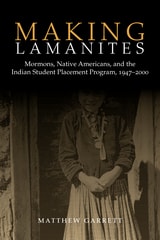
cover of Making Lamanites: Mormons, Native Americans, and the Indian Student Placement Program, 1947-2000

Making Lamanites

Mormons, Native Americans, and the Indian Student Placement Program, 1947-2000

Matthew Garrett

University of Utah Press, 2016

Winner of the Juanita Brooks Prize in Mormon Studies

From 1947 to 2000, some 50,000 Native American children left the reservations to live with Mormon foster families. While some dropped out of the Indian Student Placement Program (ISPP), for others the months spent living with LDS families often proved more penetrating than expected.
     The ISPP emerged in the mid-twentieth century, championed by Apostle Spencer W. Kimball, aligned with the then national preferences to terminate tribal entities and assimilate indigenous people. But as the paradigm shifted to self-determination, critics labeled the program as crudely assimilationist. Some ISPP students like Navajo George P. Lee fiercely defended the LDS Church before native peers and Congress, contending that it empowered Native people and instilled the true Indian identity; meanwhile Red Power activists organized protests in Salt Lake City, denouncing LDS colonization. As a new generation of church leaders quietly undercut the Indian programs, many of its former participants felt a sense of confusion and abandonment as Mormon distinctions for Native people faded in the late twentieth century.
     Making Lamanites traces this student experience within contested cultural and institutional landscapes to reveal how and why many of these Native youth adopted a new notion of Indianness. 

Winner of the Francis Armstrong Madsen Best Book Award from the Utah Division of State History.
[more]
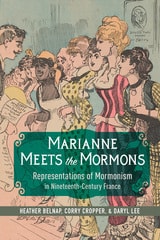
cover of Marianne Meets the Mormons: Representations of Mormonism in Nineteenth-Century France

Marianne Meets the Mormons

Representations of Mormonism in Nineteenth-Century France

Heather Belnap, Corry Cropper, and Daryl Lee

University of Illinois Press, 2022

In the nineteenth century, a fascination with the Church of Jesus Christ of Latter-day Saints made Mormons and Mormonism a common trope in French journalism, art, literature, politics, and popular culture. Heather Belnap, Corry Cropper, and Daryl Lee bring to light French representations of Mormonism from the 1830s to 1914, arguing that these portrayals often critiqued and parodied French society. Mormonism became a pretext for reconsidering issues such as gender, colonialism, the family, and church-state relations while providing artists and authors with a means for working through the possibilities of their own evolving national identity.

Surprising and innovative, Marianne Meets the Mormons looks at how nineteenth-century French observers engaged with the idea of Mormonism in order to reframe their own cultural preoccupations.
[more]
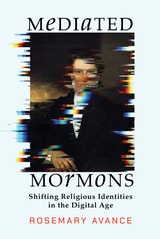
cover of Mediated Mormons: Shifting Religious Identities in the Digital Age

Mediated Mormons

Shifting Religious Identities in the Digital Age

Rosemary Avance

University of Utah Press, 2024

In the early- to mid-2010s, Mitt Romney’s presidential candidacy, the hit Broadway musical The Book of Mormon, and the Church of Jesus Christ of Latter-day Saints’ “I’m a Mormon” media campaign brought critical media attention to Mormonism. In this first lengthy treatment of Mormon identities as they intersect with their religious institution, the internet, and modernity during the so-called “Mormon Moment,” Rosemary Avance explores how LDS stakeholders challenged traditional notions of what it means to be Mormon, vying for control of their own public narratives.

Mediated Mormons uses a case study approach to consider various iterations of Mormon identity as presented by church authorities, faithful members, the secular media, and heterodox and former adherents. These often-conflicting perspectives challenge traditional models of LDS authority, dismantling a monolithic view of Mormons and offering a window into processes of social activism and institutional change in the internet era.

[more]
cover of Mercy without End: Toward a More Inclusive Church

Mercy without End

Toward a More Inclusive Church

Lavina Fielding Anderson

Signature Books, 2020

These eighteen essays span more than thirty years of Lavina Fielding Anderson’s concerns about and reflections on issues of inclusiveness in the Church of Jesus Christ of Latter-day Saints, including her own excommunication for “apostasy” in 1993, followed by twenty-five years of continued attendance at weekly LDS ward meetings. Written with a taste for irony and an eye for documentation, the essays are timeless snapshots of sometimes controversial issues, beginning with official resistance to professionally researched Mormon history in the 1980s. They underscore unanswered questions about gender equality and repeatedly call attention to areas in which the church does not live up to its better self. Compassionately and responsibly, it calls Anderson’s beloved religion back to its holiest nature.
[more]
cover of Mormon Envoy: The Diplomatic Legacy of Dr. John Milton Bernhisel

Mormon Envoy

The Diplomatic Legacy of Dr. John Milton Bernhisel

Bruce W. Worthen

University of Illinois Press, 2023

For more than twenty years, John Milton Bernhisel negotiated with the federal government on behalf of the Church of Jesus Christ of Latter-day Saints. Bruce W. Worthen illuminates the life and work of the man whose diplomacy steered the Church’s relationship with Washington, D.C. from its early period of dangerous conflict to a peaceful and pragmatic coexistence.

Having risen from a Pennsylvania backcountry upbringing to become a respected member of the upper class, Bernhisel possessed a personal history that allowed him to reach common ground with politicians and other outsiders. He negotiated for Joseph Smith’s life and, after the Church’s relocation to the Utah Territory, took on the task of rehabilitating the public image of the Latter-day Saints. Brigham Young’s defiance of the government undermined Bernhisel’s work, but their close if sometimes turbulent relationship ultimately allowed Bernhisel to make peace with Washington, secure a presidential pardon for Young, and put Utah and the Latter-day Saints on the road to formally joining the United States.
[more]
cover of Mormon Garments: Sacred and Secret

Mormon Garments

Sacred and Secret

Nancy Ross, Jessica Finnigan, and Larissa Kanno Kindred

University of Illinois Press, 2026
The Church of Jesus Christ of Latter-day Saints requires that adult members wear garments under their clothes day and night. Though a central practice, the wearing of garments exists behind a wall of silence, as Church authorities and LDS culture discourage discussion of such a sacred matter. Nancy Ross, Jessica Finnigan, and Larissa Kanno Kindred draw on a survey of over 4,500 Church members and their own backgrounds to explore the multifaceted meanings and experiences of Mormon garments. As the authors show, garments also function as a tool of social control that shapes behavior and reinforces conformity around sexuality. The diverse lived experiences of Latter-day Saints reveal how belief and gender intersect with feelings of secrecy, shame, and obedience while creating complexities for LDS members as they navigate questions of faith, identity, and agency. In addition, the authors call for greater understanding of the people grappling with tensions between personal customs and religious expectation. Insightful and rich with detail, Mormon Garments sheds light on an intimate practice in the lives of Latter-day Saints.
[more]
cover of Mormon History

Mormon History

Ronald W. Walker, David J. Whittaker, James B. Allen

University of Illinois Press, 2010
A companion volume to their massive bibliography Studies in Mormon History, 1830–1997, this descriptive history by a team of top Mormon scholars provides a comprehensive view of how the writing of Mormon history has evolved since the establishment of the church. Mormon History offers an interpretive survey of Mormon historical writings, from the partisan and often ephemeral history of the nineteenth century through the shift in the twentieth toward a more balanced and professional approach and an emphasis on how the Mormons helped settle the American West. The authors examine Mormon biography and autobiography and discuss social science literature on the Mormons, including studies of social geography, rural sociology, and agricultural economics. Two valuable appendices round out this volume, one on the development and nature of Mormon imprints, the other on conducting historical research in Mormon sources.
[more]
cover of Mormon Mavericks: Essays on Dissenters

Mormon Mavericks

Essays on Dissenters

John Sillito

Signature Books, 2002

 Some left, some stayed. Each one found some aspect of their church’s history, doctrine, policies, or politics that they could not reconcile with their own personal ethics. Some felt burdened by the conflict, while others embraced it. A few were reticent, even apologetic about their disagreements. Others were barnstormers. Each possessed some quality that destined him or her to ride at the fringes rather than at the center.

Mormon Mavericks summarizes a few famous flashpoints in Mormon history; more importantly, it provides a telling study in human nature. Each contributor is an expert in his or her discipline, and all approach their topic with equal doses of sympathy and objectivity.

The following mavericks are featured in this collection of biographical essays:

Fawn McKay Brodie
Juanita Brooks
Thomas Stuart Ferguson
Amasa Mason Lyman
Sterling M. McMurrin
John E. Page
Sarah M. Pratt D. Michael Quinn
William Smith
Fanny Stenhouse
T. B. H. Stenhouse
James Strang
Samuel Woolley Taylor
Moses Thatcher

[more]
cover of Mormon Passage of George D. Watt: First British Convert, Scribe for Zion

Mormon Passage of George D. Watt

First British Convert, Scribe for Zion

Ronald G. Watt

Utah State University Press, 2009
Nineteenth century Mormonism was a frontier religion with roots so entangled with the American experience as to be seen by some scholars as the most American of religions and by others as a direct critique of that experience. Yet it also was a missionary religion that through proselytizing quickly gained an international, if initially mostly Northern European, makeup. This mix brought it a roster of interesting characters: frontiersmen and hardscrabble farmers; preachers and theologians; dreamers and idealists; craftsmen and social engineers. Althoughthe Mormon elite soon took on, as elites do, a rather fixed, dynastic character, the social origins of its first-generation members were quite diverse. The Mormon Church at its beginning provided a good study in upward mobility. George D. Watt, for instance, was a self-educated convert with both unusual, for the time and place of frontier Utah, clerical skills and ambitions to improve his status. A man with intellectual pretensions, he had little formal training but a strong will, avid curiosity, and appetite for knowledge. Those traits made up for what he lacked in schooling and drew him into what served as intellectual circles among the Mormon elite and, later, on the church’s disenchanted fringe. They also made him for a time essential to Brigham Young as a clerk and reporter but sent him into religious and social exile, due to a contest of wills with his employer that Watt had no chance of winning,. 
Reputed to have been the first of the many English converts to the LDS church, Watt’s repeatedly demonstrated ability to learn quickly made him an early master of Pitman shorthand, just then coming into use. Employing this skill, he made two important contributions to Mormon literature: First, he more than anyone created, based on that shorthand, the Deseret Alphabet, which now is a curiosity but then was an innovation that, intended to create a unique Mormon orthography and pedagogy, stands well for the broad attempt to build in Utah the wholly self-sufficient culture of the Kingdom of God. Second, his efficient note taking allowed him to take down the sermons of Young and other church leaders and publish them in the Journal of Discourses, an indispensible historical record. In addition Watt learned, thought, and wrote about a variety of subjects, from horticulture to spiritualism, which helped define him as a resident Utah intellectual. He eventually left the Mormon Church, but the records of his domestic life before and after that decision provide a rich portrait of the working of polygamous households, particularly complicated ones in his case. Despite his accomplishments, because of his potential, George Watt’s story is at heart a tragedy. His breach with Young resulted in social isolation, poverty, and rejection by friends and associates. He never, though, lost his sense of independence or his avid mind. Whether facing an economic affront or pressing, in writing, his own conclusions about life and God, he engaged the challenge where he found it.
[more]
cover of Mormon Women at the Crossroads: Global Narratives and the Power of Connectedness

Mormon Women at the Crossroads

Global Narratives and the Power of Connectedness

Caroline Kline

University of Illinois Press, 2022

Winner of the Mormon History Association Best International Book Award

The Church of Jesus Christ of Latter-day Saints continues to contend with longstanding tensions surrounding gender and race. Yet women of color in the United States and across the Global South adopt and adapt the faith to their contexts, many sharing the high level of satisfaction expressed by Latter-day Saints in general. Caroline Kline explores the ways Latter-day Saint women of color in Mexico, Botswana, and the United States navigate gender norms, but also how their moral priorities and actions challenge Western feminist assumptions. Kline analyzes these traditional religious women through non-oppressive connectedness, a worldview that blends elements of female empowerment and liberation with a broader focus on fostering positive and productive relationships in different realms. Even as members of a patriarchal institution, the women feel a sense of liberation that empowers them to work against oppression and against alienation from both God and other human beings.

Vivid and groundbreaking, Mormon Women at the Crossroads merges interviews with theory to offer a rare discussion of Latter-day Saint women from a global perspective.

[more]
cover of Mormonism Unvailed: Eber D. Howe, with critical comments by Dan Vogel

Mormonism Unvailed

Eber D. Howe, with critical comments by Dan Vogel

Eber Dudley Howe

Signature Books, 2015

 Any Latter-day Saint who has ever defended his or her beliefs has likely addressed issues first raised by Eber D. Howe in 1834. Howe’s famous exposé was the first of its kind, with information woven together from previous news articles and some thirty affidavits he and others collected. He lived and worked in Painesville, Ohio, where, in 1829, he had published about Joseph Smith’s discovery of a “golden bible.” Smith’s decision to relocate in nearby Kirtland sparked Howe’s attention. Of even more concern was that Howe’s wife and other family members had joined the Mormon faith. Howe immediately began investigating the new Church and formed a coalition of like-minded reporters and detractors. By 1834, Howe had collected a large body of investigative material, including affidavits from Smith’s former neighbors in New York and from Smith’s father-inlaw in Pennsylvania. Howe learned about Smith’s early interest in pirate gold and use of a seer stone in treasure seeking and heard theories from Smith’s friends, followers, and family members about the Book of Mormon’s origin. Indulging in literary criticism, Howe joked that Smith, “evidently a man of learning,” was a student of “barrenness of style and expression.” Despite its critical tone, Howe’s exposé is valued by historians for its primary source material and account of the growth of Mormonism in northeastern Ohio.
[more]
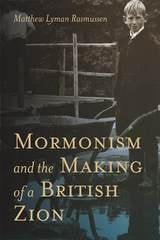
cover of Mormonism and the Making of a British Zion

Mormonism and the Making of a British Zion

Matthew L. Rasmussen

University of Utah Press, 2016

Mormonism in Britain began in the late 1830s with the arrival of American missionaries from the Church of Jesus Christ of Latter-day Saints. Not long afterward, thousands of British converts emigrated to Utah and became a kind of lifeblood for the early Mormon Church. The English North West, where Mormonism had its strongest presence, has since become a place of profound significance to the church, both institutionally and internationally. Despite its importance to Mormonism, this history has never been fully explored. Matthew Rasmussen provides the first detailed account and examines how Mormonism has changed and endured in Britain.

After many British believers left for America, church membership in England fell so sharply that the movement in Britain seemed to be on the brink of collapse. Yet British Mormonism gradually resurged and continues today. How did this religious minority flourish when so many nineteenth-century revivalist movements did not? Rasmussen explains Mormonism’s inception, perpetuation, and maturation in Britain in a compelling case study of a “new religious movement” with staying power. From its establishment in 1837 to its maturation in 1998, the Mormon perspective of Britain shifted dramatically. This book chronicles that shift, and illustrates how doctrinal adaptation has enabled Mormonism in Britain to persist. 

[more]
cover of Mormonism: THE STORY OF A NEW RELIGIOUS TRADITION

Mormonism

THE STORY OF A NEW RELIGIOUS TRADITION

Jan Shipps

University of Illinois Press, 1985
"Without fully and consciously realizing that they were doing so, the followers of Jesus established a new religious tradition. This book tells the story of yet another assembly of saints whose history, I believe, is in many respects analogous to the history of those early Christians who thought at first that they had found the only proper way to be Jews. Mormonism started to grow away from traditional Christianity almost immediately upon coming into existence. It began as a movement that understood itself as Christian, but. . . these nineteenth-century Latter-day Saints (as they came to be called) embarked on a path that led to developments that now distinguish their tradition from the Christian tradition as surely as early Christianity was distinguished from its Hebraic context."--From the preface
 
[more]
cover of Mormonisms in Asia: Stories of Global Faith and Local Lives

Mormonisms in Asia

Stories of Global Faith and Local Lives

Edited by Melissa Wei-Tsing Inouye and Laurie F. Maffly-Kipp

University of Illinois Press, 2026

Mormonism is often described as the quintessentially American religion, one that is highly centralized around its leadership and demographic presence in Utah. But given a dramatic increase in non-U.S. membership since 1960 in both the Church of Jesus Christ of Latter-day Saints and the Community of Christ, new questions about these movements come to the fore: How are these Restoration traditions lived and experienced in other parts of the world? How do church members outside the United States understand their relationship to a sacralized American past and an administrative hierarchy in Salt Lake City? And how has the relatively recent explosion of membership outside of the United States begun to shift the faith’s institutional, political, and cultural dynamics within those traditions? Most importantly, how do church members from different localities and cultures relate to each other, forming a global community? Or do they?

This volume focuses on Asia, a region that includes more than half the world's population, but where Restoration traditions specifically and Christianity broadly are minority faiths. It uses a combination of focused case studies and theoretical analysis to highlight broader trends and themes that those studies suggest about the meaning of a globalized faith in the twenty-first century. The first section of this book lays out ways of thinking about Mormonism’s global presence in terms of the nation-state, and the essays explore where and how Restoration traditions as institutional actors have made their way into new political and social contexts. The second section studies the tensions created by the encounters of LDS norms with preexisting cultural and political values in local settings. These essays burrow more deeply into political and religious realities and explore the variations in Mormon cultural assumptions about politics and society, as well as the relationship between local congregants and the Mormon administrative center. The final section presents fine-grained
studies that focus attention on one of the central features of LDS lived religion: the role of gender and the family in the religious community. In each case, divine dictates necessarily bump up against traditional societal norms that converts must navigate.

Contributors: John-Charles Duffy, Stacilee Ford, Taunalyn Ford, Conan Grames, David J. Howlett, Melissa Wei-Tsing Inouye, Keisha Lai, Laurie Maffly-Kipp, Matthew Martinich, Meagan Rainock, Shinji Takagi, Pierre Vendassi
[more]
cover of Moth and Rust: Mormon Encounters with Death

Moth and Rust

Mormon Encounters with Death

Steven Carter

Signature Books, 2017

In Mormonism we are sometimes seemingly casual
about death: it’s a veil or a mission call to the spirit
world. But our actual encounters with the reality of
death inevitably change us in ways that are difficult
to articulate.
In this collection, Mormon writers wrestle with
mortality and its aftermath. A family sings a hesitant
rendition of Happy Birthday to a grief-stricken
mother who buried her toddler just a few hours earlier;
an agnostic son decides he’s Mormon enough to
arrange a funeral for his believing father.
Some essays use death as a means to understand
faith. One author imagines a world where Heavenly
Mother visits her children in the form of their
female ancestors, appearing to her descendants in
times of grief or pain.
Others address practicalities: how do you protect
your children from death while still allowing them
to experience the world; how do you get through
one more nausea-ridden day of cancer treatment?
Still others delve into death’s questions: does the
overwhelming suffering that occurs in the animal
kingdom have a function in the “plan of happiness”?
Sometimes humorous, sometimes heartbreaking,
always thought-provoking, these personal essays,
poems, and stories may never be heard at a Mormon
funeral. But they probably should be.
[more]