Results by title
255 books match the query 'Church of Jesus Christ of Latter-day Saints (Mormon)' and 25 start with m
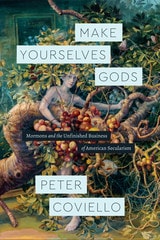
Make Yourselves Gods
Mormons and the Unfinished Business of American SecularismPeter Coviello
University of Chicago Press, 2019
Over these turbulent decades, Mormons would appear by turns as heretics, sex-radicals, refugees, anti-imperialists, colonizers, and, eventually, reluctant monogamists and enfranchised citizens. Reading Mormonism through a synthesis of religious history, political theology, native studies, and queer theory, Peter Coviello deftly crafts a new framework for imagining orthodoxy, citizenship, and the fate of the flesh in nineteenth-century America. What emerges is a story about the violence, wild beauty, and extravagant imaginative power of this era of Mormonism—an impassioned book with a keen interest in the racial history of sexuality and the unfinished business of American secularism.
Make Yourselves Gods
Mormons and the Unfinished Business of American SecularismPeter Coviello
University of Chicago Press, 2019
From the perspective of Protestant America, nineteenth-century Mormons were the victims of a peculiar zealotry, a population deranged––socially, sexually, even racially––by the extravagances of belief they called “religion.” Make Yourselves Gods offers a counter-history of early Mormon theology and practice, tracking the Saints from their emergence as a dissident sect to their renunciation of polygamy at century’s end.
Over these turbulent decades, Mormons would appear by turns as heretics, sex-radicals, refugees, anti-imperialists, colonizers, and, eventually, reluctant monogamists and enfranchised citizens. Reading Mormonism through a synthesis of religious history, political theology, native studies, and queer theory, Peter Coviello deftly crafts a new framework for imagining orthodoxy, citizenship, and the fate of the flesh in nineteenth-century America. What emerges is a story about the violence, wild beauty, and extravagant imaginative power of this era of Mormonism—an impassioned book with a keen interest in the racial history of sexuality and the unfinished business of American secularism.
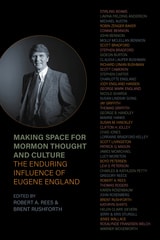
Making Space for Mormon Thought and Culture
The Enduring Influence of Eugene EnglandRobert A. Rees
Signature Books, 2025
This intimate collection brings together a broad array of tributes to Eugene England, a leading Latter-day Saint scholar–teacher of the late twentieth century. It includes the voices of those who knew Gene and his work—family, friends, students, and colleagues—to illuminate the profound impact of one of Mormonism’s most influential thinkers. Through personal narratives and thoughtful reflections, these essays reveal Gene not just as a brilliant theologian and beloved professor, but as a compassionate mentor, faithful questioner, and dedicated disciple.
England’s influence on Latter-day Saint thought, culture, and religion was not only indelible but lasting. His legacy as a founding figure in modern Mormon intellectual life emerges through stories of his classroom teachings, his founding of Dialogue: A Journal of Mormon Thought, and his courageous exploration of difficult questions within a framework of faith. Contributors share how England modeled a life devoted to both unflinching inquiry and deep spiritual commitment—demonstrating that devotion and intellectualism could strengthen rather than threaten one another.
These personal accounts paint a portrait of a man whose theological insights and generous spirit continue to influence Mormon studies and whose example inspires those seeking to harmonize faith with intellectual honesty. For both those who knew England and those discovering him for the first time, this collection offers a window into the heart and mind of a remarkable Mormon thinker and his enduring influence.
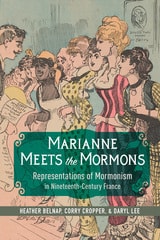
Marianne Meets the Mormons
Representations of Mormonism in Nineteenth-Century FranceHeather Belnap, Corry Cropper, and Daryl Lee
University of Illinois Press, 2022
Surprising and innovative, Marianne Meets the Mormons looks at how nineteenth-century French observers engaged with the idea of Mormonism in order to reframe their own cultural preoccupations.
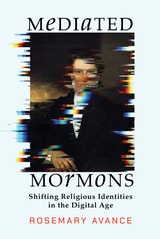
Mediated Mormons
Shifting Religious Identities in the Digital AgeRosemary Avance
University of Utah Press, 2024
Mediated Mormons uses a case study approach to consider various iterations of Mormon identity as presented by church authorities, faithful members, the secular media, and heterodox and former adherents. These often-conflicting perspectives challenge traditional models of LDS authority, dismantling a monolithic view of Mormons and offering a window into processes of social activism and institutional change in the internet era.

Mercy without End
Toward a More Inclusive ChurchLavina Fielding Anderson
Signature Books, 2020
These eighteen essays span more than thirty years of Lavina Fielding Anderson’s concerns about and reflections on issues of inclusiveness in the Church of Jesus Christ of Latter-day Saints, including her own excommunication for “apostasy” in 1993, followed by twenty-five years of continued attendance at weekly LDS ward meetings. Written with a taste for irony and an eye for documentation, the essays are timeless snapshots of sometimes controversial issues, beginning with official resistance to professionally researched Mormon history in the 1980s. They underscore unanswered questions about gender equality and repeatedly call attention to areas in which the church does not live up to its better self. Compassionately and responsibly, it calls Anderson’s beloved religion back to its holiest nature.
Moral Visions
Ethics and the Book of MormonEdited by Courtney S. Campbell and Kelly Sorensen
University of Illinois Press, 2025
Contributors in the first section discuss foundational issues such as the Book of Mormon’s moral psychology, its minimalist and covenantal moralities, the nature of the good and how the good is known, the question of whether value depends on a certain kind of future, the Book of Mormon's strategy for moral persuasion, and God’s participation in human choices. In the second section, the essayists turn to everyday ethical questions concerning resistance to forced cultural assimilation, clothing and dress, authority, and memory. The final chapter further explores practical moral visions.
A rich and thought-provoking analysis, Moral Visions examines the Book of Mormon through a variety of methods while aiming to deepen understanding of both the text’s messages and its potential place in future discussions of ethics. Contributors: Daniel Becerra, Courtney S. Campbell, Ryan Davis, Michael D. K. Ing, Ariel Bybee Laughton, Kimberly Matheson, Rachel Esplin Odell, Kelly Sorensen, Joseph M. Spencer
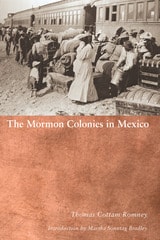
Mormon Colonies in Mexico
Thomas Cottam Romney
University of Utah Press, 2005
"Romney’s unique vantage point is the strongest draw of this narrative: Romney and his family lived much of their life in the Mexican Mormon colonies. But the narrative’s value is much broader and deeper than just that. Romney’s insights into Mexican politics and personalities, and his view of the course of history from inside rather than from outside, are fascinating, colorful and opinionated. He was clear about who he admired and why, and who he did not."
—from the Foreword
In the 1880s, as a precondition to granting Utah statehood, the United States government enacted laws to put a stop to the Mormon practice of polygamy. Those who continued to practice this principle were forced underground as federal marshals roamed the territory searching for "polygs." In response, the Church of Jesus Christ of Latter-day Saints looked for safe places to send its members; many found refuge across the border in Mexico.
Unavailable since its original publication in 1938, this important document of a little-known chapter in Mormon history is now reprinted with a foreword by Martha Sonntag Bradley. Romney was raised and spent much of his life in the colonies, making this book a significant contribution to LDS history. It chronicles a new kind of Mormon pioneer facing the hardships of an unfamiliar land, a tenuous relationship with the government, and the necessary fortitude to hold fast to one’s belief in the face of difficulty and trial.

Mormon Enigma
Emma Hale SmithLinda King Newell and Valeen Tippetts Avery
University of Illinois Press, 1994
Winner of the Evans Biography Award, the Mormon History Association Best Book Award, and the John Whitmer Association (RLDS) Best Book Award.
Mormon Enigma is the bestselling biography of Emma Hale Smith, wife of the Mormon prophet Joseph Smith. It was Joseph Smith who announced that an angel of the Lord had commanded him to introduce a 'new order of marriage.' And it was Emma Hale Smith who confronted the practice of polygamy head on.
As the authors note in their introduction, "Early leaders in Utah castigated Emma from their pulpits for opposing Brigham Young and the practice of polygamy, and for lending support to the Reorganization. As these attitudes filtered down through the years, Emma was virtually written out of official Utah histories. In this biography, we have attempted to reconstruct the full story of this remarkable and much misunderstood woman's experiences.
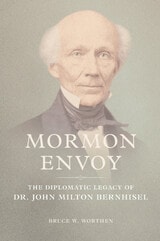
Mormon Envoy
The Diplomatic Legacy of Dr. John Milton BernhiselBruce W. Worthen
University of Illinois Press, 2023
Having risen from a Pennsylvania backcountry upbringing to become a respected member of the upper class, Bernhisel possessed a personal history that allowed him to reach common ground with politicians and other outsiders. He negotiated for Joseph Smith’s life and, after the Church’s relocation to the Utah Territory, took on the task of rehabilitating the public image of the Latter-day Saints. Brigham Young’s defiance of the government undermined Bernhisel’s work, but their close if sometimes turbulent relationship ultimately allowed Bernhisel to make peace with Washington, secure a presidential pardon for Young, and put Utah and the Latter-day Saints on the road to formally joining the United States.
Mormon Garments
Sacred and SecretNancy Ross, Jessica Finnigan, and Larissa Kanno Kindred
University of Illinois Press, 2026
Mormon History
Ronald W. Walker, David J. Whittaker, James B. Allen
University of Illinois Press, 2010
Mormon Mavericks
Essays on DissentersJohn Sillito
Signature Books, 2002
Mormon Mavericks summarizes a few famous flashpoints in Mormon history; more importantly, it provides a telling study in human nature. Each contributor is an expert in his or her discipline, and all approach their topic with equal doses of sympathy and objectivity.
The following mavericks are featured in this collection of biographical essays:
Fawn McKay BrodieJuanita Brooks
Thomas Stuart Ferguson
Amasa Mason Lyman
Sterling M. McMurrin
John E. Page
Sarah M. Pratt D. Michael Quinn
William Smith
Fanny Stenhouse
T. B. H. Stenhouse
James Strang
Samuel Woolley Taylor
Moses Thatcher
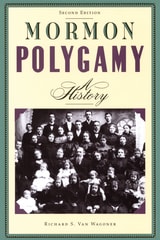
Mormon Polygamy
A HistoryRichard S. Van Wagoner
Signature Books, 1989
What emerges is a portrait that neither discounts nor exaggerates the historical evidence. He presents polygamy in context, neither condemning nor defending, while relevant contemporary accounts are treated sympathetically but interpreted critically. No period of Mormon history is emphasized over another. The result is a systematic view that is unavailable in studies of isolated periods or in the repetitions of folklore that only disguise the reality of what polygamy was.
Scattered throughout the western United States today are an estimated 30,000 fundamentalist Mormons who still live “the principle.” They, too, are a part of Joseph Smith’s legacy and are included in this study.
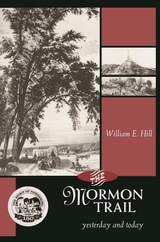
Mormon Trail
Yesterday and TodayWilliam E. Hill
Utah State University Press, 1996
Back in print, this essential reference for readers interested in the Mormon Trail is part history, part resource book, part guide and photographic essay. Driven from their home in Nauvoo, Illinois, Mormons led by Brigham Young began in 1846 to journey west to an expected haven in the Great Salt Lake Valley. The first party arrived there in July 1847. Thousands of members and converts later followed the Mormon Trail, which for much of its way traced the route of the Oregon Trail, although it generally stayed across the Platte River from the more-traveled way. It was thus, until the railroad's arrival in 1869, one of the West's most important and heavily used roads.
Although the Mormons' experience was in most ways similar to that of other emigrants, the religious motivations, tight organization, and family groups of the Mormons gave their migration a distinct character. William E. Hill introduces the Mormons, their eventful early history, and the characteristics of the migration west. His book also includes a chronology of trail-related events, excerpts from diaries and guidebooks, songs, historical maps, over 200 then-and-now illustrations, descriptions of major museums and displays on the trail, and recommendations for further reading.
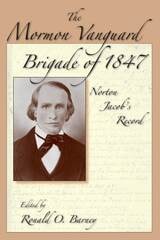
Mormon Vanguard Brigade Of 1847
Norton Jacob's Recordedited by Ronald O. Barney
Utah State University Press, 2005
Mormon Women at the Crossroads
Global Narratives and the Power of ConnectednessCaroline Kline
University of Illinois Press, 2022
Winner of the Mormon History Association Best International Book Award
The Church of Jesus Christ of Latter-day Saints continues to contend with longstanding tensions surrounding gender and race. Yet women of color in the United States and across the Global South adopt and adapt the faith to their contexts, many sharing the high level of satisfaction expressed by Latter-day Saints in general. Caroline Kline explores the ways Latter-day Saint women of color in Mexico, Botswana, and the United States navigate gender norms, but also how their moral priorities and actions challenge Western feminist assumptions. Kline analyzes these traditional religious women through non-oppressive connectedness, a worldview that blends elements of female empowerment and liberation with a broader focus on fostering positive and productive relationships in different realms. Even as members of a patriarchal institution, the women feel a sense of liberation that empowers them to work against oppression and against alienation from both God and other human beings.
Vivid and groundbreaking, Mormon Women at the Crossroads merges interviews with theory to offer a rare discussion of Latter-day Saint women from a global perspective.
Mormonism Unvailed
Eber D. Howe, with critical comments by Dan VogelEber Dudley Howe
Signature Books, 2015
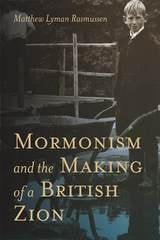
Mormonism and the Making of a British Zion
Matthew L. Rasmussen
University of Utah Press, 2016
After many British believers left for America, church membership in England fell so sharply that the movement in Britain seemed to be on the brink of collapse. Yet British Mormonism gradually resurged and continues today. How did this religious minority flourish when so many nineteenth-century revivalist movements did not? Rasmussen explains Mormonism’s inception, perpetuation, and maturation in Britain in a compelling case study of a “new religious movement” with staying power. From its establishment in 1837 to its maturation in 1998, the Mormon perspective of Britain shifted dramatically. This book chronicles that shift, and illustrates how doctrinal adaptation has enabled Mormonism in Britain to persist.
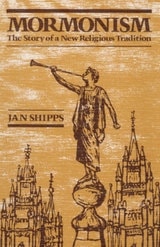
Mormonism
THE STORY OF A NEW RELIGIOUS TRADITIONJan Shipps
University of Illinois Press, 1985
Mormonisms in Asia
Stories of Global Faith and Local LivesEdited by Melissa Wei-Tsing Inouye and Laurie F. Maffly-Kipp
University of Illinois Press, 2026
This volume focuses on Asia, a region that includes more than half the world's population, but where Restoration traditions specifically and Christianity broadly are minority faiths. It uses a combination of focused case studies and theoretical analysis to highlight broader trends and themes that those studies suggest about the meaning of a globalized faith in the twenty-first century. The first section of this book lays out ways of thinking about Mormonism’s global presence in terms of the nation-state, and the essays explore where and how Restoration traditions as institutional actors have made their way into new political and social contexts. The second section studies the tensions created by the encounters of LDS norms with preexisting cultural and political values in local settings. These essays burrow more deeply into political and religious realities and explore the variations in Mormon cultural assumptions about politics and society, as well as the relationship between local congregants and the Mormon administrative center. The final section presents fine-grained
studies that focus attention on one of the central features of LDS lived religion: the role of gender and the family in the religious community. In each case, divine dictates necessarily bump up against traditional societal norms that converts must navigate.
Contributors: John-Charles Duffy, Stacilee Ford, Taunalyn Ford, Conan Grames, David J. Howlett, Melissa Wei-Tsing Inouye, Keisha Lai, Laurie Maffly-Kipp, Matthew Martinich, Meagan Rainock, Shinji Takagi, Pierre Vendassi
Mormons and Mormonism
An Introduction to an American World ReligionEdited by Eric A. Eliason
University of Illinois Press, 2001
This volume explains how the earliest Mormons viewed their religion and suggests that the Book of Mormon appeared to them as an exciting document of social protest. Contributors consider the history of persecution of the Mormons, the church's relationship with the state of Utah and with other divisions of Christianity, and culture clashes in the church's missionary efforts. Mormons and Mormonism also places beliefs such as vicarious baptism for the dead in a larger context of community and religious ideals.
The founding of Mormonism and its rapid emergence as a new world religion are among the most intriguing aspects of American religious history and among the most neglected in the religion classroom. This much-needed volume lays the groundwork for a better understanding of the LDS Church and its historical and potential impact on the United States and the world.
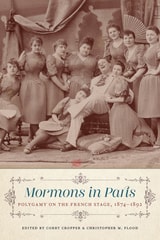
Mormons in Paris
Polygamy on the French Stage, 1874-1892Corry Cropper
Bucknell University Press, 2021
In the late nineteenth century, numerous French plays, novels, cartoons, and works of art focused on Mormons. Unlike American authors who portrayed Mormons as malevolent “others,” however, French dramatists used Mormonism to point out hypocrisy in their own culture. Aren't Mormon women, because of their numbers in a household, more liberated than French women who can't divorce? What is polygamy but another name for multiple mistresses? This new critical edition presents translations of four musical comedies staged or published in France in the late 1800s: Mormons in Paris (1874), Berthelier Meets the Mormons (1875), Japheth’s Twelve Wives (1890), and Stephana’s Jewel (1892). Each is accompanied by a short contextualizing introduction with details about the music, playwrights, and staging. Humorous and largely unknown, these plays use Mormonism to explore and mock changing French mentalities during the Third Republic, lampooning shifting attitudes and evolving laws about marriage, divorce, and gender roles.
Published by Bucknell University Press. Distributed worldwide by Rutgers University Press.
Mormons, Musical Theater, and Belonging in America
Jake Johnson
University of Illinois Press, 2019
Moth and Rust
Mormon Encounters with DeathSteven Carter
Signature Books, 2017
about death: it’s a veil or a mission call to the spirit
world. But our actual encounters with the reality of
death inevitably change us in ways that are difficult
to articulate.
In this collection, Mormon writers wrestle with
mortality and its aftermath. A family sings a hesitant
rendition of Happy Birthday to a grief-stricken
mother who buried her toddler just a few hours earlier;
an agnostic son decides he’s Mormon enough to
arrange a funeral for his believing father.
Some essays use death as a means to understand
faith. One author imagines a world where Heavenly
Mother visits her children in the form of their
female ancestors, appearing to her descendants in
times of grief or pain.
Others address practicalities: how do you protect
your children from death while still allowing them
to experience the world; how do you get through
one more nausea-ridden day of cancer treatment?
Still others delve into death’s questions: does the
overwhelming suffering that occurs in the animal
kingdom have a function in the “plan of happiness”?
Sometimes humorous, sometimes heartbreaking,
always thought-provoking, these personal essays,
poems, and stories may never be heard at a Mormon
funeral. But they probably should be.