Results by title
153 books match the query 'Cities and towns' and 12 start with m
MAKING SENSE OF THE CITY
LOCAL GOVERNMENT, CIVIC CULTURE, AND COMMUNITY LIFE IN URBAN AMERICAROBERT B. FAIRBANKS
The Ohio State University Press, 2001
Making Sense of the City explores the ways in which urbanites have attempted to confront the challenges of urban life during the nineteenth and twentieth centuries. In the spirit of Zane L. Miller, whom this volume honors, the nine contributors focus closely on the words and actions of individuals, institutions, and organizations who participated in the public discourse about what the city was or could be. Through an examination of such topics as city charters, city planning texts, neighborhood organizations, municipal recreation programs, urban government reforms, urban identity, and fair housing campaigns, the authors offer insight into the process through which ideas about the nature of the city have affected action in the urban environment.
Contributing authors are
- Robert B. Fairbanks
- Patricia Mooney-Melvin
- Judith Spraul-Schmidt
- Alan I. Marcus
- Robert A. Burnham
- Andrea Tuttle Kornbluh
- Bradley D. Cross
- Charles F. Casey-Leininger
- Roger W. Lotchin
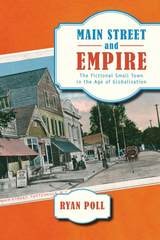
Main Street and Empire
The Fictional Small Town in the Age of GlobalizationPoll, Ryan
Rutgers University Press, 2012
In Main Street and Empire, Ryan Poll addresses this need, arguing that the small town, as evoked by the image of “Main Street,” is not a relic of the past but rather a metaphorical screen upon which America’s “everyday” stories and subjects are projected on both a national and global scale.
Bringing together a broad selection of texts—from Thornton Wilder’s Our Town, Grace Metalious’s Peyton Place, and Peter Weir’s The Truman Show to the speeches of William McKinley, Ronald Reagan, Sarah Palin, and Barack Obama—Poll examines how the small town is used to imagine and reproduce the nation throughout the twentieth- and into the twenty-first century. He contends that the dominant small town, despite its innocent, nostalgic appearance, is central to the development of the U.S. empire and global capitalism.
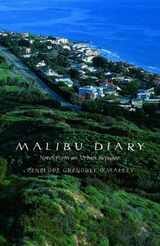
Malibu Diary
Notes From An Urban RefugeePenelope O'Malley
University of Nevada Press, 2004
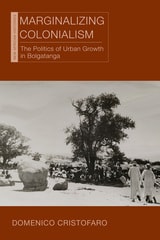
Marginalizing Colonialism
The Politics of Urban Growth in BolgatangaDomenico Cristofaro
Ohio University Press, 2026
Marginalizing Colonialism offers a social, political, and spatial history of Bolgatanga, a northern Ghanaian town whose colonial-era urban development has been largely overlooked in African historiography. Covering the late nineteenth century through the 1940s, the book traces how this settlement—long characterized as a remote hinterland of the British Empire—emerged as a commercial and political center in the region. Rather than depicting urbanization as an imperial project, it reveals how African actors actively shaped Bolgatanga’s growth and repeatedly marginalized, redirected, and evaded colonial authority.
The narrative follows Bolgatanga’s transformation from a dispersed settlement organized around kinship, ritual geographies, and earth shrines into a dynamic urban hub integrated into regional trade networks. Central to this shift were new land tenure systems, commercial expansion, and changing spatial practices. By the 1930s and 1940s, trade in kola, groundnuts, livestock, and other goods surged, stimulated by new roads and increased mobility. Population growth converted farmland into leased plots, permanent buildings replaced older compounds, and areas around the market became focal points of economic and social life.
These changes were driven not by the colonial state but rather by local negotiations and strategic adaptations. Chiefs, earth priests, merchants, and migrant traders mediated and reshaped colonial policies, while missionaries and settlers concluded land agreements beyond official oversight. Roads and marketplaces, planned through negotiations between colonial officials and local chiefs and built largely through African labor, became central infrastructures of local economic life. Even as colonial administrators sought to codify land tenure and regulate commerce, their influence remained largely nominal—a background presence in a story propelled by African initiative.
Drawing on archival documents, oral histories, and unpublished manuscripts by local intellectuals, Marginalizing Colonialism provides the first comprehensive urban history of Bolgatanga. It challenges dominant narratives in African colonial and urban historiography by exposing the silences of the colonial archive and highlighting the significance of medium-sized towns as arenas of negotiation and creativity. Ultimately, the book argues that Bolgatanga’s urbanization was a locally driven process that redefined power, space, and governance—leaving a legacy that continues to shape the city’s identity and regional role today.
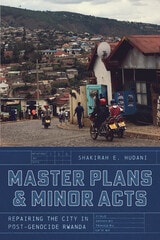
Master Plans and Minor Acts
Repairing the City in Post-Genocide RwandaShakirah E. Hudani
University of Chicago Press, 2024
Master Plans and Minor Acts examines a “material politics of repair” in post-genocide Rwanda, where in a country saturated with deep historical memory, spatial master planning aims to drastically redesign urban spaces. How is the post-conflict city reconstituted through the work of such planning, and with what effects for material repair and social conciliation?
Through extended ethnographic and qualitative research in Rwanda in the decades after the genocide of 1994, this book questions how repair after conflict is realized amidst large-scale urban transformation. Bridging African studies, urban studies, and human geography in its scope, this work ties Rwanda’s transformation to contexts of urban change in other post-conflict spaces, bringing to the fore critical questions about the ethics of planning in such complex geographies.
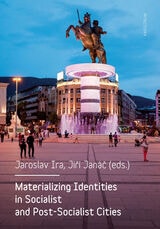
Materializing Identities in Socialist and Post-Socialist Cities
Edited by Jaroslav Ira and Jirí Janác
Karolinum Press, 2017
Metropolis 1890-1940
Edited by Anthony Sutcliffe
University of Chicago Press, 1984
Metropolitan Resilience in a Time of Economic Turmoil
Edited by Michael A. Pagano
University of Illinois Press, 2013
Cities, counties, school districts and other local governments have suffered a long-lasting period of fiscal challenges since the beginning of the Great Recession. Metropolitan governments continue to adjust to the "new normal" of sharply lower property values, consumer sales, and personal income. Contributors to this volume include elected officials, academics, key people in city administrations, and other nationally recognized experts who discuss solutions to the urban problems created by the Great Recession.
Metropolitan Resilience in a Time of Economic Turmoil looks at the capacity of local governments to mobilize resources efficiently and effectively, as well as the overall effects of the long-term economic downturn on quality of life. Introducing the reader to the fiscal effects of the Great Recession on cities, the book examines the initial fraying and subsequent mending of the social safety net, the opportunities for pursuing economic development strategies, the challenges of inter-jurisdictional cooperation, and the legacy costs of pension liabilities and infrastructure decay.
Contributors are Phil Ashton, Raphael Bostic, Richard Feiock, Rachel A. Gordon, Rebecca Hendrick, Geoffrey J.D. Hewings, David Merriman, Richard Nathan, Michael A. Pagano, Breeze Richardson, Annette Steinacker, Nik Theodore, Rachel Weber, and Margaret Weir.
Middletown families
fifty years of change and continuityTheodore. Caplow
University of Minnesota Press, 1982
Mining Cultures
Men, Women, and Leisure in Butte, 1914-41Mary Murphy
University of Illinois Press, 1997
Butte, Montana, long deserved its reputation as a wide-open town. Mining Cultures shows how the fabled Montana city evolved from a male-dominated mining enclave to a community in which men and women participated on a more equal basis as leisure patterns changed and consumer culture grew. Mary Murphy looks at how women worked and spent their leisure time in a city dominated by the quintessential example of "men's work": mining. Bringing Butte to life, she adds in-depth research on church weeklies, high school yearbooks, holiday rituals, movie plots, and news of local fashion to archival material and interviews.
A richly illustrated jaunt through western history, Mining Cultures is the never-told chronicle of how women transformed the richest hill on earth.
Mosques in the Metropolis
Incivility, Caste, and Contention in EuropeElisabeth Becker
University of Chicago Press, 2021
Multicultural Cities of the Habsburg Empire, 1880–1914
Imagined Communities and Conflictual EncountersCatherine Horel
Central European University Press, 2023
Catherine Horel has undertaken a comparative analysis of the societal, ethnic, and cultural diversity in the last decades of the Habsburg Monarchy as represented in twelve cities: Arad, Bratislava, Brno, Chernivtsi, Lviv, Oradea, Rijeka, Sarajevo, Subotica, Timișoara, Trieste, and Zagreb. By purposely selecting these cities, the author aims to counter the disproportionate attention that the largest cities in the empire receive.
With a focus on the aspects of everyday life faced by the city inhabitants (associations, schools, economy, and municipal politics) the book avoids any idealization of the monarchy as a paradise of peaceful multiculturalism, and also avoids exaggerating conflicts. The author claims that the world of the Habsburg cities was a dynamic space where many models coexisted and created vitality, emulation, and conflict. Modernization brought about the dissolution of old structures, but also mobility, the progress of education, the explosion of associative life, and constantly growing cultural offerings.