Results by title
205 books match the query 'City' and 5 start with m
MAKING SENSE OF THE CITY
LOCAL GOVERNMENT, CIVIC CULTURE, AND COMMUNITY LIFE IN URBAN AMERICAROBERT B. FAIRBANKS
The Ohio State University Press, 2001
Making Sense of the City explores the ways in which urbanites have attempted to confront the challenges of urban life during the nineteenth and twentieth centuries. In the spirit of Zane L. Miller, whom this volume honors, the nine contributors focus closely on the words and actions of individuals, institutions, and organizations who participated in the public discourse about what the city was or could be. Through an examination of such topics as city charters, city planning texts, neighborhood organizations, municipal recreation programs, urban government reforms, urban identity, and fair housing campaigns, the authors offer insight into the process through which ideas about the nature of the city have affected action in the urban environment.
Contributing authors are
- Robert B. Fairbanks
- Patricia Mooney-Melvin
- Judith Spraul-Schmidt
- Alan I. Marcus
- Robert A. Burnham
- Andrea Tuttle Kornbluh
- Bradley D. Cross
- Charles F. Casey-Leininger
- Roger W. Lotchin
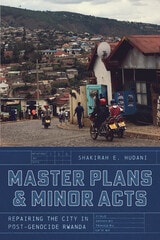
Master Plans and Minor Acts
Repairing the City in Post-Genocide RwandaShakirah E. Hudani
University of Chicago Press, 2024
Master Plans and Minor Acts examines a “material politics of repair” in post-genocide Rwanda, where in a country saturated with deep historical memory, spatial master planning aims to drastically redesign urban spaces. How is the post-conflict city reconstituted through the work of such planning, and with what effects for material repair and social conciliation?
Through extended ethnographic and qualitative research in Rwanda in the decades after the genocide of 1994, this book questions how repair after conflict is realized amidst large-scale urban transformation. Bridging African studies, urban studies, and human geography in its scope, this work ties Rwanda’s transformation to contexts of urban change in other post-conflict spaces, bringing to the fore critical questions about the ethics of planning in such complex geographies.
Mediators
Aesthetics, Politics, and the CityReinhold Martin
University of Minnesota Press, 2014
Forerunners: Ideas First is a thought-in-process series of breakthrough digital publications. Written between fresh ideas and finished books, Forerunners draws on scholarly work initiated in notable blogs, social media, conference plenaries, journal articles, and the synergy of academic exchange. This is gray literature publishing: where intense thinking, change, and speculation take place in scholarship.
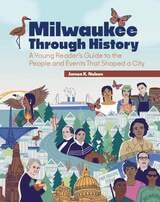
Milwaukee Through History
A Young Reader's Guide to the People and Events That Shaped a CityJames K. Nelsen
Wisconsin Historical Society Press, 2025
This richly illustrated book for middle grade and high school learners uses primary sources and archival photos to explore Milwaukee’s role in Wisconsin and US history. Milwaukee Through History highlights the city’s multiple transformations—from a resource-rich homeland of Ho-Chunk, Menominee, Ojibwe, Potawatomi, and other Native peoples to an immigrant hub to an industrial boomtown and, finally, to a vibrant tourist destination that continues to grapple with issues of poverty and inequality.
Readers will discover key people, places, events, and innovations that made Milwaukee—and national—history, including:
• Freedom seeker Joshua Glover
• Industrial giants like Harley Davidson & Allen Bradley
• Whitnall Park and the North Point Water Tower
• Labor movements and the fair housing marches
• Civil rights leader Vel Phillips
Author James K. Nelsen sheds new light on important events and milestones in history, including the American Revolution, the War of 1812, the Civil War, and the Great Migration. Written with middle and high school readers in mind, the book will appeal to people of all ages who are curious about Milwaukee’s history and culture. Milwaukee Through History is both an engaging supplement to Wisconsin and US history curricula and a great read for anyone seeking a deeper understanding of a diverse and dynamic city.

Modern Melbourne
City and Site of Nature and CultureRod Giblett
Intellect Books, 2020
It places Melbourne within an international context by comparing and contrasting it to other cities built on or beside wetlands, including London, New York, Paris, Los Angeles, and Toronto. Further, it is the first book to apply the work of European thinkers and writers on modernity and the modern city—such as Walter Benjamin and Peter Sloterdijk—to an analysis of Melbourne. Giblett considers the intertwining of nature and culture, people and place, and cities and wetlands in this bioregional and ecocultural analysis. Placing the city in its proper bioregional and international contexts, Modern Melbourne provides a rich historical analysis of the cultural capital of Australia.