Results by title
808 books match the query 'Civilization' and 38 start with m

Mad Men, Death and the American Dream
Elisabeth Bronfen
Diaphanes, 2016
We are drawn to Mad Men’s dapper cast of characters, argues Elisabeth Bronfen, because, although the series has drawn praise for its depiction of the 1960s and ’70s, it speaks equally well to cultural concerns of the present. The prototypical con man, Don makes a precarious journey from poverty to fame and prosperity that maps the pursuit of moral perfectionism that features prominently throughout American cultural history. Yet a lingering sense of dissatisfaction hints that the lifestyle Don strives for may be a mere manifestation of the illusory American dream—cemented in the same collective desires Don draws on to advertise cigarettes and luxury cars by day.
"Mad Men," Death and the American Dream takes readers through the cultural fantasies that underlie characters’ motivations in this sophisticated and immensely popular television series, showing how—then as now—we turn to fantasy in the face of conflicts that cannot be resolved in political reality. Fascinating and full of accessible insights, the book will appeal to the show’s many fans, as well as anyone interested in American studies, media studies, or cultural history.
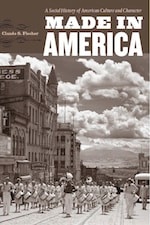
Made in America
A Social History of American Culture and CharacterClaude S. Fischer
University of Chicago Press, 2010
Our nation began with the simple phrase, “We the People.” But who were and are “We”? Who were we in 1776, in 1865, or 1968, and is there any continuity in character between the we of those years and the nearly 300 million people living in the radically different America of today?
With Made in America, Claude S. Fischer draws on decades of historical, psychological, and social research to answer that question by tracking the evolution of American character and culture over three centuries. He explodes myths—such as that contemporary Americans are more mobile and less religious than their ancestors, or that they are more focused on money and consumption—and reveals instead how greater security and wealth have only reinforced the independence, egalitarianism, and commitment to community that characterized our people from the earliest years. Skillfully drawing on personal stories of representative Americans, Fischer shows that affluence and social progress have allowed more people to participate fully in cultural and political life, thus broadening the category of “American” —yet at the same time what it means to be an American has retained surprising continuity with much earlier notions of American character.
Firmly in the vein of such classics as The Lonely Crowd and Habits of the Heart—yet challenging many of their conclusions—Made in America takes readers beyond the simplicity of headlines and the actions of elites to show us the lives, aspirations, and emotions of ordinary Americans, from the settling of the colonies to the settling of the suburbs.
Major Women Writers of Seventeenth-Century England
James Fitzmaurice, Josephine A. Roberts, Carol L. Barash, Eugene R. Cunnar, and Nancy A. Gutierrez, Editors
University of Michigan Press, 1997
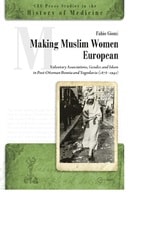
Making Muslim Women European
Voluntary Associations, Gender, and Islam in Post-Ottoman Bosnia and Yugoslavia (1878-1941)Fabio Giomi
Central European University Press, 2021
This social, cultural, and political history of Slavic Muslim women of the Yugoslav region in the first decades of the post-Ottoman era is the first to provide a comprehensive overview of the issues confronting these women. It is based on a study of voluntary associations (philanthropic, cultural, Islamic-traditionalist, and feminist) of the period.
It is broadly held that Muslim women were silent and relegated to a purely private space until 1945, when the communist state “unveiled” and “liberated” them from the top down. After systematic archival research in Bosnia, Croatia, Serbia, and Austria, Fabio Giomi challenges this view by showing: • How different sectors of the Yugoslav elite through association publications, imagined the role of Muslim women in post-Ottoman times, and how Muslim women took part in the construction or the contestation of these narratives. • How associations employed different means in order to forge a generation of “New Muslim Women” able to cope with the post-Ottoman political and social circumstances. • And how Muslim women used the tools provided by the associations in order to pursue their own projects, aims and agendas. The insights are relevant for today’s challenges facing Muslim women in Europe. The text is illustrated with exceptional photographs.T

Making Stars
Biography and Celebrity in Eighteenth-Century BritainNora Nachumi
University of Delaware Press, 2022
Making a Social Body
British Cultural Formation, 1830-1864Mary Poovey
University of Chicago Press, 1995
Poovey illuminates the ways literary genres, such as the novel, and innovations in social thought, such as statistical thinking and anatomical realism, helped separate social concerns from the political and economic domains. She then discusses the influence of the social body concept on Victorian ideas about the role of the state, examining writings by James Phillips Kay, Thomas Chalmers, and Edwin Chadwick on regulating the poor. Analyzing the conflict between Kay's idea of the social body and Babbage's image of the social machine, she considers the implications of both models for the place of Victorian women. Poovey's provocative readings of Disraeli's Coningsby, Gaskell's Mary Barton, and Dickens's Our Mutual Friend show that the novel as a genre exposed the role gender played in contemporary discussions of poverty and wealth.
Making a Social Body argues that gender, race, and class should be considered in the context of broader concerns such as how social authority is distributed, how institutions formalize knowledge, and how truth is defined.
Mama Africa
Reinventing Blackness in BahiaPatricia de Santana Pinho
Duke University Press, 2010
Pinho explores how Bahian cultural production influences and is influenced by black diasporic cultures and the idealization of Africa—to the extent that Bahia draws African American tourists wanting to learn about their heritage. Analyzing the conceptions of blackness produced by the blocos afro, she describes how Africa is re-inscribed on the body through clothes, hairstyles, and jewelry; once demeaned, blackness is reclaimed as a source of beauty and pride. Turning to the body’s interior, Pinho explains that the myth of Mama Africa implies that black appearances have corresponding black essences. Musical and dance abilities are seen as naturally belonging to black people, and these traits are often believed to be transmitted by blood. Pinho argues that such essentialized ideas of blackness render black culture increasingly vulnerable to exploitation by the state and commercial interests. She contends that the myth of Mama Africa, while informing oppositional black identities, overlaps with a constraining notion of Bahianness promoted by the government and the tourist industry.
Manliness and Civilization
A Cultural History of Gender and Race in the United States, 1880-1917Gail Bederman
University of Chicago Press, 1995
In turn-of-the-century America, cultural ideals of manhood changed profoundly, as Victorian notions of self-restrained, moral manliness were challenged by ideals of an aggressive, overtly sexualized masculinity. Bederman traces this shift in values and shows how it brought together two seemingly contradictory ideals: the unfettered virility of racially "primitive" men and the refined superiority of "civilized" white men. Focusing on the lives and works of four very different Americans—Theodore Roosevelt, educator G. Stanley Hall, Ida B. Wells, and Charlotte Perkins Gilman—she illuminates the ideological, cultural, and social interests these ideals came to serve.
Manufacturing Confucianism
Chinese Traditions and Universal CivilizationLionel M. Jensen
Duke University Press, 1998
Tracing the history of the Jesuits’ invention of Confucius and of themselves as native defenders of Confucius’s teaching, Jensen reconstructs the cultural consequences of the encounter between the West and China. For the West, a principal outcome of this encounter was the reconciliation of empirical investigation and theology on the eve of the scientific revolution. Jensen also explains how Chinese intellectuals in the early twentieth century fashioned a new cosmopolitan Chinese culture through reliance on the Jesuits’ Confucius and Confucianism. Challenging both previous scholarship and widespread belief, Jensen uses European letters and memoirs, Christian histories and catechisms written in Chinese, translations and commentaries on the Sishu, and a Latin summary of Chinese culture known as the Confucius Sinarum Philosophus to argue that the national self-consciousness of Europe and China was bred from a cultural ecumenism wherein both were equal contributors.
Maps and Civilization
Cartography in Culture and Society, Third EditionNorman J. W. Thrower
University of Chicago Press, 2008
The third edition of Maps and Civilization incorporates numerous revisions, features new material throughout the book, and includes a new alphabetized bibliography.
Praise for previous editions of Maps and Civilization:
“A marvelous compendium of map lore. Anyone truly interested in the development of cartography will want to have his or her own copy to annotate, underline, and index for handy referencing.”—L. M. Sebert, Geomatica

Maps in Tudor England
P. D. A. Harvey
University of Chicago Press, 1993
In Maps in Tudor England, P. D. A. Harvey traces this revolution of production, understanding, and use of maps in England from 1485 to 1603. By the mid-sixteenth century, mapmapers had begun to draw maps to a consistent scale, reproducing the results of measured survey. By the end of the century, maps drawn to scale and showing features by conventional signs were commonly used throughout England.
In this survey Harvey focuses on maps of small areas, up to the size of a county, exploring their impact on the political and social life of England in the spheres of the military, government, towns, landed estates, buildings, and the law. Richly illustrated with thirty color and fifty black and white reproductions of rare maps, his account is an informative and accessible introduction to this revolutionary period in the history of cartography, as well as a unique visual history of Tudor England.
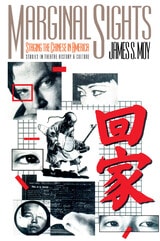
Marginal Sights
Staging the Chinese in AmericaJames S. Moy
University of Iowa Press, 1994
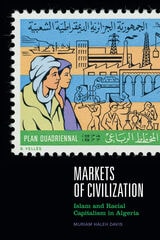
Markets of Civilization
Islam and Racial Capitalism in AlgeriaMuriam Haleh Davis
Duke University Press, 2022
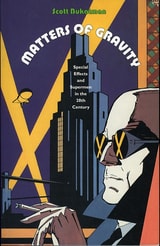
Matters of Gravity
Special Effects and Supermen in the 20th CenturyScott Bukatman
Duke University Press, 2003
Considering theme parks, cyberspace, cinematic special effects, superhero comics, and musical films, Matters of Gravity highlights phenomena that make technology spectacular, permit unfettered flights of fantasy, and free us momentarily from the weight of gravity and history, of past and present. Bukatman delves into the dynamic ways pop culture imagines that apotheosis of modernity: the urban metropolis. He points to two genres, musical films and superhero comics, that turn the city into a unique site of transformative power. Leaping in single bounds from lively descriptions to sharp theoretical insights, Matters of Gravity is a deft, exhilarating celebration of the liberatory effects of popular culture.
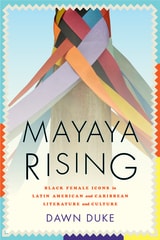
Mayaya Rising
Black Female Icons in Latin American and Caribbean Literature and CultureDawn Duke
Bucknell University Press, 2023
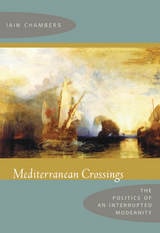
Mediterranean Crossings
The Politics of an Interrupted ModernityIain Chambers
Duke University Press, 2008
In evocative and erudite prose, Chambers renders the Mediterranean a mutable space, profoundly marked by the linguistic, literary, culinary, musical, and intellectual dissemination of Arab, Jewish, Turkish, and Latin cultures. He brings to light histories of Mediterranean crossings—of people, goods, melodies, thought—that are rarely part of orthodox understandings. Chambers writes in a style that reflects the fluidity of the exchanges that have formed the region; he segues between major historical events and local daily routines, backwards and forwards in time, and from one part of the Mediterranean to another. A sea of endlessly overlapping cultural and historical currents, the Mediterranean exceeds the immediate constraints of nationalism and inflexible identity. It offers scholars an opportunity to rethink the past and present and to imagine a future beyond the confines of Western humanistic thought.
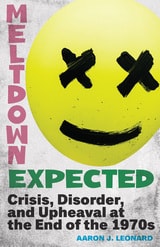
Meltdown Expected
Crisis, Disorder, and Upheaval at the end of the 1970sAaron J. Leonard
Rutgers University Press, 2024
Meltdown Expected tells the story of the power shifts from late 1978 through 1979 whose repercussions are still being felt. Iran’s revolution led to a hostage crisis while neighbouring Afghanistan became the site of a proxy war between the USSR and the US, who supplied aid to Islamic mujahideen fighters that would later form the Taliban. Meanwhile, as tragedies like the Jonestown mass suicide and the assassination of Harvey Milk captured the nation’s attention, the government quietly reasserted and expanded the FBI’s intelligence powers. Drawing from recently declassified government documents and covering everything from Three Mile Island to the rise of punk rock, Aaron J. Leonard paints a vivid portrait of a tumultuous yet pivotal time in American history.
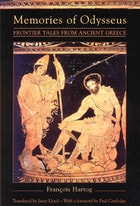
Memories of Odysseus
Frontier Tales From Ancient GreeceFrançois Hartog
University of Chicago Press, 2001
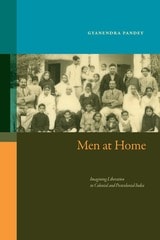
Men at Home
Imagining Liberation in Colonial and Postcolonial IndiaGyanendra Pandey
Duke University Press, 2025

Mencken’s America
H. L. MenckenS. T. Joshi
Ohio University Press, 2004
Long famous as a political, social, and cultural gadfly, journalist and essayist H. L. Mencken was unafraid to speak his mind on controversial topics and to express his views in a deliberately provocative manner.
Mencken was prolific; much of his best work lies buried in the newspapers and magazines in which it originally appeared. Mencken’s America is a sampling of this uncollected work, arranged to present the wide-ranging treatise on American culture that Mencken himself never wrote.
The core of the book is a series of six articles on “The American” published in the Smart Set in 1913-14. Never before reprinted, they embody the essence of Mencken’s views on the deficiencies of his countrymen.
What was the problem with America? For Mencken, it could be summed up in one word: Puritanism. Puritanism accounted for much that was wrong with American culture: the prevalence of “militant morality” represented by Prohibition, by campaigns against prostitution, and by religious fundamentalism. American hostility toward the fine arts led to furious attempts to suppress any work of art that was thought to contravene conventional morality-attempts that Mencken chronicles with impressive scholarship in the essay “Puritanism as a Literary Force.”
Mencken reserved his greatest scorn for American political institutions. Opposed to the very principle of democracy and universal suffrage, he maintained that, in the absence of an educated electorate, all politicians are compelled to become demagogues.
Bracing, infuriating, and pungent, H. L. Mencken’s writings retain their relevance even after the passage of nearly a hundred years, cogently discussing issues with which Americans of the twenty-first century are still wrestling. Sagaciously edited by S. T. Joshi, one of the country’s foremost Mencken scholars, Mencken’s America is a superb example of America’s turning the looking glass on itself.
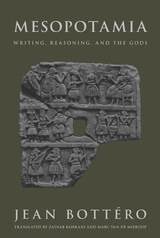
Mesopotamia
Writing, Reasoning, and the GodsJean Bottéro
University of Chicago Press, 1995
To give the reader some sense of how Mesopotamian civilization has been mediated and interpreted in its transmission through time, Bottero begins with an account of Assyriology, the discipline devoted to the ancient culture. This transmission, compounded with countless discoveries, would not have been possible without the surprising decipherment of the cuneiform writing system. Bottero also focuses on divination in the ancient world, contending that certain modes of worship in Mesopotamia, in their application of causality and proof, prefigure the "scientific mind."
Mesopotamian Chronicles
Jean-Jacques Glassner
SBL Press, 2004
Mexico Reading the United States
Linda Egan
Vanderbilt University Press, 2009
In a time of ever-increasing migration of capital and human beings, this book turns on its head the usual perspective of U.S. economic and cultural dominance in order to deepen understanding of the bi-national relationship.
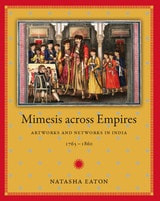
Mimesis across Empires
Artworks and Networks in India, 1765-1860Natasha Eaton
Duke University Press, 2013
Minding the South
John Shelton Reed
University of Missouri Press, 2003
You're in the American South now, a proud region with a distinctive history and culture. A place that echoes with names like Thomas Jefferson and Robert E. Lee, Scarlett O'Hara and Uncle Remus, Martin Luther King and William Faulkner, Billy Graham, Mahalia Jackson, Muhammad Ali, Elvis Presley. Home of the country blues and country music, bluegrass and Dixieland jazz, gospel music and rock and roll. Where menus offer both down-home biscuits and gravy and uptown shrimp and grits. Where churches preach against "cigarettes, whiskey, and wild, wild women" (all Southern products) and where American football is a religion.
For more than thirty years John Shelton Reed has been “minding” the South—watching over it, providing commentary upon it. He is the author or editor of thirteen books about the South, and despite his disclaimer regarding formal study of Southern history, Reed has read widely and in depth about the South. His primary focus is upon Southerners’ present-day culture and consciousness, but he knows that one must approach the South historically in order to understand the place and its people.
Miners, Merchants, and Farmers in Colonial Colombia
By Ann Twinam
University of Texas Press, 1982
The inhabitants of the department of Antioquía in north-central Colombia have played a unique role in that country’s economic history. During the colonial period Antioqueño placer miners supplied a substantial portion of New Granada’s gold exports. Their nineteenth-century descendants pioneered investments in lode mining, colonization, international commerce, banking, stock raising, tobacco, and coffee. In the twentieth century, Antioqueños initiated the industrialization of the regional capital, Medellín.
Many theories have been set forth to account for the special energy and initiative of Antioqueños. They range from ethnic and psychological interpretations (Antioqueños are descended from Jews or Basques; they are driven to succeed because of status deprivation) to historical explanations that emphasize their geographic isolation, mining heritage, or the coffee-export economy. In Miners, Merchants, and Farmers in Colonial Colombia, Ann Twinam critiques these theories and sets forth her own revisionist interpretation of Antioqueño enterprise. Rather than emphasize the alien or deviant in Antioqueño psychology or culture, Twinam re-creates the region’s late colonial economic and social structure and attributes the origins of Antioqueño enterprise to a particular mix of human and natural resources that directed the region’s development toward capital accumulation and reinvestment.
Although the existing limitations of their colonial environment may have forced Antioqueños along enterprising pathways initially, the continuation of Antioqueño investments to the present day suggests that their adaptation to a specific economic reality became a way of life transcending the historical conditions that created it.
Mirror in Parchment
The Luttrell Psalter and the Making of Medieval EnglandMichael Camille
University of Chicago Press, 1998
The richly illuminated Luttrell Psalter was created for the English nobleman Sir Geoffrey Luttrell (1276-1345). Inexpensive mechanical illustration has since disseminated the book's images to a much wider audience; hence the Psalter's representations of manorial life have come to profoundly shape our modern idea of what medieval English people, high and low, looked like at work and at play. Alongside such supposedly truthful representations, the Psalter presents myriad images of fantastic monsters and beasts. These patently false images have largely been disparaged or ignored by modern historians and art historians alike, for they challenge the credibility of those pictures in the Luttrell Psalter that we wish to see as real.
In the conviction that medieval images were not generally intended to reflect daily life but rather to shape a new reality, Michael Camille analyzes the Psalter's famous pictures as representations of the world, imagined and real, of its original patron. Addressed are late medieval chivalric ideals, physical sites of power, and the boundaries of Sir Geoffrey's imagined community, wherein agricultural laborers and fabulous monsters play a similar ideological role. The Luttrell Psalter thus emerges as a complex social document of the world as its patron hoped and feared it might be.
Modern Chinese Literary and Cultural Studies in the Age of Theory
Reimagining a FieldRey Chow, ed.
Duke University Press, 2000
One of the volume’s provocative suggestions is that the old model of area studies—an offshoot of U.S. Cold War strategy that found its anchorage in higher education—is no longer feasible for the diverse and multifaceted experiences that are articulated under the rubric of “Chineseness.” As Rey Chow argues in her introduction, the notion of a monolithic Chineseness bound ultimately to mainland China is, in itself, highly problematic because it recognizes neither the material realities of ethnic minorities within China nor those of populations in places such as Tibet, Taiwan, and post–British Hong Kong. Above all, this book demonstrates that, as the terms of a chauvinistic sinocentrism become obsolete, the critical use of theory—particularly by younger China scholars whose enthusiasm for critical theory coincides with changes in China’s political economy in recent years—will enable the emergence of fresh connections and insights that may have been at odds with previous interpretive convention.
Originally published as a special issue of the journal boundary 2, this collection includes two new essays and an afterword by Paul Bové that places its arguments in the context of contemporary cultural politics. It will have far-reaching implications for the study of modern China and will be of interest to scholars of theory and culture in general.
Contributors. Stanley K. Abe, Ien Ang, Chris Berry, Paul Bové, Sung-cheng Yvonne Chang, Rey Chow, Dorothy Ko, Charles Laughlin, Leung Ping-kwan, Kwai-cheung Lo, Christopher Lupke, David Der-wei Wang, Michelle Yeh

Modern Japanese Cuisine
Food, Power and National IdentityKatarzyna J. Cwiertka
Reaktion Books, 2015
Katarzyna J. Cwiertka demonstrates that key shifts in the Japanese diet were, in many cases, a consequence of modern imperialism. Exploring reforms in military catering and home cooking, wartime food management and the rise of urban gastronomy, Cwiertka shows how Japan’s numerous regional cuisines were eventually replaced by a set of foods and practices with which the majority of Japanese today ardently identify.
The result of over a decade of research, Modern Japanese Cuisine is a fascinating look at the historical roots of some of the world’s best cooking and will provide appetizing reading for scholars of Japanese culture and foodies alike.
Modern Mexican Culture
Critical FoundationsEdited by Stuart A. Day
University of Arizona Press, 2017
Modern Mexican Culture offers an enriching and deep investigation of key ideas and events in Mexico through an examination of art and history. Experts in Mexican cultural and literary studies cover the 1968 Tlatelolco student massacre, the figure of the charro (cowboy), the construct of the postrevolutionary teacher, the class-correlated construct of gente decente, a borderlands response to the rhetoric of dominance, and the “democratic transition” in late twentieth-century Mexico. Each essay is a rich reading experience, providing teachers and students alike with a deep and well-contextualized sense of Mexican life, culture, and politics.
Each chapter provides a historical grounding of its topic, followed by a multifaceted analysis through various artistic representations that provide a more complex view of Mexico. Chapters are accompanied by lists of readily available murals, political cartoons, plays, pamphlets, posters, films, poems, novels, and other cultural products. Modern Mexican Culture demonstrates the power of art and artists to question, explain, and influence the world around us.
Contributors:
Rafael Acosta Morales
Jacqueline E. Bixler
Marta Caminero-Santangelo
Debra A. Castillo
Christopher Conway
David S. Dalton
Stuart A. Day
Emily Hind
Robert McKee Irwin
Ryan Long
Dana A. Meredith
Magalí Rabasa
Luis Alberto Rodríguez Cortés
Fernando Fabio Sánchez
Ignacio M. Sánchez Prado
Analisa Taylor
Oswaldo Zavala
Modernity on Endless Trial
Leszek Kolakowski
University of Chicago Press, 1990
"Exemplary. . . . It should be celebrated." —Arthur C. Danto, New York Times Book Review
"This book . . . express[es] Kolakowski's thought on God, man, reason, history, moral truth and original sin, prompted by observation of the dramatic struggle among Christianity, the Enlightenment and modern totalitarianism. It is a wonderful collection of topics." —Thomas Nagel, Times Literary Supplement
"No better antidote to bumper-sticker thinking exists than this collection of 24 'appeals for moderation in consistency,' and never has such an antidote been needed more than it is now." —Joseph Coates, Chicago Tribune
"Whether learned or humorous, these essays offer gems in prose of diamond hardness, precision, and brilliance." —Thomas D'Evelyn, The Christian Science Monitor
A "Notable Books of the Year 1991" selection, New York Times Book Review—a "Noted with Pleasure" selection, New York Times Book Review—a "Summer Reading 1991" selection, New York Times Book Review—a "Books of the Year" selection, The Times.
More Adventures with Britannia
Personalities, Politics and Culture in BritainEdited by Wm. Roger Louis
University of Texas Press, 1998
Collecting the interpretations of outstanding writers on the literature and history of modern Britain, this book deals with a rich variety of themes, some familiar, many unexpected, taking the reader on a highly engaging excursion through British life and intellectual biography. The scope includes not only the personalities, politics, and culture of England, Wales, Scotland, and Ireland, but also the interaction of British and other societies throughout the world.
Mother India
Selections from the Controversial 1927 Text, Edited and with an Introduction by Mrinalini SinhaKatherine Mayo
University of Michigan Press, 2000
Mrinalini's Sinha's edition provides selections of this controversial book and commentary on the Mother India phenomenon. It also reprints a range of responses from Mayo's contemporaries. Sinha's edition works to locate the book and the controversy it incited in the context of U.S. domestic, British Imperial, and Indian nationalist politics. Unlike previous editions, Sinha's examines the history of cultural feminisms and the relations between women's movements in the United States, Britain, and India; the examination of these different movements reveals intriguing insights into the nature of the varied reactions to Mayo's book. The edition includes several formerly obscure contemporary responses to Mother India from representatives of the women's movement and of the anti-caste movement in India.
Intended as a tool for students and teachers alike, this book will be an important text in the field of women's studies, cultural studies, political science, history, and religion, among others.
Mrinalini Sinha is Associate Professor of History, Southern Illinois University. She is the author of Colonial Masculinity: The 'Manly Englishman' and the 'Effeminate Bengali' in the Late Nineteenth Century.
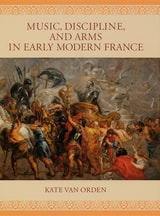
Music, Discipline, and Arms in Early Modern France
Kate van Orden
University of Chicago Press, 2005
The great pressure on French noblemen to take up the life of the warrior gave rise to bellicose art forms such as sword dances and equestrian ballets. Far from being construed as effeminizing, such combinations of music and the martial arts were at once refined and masculine-a perfect way to display military prowess. The incursion of music into riding schools and infantry drills contributed materially to disciplinary order, enabling the larger and more effective armies of the seventeenth century. This book is a history of the development of these musical spheres and how they brought forth new cultural priorities of civility, military discipline, and political harmony. Music, Discipline, and Arms in Early Modern France effectively illustrates the seminal role music played in mediating between the cultural spheres of letters and arms.
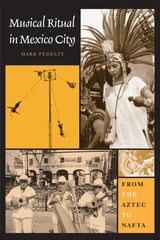
Musical Ritual in Mexico City
From the Aztec to NAFTABy Mark Pedelty
University of Texas Press, 2004
On the Zócalo, the main square of Mexico City, Mexico's entire musical history is performed every day. "Mexica" percussionists drum and dance to the music of Aztec rituals on the open plaza. Inside the Metropolitan Cathedral, choristers sing colonial villancicos. Outside the National Palace, the Mexican army marching band plays the "Himno Nacional," a vestige of the nineteenth century. And all around the square, people listen to the contemporary sounds of pop, rock, and música grupera. In all, some seven centuries of music maintain a living presence in the modern city.
This book offers an up-to-date, comprehensive history and ethnography of musical rituals in the world's largest city. Mark Pedelty details the dominant musical rites of the Aztec, colonial, national, revolutionary, modern, and contemporary eras, analyzing the role that musical ritual played in governance, resistance, and social change. His approach is twofold. Historical chapters describe the rituals and their functions, while ethnographic chapters explore how these musical forms continue to resonate in contemporary Mexican society. As a whole, the book provides a living record of cultural continuity, change, and vitality.
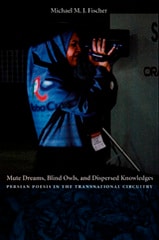
Mute Dreams, Blind Owls, and Dispersed Knowledges
Persian Poesis in the Transnational CircuitryMichael M. J. Fischer
Duke University Press, 2004
Fischer reveals how the distinctive expressive idiom emerging in contemporary Iranian film reworks Persian imagery that has itself been in dialogue with other cultures since the time of Zoroaster and ancient Greece. He examines a range of narrative influences on this expressive idiom and imagery, including Zoroastrian ritual as it is practiced in Iran, North America, and India; the mythic stories, moral lessons, and historical figures written about in Iran’s national epic, the Shahnameh; the dreamlike allegorical world of Persian surrealism exemplified in Sadeq Hedayat’s 1939 novella The Blind Owl; and the politically charged films of the 1960s and 1970s. Fischer contends that by combining Persian traditions with cosmopolitan influences, contemporary Iranian filmmakers—many of whom studied in Europe and America—provide audiences around the world with new modes of accessing ethical and political experiences.
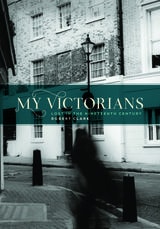
My Victorians
Lost in the Nineteenth CenturyRobert Clark
University of Iowa Press, 2019
As Clark delves deeper into the Victorian world, he wonders: What can its artists offer a twenty-first century writer by way of insight into his own life and work? His obsession with Victoriana bleeds into all aspects of his life, even the seemingly incongruous world of online dating. My Victorians is in the spirit of Geoff Dyer’s Out of Sheer Rage and Rebecca Mead’s My Life in Middlemarch. This book considers what happens when heartbreak, eros, faith, and doubt drive us to take refuge in the past.
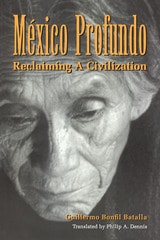
México Profundo
Reclaiming a CivilizationBy Guillermo Bonfil Batalla
University of Texas Press, 1996
This translation of a major work in Mexican anthropology argues that Mesoamerican civilization is an ongoing and undeniable force in contemporary Mexican life.
For Guillermo Bonfil Batalla, the remaining Indian communities, the "de-Indianized" rural mestizo communities, and vast sectors of the poor urban population constitute the México profundo. Their lives and ways of understanding the world continue to be rooted in Mesoamerican civilization. An ancient agricultural complex provides their food supply, and work is understood as a way of maintaining a harmonious relationship with the natural world. Health is related to human conduct, and community service is often part of each individual's life obligation. Time is circular, and humans fulfill their own cycle in relation to other cycles of the universe.
Since the Conquest, Bonfil argues, the peoples of the México profundo have been dominated by an "imaginary México" imposed by the West. It is imaginary not because it does not exist, but because it denies the cultural reality lived daily by most Mexicans.
Within the México profundo there exists an enormous body of accumulated knowledge, as well as successful patterns for living together and adapting to the natural world. To face the future successfully, argues Bonfil, Mexico must build on these strengths of Mesoamerican civilization, "one of the few original civilizations that humanity has created throughout all its history."