Results by title
167 books match the query 'Colorado' and 8 start with m
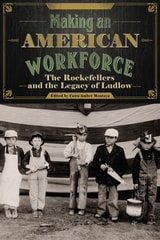
Making an American Workforce
The Rockefellers and the Legacy of LudlowFawn-Amber Montoya
University Press of Colorado, 2014
Focusing on the workers themselves—men, women, and children representative of a variety of immigrant and ethnic groups—contributors trace the emergence of the Employee Representation Plan, the work of the company's Sociology Department, and CF&I's interactions with the YMCA in the early twentieth century. They examine CF&I's early commitment to Americanize its immigrant employees and shape worker behavior, the development of policies that constructed the workforce it envisioned while simultaneously laying the groundwork for the strike that eventually led to the Ludlow Massacre, and the impact of the massacre on the employees, the company, and beyond.
Making an American Workforce provides greater insight into the repercussions of the Industrial Representation Plan and the Ludlow Massacre, revealing the long-term consequences of Colorado Fuel and Iron Company policies on the American worker, the state of Colorado, and the creation of corporate culture. Making an American Workforce will be of interest to Western, labor, and business historians.
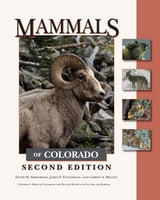
Mammals of Colorado, Second Edition
David M. Armstrong
University Press of Colorado, 2010
An introductory chapter on Colorado's environments, a discussion of the development of the fauna over geologic time, and a brief history of human knowledge of Coloradan mammals provide ecological and evolutionary context. The most recent records of the state's diverse species, rich illustrations (including detailed maps, skull drawings, and photographs), and an extensive bibliography make this book a must-have reference.
Amateur and professional naturalists, students, vertebrate biologists, and ecologists as well as those involved in conservation and wildlife management in Colorado will find value in this comprehensive volume. Co-published with the Denver Museum of Nature & Science
Man Who Thought He Owned Water
On the Brink with American Farms, Cities, and FoodTershia d'Elgin
University Press of Colorado, 2016
When her father bought his farm—Big Bend Station—he also bought the ample water rights associated with the land and the South Platte River, confident that he had secured the necessary resources for a successful endeavor. Yet water immediately proved fickle, hard to defend, and sometimes dangerous. Eventually those rights were curtailed without compensation. Through her family’s story, d’Elgin dramatically frames the personal-scale implications of water competition, revealing how water deals, infrastructure, transport, and management create economic growth but also sever human connections to Earth’s most vital resource. She shows how water flows to cities at the expense of American-grown food, as rural land turns to desert, wildlife starves, the environment degrades, and climate change intensifies.
Depicting deep love, obsession, and breathtaking landscape, The Man Who Thought He Owned Water is an impassioned call to rebalance our relationship with water. It will be of great interest to anyone seeking to understand the complex forces affecting water resources, food supply, food security, and biodiversity in America.
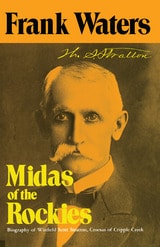
Midas of the Rockies
Biography of Winfield Scott Stratton, Croesus of Cripple CreekFrank Waters
Ohio University Press, 1972
This reprint makes available again Frank Waters’ dramatic and colorful 1937 biography of Winfield Scott Stratton, the man who struck it rich at the foot of Pike’s Peak and turned Cripple Creek into the greatest gold camp on earth. More than regional history, Midas of the Rockies is a story so fabulously impossible and yet so painfully true that it commends itself to the whole of America, the only earth, the only people who could have created it.
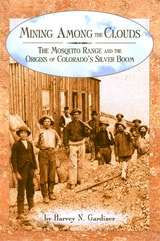
Mining among the Clouds
The Mosquito Range and the Origins of Colorado's Silver BoomHarvey N. Gardiner
University Press of Colorado, 2002

Modernism at Mid-Century
The Architecture of the United States Air Force AcademyEdited by Robert Bruegmann
University of Chicago Press, 1994
The contributors to this volume (Jory Johnson, Robert Nauman, Sheri Olson, James Russell, and Kristen Schaffer) and editor Robert Bruegmann chronicle the complex history of the planning, design, and construction of the Air Force Academy. As the most conspicuous commission of the American military at the height of the Cold War, the design of the Academy generated intense popular interest and was a lightning rod for conflicting values in postwar society. The design, by architects Skidmore, Owings & Merrill, has been hailed as the final triumph of the International Style and as a monument to military bureaucracy.

Module 27
Providing Access to Privacy-Protected Records at Public Institutions in the Age of Radical Empathy: Cases and ConsiderationsMegan K. Friedel
Society of American Archivists, 2025
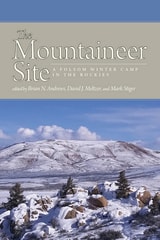
Mountaineer Site
A Folsom Winter Camp in the RockiesBrian N. Andrews
University Press of Colorado, 2022
Contributors examine data concerning the structures, the duration and repetition of occupations, and the nature of the site’s artifact assemblages to offer a valuable new perspective on human activity in the Rocky Mountains in the Late Pleistocene. Chapters survey the history of fieldwork at the site and compare and explain the various excavation procedures used; discuss the geology, taphonomic history, and geochronology of the site; analyze artifacts and other recovered materials; examine architectural elements; and compare the present and past environments of the Upper Gunnison Basin to gain insight into the setting in which Folsom groups were operating and the resources that were available to them.
The Folsom archaeological record indicates far greater variability in adaptive behavior than previously recognized in traditional models. The Mountaineer Site shows how accounting for reduced mobility, more generalized subsistence patterns, and variability in tool manufacture and use allows for a richer and more accurate understanding of Folsom lifeways. It will be of great interest to graduate students and archaeologists focusing on Paleoindian archaeology, hunter-gatherer mobility, lithic technological organization, and prehistoric households, as well as prehistorians, anthropologists, and social scientists.
Contributors: Richard J. Anderson, Andrew R. Boehm, Christy E. Briles, Katherine A. Cross, Steven D. Emslie, Metin I. Eren, Richard Gunst, Kalanka Jayalath, Brooke M. Morgan, Cathy Whitlock