Results by title
144 books match the query 'Communication' and 6 start with m

Mature Audiences
Television in the Lives of EldersKaren E. Riggs
Rutgers University Press, 1998

Media and Identity in Contemporary Europe
Consequences of global convergenceRichard Collins
Intellect Books, 1995
Because technological change in broadcasting has enabled us to open up media markets, the shape of media and of society has become more internationally-oriented. Indeed, modern international media has bought into question the very legitimacy of national communities and ideologies. And this is a phenomenon whose greatest impact has been in Europe.
These studies address the future of public service broadcasting and the power of national regulators to shape trans-national media relationships. The author takes an empirical approach to analysis of these issues, exploring media and communication studies very much as a social science.
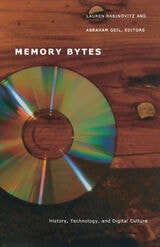
Memory Bytes
History, Technology, and Digital CultureLauren Rabinovitz and Abraham Geil, eds.
Duke University Press, 2004
These essays from scholars in the social sciences and humanities cover topics related to science and medicine, politics and war, mass communication, philosophy, film, photography, and art. Whether describing how the cultural and legal conflicts over player piano rolls prefigured controversies over the intellectual property status of digital technologies such as mp3 files; comparing the experiences of watching QuickTime movies to Joseph Cornell’s “boxed relic” sculptures of the 1930s and 1940s; or calling for a critical history of electricity from the Enlightenment to the present, Memory Bytes investigates the interplay of technology and culture. It relates the Information Age to larger and older political and cultural phenomena, analyzes how sensory effects have been technologically produced over time, considers how human subjectivity has been shaped by machines, and emphasizes the dependence of particular technologies on the material circumstances within which they were developed and used.
Contributors. Judith Babbitts, Scott Curtis, Ronald E. Day, David Depew, Abraham Geil, Sharon Ghamari-Tabrizi, Lisa Gitelman, N. Katherine Hayles, John Durham Peters, Lauren Rabinovitz, Laura Rigal, Vivian Sobchack, Thomas Swiss
Misinformation and Mass Audiences
Edited by Brian G. Southwell, Emily A. Thorson, and Laura Sheble
University of Texas Press, 2018
Lies and inaccurate information are as old as humanity, but never before have they been so easy to spread. Each moment of every day, the Internet and broadcast media purvey misinformation, either deliberately or accidentally, to a mass audience on subjects ranging from politics to consumer goods to science and medicine, among many others. Because misinformation now has the potential to affect behavior on a massive scale, it is urgently important to understand how it works and what can be done to mitigate its harmful effects.
Misinformation and Mass Audiences brings together evidence and ideas from communication research, public health, psychology, political science, environmental studies, and information science to investigate what constitutes misinformation, how it spreads, and how best to counter it. The expert contributors cover such topics as whether and to what extent audiences consciously notice misinformation, the possibilities for audience deception, the ethics of satire in journalism and public affairs programming, the diffusion of rumors, the role of Internet search behavior, and the evolving efforts to counteract misinformation, such as fact-checking programs. The first comprehensive social science volume exploring the prevalence and consequences of, and remedies for, misinformation as a mass communication phenomenon, Misinformation and Mass Audiences will be a crucial resource for students and faculty researching misinformation, policymakers grappling with questions of regulation and prevention, and anyone concerned about this troubling, yet perhaps unavoidable, dimension of current media systems.
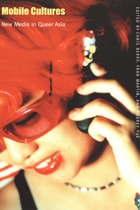
Mobile Cultures
New Media in Queer AsiaChris Berry, Fran Martin, and Audrey Yue, eds.
Duke University Press, 2003
Scholars, artists, and activists from a range of countries, the contributors chronicle the different ways new media galvanize Asian queer communities in Taiwan, South Korea, Japan, Indonesia, Thailand, Malaysia, India, and around the world. They consider phenomena such as the uses of the Internet among gay, lesbian, or queer individuals in Taiwan and South Korea; the international popularization of Japanese queer pop culture products such as Yaoi manga; and a Thai website’s reading of a scientific tract on gay genetics in light of Buddhist beliefs. Essays also explore the politically subversive possibilities opened up by the proliferation of media technologies, examining, for instance, the use of Cyberjaya—Malaysia’s government-backed online portal—to form online communities in the face of strict antigay laws.
Contributors. Chris Berry, Tom Boellstorff, Larissa Hjorth, Katrien Jacobs, Olivia Khoo, Fran Martin, Mark McLelland, David Mullaly, Baden Offord, Sandip Roy, Veruska Sabucco, Audrey Yue
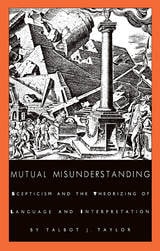
Mutual Misunderstanding
Scepticism and the Theorizing of Language and InterpretationTalbot J. Taylor
Duke University Press, 1992
Mutual Misundertanding thus presents a strikingly original analysis of the rhetorical patterns underlying Western linguistic thought, as exemplified in the works of John Locke, Jacques Derrida, Gottlob Frege, Jonathan Culler, Noam Chomsky, Ferdinand de Saussure, H. Paul Grice, Michael Dummet, Stanley Fish, Alfred Schutz, Barbara Herrnstein Smith, Harold Garfinkel, and others.
This analysis reveals how, by the combined effect of appeals to "commonsense" and anxieties about implications of relativism, scepticism has a determining role in the discursive development of a number of the intellectual disciplines making up the "human sciences" today, including critical theory, literary hermeneutics, philosophy of language and logic, communication theory, discourse and conversation analysis, pragmatics, stylistics, and linguistics. Consequently, this provocative study will be of value to readers from a wide variety of disciplinary backgrounds.