Results by title
355 books match the query 'Communism, Post-Communism & Socialism' and 17 start with m
Macroeconomic Policies and the Development of Markets in Transition Economies
Fabrizio Coricelli
Central European University Press, 1998

Magical Marxism
Subversive Politics and the ImaginationAndy Merrifield
Pluto Press, 2011
Following his hugely popular book, The Wisdom of Donkeys, Andy Merrifield breathes new life into the Marxist tradition.
Magical Marxism demands something more of traditional Marxism - something more interesting and liberating. It asks that we imagine a Marxism that moves beyond debates about class, the role of the state and the dictatorship of the proletariat. In escaping the formalist straitjacket of orthodox Marxist critique, Merrifield argues for a reconsideration of Marxism and its potential, applying previously unexplored approaches to Marxist thinking that will reveal vital new modes of political activism and debate.
This book will provoke and inspire in equal measure. It gives us a Marxism for the 21st century, which offers dramatic new possibilities for political engagement.
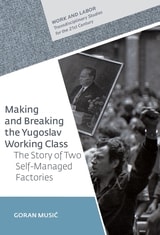
Making and Breaking the Yugoslav Working Class
The Story of Two Self-Managed FactoriesGoran Music
Central European University Press, 2021
Workers' self-management was one of the unique features of communist Yugoslavia. Goran Musić has investigated the changing ways in which blue-collar workers perceived the recurring crises of the regime. Two self-managed metal enterprises, one in Serbia another in Slovenia, provide the frame of the analysis in the time span between 1945 and 1989. These two factories became famous for strikes in 1988 that evoked echoes in popular discourses in former Yugoslavia. Drawing on interviews, factory publications and other media, local archives, and secondary literature, Musić analyzes the two cases, going beyond the clichés of political manipulation from the top and workers' intrinsic attraction to nationalism.
The author explains how, in the later phase of communist Yugoslavia, growing social inequalities among the workers and undemocratic practices inside the self-managed enterprises facilitated the spread of a nationalist and pro-market ideology on the shop floors. Yet rather than being a mass taken advantage of by populist leaders, the working class Musić presents is one with agency and voice, a force that played an important role in shaping the fate of the country. The book thus seeks to open a debate on the social processes leading up to the dissolution of Yugoslavia.
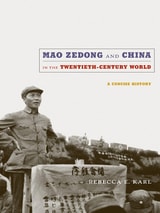
Mao Zedong and China in the Twentieth-Century World
A Concise HistoryRebecca E. Karl
Duke University Press, 2010
Marx Beyond Marx
Antonio Negri
Pluto Press, 1992
Marx and History
From Primitive Society to the Communist FutureBy D. Ross Gandy
University of Texas Press, 1979
In this book Marx's observations on history, which are found scattered throughout his voluminous writings, are brought together and subjected to searching analysis.
D. Ross Gandy writes in refreshingly direct language, without resorting to jargon. For the first time we have a thoughtful assessment of Marx's views on all the epochs that cross his historical vision. Gandy treats Marx's ideas on primitive societies, on ancient Roman and Asiatic civilization, on the structure of feudalism, on strategies for overthrowing capitalism, and on the hypothetical communist future. Among the author's departures from traditional readings of Marx are his interpretations of class struggle, his conception of social strata, and his cogent analysis of the "new Marxism."
Since many aspects of Marxist historical theory have been neglected or distorted, Gandy's remarkably clear commentary, based on extensive research—including an exhaustive study of the forty-volume Marx-Engels Werke—will doubtless stimulate debate among sociologists and other students of social change, political scientists, and historians.
Marx and the Robots
Networked Production, AI, and Human LabourFlorian Butollo
Pluto Press, 2022
It covers a broad range of digital aspects now proliferating across our work and lives, including chapters on the digitalization of agriculture, robotics in the factory and the labor process on crowdworking platforms. It looks to how 20th century Marxist predictions of the 'workerless factory' are, or are not, coming true, and how 'Platform Capitalism' should be understood and critiqued.
Through rich empirical, theoretical and historical material, this book is necessary reading for those wanting a clear overview of our digital world.
Marx at the Margins
On Nationalism, Ethnicity, and Non-Western SocietiesKevin B. Anderson
University of Chicago Press, 2016
Marx's Dream
From Capitalism to CommunismTom Rockmore
University of Chicago Press, 2018
With Marx’s Dream, Tom Rockmore offers a much-needed alternative view, distinguishing rigorously between Marx and Marxism. Rockmore breaks with the Marxist view of Marx in three key ways. First, he shows that the concern with the relation of theory to practice—reflected in Marx’s famous claim that philosophers only interpret the world, while the point is to change it—arose as early as Socrates, and has been central to philosophy in its best moments. Second, he seeks to free Marx from his unsolicited Marxist embrace in order to consider his theory on its own merits. And, crucially, Rockmore relies on the normal standards of philosophical debate, without the special pleading to which Marxist accounts too often resort. Marx’s failures as a thinker, Rockmore shows, lie less in his diagnosis of industrial capitalism’s problems than in the suggested remedies, which are often unsound.
Only a philosopher of Rockmore’s stature could tackle a project this substantial, and the results are remarkable: a fresh Marx, unencumbered by doctrine and full of insights that remain salient today.
Marxism and the Interpretation of Culture
Edited by Cary Nelson and Lawrence Grossberg
University of Illinois Press, 1988

Masterpieces of History
The Peaceful End of the Cold War in Europe, 1989The National Security Archive Savranskaya
Central European University Press, 2010
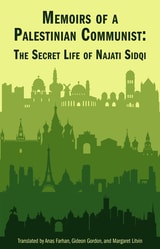
Memoirs of a Palestinian Communist
The Secret Life of Najati SidqiNajati Sidqi; translated by Margaret Litvin, Gideon Gordon, and Anas Farhan
University of Texas Press, 2025
The secret life of a Palestinian Communist activist during the leadup to World War II.
In the public eye, Najati Sidqi was known as a journalist and writer, a translator of Russian classics, and an outspoken opponent of Nazism. However, Sidqi concealed a critical component of his life from the world and his family. He was an underground activist for the Palestinian Communist Party, a risky and influential pursuitthat took him to early Bolshevik Moscow, British courts and prison cells in Palestine, Nazi Germany, intrigue-heavy interwar Paris, and Civil War Spain, Morocco, and Algeria. Throughout his journey, Sidqi continued to write, even as he faced fascism, intense surveillance, active warzones, the death of friends, and exile.
Memoirs of a Palestinian Communist brings Sidqi’s incredible life and work to light, wryly narrating his international travels, his work as an activist, and his political dealings at a crucial moment for Palestine and the international fight against fascism. Translated from Arabic into English for the first time, it is a riveting firsthand account of an often-overlooked aspect of the history of the global left. Generous supplementary materials make the memoir accessible to students and non-specialist scholars: a preface by Sidqi’s grandson, a foreword by renowned historian Joel Beinin, a translators’ introduction that presents new research on Sidqi’s family history, a map of his travels, and a timeline, as well as a bibliographic essay offering pointers for further research.
Menace of Our Time
The Long War Against American CommunismAaron J. Leonard
Rutgers University Press, 2025
A survey of the far-reaching measures the U.S. government brought to bear against the CPUSA, from poison-pen letters to the Red Scare and beyond.
Beginning at the turn of the twentieth century and ending only with the Soviet Union’s collapse in 1991, the U.S. government and major elements in the wider society waged an unrelenting campaign to suppress and criminalize domestic communism. This long-overdue book details the longest and most extensive repressive operation ever undertaken by U.S. authorities against a domestic political organization that, however problematic, was largely operating within the scope of constitutionally mandated freedoms. Beyond that, this is the story of how systemic measures against U.S. communists—in contrast to the vaunted claims of American political freedom—defined the political landscape of the last century.
Menace of Our Time tracks the suppression efforts aimed at the group, including the state laws of the twenties that imprisoned the fledgling communist leadership; the tactics used by police and local authorities against communists as they fought for unions, racial equality, and the unemployed; the trials and imprisonment of communist leaders mid-century; the extra-legal efforts of the Counterintelligence Program (COINTELPRO) in the sixties; and the ongoing, relentless surveillance by the FBI that followed. In examining the far-reaching measures the government brought to bear against the Communist Party USA, Aaron J. Leonard provides a clearer picture of the mechanics of social and political repression that abound in the society we still inhabit.
Mind and Labor on the Farm in Black-Earth Russia, 1861-1914
David Kerans
Central European University Press, 2001
Moving Against the System
The 1968 Congress of Black Writers and the Shaping of Global Black ConsciousnessEdited by David Austin
Pluto Press, 2018
Against a backdrop of widespread racism in the West and ongoing colonialism and imperialism in the Global South, this group of activists, writers, and political figures gathered to discuss the history and struggles of people of African descent and the meaning of black power.
For the first time since 1968, David Austin brings alive the speeches and debates of the most important international gathering of black radicals of the era. With never-before-seen texts from Stokely Carmichael, Walter Rodney and C.L.R. James, these documents will prove invaluable to anyone interested in black radical thought and political activism of the 1960s.
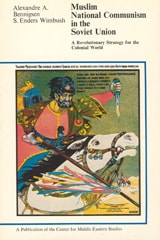
Muslim National Communism in the Soviet Union
A Revolutionary Strategy for the Colonial WorldAlexandre A. Bennigsen and S. Enders Wimbush
University of Chicago Press, 1978
The authors show that the ideas of Muslim national communism persist in the land of their birth and have spread to such developing societies as China, Algeria, and Indonesia. This doctrine is an important factor in the ideological split and increasing tensions between industrial and nonindustrial nations, East and West, and now North and South, which grip the world communist movement.