Results by title
81 books match the query 'Composers' and 6 start with m
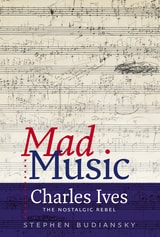
Mad Music
Charles Ives, the Nostalgic RebelStephen Budiansky
University Press of New England, 2014
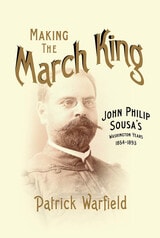
Making the March King
John Philip Sousa's Washington Years, 1854-1893Patrick Warfiled
University of Illinois Press, 2013
Warfield examines Sousa's wide-ranging experience composing, conducting, and performing in the theater, opera house, concert hall, and salons, as well as his leadership of the United States Marine Band and the later Sousa Band, early twentieth-century America's most famous and successful ensemble. Sousa composed not only marches during this period but also parlor, minstrel, and art songs; parade, concert, and medley marches; schottisches, waltzes, and polkas; and incidental music, operettas, and descriptive pieces. Warfield's examination of Sousa's output reveals a versatile composer much broader in stylistic range than the bandmaster extraordinaire remembered as the March King.
In particular, Making the March King demonstrates how Sousa used his theatrical training to create the character of the March King. The exuberant bandmaster who pleased audiences was both a skilled and charismatic conductor and a theatrical character whose past and very identity suggested drama, spectacle, and excitement. Sousa's success was also the result of perseverance and lessons learned from older colleagues on how to court, win, and keep an audience. Warfield presents the story of Sousa as a self-made business success, a gifted performer and composer who deftly capitalized on his talents to create one of the most entertaining, enduring figures in American music.
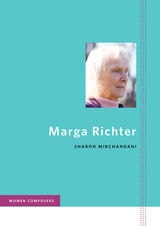
Marga Richter
Sharon Mirchandani
University of Illinois Press, 2012
This is the first full-length introduction to the life and works of significant American composer Marga Richter (born 1926), who has written more than one hundred works for orchestra, chamber ensemble, dance, opera, voice, chorus, piano, organ, and harpsichord. Still actively composing in her eighties, Richter is particularly known for her large-scale works performed by ensembles such as the London Philharmonic Orchestra and the Civic Orchestra of Chicago and for other pieces performed by prominent artists including pianist Menahem Pressler, conductor Izler Solomon, and violinist Daniel Heifetz.
Interspersing consideration of Richter's musical works with discussion of her life, her musical style, and the origins and performances of her works, Sharon Mirchandani documents a successful composer's professional and private life throughout the twentieth century. Covering Richter's formative years, her influences, and the phases of her career from the 1950s to the present, Mirchandani closely examines Richter's many interesting, attractive musical works that draw inspiration from distinctly American, Irish/English, and Asian sources. Drawing extensively on interviews with the composer, Mirchandani also provides detailed descriptions of Richter's scores and uses reviews and other secondary sources to provide contexts for her work, including their relationship to modern dance, to other musical styles, and to 1970s feminism.
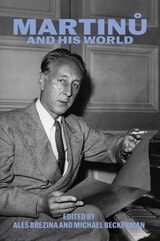
Martinu and His World
Edited by Aleš Brezina and Michael Beckerman
University of Chicago Press, 2025
Bohuslav Martinů was one of the most extraordinary and prolific composers of the twentieth century. Martinů and His World offers a portrait of the composer in all his complexity. Born in the present-day Czech Republic, Martinů was rendered stateless as a result of events around World War II and the Communist takeover of Czechoslovakia. He lived for more than a decade in the United States, where he had great success, and died in Switzerland.
Martinů composed more than four hundred works in all genres of instrumental and vocal music, and infused each with a special combination of the lyrical and the dramatic. Alongside an unerring sense of form, his works draw on a kaleidoscope of elements from such sources as Dvořák, American jazz of the 1920s, English Renaissance madrigals, the late Baroque concerto grosso, French Impressionism, Czech and Moravian folk songs, and the contemporary music of his day.
This volume pays special attention to Martinů’s little-known operatic works and presents for the first time both a recently discovered personal diary and a series of interviews with important figures who were part of his American years.
Martinů and His World reveals the composer as an essential voice of his time, an original thinker about music past and present, who lived through the political complexities of the twentieth century and stood up to them both as a human being and as an artist.

Music from Within
A Biography of the Composer S.C. Eckhardt-GramattéFerdinand Eckhardt
University of Manitoba Press, 1985
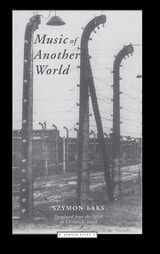
Music of Another World
Szymon Laks
Northwestern University Press, 2000