Results by title
80 books match the query 'Composition and exercises' and 2 start with m

Methods and Methodology in Composition Research
Gesa Kirsch and Patricia A. Sullivan
Southern Illinois University Press, 1992
In original essays, fourteen nationally known scholars examine the practical, philosophical, and epistemological implications of a variety of research traditions. Included are discussions of historical, theoretical, and feminist scholarship; case-study and ethnographic research; text and conversation analysis; and cognitive, experimental, and descriptive research. Issues that cross methodological boundaries, such as the nature of collaborative research and writing, methodological pluralism, the classification and coding of research data, and the politics of composition research, are also examined. Contributors reflect on their own research practices, and so reflect the current state of composition research itself.
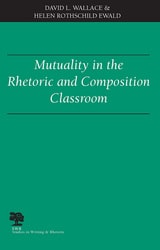
Mutuality in the Rhetoric and Composition Classroom
David L. Wallace and Helen Rothschild Ewald
Southern Illinois University Press, 2000
In Mutuality in the Rhetoric and Composition Classroom, David L. Wallace and Helen Rothschild Ewald point out the centrality of rhetoric in the academy, asserting the intimate connection between language and knowledge making. They also stress the need for a change in the roles of teachers and students in today’s classroom. Their goal is mutuality, a sharing of authority among teachers and students in the classroom that would allow everyone an equal voice in the communication of ideas.
Arguing that the impetus to empower students by engaging them in liberatory and emancipatory pedagogies is simply not enough, Wallace and Ewald seek to “help readers identify, theorize, and work through problems faced by teachers who already value alternative approaches but who are struggling to implement them in the classroom." It is not the teacher’s job merely to convey a received body of knowledge, nor is knowledge a prepackaged commodity to be delivered by the teacher. It is “constituted in the classroom through the dialogic interaction between teachers and students alike.”
Wallace and Ewald see mutuality as potentially transformative, but they “do not believe that the nature or that transformation can be designated in advance.” Rather it is located in the interaction between teachers and students. Wallace and Ewald look at how the transformative notion of mutuality can be effected in classrooms in three important ways: reconstituting classroom speech genres, redesigning the architecture of rhetoric and writing courses, and valuing students’ interpretive agency in classroom discourse. Mutuality in alternative pedagogy, they assert, is neither a single approach nor a specific set of valued practices; it is a continuous collaboration between teachers and students.