Results by title
81 books match the query 'Creation' and 7 start with m
Making Rights Real
Activists, Bureaucrats, and the Creation of the Legalistic StateCharles R. Epp
University of Chicago Press, 2009
It’s a common complaint: the United States is overrun by rules and procedures that shackle professional judgment, have no valid purpose, and serve only to appease courts and lawyers. Charles R. Epp argues, however, that few Americans would want to return to an era without these legalistic policies, which in the 1970s helped bring recalcitrant bureaucracies into line with a growing national commitment to civil rights and individual dignity.
Focusing on three disparate policy areas—workplace sexual harassment, playground safety, and police brutality in both the United States and the United Kingdom—Epp explains how activists and professionals used legal liability, lawsuit-generated publicity, and innovative managerial ideas to pursue the implementation of new rights. Together, these strategies resulted in frameworks designed to make institutions accountable through intricate rules, employee training, and managerial oversight. Explaining how these practices became ubiquitous across bureaucratic organizations, Epp casts today’s legalistic state in an entirely new light.
Making the White Man's West
Whiteness and the Creation of the American WestJason E. Pierce
University Press of Colorado, 2016
The West, especially the Intermountain states, ranks among the whitest places in America, but this fact obscures the more complicated history of racial diversity in the region. In Making the White Man’s West, author Jason E. Pierce argues that since the time of the Louisiana Purchase, the American West has been a racially contested space. Using a nuanced theory of historical “whiteness,” he examines why and how Anglo-Americans dominated the region for a 120-year period.
In the early nineteenth century, critics like Zebulon Pike and Washington Irving viewed the West as a “dumping ground” for free blacks and Native Americans, a place where they could be segregated from the white communities east of the Mississippi River. But as immigrant populations and industrialization took hold in the East, white Americans began to view the West as a “refuge for real whites.” The West had the most diverse population in the nation with substantial numbers of American Indians, Hispanics, and Asians, but Anglo-Americans could control these mostly disenfranchised peoples and enjoy the privileges of power while celebrating their presence as providing a unique regional character. From this came the belief in a White Man’s West, a place ideally suited for “real” Americans in the face of changing world.
The first comprehensive study to examine the construction of white racial identity in the West, Making the White Man’s West shows how these two visions of the West—as a racially diverse holding cell and a white refuge—shaped the history of the region and influenced a variety of contemporary social issues in the West today.
Mapping Identity
The Creation of the Coeur d'Alene Indian Reservation, 1805-1902Laura Woodworth-Ney
University Press of Colorado, 2004
Mapping Identity builds on the growing body of literature that presents a more complex picture of federal policy, native identity, and the creation of Indian reservations in the western United States. It will be important to readers interested in western U.S. history, legal and administrative history, Native American history, and interior Northwest history.
Maya Creation Myths
Words and Worlds of the Chilam BalamTimothy Knowlton
University Press of Colorado, 2010
Maya Creation Myths provides not only new and outstanding translations of these myths but also an interpretive journey through these often misunderstood texts, providing insight into Maya cosmology and how Maya intellectuals met the challenge of the European clergy's attempts to eradicate their worldviews. Unlike many scholars who focus primarily on traces of pre-Hispanic culture or Christian influence within the Books of Chilam Balam, Knowlton emphasizes the diversity of Maya mythic traditions and the uniquely Maya discursive strategies that emerged in the Colonial period.
This book will be of significant interest to Maya scholars, folklorists, and historians, as well as students and scholars of religion, cosmology, and anthropology.
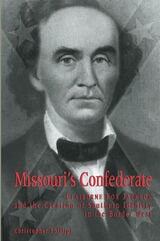
Missouri's Confederate
Claiborne Fox Jackson and the Creation of Southern Identity in the Border WestChristopher Phillips
University of Missouri Press, 2000
Claiborne Fox Jackson (1806-1862) remains one of Missouri's most controversial historical figures. Elected Missouri's governor in 1860 after serving as a state legislator and Democratic party chief, Jackson was the force behind a movement for the neutral state's secession before a federal sortie exiled him from office. Although Jackson's administration was replaced by a temporary government that maintained allegiance to the Union, he led a rump assembly that drafted an ordinance of secession in October 1861 and spearheaded its acceptance by the Confederate Congress. Despite the fact that the majority of the state's populace refused to recognize the act, the Confederacy named Missouri its twelfth state the following month. A year later Jackson died in exile in Arkansas, an apparent footnote to the war that engulfed his region and that consumed him.
In this first full-length study of Claiborne Fox Jackson, Christopher Phillips offers much more than a traditional biography. His extensive analysis of Jackson's rise to power through the tangle that was Missouri's antebellum politics and of Jackson's complex actions in pursuit of his state's secession complete the deeper and broader story of regional identity--one that began with a growing defense of the institution of slavery and which crystallized during and after the bitter, internecine struggle in the neutral border state during the American Civil War. Placing slavery within the realm of western democratic expansion rather than of plantation agriculture in border slave states such as Missouri, Philips argues that southern identity in the region was not born, but created. While most rural Missourians were proslavery, their "southernization" transcended such boundaries, with southern identity becoming a means by which residents sought to reestablish local jurisdiction in defiance of federal authority during and after the war. This identification, intrinsically political and thus ideological, centered—and still centers—upon the events surrounding the Civil War, whether in Missouri or elsewhere. By positioning personal and political struggles and triumphs within Missourians' shifting identity and the redefinition of their collective memory, Phillips reveals the complex process by which these once Missouri westerners became and remain Missouri southerners.
Missouri's Confederate not only provides a fascinating depiction of Jackson and his world but also offers the most complete scholarly analysis of Missouri's maturing antebellum identity. Anyone with an interest in the Civil War, the American West, or the American South will find this important new biography a powerful contribution to our understanding of nineteenth-century America and the origins—as well as the legacy—of the Civil War.
Modernism
The Creation of Nation-StatesMichal Kopecek
Central European University Press, 2010
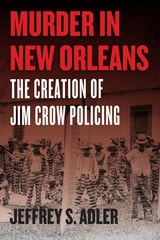
Murder in New Orleans
The Creation of Jim Crow PolicingJeffrey S. Adler
University of Chicago Press, 2019
New Orleans in the 1920s and 1930s was a deadly place. In 1925, the city’s homicide rate was six times that of New York City and twelve times that of Boston. Jeffrey S. Adler has explored every homicide recorded in New Orleans between 1925 and 1940—over two thousand in all—scouring police and autopsy reports, old interviews, and crumbling newspapers. More than simply quantifying these cases, Adler places them in larger contexts—legal, political, cultural, and demographic—and emerges with a tale of racism, urban violence, and vicious policing that has startling relevance for today.
Murder in New Orleans shows that whites were convicted of homicide at far higher rates than blacks leading up to the mid-1920s. But by the end of the following decade, this pattern had reversed completely, despite an overall drop in municipal crime rates. The injustice of this sharp rise in arrests was compounded by increasingly brutal treatment of black subjects by the New Orleans police department. Adler explores other counterintuitive trends in violence, particularly how murder soared during the flush times of the Roaring Twenties, how it plummeted during the Great Depression, and how the vicious response to African American crime occurred even as such violence plunged in frequency—revealing that the city’s cycle of racial policing and punishment was connected less to actual patterns of wrongdoing than to the national enshrinement of Jim Crow. Rather than some hyperviolent outlier, this Louisiana city was a harbinger of the endemic racism at the center of today’s criminal justice state. Murder in New Orleans lays bare how decades-old crimes, and the racially motivated cruelty of the official response, have baleful resonance in the age of Black Lives Matter.