56 books match the query 'Criminals' and 2 start with m
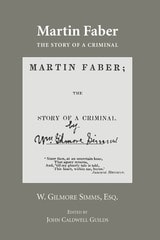
cover of Martin Faber: The Story of a Criminal with "Confessions of a Murder"

Martin Faber

The Story of a Criminal with "Confessions of a Murder"

William Gilmore Simms

University of Arkansas Press, 2006
William Gilmore Simms’s (1806–1870) body of work, a sweeping fictional portrait of the colonial and antebellum South in all its regional diversity, with its literary and intellectual issues, is probably more comprehensive than any other nineteenth-century southern author. Simms’s career began with a short novel, Martin Faber, published in 1833. This Gothic tale is reminiscent of James Hogg’s Confessions of a Sinner and was written four years before Edgar Allan Poe’s “William Wilson.” Narrated in the first person, it is considered a pioneering examination of criminal psychology. Martin seduces then murders Emily so that he might marry another woman, Constance. Martin confesses to his friend and is killed after attempting to stab Constance when she visits him in jail. The book was immediately successful and was well received by the northern media, thus starting Simms’s successful career as a writer, one that would rank him as the only major southern literary figure besides Poe before the Civil War. As with other volumes in the Arkansas Edition of Simms’s work, this volume includes a critical introduction by the editor and a Simms chronology, as well as appendices dealing with textual matters. This edition also includes Simms’s 1829 story, “Confessions of a Murderer,” which was the germ for his first book of fiction.
[more]
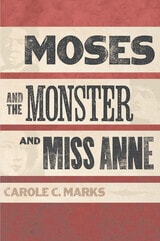
cover of Moses and the Monster and Miss Anne

Moses and the Monster and Miss Anne

Carole C. Marks

University of Illinois Press, 2008

This engaging history presents the extraordinary lives of Patty Cannon, Anna Ella Carroll, and Harriet Tubman, three "dangerous" women who grew up in early-nineteenth-century Maryland and were vigorously enmeshed in the social and political maelstrom of antebellum America. The "monstrous" Patty Cannon was a reputed thief, murderer, and leader of a ruthless gang who kidnapped free blacks and sold them back into slavery, whereas Miss Anna Ella Carroll, a relatively genteel unmarried slaveholder, foisted herself into state and national politics by exerting influence on legislators and conspiring with Governor Thomas Holliday Hicks to keep Maryland in the Union when many state legislators clamored to join the Confederacy. And, of course, Harriet Tubman--slave rescuer, abolitionist, and later women's suffragist--was both hailed as "the Moses of her people" and hunted as an outlaw with a price on her head worth at least ten thousand dollars.

All three women lived for a time in close proximity on the Eastern Shore of Maryland, an isolated region that thrived on tobacco and then lost it, procured slaves and then lost them, and produced strong-minded women and then condemned them. Though they never actually met, and their backgrounds and beliefs differed drastically, these women's lives converged through their active experiences of the conflict over slavery in Maryland and beyond, the uncertainties of economic transformation, the struggles in the legal foundation of slavery and, most of all, the growing dispute in gender relations in America.

Throughout this book, Carole C. Marks gleans historical fact and sociological insight from the persistent myths and exaggerations that color the women's legacies, and she investigates the common roots and motivations of three remarkable figures who bucked the era's expectations for women. She also considers how each woman's public identity reflected changing ideas of domesticity and the public sphere, spirituality, and legal rights and limitations. Cannon, Carroll, and Tubman, each in her own way, passionately fought for the future of Maryland and the United States, and from these unique vantage points, Moses and the Monster and Miss Anne portrays the intersecting and conflicting forces of race, economics, and gender that threatened to rend a nation apart.

[more]