Results by title
459 books match the query 'Criminology' and 21 start with m
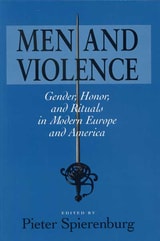
MEN AND VIOLENCE
GENDER, HONOR, AND RITUALS IN MODERN EUROPE AND AMERICAPieter Spierenburg
The Ohio State University Press, 1998
The essays focus on the United States and western Europe from the seventeenth to the twentieth centuries. The contributors are Ute Frevert, Steven Hughes, Robert Nye, Daniele Boschi, Amy Sophia Greenberg, Martin J. Wiener, Stephen Kantrowitz, and Terence Finnegan. Men and Violence will be welcomed and widely used by a broad range of scholars and students.
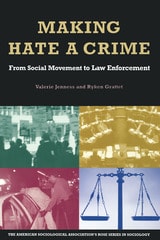
Making Hate A Crime
From Social Movement to Law EnforcementValerie Jenness
Russell Sage Foundation, 2001
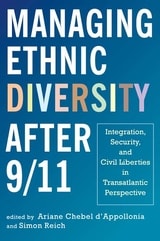
Managing Ethnic Diversity after 9/11
Integration, Security, and Civil Liberties in Transatlantic PerspectiveChebel d'Appollonia, Ariane
Rutgers University Press, 2010
Managing Ethnic Diversity after 9/11 compares these two strategies and considers that both may have engendered greater radicalization--and a greater chance of home-grown terrorism. Essays address how transatlantic countries, including the United Kingdom, the United States, France, Germany, Spain, Italy, and the Netherlands have integrated ethnic minorities, especially Arabs and Muslims, since 9/11. Discussing the "securitization of integration," contributors argue that the neglect of civil integration has challenged the rights of these minorities and has made greater security more remote.
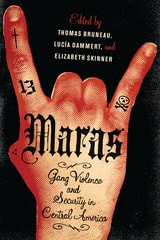
Maras
Gang Violence and Security in Central AmericaEdited by Thomas C. Bruneau, Lucía Dammert, and Elizabeth Skinner
University of Texas Press, 2011
Sensational headlines have publicized the drug trafficking, brutal violence, and other organized crime elements associated with Central America's mara gangs, but there have been few clear-eyed analyses of the history, hierarchies, and future of the mara phenomenon. The first book to look specifically at the Central American gang problem by drawing on the perspectives of researchers from different disciplinary backgrounds, Maras: Gang Violence and Security in Central America provides much-needed insight.
These essays trace the development of the gangs, from Mara Salvatrucha to the 18th Street Gang, in Los Angeles and their spread to El Salvador, Honduras, Guatemala, and Nicaragua as the result of members' deportation to Central America; there, they account for high homicide rates and threaten the democratic stability of the region. With expertise in areas ranging from political science to law enforcement and human rights, the contributors also explore the spread of mara violence in the United States. Their findings comprise a complete documentation that spans sexualized violence, case studies of individual gangs, economic factors, varied responses to gang violence, the use of intelligence gathering, the limits of state power, and the role of policy makers.
Raising crucial questions for a wide readership, these essays are sure to spark productive international dialogues.
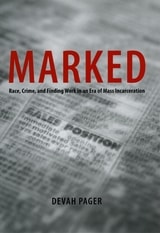
Marked
Race, Crime, and Finding Work in an Era of Mass IncarcerationDevah Pager
University of Chicago Press, 2007
Nearly every job application asks it: have you ever been convicted of a crime? For the hundreds of thousands of young men leaving American prisons each year, their answer to that question may determine whether they can find work and begin rebuilding their lives.
The product of an innovative field experiment, Marked gives us our first real glimpse into the tremendous difficulties facing ex-offenders in the job market. Devah Pager matched up pairs of young men, randomly assigned them criminal records, then sent them on hundreds of real job searches throughout the city of Milwaukee. Her applicants were attractive, articulate, and capable—yet ex-offenders received less than half the callbacks of the equally qualified applicants without criminal backgrounds. Young black men, meanwhile, paid a particularly high price: those with clean records fared no better in their job searches than white men just out of prison. Such shocking barriers to legitimate work, Pager contends, are an important reason that many ex-prisoners soon find themselves back in the realm of poverty, underground employment, and crime that led them to prison in the first place.
“Using scholarly research, field research in Milwaukee, and graphics, [Pager] shows that ex-offenders, white or black, stand a very poor chance of getting a legitimate job. . . . Both informative and convincing.”—Library Journal
“Marked is that rare book: a penetrating text that rings with moral concern couched in vivid prose—and one of the most useful sociological studies in years.”—Michael Eric Dyson
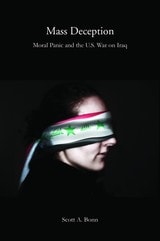
Mass Deception
Moral Panic and the U.S. War on IraqScott A. Bonn
Rutgers University Press, 2010
Mass Deception argues that the George W. Bush administration manufactured public support for the war on Iraq. Scott A. Bonn introduces a unique, integrated, and interdisciplinary theory called "critical communication" to explain how and why political elites and the news media periodically create public panics that benefit both parties. Using quantitative analysis of public opinion polls and presidential rhetoric pre- and post-9/11 in the news media, Bonn applies the moral panic concept to the Iraq war. He critiques the war and occupation of Iraq as violations of domestic and international law. Finally, Mass Deception connects propaganda and distortion efforts by the Bush administration to more general theories of elite deviance and state crime.
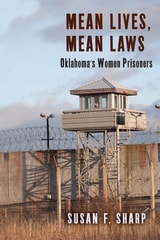
Mean Lives, Mean Laws
Oklahoma's Women PrisonersSharp, Susan F
Rutgers University Press, 2014
The culmination of over a decade of original research, Mean Lives, Mean Laws exposes a Kafkaesque criminal justice system, one that has no problem with treating women as collateral damage in the War on Drugs or with stripping female prisoners of their parental rights. Yet it also reveals the individual histories of women who were jailed in Oklahoma, providing intimate portraits of their lives before, during, and after their imprisonment. We witness the impoverished and abusive conditions in which many of these women were raised; we get a vivid portrait of their everyday lives behind bars; and we glimpse the struggles that lead many ex-convicts to fall back into the penal system.
Through an innovative methodology that combines statistical rigor with extensive personal interviews, Sharp shows how female incarceration affects not only individuals, but also families and communities. Putting a human face on a growing social problem, Mean Lives, Mean Laws raises important questions about both the state of Oklahoma and the state of the nation.
Medical Malpractice
Law, Tactics, and EthicsFrank M. McClellan
Temple University Press, 1993
From practical to philosophical considerations, this succinct, clear presentation of medical malpractice issues is a valuable resource for the classroom and the reference shelf. Frank M. McClellan illustrates the multitude of considerations that impact the merit of each case, never losing sight of the importance of preserving human dignity in malpractice lawsuits.
Early chapters urge the evaluation of legal, medical, and ethical standards, especially the Standard of Care. Part II focuses on assessing and proving compensatory and punitive damages, Part III sets out guidelines for intelligence gathering, medical research, choosing expert witnesses, and preparing for trial.
Students of law, medicine, and public health, as well as lawyers and health care professionals, will find in Medical Malpractice a valuable text or reference book. "Problems" in twelve of the thirteen chapters illustrate the range of issues that can arise in malpractice suits. An appendix lists leading cases that have shaped medical malpractice law.
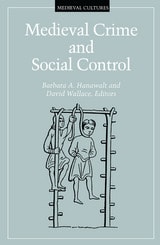
Medieval Crime and Social Control
Barbara A. Hanawalt
University of Minnesota Press, 1998
Uses historical and literary insights to consider crime and punishment in the Middle Ages.
Crime is a matter of interpretation, and never was this truer than in the Middle Ages, when societies faced with new ideas and pressures were continually forced to rethink what a crime was-and what was a crime. This collection undertakes a thorough exploration of shifting definitions of crime and changing attitudes toward social control in medieval Europe.
These essays-by leading specialists in European history and literature-reveal how various forces in medieval society interacted and competed in interpreting and influencing mechanisms for social control. They also demonstrate how well the different methods of history and literature combine to illuminate these developments.The essays show how the play with boundaries between legitimate and illegitimate actions took place not only in laws and courts, but also in the writing of social commentators such as John Fortescue and Jean Gerson, in the works of authors such as William Langland and Geoffrey Chaucer, and in popular literature such as sagas and romances. Drawing on a wide range of historical and literary sources-legal treatises, court cases, statutes, poems, romances, and comic tales-the contributors consider topics including fear of crime, rape and violence against women, revenge and condemnations of crime, learned dispute about crime and social control, and legal and political struggles over hunting rights. Their work shows how medieval society also defined its boundaries in contested spaces such as taverns and forests and in the different rules applying to the behavior and treatment of men and women.Contributors: Christopher Cannon, Oxford U; Elizabeth Fowler, Yale U; Louise O. Fradenburg, U of California, Santa Barbara; Claude Gauvard, Sorbonne; James H. Landman, U of North Texas; William Perry Marvin, Colorado State U; William Ian Miller, U of Michigan; Louise Mirrer, CUNY; Walter Prevenier, U of Ghent.ISBN 0-8166-3168-9 Cloth $49.95xxISBN 0-8166-3169-7 Paper $19.95x268 pages 5 7/8 x 9 JanuaryMedieval Cultures Series, volume 16Translation inquiries: University of Minnesota Press
Miranda's Waning Protections
Police Interrogation Practices after DickersonWelsh S. White
University of Michigan Press, 2003
Welsh S. White looks at both sides of the issue, emphasizing that Miranda represents just one stage in the Court's ongoing struggle to accommodate a fundamental conflict between law enforcement and civil liberties, and assessing whether the Court's present decisions (including Miranda) strike an appropriate balance between promoting law enforcement's interest in obtaining reliable evidence and the individual's interest in being protected from overreaching police practices.
Welsh S. White is Professor of Law, University of Pittsburgh School of Law. He is best known for his work on capital punishment and has published and lectured on the death penalty for the past twenty years.
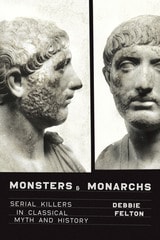
Monsters and Monarchs
Serial Killers in Classical Myth and HistoryBy Debbie Felton
University of Texas Press, 2021
Jack the Ripper. Jeffrey Dahmer. John Wayne Gacy. Locusta of Gaul. If that last name doesn’t seem to fit with the others, it’s likely because our modern society largely believes that serial killers are a recent phenomenon. Not so, argues Debbie Felton—in fact, there’s ample evidence to show that serial killers stalked the ancient world just as they do the modern one.
Felton brings this evidence to light in Monsters and Monarchs, and in doing so, forces us to rethink the assumption that serial killers arise from problems unique to modern society. Exploring a trove of stories from classical antiquity, she uncovers mythological monsters and human criminals that fit many serial killer profiles: the highway killers confronted by the Greek hero Theseus, such as Procrustes, who tortured and mutilated their victims; the Sphinx, or “strangler,” from the story of Oedipus; child-killing demons and witches, which could explain abnormal infant deaths; and historical figures such as Locusta of Gaul, the most notorious poisoner in the early Roman Empire. Redefining our understanding of serial killers and their origins, Monsters and Monarchs changes how we view both ancient Greek and Roman society and the modern-day killers whose stories still captivate the public today.
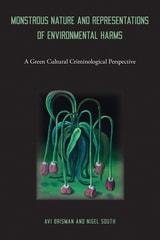
Monstrous Nature and Representations of Environmental Harms
A Green Cultural Criminological PerspectiveAvi Brisman and Nigel South
Temple University Press, 2025
The authors use examples from popular culture, including Disney and Marvel Cinematic Universe films, to consider ideas about how the environment responds to people who cause it harm. Brisman and South identify and discuss three dominant and interrelated depictions of the relationship between humans and the environment: first, nature as monstrous or fear inducing; second, nature and the Earth (or parts of it) as abject; and third, the entanglement of nature and the apocalypse, wherein nature is contributing to the end of the world, with an end point sometimes conceptualized as one without humans.
Monstrous Nature and Representations of Environmental Harms argues that such representations have material consequences. The authors make the case for challenging them so that we neither perpetuate them nor retreat into cynicism and defeatism about the future of our planet.
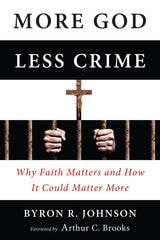
More God, Less Crime
Why Faith Matters and How It Could Matter MoreByron Johnson
Templeton Press, 2012
In More God, Less Crime renowned criminologist Byron R. Johnson proves that religion can be a powerful antidote to crime. The book describes how faith communities, congregations, and faith-based organizations are essential in forming partnerships necessary to provide the human and spiritual capital to effectively address crime, offender rehabilitation, and the substantial aftercare problems facing former prisoners. There is scattered research literature on religion and crime but until now, there has never been one publication that systematically and rigorously analyzes what we know from this largely overlooked body of research in a lay-friendly format. The data shows that when compared to current strategies, faith-based approaches to crime prevention bring added value in targeting those factors known to cause crime: poverty, lack of education, and unemployment. In an age of limited fiscal resources, Americans can’t afford a criminal justice system that turns its nose up at volunteer efforts that could not only work better than the abysmal status quo, but also save billions of dollars at the same time. This book provides readers with practical insights and recommendations for a faith-based response that could do just that.

More Guns, Less Crime
Understanding Crime and Gun Control Laws, Second EditionJohn R. Lott, Jr.
University of Chicago Press, 2000
"Lott's pro-gun argument has to be examined on the merits, and its chief merit is lots of data. . . . If you still disagree with Lott, at least you will know what will be required to rebut a case that looks pretty near bulletproof."—Peter Coy, Business Week
"By providing strong empirical evidence that yet another liberal policy is a cause of the very evil it purports to cure, he has permanently changed the terms of debate on gun control. . . . Lott's book could hardly be more timely. . . . A model of the meticulous application of economics and statistics to law and policy."—John O. McGinnis, National Review
"His empirical analysis sets a standard that will be difficult to match. . . . This has got to be the most extensive empirical study of crime deterrence that has been done to date."—Public Choice
"For anyone with an open mind on either side of this subject this book will provide a thorough grounding. It is also likely to be the standard reference on the subject for years to come."—Stan Liebowitz, Dallas Morning News
"A compelling book with enough hard evidence that even politicians may have to stop and pay attention. More Guns, Less Crime is an exhaustive analysis of the effect of gun possession on crime rates."—James Bovard, Wall Street Journal
"John Lott documents how far 'politically correct' vested interests are willing to go to denigrate anyone who dares disagree with them. Lott has done us all a service by his thorough, thoughtful, scholarly approach to a highly controversial issue."—Milton Friedman
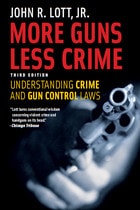
More Guns, Less Crime
Understanding Crime and Gun Control Laws, Third EditionJohn R. Lott, Jr.
University of Chicago Press, 2010
On its initial publication in 1998, John R. Lott’s More Guns, Less Crime drew both lavish praise and heated criticism. More than a decade later, it continues to play a key role in ongoing arguments over gun-control laws: despite all the attacks by gun-control advocates, no one has ever been able to refute Lott’s simple, startling conclusion that more guns mean less crime. Relying on the most rigorously comprehensive data analysis ever conducted on crime statistics and right-to-carry laws, the book directly challenges common perceptions about the relationship of guns, crime, and violence. For this third edition, Lott draws on an additional ten years of data—including provocative analysis of the effects of gun bans in Chicago and Washington, D.C—that brings the book fully up to date and further bolsters its central contention.
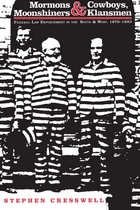
Mormons and Cowboys, Moonshiners and Klansman
Federal Law Enforcement in the South and West, 1870-1893Stephen Cresswell
University of Alabama Press, 1991
A critical study of the expansion of federal law enforcement across the post-Civil War American South and frontier West.
In the decades immediately following the Civil War, the United States expanded rapidly. As the nation grew, so too did federal law, moving into areas of citizens’ lives previously regulated by local custom and state and territorial statutes.
Drawing on contemporary accounts and the letters that flowed between the Washington office of the Justice Department and its attorneys and marshals throughout the states and territories, Cresswell uses a case-study approach to explore the enforcement of federal law in four regions. In northern Mississippi, the rights of freedmen to vote clashed with established rules of relations between blacks and whites. In Utah Territory, Mormon polygamy and economic dominance challenged the aspirations of non-Mormon settlers. In eastern Tennessee, desperate poverty lent enchantment to the easy money of moonshining. In Arizona Territory, frontier greed and violence threatened the lives of people and the chances of early admission to the Union of states.
Mormons and Cowboys, Moonshiners and Klansmen moves beyond these local case studies to illuminate larger questions, including the evolution of the American criminal justice system, the relationship of the South and the West to the rest of the nation, the workings of the 19th-century American bureaucracy, and conflict of the local, state, and federal governments.
Out of the efforts of these early federal marshals came the modern federal justice system, with its firm policy guidelines, its Federal Bureau of Investigation, and its broader powers over the country as a whole.
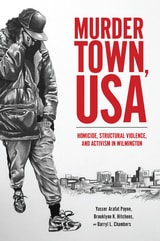
Murder Town, USA
Homicide, Structural Violence, and Activism in WilmingtonYasser Arafat Payne
Rutgers University Press, 2023
Far too many poor Black communities struggle with gun violence and homicide. The result has been the unnatural contortion of Black families and the inter-generational perpetuation of social chaos and untimely death. Young people are repeatedly ripped away from life by violence, while many men are locked away in prisons. In neighborhoods like those of Wilmington, Delaware, residents routinely face the pressures of violence, death, and incarceration. Murder Town, USA is thus a timely ethnography with an innovative structure: the authors helped organize fifteen residents formerly involved with the streets and/or the criminal justice system to document the relationship between structural opportunity and experiences with violence in Wilmington's Eastside and Southbridge neighborhoods.
Earlier scholars offered rich cultural analysis of violence in low-income Black communities, and yet this literature has mostly conceptualized violence through frameworks of personal responsibility or individual accountability. And even if acknowledging the pressure of structural inequality, most earlier researchers describe violence as the ultimate result of some moral failing, a propensity for crime, and the notion of helplessness. Instead, in Murder Town USA, Payne, Hitchens, and Chamber, along with their collaborative team of street ethnographers, instead offer a radical re-conceptualization of violence in low-income Black communities by describing the penchant for violence and involvement in crime overall to be a logical, "resilient" response to the perverse context of structural inequality.
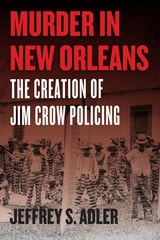
Murder in New Orleans
The Creation of Jim Crow PolicingJeffrey S. Adler
University of Chicago Press, 2019
New Orleans in the 1920s and 1930s was a deadly place. In 1925, the city’s homicide rate was six times that of New York City and twelve times that of Boston. Jeffrey S. Adler has explored every homicide recorded in New Orleans between 1925 and 1940—over two thousand in all—scouring police and autopsy reports, old interviews, and crumbling newspapers. More than simply quantifying these cases, Adler places them in larger contexts—legal, political, cultural, and demographic—and emerges with a tale of racism, urban violence, and vicious policing that has startling relevance for today.
Murder in New Orleans shows that whites were convicted of homicide at far higher rates than blacks leading up to the mid-1920s. But by the end of the following decade, this pattern had reversed completely, despite an overall drop in municipal crime rates. The injustice of this sharp rise in arrests was compounded by increasingly brutal treatment of black subjects by the New Orleans police department. Adler explores other counterintuitive trends in violence, particularly how murder soared during the flush times of the Roaring Twenties, how it plummeted during the Great Depression, and how the vicious response to African American crime occurred even as such violence plunged in frequency—revealing that the city’s cycle of racial policing and punishment was connected less to actual patterns of wrongdoing than to the national enshrinement of Jim Crow. Rather than some hyperviolent outlier, this Louisiana city was a harbinger of the endemic racism at the center of today’s criminal justice state. Murder in New Orleans lays bare how decades-old crimes, and the racially motivated cruelty of the official response, have baleful resonance in the age of Black Lives Matter.

Murder
A Tale of Modern American LifeSara L. Knox
Duke University Press, 1998
In her approach to the telling of this cultural phenomenon, Knox draws on historical analysis and original research. She discusses such subjects as the continuing existence of capital punishment, the “sensational” American murderers Martha Beck and Ray Fernandez (aka the Honeymoon Killers), the connection between true crime books and romance narratives, and pulp murder novels of the 1930s and 1940s. Analyzing widespread interest in forensic psychiatry, sexuality, mortality, and the relation of gender to society’s reactions to murder, Knox refers to the early work of David Brion Davis, Bill Ellis, and Joel Black. While demonstrating how society’s focus has shifted from the act itself to the psychology of the murderer to the broader social forces at work, she discusses the writings of Willard Motley, William March, Curtis Bok, James Baldwin, and Kate Millett, among others.
Full of anecdotes and insights, Murder is a lively meditation on American culture that includes not only close critical readings of individual texts but also everyday matters of murder’s meaning. It will interest those involved with American studies, cultural studies, and true crime accounts.
Murdered in Jersey
Expanded EditionGerald Tomlinson
Rutgers University Press, 1994
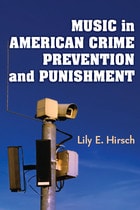
Music in American Crime Prevention and Punishment
Lily E. Hirsch
University of Michigan Press, 2014
Although the use of music for extramusical purposes has been a part of American culture for some time, the phenomenon remained largely unknown to the general public until revelations became widespread of startling military practices during the second Iraq War. In Music in American Crime Prevention and Punishment, Lily E. Hirsch explores the related terrain at the intersection of music and law, demonstrating the ways in which music has become a tool of law enforcement and justice through: police and community leaders’ use of classical music in crime deterrence and punishment; the use of rap lyrics as prosecutorial evidence; allegations of music as incitement to violence; and the role of music in U.S. prisons and in detention centers in Guantanamo, Iraq, and Afghanistan.
In the course of her study, Hirsch asks several questions: How does the law treat music? When and why does music participate in the law? How does music influence the legal process? How does the legal process influence music? And how do these appropriations affect the Romantic ideals underlying our view of music?