Results by title
193 books match the query 'Cultural & Regional' and 15 start with m
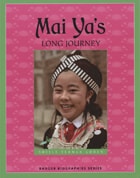
Mai Ya's Long Journey
Sheila Cohen
Wisconsin Historical Society Press, 2005
The story of Mai Ya Xiong and her family and their journey from the Ban Vinai refugee camp in Thailand to a new life in Madison, Wisconsin, is extraordinary. Yet it is typical of the stories of the 200,000 Hmong people who now live in the United States and who struggle to adjust to American society while maintaining their own culture as a free people.
Mai Ya's Long Journey follows Mai Ya Xiong, a young Hmong woman, from her childhood in Thailand's Ban Vinai Refugee Camp to her current home in Wisconsin. Mai Ya's parents fled Laos during the Vietnam War and were refugees in Thailand for several years before reaching the United States. But the story does not end there. Students will read the challenges Mai Ya faces in balancing her Hmong heritage and her adopted American culture as she grows into adulthood.
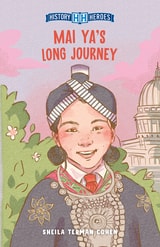
Mai Ya’s Long Journey
Sheila Terman Cohen
Wisconsin Historical Society Press, 2027
A true story of courage, family, and the challenges and triumphs of building a life in a new place and culture.
Mai Ya Xiong arrived in Wisconsin with her family when she was just seven years old. Born in Ban Vinai Refugee Camp in Thailand after her family fled war-torn Laos, Mai Ya knew no English, had never lived in a home with running water, and had never seen snow before. The Xiong family was part of the early wave of Hmong refugees who came to the United States from Southeast Asia in the 1980s with hopes of building new lives. Through hardship and loss, joy and perseverance, young Mai Ya navigated growing up in two worlds—maintaining Hmong traditions while learning the American way of life.
Mai Ya’s Long Journey offers young readers an inspiring and insightful window into life as a refugee and the experience of adapting to a new home, a new language, a new country, and new friends. In addition to examining Mai Ya’s school years, this updated edition of a beloved biography expands the story with Mai Ya’s journey into adulthood and parenthood, while also highlighting the celebrations marking the 50th anniversary of Hmong settlement in the United States. An afterword by Mai Ya reflects on her evolving understanding of identity, revealing how her desire to fit in as a child has transformed into a commitment to honor her heritage and pass Hmong values and customs on to her own children.
Blending biography and history, Mai Ya’s Long Journey expands the learning experience by sharing information about the Hmong language, spiritual traditions, and folklore as well as about American involvement in the Vietnam War. The book helps readers ages 8–11 understand the immigrant experience while celebrating the strength, determination, and cultural pride that continue to shape Hmong communities across the United States.
Maria's Journey
Ramon Arredondo and Trisha (Hull) Arredondo
Indiana Historical Society Press, 2010

Medgar Evers
Mississippi MartyrMichael Vinson Williams
University of Arkansas Press, 2011
Meet Me on the Midway
A History of Wisconsin FairsJerry Apps
Wisconsin Historical Society Press, 2022
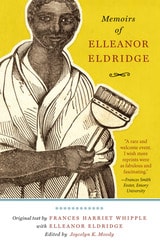
Memoirs of Elleanor Eldridge
Frances H. Whipple
West Virginia University Press, 2013
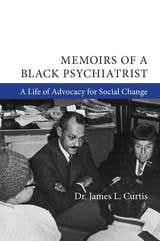
Memoirs of a Black Psychiatrist
A Life of Advocacy for Social ChangeDr. James L. Curtis
Michigan Publishing Services, 2017
In his two previous books, Dr. Curtis illustrated the leadership role he played in changing how medicine is practiced for the better. His first book, Blacks, Medical Schools and Society (University of Michigan Press, 1971), was written when he was an associate dean of the Cornell University Medical College. As dean in the beginning years of Affirmative Action in Medicine, Dr. Curtis took action in this movement by desegregating medical school admissions not only at Cornell, but also in all US medical schools. After his retirement, his second book, Affirmative Action in Medicine: Improving Health Care for All (University of Michigan Press, 2003), was published: a twenty-five-year progress report on the social benefit of these programs in the American practice of medicine.
Dr. Curtis retired in 2000 as Clinical Professor of Psychiatry of Columbia University College of Physicians and Surgeons, having been a faculty member for eighteen years. During his tenure at Columbia he was also Director of Psychiatry at Harlem Hospital Center, serving one of the most economically deprived neighborhoods of New York City. Since 2003, he has lived in his hometown of Albion, Michigan, one of the formerly vibrant and prosperous cities devastated by the collapse of the automobile industry. With a small group of others, he is developing new social service programs to benefit Albion.
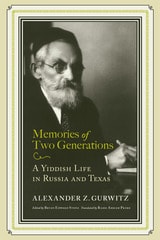
Memories of Two Generations
A Yiddish Life in Russia and TexasAlexander Z. Gurwitz, Edited and Introduced by Bryan Edward Stone
University of Alabama Press, 2022
The 1935 autobiography of Alexander Ziskind Gurwitz, an Orthodox Jew whose lively recounting of his life in Tsarist Russia and his immigration to San Antonio, Texas, in 1910 captures turbulent changes in early twentieth-century Jewish history
In 1910, at the age of fifty-one, Alexander Ziskind Gurwitz made the bold decision to emigrate with his wife and four children from southeastern Ukraine in Tsarist Russia to begin a new life in Texas. In 1935, in his seventies, Gurwitz composed a retrospective autobiography, Memories of Two Generations, that recounts his personal story both of the rich history of the lost Jewish world of Eastern Europe and of the rambunctious development of frontier Jewish communities in the United States.
In both Europe and America, Gurwitz inhabited an almost exclusively Jewish world. As a boy, he studied in traditional yeshivas and earned a living as a Hebrew language teacher and kosher butcher. Widely travelled, Gurwitz recalls with wit and insight daily life in European shtetls, providing perceptive and informative comments about Jewish religion, history, politics, and social customs. Among the book’s most notable features is his first-hand, insider’s account of the yearly Jewish holiday cycle as it was observed in the nineteenth century, described as he experienced it as a child.
Gurwitz’s account of his arrival in Texas forms a cornerstone record of the Galveston Immigration Movement; this memoir represents the only complete narrative of that migration from an immigrant’s point of view. Gurwitz’s descriptions about the development of a thriving Orthodox community in San Antonio provide an important and unique primary source about a facet of American Jewish life that is not widely known.
Gurwitz wrote his memoir in his preferred Yiddish, and this translation into English by Rabbi Amram Prero captures the lyrical style of the original. Scholar and author Bryan Edward Stone’s special introduction and illuminating footnotes round out a superb edition that offers much to experts and general readers alike.
Memphis Tennessee Garrison
The Remarkable Story of a Black Appalachian WomanAncella R. Bickley
Ohio University Press, 2001
As a black Appalachian woman, Memphis Tennessee Garrison belonged to a demographic category triply ignored by historians.
The daughter of former slaves, she moved to McDowell County, West Virginia, at an early age and died at ninety-eight in Huntington. The coalfields of McDowell County were among the richest seams in the nation. As Garrison makes clear, the backbone of the early mining work force—those who laid the railroad tracks, manned the coke ovens, and dug the coal—were black miners. These miners and their families created communities that became the centers of the struggle for unions, better education, and expanded civil rights. Memphis Tennessee Garrison, an innovative teacher, administrative worker at U.S. Steel, and vice president of the National Board of the NAACP at the height of the civil rights struggle (1963-66), was involved with all of these struggles.
In many ways, this oral history, based on interview transcripts, is the untold and multidimensional story of African American life in West Virginia, as seen through the eyes of a remarkable woman. She portrays a courageous people who organize to improve their working conditions, send their children to school and then to college, own land, and support a wide range of cultural and political activities.
Modern Jungles
A Hmong Refugee's Childhood Story of SurvivalPao Lor
Wisconsin Historical Society Press, 2023
Born in a small farming village, Pao was destined to be a Hmong clan leader, wedding negotiator, or shaman. But the course of his life changed dramatically in the 1970s, when the Hmong faced persecution for their role in helping US forces fighting communism in the region. After more than two years in Thai refugee camps, Pao and his surviving family members boarded the belly of an “iron eagle” bound for the United States, where he pictured a new life of comfort and happiness. Instead, Pao found himself navigating a frightening and unfamiliar world, adjusting to a string of new schools and living situations while struggling to fulfill the hopes his parents had once held for his future. Now in Modern Jungles, Pao Lor shares his inspiring coming-of-age tale about perseverance, grit, and hope.
Included are discussion questions for use by book clubs, in classrooms, or around the dinner table.
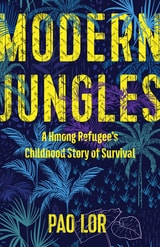
Modern Jungles
A Hmong Refugee’s Childhood Story of SurvivalPao Lor
Wisconsin Historical Society Press, 2021
Born in a small farming village, Pao was destined to be a Hmong clan leader, wedding negotiator, or shaman. But the course of his life changed dramatically in the 1970s, when the Hmong faced persecution for their role in helping US forces fighting communism in the region. After more than two years in Thai refugee camps, Pao and his surviving family members boarded the belly of an “iron eagle” bound for the United States, where he pictured a new life of comfort and happiness. Instead, Pao found himself navigating a frightening and unfamiliar world, adjusting to a string of new schools and living situations while struggling to fulfill the hopes his parents had once held for his future. Now in Modern Jungles, Pao Lor shares his inspiring coming-of-age tale about perseverance, grit, and hope.
Included are discussion questions for use by book clubs, in classrooms, or around the dinner table.
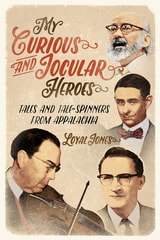
My Curious and Jocular Heroes
Tales and Tale-Spinners from AppalachiaLoyal Jones
University of Illinois Press, 2017
We stopped, and we heard the biggest racket you ever heard up in the house.
“What’s the matter, son?”
“Why, Maw and Paw are up there fightin’.”
“Who is your Paw, son?”
“Well, that’s what they are fightin’ over.”
Brimming with ballads, stories, riddles, tall tales, and great good humor, My Curious and Jocular Heroes pays homage to four people who guided and inspired Loyal Jones’s own study of Appalachian culture. His sharp-eyed portraits introduce a new generation to Bascom Lunsford, the pioneer behind the “memory collections” of song and story at Columbia University and the Library of Congress; the Sorbonne-educated collector and performer Josiah H. Combs; Cratis D. Williams, the legendary father of Appalachian studies; and the folklorist and master storyteller Leonard W. Roberts. Throughout, Jones highlights the tales, songs, jokes, and other collected nuggets that define the breadth of each man’s research and repertoire.
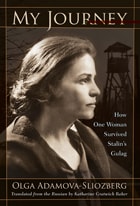
My Journey
How One Woman Survived Stalin's GulagOlga Adamova-Sliozberg
Northwestern University Press, 2011
Arrested along with her husband (who, she would much later learn, was shot the next day) in the great purges of the thirties, Adamova-Sliozberg decided to record her Gulag experiences a year after her arrest, and she “wrote them down in her head” (paper and pencils were not available to prisoners) every night for years. When she returned to Moscow after the war in 1946, she composed the memoir on paper for the first time and then buried it in the garden of the family dacha. After her re-arrest and seven more years of banishment to Kazakhstan, she returned to the dacha to dig up the buried memoir, but could not find it. She sat down and wrote it all over again.
In her later years she also added a collection of stories about her family. Concluding on a hopeful note—Adamova-Sliozberg’s record is cleared, she re-marries a fellow former-prisoner, and she is reunited with her children—this story is a stunning account of perseverance in the face of injustice and unimaginable hardship. This vital primary source continues to fascinate anyone interesting in the tumultuous history of Russia and the Soviet Union in the twentieth century.
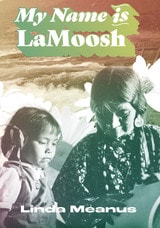
My Name is LaMoosh
Linda Meanus
Oregon State University Press, 2023
My Name is LaMoosh is the life story of Warm Springs Tribal elder Linda Meanus. She grew up with her grandma Flora Thompson and grandpa Chief Tommy Thompson near Celilo Falls, a mighty fishery on the Columbia that was flooded in 1957 by the construction of The Dalles Dam. Linda persevered through this historic trauma and life’s challenges to teach young people about the Indigenous ways of the Columbia River.
Intended for early readers to learn more about Native American history through a first-hand account, the book is also a reminder that Indigenous people continue to maintain a cultural connection to the land and river that gave them their identity.
My Name is LaMoosh includes fact boxes that provide historical, cultural, and environmental context for Linda’s personal story. Hundreds of books exist about Lewis and Clark and their journey of “discovery.” This book balances our understanding of American history with the long-neglected voices of Indigenous people. Linda’s story is not just about historic trauma but also about resilience, perseverance, and reciprocity.
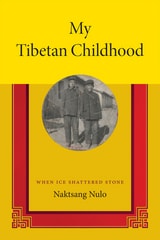
My Tibetan Childhood
When Ice Shattered StoneNatksang Nulo
Duke University Press, 2014
The real significance of this episodic narrative is the way it shows, through the eyes of a child, the suppressed histories of China's invasion of Tibet. The author's matter-of-fact accounts cast the atrocities that he relays in stark relief. Remarkably, Naktsang lived to tell his tale. His book was published in 2007 in China, where it was a bestseller before the Chinese government banned it in 2010. It is the most reprinted modern Tibetan literary work. This translation makes a fascinating if painful period of modern Tibetan history accessible in English.