Results by title
170 books match the query 'Death, Grief, Loss' and 12 start with m
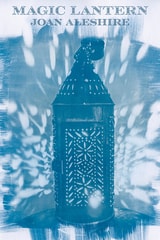
Magic Lantern
Joan Aleshire
Four Way Books, 2026
Conceived of as a memoir in poems of late-life love and its betrayal, Magic Lantern traces the borders of loss and investigates the source of our strength to traverse them, finding the roots of resilience in ordinary interactions and illuminating the undramatic power of simple connections. "At a time of our lives when the only hands / we can expect to touch us this gently / will be wearing latex gloves," Aleshire recounts a tender moment before romantic rupture. "The technician in the ER said softly, / trying to attach your heart monitors, / You’re so hairy, I’m not sure / this will stick, but I thought / it didn’t matter how intimately / they handled you; my love / had covered, would cover / you, before and after them." When the realization of the beloved’s treachery obliterates this lucidity and generosity, the speaker feels violated and estranged from herself, reducing the narrative of the affair to “what we did / in the dark, until we became / the dark.” The private destabilization of this heartache pales but compounds the shadows of a world already rent by international war and domestic political upheaval, but Aleshire orients toward another light source: the rewarding labor of building community and the noble pursuit of seeking meaning itself. The title poem executes a beautiful metacommentary on the value of art, which is to say going to the effort, trying for trying’s sake. At a local filmmaker’s screening, the speaker marvels at the powerful impression the artist has rendered with black-and-white film, astonished by how “the depths and brights, / shadows and gleams... make us watching / feel more.” In these deeply compassionate and vulnerable poems, Aleshire draws our attention to the artistry of our lives, the luminosity we stroke and orchestrate through our meticulous care and enduring bonds. This is the light we see by. A transportative seventh collection, Magic Lantern draws the disordered overwhelm of the human experience into a dazzling, seamless sequence of images, setting the ordinary into motion so that it not only coheres, but glows.
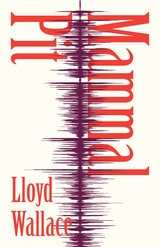
Mammal Pit
Lloyd Wallace
University of Chicago Press, 2027
A strange, cacophonous, and contemplative long poem following a posthumous narrator making meaning of life and death.
Lloyd Wallace’s book-length poem Mammal Pit uses the imaginative technologies of literature to try to say something true about being alive. Conceived as though spoken in a single, long breath by an ostensibly posthumous narrator, this soliloquy accrues fragments, images, impressions, jokes, and regrets as it progresses. The narrator recalls moments from his past life, running through the American South, crossing the long Ohio River into Pittsburgh, and zigzagging over to the oiled, silent hallways of the US Capitol, all while calling up and attempting to make sense of what it was to be alive in a human body surrounded by the heavy liquid of time. Studded with strange, exacting images—“Men dreaming of knives / In such excruciating detail / They wake up with paper cuts / Saliva wife”—Wallace’s debut collection attempts to ask the questions poetry is made to answer: What do you do with death? What do you do when it’s standing beside you? What can you do but hold its hand?
Wallace’s humorous and morbid romp across America and across the boundaries of life and death whirls language away from expected patterns and forms. Committed to the question of what it means to die, Wallace faces its inevitability and the fact that we are all doing it as we speak.
Mammal Pit is the winner of the 2027 Phoenix Emerging Poet Book Prize.
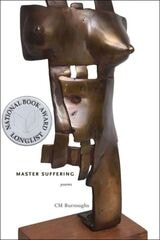
Master Suffering
CM Burroughs
Tupelo Press, 2021
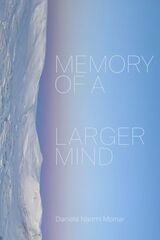
Memory of a Larger Mind
Daniela Naomi Molnar
Omnidawn, 2026
Poems written outdoors, in the presence of disappearing glaciers—a book of memory, grief, and transformation.
In her new poetry collection, Memory of a Larger Mind, Daniela Naomi Molnar sifts through memory and layered loss—planetary, cultural, familial, and personal—asking how we withstand and how we transform. These are plein air poems, written outdoors in the presence of disappearing glaciers and composed with shifting light, wind, sound, and scent: elegies and love songs, celebrations and laments. Braiding the slow death of glaciers with her grandmother's survival of the Holocaust, the book holds ecological and ancestral loss in a single frame. Alive to our current moment while keeping one foot in geologic time, Molnar exposes genocide and ecocide as expressions of the same logic, the same movement: ice to water to light, grief to love to joy to grief.
Memory of a Larger Mind is part of a larger interdisciplinary project that gathers pigments, language, and memory from “sacrifice zones”—glaciated landscapes, former concentration and incarceration camps, desecrated sacred sites—and transforms them into poems, paintings, and films. The result is work in which all bodies are understood as dynamic, part of a world in which difficult pasts might open toward more peaceful futures, and in which grief, handled with care, might shift to love.
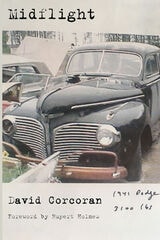
Midflight
David Corcoran
Four Way Books, 2022
A posthumous collection, Midflight collects the poems written by beloved science editor and journalist David Corcoran in the latter part of his life. Idling in a space between the pastoral and the ordinary, Corcoran’s lyrical world maps the sublime mundanity of nature while exploring memory, dreams, and consciousness itself. Corcoran’s lines abound with figures living and long deceased, with the dead walking onstage as if they never left. Describing the accident that killed his father when he was a toddler in “Here,” Corcoran writes, “the door [opens] in midflight / and [pitches] him out.” In “Last Questions,” he asks, “Are you my brother or / a mockingbird?” While these haunting, vivid poems have an aching prescience, imbued as they are with the awareness of human ephemerality, the gift they proffer, to the writer and the reader at once, is the sense of finding oneself midflight, in midair, betwixt sky and ground, in the free fall of being—going and going and never gone.
Monster Mash
Susan Browne
Four Way Books, 2025
More Poems about Money
Daniel Wolff
Four Way Books, 2022
Mountain Amnesia
Gale Marie Thompson
University Press of Colorado, 2023
Mountain Amnesia also explores the question of how implicated or dependent we are on the lives and actions of others. What does it mean to be accountable to and responsible for those around you? How are we implicated in others’ crimes? What can we do in the aftermath? The poems in this collection explore the limits of knowing and seeing, and how we come to be known and seen: “I ask the world for its bandage /of meaning.” Mountain Amnesia both pursues and surrenders to these limits of knowing, narrowing the vast distances between ourselves and others.
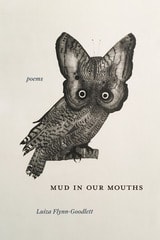
Mud in Our Mouths
PoemsLuiza Flynn-Goodlett
Northwestern University Press, 2025
An award-winning poet writing through violence, solace, and hope
Luiza Flynn-Goodlett’s Mud in Our Mouths illuminates how we are all enmeshed in a web of violence and love. As the speaker of the collection drives cross-country to visit her family of origin in Tennessee, she reckons with the tensions between her current and past selves and the many ways violence—interpersonal, societal, and environmental—has shaped her life. She struggles to find meaning, questioning the ethics of locating faith in a natural world she is unintentionally destroying, and grapples with her complicity in systems of power and oppression as a white Southern woman. Ultimately, she rejects the idea of genetic family as a place of solace; instead, she cleaves to the liberation and joy of connections forged outside those strictures, where intimacy is freely chosen rather than preordained.
Muscadine
A. H. Jerriod Avant
Four Way Books, 2023
Muscadine
A. H. Jerriod Avant
Four Way Books, 2023
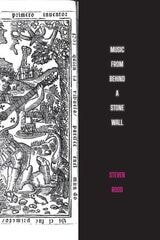
music from behind a stone wall
Steven Rood
Omnidawn, 2024
The poems in Steven Rood’s newest collection take on a musical sensibility as they flow from the poet’s sixty years as a classical guitarist who remains preoccupied with the tonalities of daily life. Each poem in music from behind a stone wall comes together to build a multi-layered symphony that reveals the delights and travails of family life and moments of intimate connection with animals and plants. At the core of the book are poems considering the overwhelming task of trying to communicate the essence of musical experience via the written word. This is a book of grief and joy sung with lyric acuity, vivid images, and formal variation.