Results by title
65 books match the query 'Difference' and 5 start with m

Macedonia
The Politics of Identity and DifferenceJane K. Cowan
Pluto Press, 2000

Making Up the Difference
Women, Beauty, and Direct Selling in EcuadorBy Erynn Masi de Casanova
University of Texas Press, 2011
Globalization and economic restructuring have decimated formal jobs in developing countries, pushing many women into informal employment such as direct selling of cosmetics, perfume, and other personal care products as a way to "make up the difference" between household income and expenses. In Ecuador, with its persistent economic crisis and few opportunities for financially and personally rewarding work, women increasingly choose direct selling as a way to earn income by activating their social networks. While few women earn the cars and trips that are iconic prizes in the direct selling organization, many use direct selling as part of a set of household survival strategies.
In this first in-depth study of a cosmetics direct selling organization in Latin America, Erynn Masi de Casanova explores women's identities as workers, including their juggling of paid work and domestic responsibilities, their ideas about professional appearance, and their strategies for collecting money from customers. Focusing on women who work for the country's leading direct selling organization, she offers fascinating portraits of the everyday lives of women selling personal care products in Ecuador's largest city, Guayaquil. Addressing gender relations (including a look at men's direct and indirect involvement), the importance of image, and the social and economic context of direct selling, Casanova challenges assumptions that this kind of flexible employment resolves women's work/home conflicts and offers an important new perspective on women's work in developing countries.
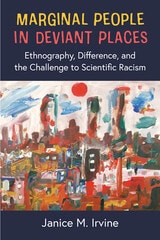
Marginal People in Deviant Places
Ethnography, Difference, and the Challenge to Scientific RacismJanice M. Irvine
University of Michigan Press, 2022
Place plays a crucial role in this work as Irvine examines its role in shaping ethnographies about outsiders and therefore understandings of social difference. Irvine has visited the sites of each of the ethnographies about which she writes, collecting photos, videos, and archival materials that will help readers understand the importance of place in the generation of particular ethnographic stories. The open-access online edition of this book is richly illustrated to help convey the deep sense of emplacement of the ethnographies discussed in this book and includes a series of interviews with sociologists about how they conduct their work and understand their forebears.
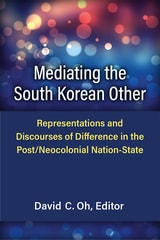
Mediating the South Korean Other
Representations and Discourses of Difference in the Post/Neocolonial Nation-StateDavid C. Oh, Editor
University of Michigan Press, 2022
This collection brings together leading and emerging scholars of multiculturalism in Korean media culture to examine mediated constructions of the “other,” taking into account the nation’s postcolonial and neocolonial relationships and its mediated construction of self. “Anthrocategorism ,” a more nuanced translation of injongchabyeol, is proffered as a new framework for understanding difference in ways that are locally meaningful in a society and media system in which racial or even ethnic differences are not the most salient. The collection points to the construction of racial others that elevates, tolerates, and incorporates difference; the construction of valued and devalued ethnic others, and the ambivalent construction of co-ethnic others as sympathetic victims or marginalized threats.
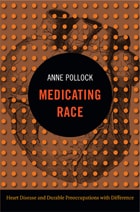
Medicating Race
Heart Disease and Durable Preoccupations with DifferenceAnne Pollock
Duke University Press, 2012