Results by title
55 books match the query 'Dreams' and 5 start with m
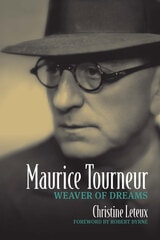
Maurice Tourneur
Weaver of DreamsChristine Leteux, Foreword by Robert Byrne
University of Wisconsin Press, 2026
In 1914, an unknown French filmmaker arrived in New York; within four years, Maurice Tourneur (1876–1961) would become one of America’s most acclaimed directors. In this masterful biography, Christine Leteux shows how intimately connected Tourneur’s life was to major events of the twentieth century as well as to the profound transformations in movie making. A master of directing silent films, he quickly managed the transition to sound. His last major work was created for Continental Films, the German-owned firm that controlled the French film industry during the Nazi Occupation. His son, Jacques, followed in his footsteps, also becoming an acclaimed director.
Drawing heavily on previously unpublished archival documents, Leteux reinvigorates film history and demonstrates that we know far less about this era of filmmaking than we often assume. She reveals not only how Tourneur jumped from France to the United States and back again but also how he shifted from one company to another, moving quickly up the ladder to bigger productions and ever larger studios. Tourneur’s drive, insight, technical proficiency, skill with actors, ability to create new forms of storytelling, and fame on both sides of the Atlantic make it all the more surprising that he is not better known today—an oversight that has now been corrected thanks to Leteux’s impressively detailed research and nuanced storytelling.

Memory and Dreams
The Creative Human MindGeorge Christos
Rutgers University Press, 2003
Why do we sleep? Why do we dream? How does the brain turn a collection of new experiences into memories, dreams, and creative thoughts?
After synthesizing much of what is known about the neurobiological basis of memory and dreaming, Memory and Dreams: The Creative Human Mind offers new interpretations of how memories are formed, the nature of creativity, the purpose of dream sleep, and, in its most original section, the causes of SIDS.
Memory is represented in the brain by specific neural firing patterns that share common neurons and connections. Mathematical models therefore suggest that the brain can generate its own set of “spurious memories” by combining various features of stored memories. George Christos suggests that these spurious memories represent the basis for creativity.
The function of dreaming in humans and almost all other mammals is one of the great unsolved biological mysteries. Christos argues that we dream in order to process recently acquired memories, to forget unimportant memories, and to generate more creative states. By organizing our memories, dreaming allows us to be more predisposed for learning the next day.
The last section of the book deals with one of the most puzzling and heartbreaking problems in medical science, SIDS. Christos posits that infants, through dreaming, may trigger fetal breathing pathways and stop breathing without any alarms going off. In other words, SIDS has no physical cause; the cause is in the mind of the infant, who “dreams” it is back in the safety of its mother’s womb—a state in which it does not breathe. Christos asserts that this is the only theory that explains the causes as well as the trigger mechanisms of SIDS and is consistent with all of the known facts. The book concludes with a list of suggested preventative measures derived from this provocative theory.
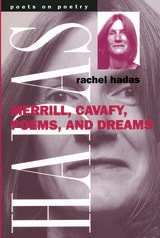
Merrill, Cavafy, Poems, and Dreams
Rachel Hadas
University of Michigan Press, 2000
The second half of the book combines explorations of various corners and horizons of the poetry scene, including neglected American poets and Hadas's thoughts on her own poetics and career. "Two Letters from New York" and "Tangled Web Sites" take bemused looks at literary or cultural landscapes. Hadas also looks inward: to dreams and dreamwork, to her dead mother's address book, to the emblematic drilling of a well in a country house. The range of selections includes essays, interviews, memoir, criticism, and a few of Hadas's own poems.
Rachel Hadas is the author of eleven books of poetry, essays, and translations. Her most recent book is Halfway Down the Hall: New and Selected Poems. She has received a Guggenheim Fellowship in Poetry and an American Academy-Institute of Arts and Letters Award in Literature, and is a member of the American Academy of Arts and Sciences. She is Professor of English at the Newark campus of Rutgers University.
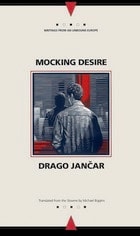
Mocking Desire
Drago Jancar
Northwestern University Press, 1998
Gregor Gradnik, a Slovenian writer, enters the sensual and seething life of New Orleans to teach a creative writing class at a university. Gregor at first acts as only an observer, yet seductive New Orleans soon draws him into a series of bizarre erotic, professional, and social relationships. A profound and entertaining work, Mocking Desire provides the English-speaking world with the perfect introduction to one of Eastern Europe's leading writers.

Morocco
In the Labyrinth of Dreams and BazaarsWalter M. Weiss
Haus Publishing, 2016
In Morocco, Walter M. Weiss brings extensive knowledge of the region to bear as he travels the breadth and depth of the country’s social and geographical contrasts. Berber villagers of the mountains are for the most part still illiterate and consider their king to be divinely chosen, while businessmen in Casablanca’s towering offices dream of closer ties to the European Union. Weiss visits the settings of modern legends, such as Tangier, as well as the two medieval centres Fès and Meknès, and sees earthen kasbahs and Marrakech’s bazaar. On the way, he meets acrobats, Sufi musicians, pilgrims, craftsmen, beatniks, rabbis, and Berber farmers—a kaleidoscope of variety and cultural influence.