917 books match the query 'Economics' and 54 start with m

cover of Macroeconomic Consequences of Farm Support Policies

Macroeconomic Consequences of Farm Support Policies

A. B. Stoeckel, David Vincent and Sandy Cuthbertson

Duke University Press, 1989

Agricultural protectionism is a basic factor underlying the U.S. trade deficit, Third World debt, and global underemployment. Yet despite the seriousness of the problem and attention given to it by many researchers, little progress has been made in formulating and implementing policies to deal with it.
The scholars and experts here assembled present for the first time a quantification and analysis of the impact upon the world economy of reduction or elimination of agricultural protectionism. They question why, give the magnitude of the problem, inferior policies endure despite the weight of evidence that they have failed. The answer they derive is that there is no general understanding of the true cost of the failure, and therefore it is necessary to initiate reform from outside agricultural circles.
[more]
cover of Macroeconomic Linkage: Savings, Exchange Rates, and Capital Flows

Macroeconomic Linkage

Savings, Exchange Rates, and Capital Flows

Edited by Takatoshi Ito and Anne O. Krueger

University of Chicago Press, 1994

This volume explores East Asia's macroeconomic experience in the 1980s and the economic impact of East Asia's growth on the rest of the world. The authors explore the causes of capital flows, changes in trade balances, and exchange rate fluctuations in East Asia and their effects on other countries.

These fourteen papers are organized around four themes: the overall determinants of growth and trading relations in the East Asian region; monetary policies in relation to capital controls and capital accounts; the impact of exchange rate behavior on industrial structure; and the potential for greater regional integration. The contributors examine interactions among exchange rate movements, trade balances, and capital flows; how government monetary policy affects capital flows; the effect of exchange rates on industrial structure, inventories, and prices; and the extent of regional integration in East Asia.
[more]
cover of Macroeconomic Policies and the Development of Markets in Transition Economies

Macroeconomic Policies and the Development of Markets in Transition Economies

Fabrizio Coricelli

Central European University Press, 1998

Presenting the first integrated view of transition based on a unified analytical framework, this book evaluates the experience of several transition economies. Fabrizio Coricelli's view of transition emphasizes the connection between peculiar initial conditions and the effects of market reforms. Taking the starting point of underdeveloped markets and market institutions, he evaluates macroeconomic policies in relation to their impact on the development of markets. Coricelli stresses particularly financial markets – the 'missing' market under the system of central planning – and he highlights fundamental trade-offs for economic policy which can play a crucial role in determining the success of reforms.
[more]
cover of Macroeconomics: A Critical Companion

Macroeconomics

A Critical Companion

Ben Fine and Ourania Dimakou

Pluto Press, 2016
Macroeconomics is fundamental to our understanding of how the world functions today. But too often our understanding is based on orthodox, canonized analysis. In this rule-breaking book, Ben Fine and Ourania Dimakou provides an engaging, heterodox primer for those interested in an alternative to mainstream macroeconomic theory and history. From classical theory to the Keynesian revolution and more modern forms including the Monetarist counterrevolution, New Classical Fundamentalism, and New Consensus Macroeconomics, Fine and Dimakou rigorously and comprehensively lay out the theories of mainstream economists, warts and all.
[more]
cover of Macroeconomics: A Neoclassical Introduction

Macroeconomics

A Neoclassical Introduction

Merton H. Miller and Charles W. Upton

University of Chicago Press, 1986

"Miller and Upton is by far the most cited macroeconomics text in front line academic research journals over the last ten years. It has become a contemporary classic."—Roger C. Kormendi, University of Michigan

"The most innovative approach to introducing macroeconomics that I have seen. . . . A 'classic' in the sense that every serious student of macroeconomics is likely to want it in his or her library."—John P. Gould, University of Chicago

"The task the authors set out to perform is ambitious: to write a macroeconomics textbook structured around a neoclassical growth model. And in this task they have succeeded."—Clifford W. Smith, Jr., Journal of Finance

"This is a superb book. As a vehicle for teaching economics I have to place it right behind Henderson and Quant (Microeconomics) and Dorfman, Samuelson, and Solow (Linear Programming). Moreover, it is an exciting book both to read and to think about. . . . It is not just that these authors have something to say, but their way of saying it is generally superior."—F. E. Banks, Kyklos
[more]
cover of Making Americans Healthier: Social and Economic Policy as Health Policy

Making Americans Healthier

Social and Economic Policy as Health Policy

Robert F. Schoeni

Russell Sage Foundation, 2008
The United States spends billions of dollars annually on social and economic policies aimed at improving the lives of its citizens, but the health consequences associated with these policies are rarely considered. In Making Americans Healthier, a group of multidisciplinary experts shows how social and economic policies seemingly unrelated to medical well-being have dramatic consequences for the health of the American people. Most previous research concerning problems with health and healthcare in the United States has focused narrowly on issues of medical care and insurance coverage, but Making Americans Healthier demonstrates the important health consequences that policymakers overlook in traditional cost-benefit evaluations of social policy. The contributors examine six critical policy areas: civil rights, education, income support, employment, welfare, and neighborhood and housing. Among the important findings in this book, David Cutler and Adriana Lleras-Muney document the robust relationship between educational attainment and health, and estimate that the health benefits of education may exceed even the well-documented financial returns of education. Pamela Herd, James House, and Robert Schoeni discover notable health benefits associated with the Supplemental Security Income Program, which provides financial support for elderly and disabled Americans. George Kaplan, Nalini Ranjit, and Sarah Burgard document a large and unanticipated improvement in the health of African-American women following the enactment of civil rights legislation in the 1960s. Making Americans Healthier presents ground-breaking evidence that the health impact of many social policies is substantial. The important findings in this book pave the way for promising new avenues for intervention and convincingly demonstrate that ultimately social and economic policy is health policy. A Volume in the National Poverty Center Series on Poverty and Public Policy
[more]
cover of Making It Work: Low-Wage Employment, Family Life, and Child Development

Making It Work

Low-Wage Employment, Family Life, and Child Development

Hirokazu Yoshikawa

Russell Sage Foundation, 2006
Low-skilled women in the 1990s took widely different paths in trying to support their children. Some held good jobs with growth potential, some cycled in and out of low-paying jobs, some worked part time, and others stayed out of the labor force entirely. Scholars have closely analyzed the economic consequences of these varied trajectories, but little research has focused on the consequences of a mother's career path on her children's development. Making It Work, edited by Hirokazu Yoshikawa, Thomas Weisner, and Edward Lowe, looks past the economic statistics to illustrate how different employment trajectories affect the social and emotional lives of poor women and their children. Making It Work examines Milwaukee's New Hope program, an experiment testing the effectiveness of an anti-poverty initiative that provided health and child care subsidies, wage supplements, and other services to full-time low-wage workers. Employing parent surveys, teacher reports, child assessment measures, ethnographic studies, and state administrative records, Making It Work provides a detailed picture of how a mother's work trajectory affects her, her family, and her children's school performance, social behavior, and expectations for the future. Rashmita Mistry and Edward D. Lowe find that increases in a mother's income were linked to higher school performance in her children. Without large financial worries, mothers gained extra confidence in their ability to parent, which translated into better test scores and higher teacher appraisals for their children. JoAnn Hsueh finds that the children of women with erratic work schedules and non-standard hours—conditions endemic to the low-skilled labor market—exhibited higher levels of anxiety and depression. Conversely, Noemi Enchautegui-de-Jesus, Hirokazu Yoshikawa, and Vonnie McLoyd discover that better job quality predicted lower levels of acting-out and withdrawal among children. Perhaps most surprisingly, Anna Gassman-Pines, Hirokazu Yoshikawa, and Sandra Nay note that as wages for these workers rose, so did their marriage rates, suggesting that those worried about family values should also be concerned with alleviating poverty in America. It is too simplistic to say that parental work is either "good" or "bad" for children. Making It Work gives a nuanced view of how job quality, flexibility, and wages are of the utmost importance for the well-being of low-income parents and children.
[more]
cover of Making Money in Ancient Athens

Making Money in Ancient Athens

Michael Leese

University of Michigan Press, 2021

Given their cultural, intellectual, and scientific achievements, surely the Greeks were able to approach their economic affairs in a rational manner like modern individuals? Since the nineteenth century, many scholars have argued that premodern people did not behave like modern businesspeople, and that the “stagnation” that characterized the economy prior to the Industrial Revolution can be explained by a prevailing noneconomic mentality throughout premodern (and nonwestern) societies. This view, which simultaneously extols the “sophistication” of the modern West, relegates all other civilizations to the status of economic backwardness.

But the evidence from ancient Athens, which is one of the best-documented societies in the premodern world, tells a very different story: one of progress, innovation, and rational economic strategies. Making Money in Ancient Athens examines in the most comprehensive manner possible the voluminous source material that has survived from Athens in inscriptions, private lawsuit speeches, and the works of philosophers like Aristotle and Plato. Inheritance cases that detail estate composition and investment choices, and maritime trade deals gone wrong, provide unparalleled glimpses into the specific factors that influenced Athenians at the level of the economic decision-making process itself, and the motivations that guided the specific economic transactions attested in the source material. Armed with some of the most thoroughly documented case studies and the richest variety of source material from the ancient Greek world, Michael Leese argues that the evidence overwhelmingly demonstrates that ancient Athenians achieved the type of long-term profit and wealth maximization and continuous reinvestment of profits into additional productive enterprise that have been argued as unique to (and therefore responsible for) the modern industrial-capitalist system.
[more]
cover of Making Sense of Social Security Reform

Making Sense of Social Security Reform

Daniel Shaviro

University of Chicago Press, 2000

The Social Security Act of 1935 must be counted among the most monumental pieces of legislation ever passed by Congress. Today, sixty-five years after its enactment, public support for Social Security remains extremely strong. At the same time, there have been reports that Social Security is in grave danger of financial collapse, and numerous groups across the political spectrum have agitated for its reform. The president has put forward proposals to rescue Social Security, conservatives argue for its privatization, and liberals advocate increases in its funding from surplus tax revenues.

But what is the average person to make of all this? How many Americans know where the money for Social Security benefits really comes from, or who wins and loses from the system's overall operations? Few people understand the current Social Security system in even its broadest outlines. And yet Social Security reform is ranked among the most important social issues of our time.

With Making Sense of Social Security Reform, Daniel Shaviro makes an important contribution to the public understanding of the issues involved in reforming Social Security. His book clearly and straightforwardly describes the current system and the pressures that have been brought to bear upon it, before dissecting and evaluating the various reform proposals. Accessible to anyone who has an interest in the issue, Shaviro's new work is unique in offering a balanced, nonpartisan account.
[more]
cover of Making Work Pay

Making Work Pay

Bruce D. Meyer

Russell Sage Foundation, 2001

Since its inception under President Ford in 1975, the Earned Income Tax Credit (EITC) has become the largest antipoverty program for the non-elderly in the United States. In 1998, more than nineteen million families received EITC payments, and the program lifted over four million Americans above the poverty line. Despite the rapid growth of the EITC throughout the 1990s, little has been written about how the program works or how it affects low-income families. Making Work Pay provides the first full-scale examination of the EITC, exploring its effects on income distribution, poverty, work, and marriage. Making Work Pay opens with a history of the EITC—its emergence in the 1970s as a pro-work, low-cost antipoverty program and its expansion through the 1980s and 1990s. The central chapters in the volume look at the substantial impact of the EITC on work incentives in recent years and show that the program, in combination with welfare reform and a strong economy, has led to an unprecedented increase in the employment of single mothers. In one study, researchers conclude that the EITC—with its stipulation that one family member be a wage earner—was the most important change in work incentives for single mothers between 1984 and 1996, a period when the employment rate of single mothers rose sharply. Several chapters outline proposals for reforming the program, addressing the concerns by policymakers about the work disincentives that rise as benefits fall with increasing income. Finally, Making Work Pay examines how EITC recipients view the credit and what they do with it once they get it. The contributors find that not only does EITC's lump-sum payment increase consumption but it also allows recipients to make changes in economic status. Many families use the end-of-the-year payment as a form of forced savings, enabling them to save for home improvement, a new car, or other purchases to improve their lives, and providing the extra economic cushion needed to move beyond mere day-to-day survival. Comprehensive in scope, Making Work Pay is an indispensable resource for policymakers, administrators, and researchers seeking to understand the ramifications of the country's largest programs for aiding the working poor.
[more]
cover of Making the Work-Based Safety Net Work Better: Forward-Looking Policies to Help Low-Income Families

Making the Work-Based Safety Net Work Better

Forward-Looking Policies to Help Low-Income Families

Carolyn J. Heinrich

Russell Sage Foundation, 2009

Work first. That is the core idea behind the 1996 welfare reform legislation. It sounds appealing, but according to Making the Work-Based Safety Net Work Better, it collides with an exceptionally difficult reality. The degree to which work provides a way out of poverty depends greatly on the ability of low-skilled people to maintain stable employment and make progress toward an income that provides an adequate standard of living. This forward-looking volume examines eight areas of the safety net where families are falling through and describes how current policies and institutions could evolve to enhance the self-sufficiency of low-income families. David Neumark analyzes a range of labor market policies and finds overwhelming evidence that the minimum wage is ineffective in promoting self-sufficiency. Neumark suggests the Earned Income Tax Credit is a much more promising policy to boost employment among single mothers and family incomes. Greg Duncan, Lisa Gennetian, and Pamela Morris find no evidence that encouraging parents to work leads to better parenting, improved psychological health, or more positive role models for children. Instead, the connection between parental work and child achievement is linked to parents' improved access to quality child care. Rebecca Blank and Brian Kovak document an alarming increase in the number of single mothers who receive neither wages nor public assistance and who are significantly more likely to suffer from medical problems of their own or of a child. Time caps and work hour requirements embedded in benefits policies leave some mothers unable to work and ineligible for cash benefits. Marcia Meyers and Janet Gornick identify another gap: low-income families tend to lose financial support and health coverage long before they earn enough to access employer-based benefits and tax provisions. They propose building "institutional bridges" that minimize discontinuities associated with changes in employment, earnings, or family structure. Steven Raphael addresses a particularly troubling weakness of the work-based safety net—its inadequate provision for the large number of individuals who are or were incarcerated in the United States. He offers tractable suggestions for policy changes that could ease their transition back into non-institutionalized society and the labor market. Making the Work-Based Safety Net Work Better shows that the "work first" approach alone isn't working and suggests specific ways the social welfare system might be modified to produce greater gains for vulnerable families.
[more]
cover of Malaysian "Bail Outs"?: Capital Controls, Restructuring and Recovery

Malaysian "Bail Outs"?

Capital Controls, Restructuring and Recovery

Translated by Wong Sook, K.S. Jomo, and Chin Kok Fay

National University of Singapore Press, 2005
The financial crisis of 1997 and 1998 shook the rising economies of Asia. Different nations responded in different ways to the crisis, and Malaysia’s response in particular was criticized by the global financial community as a bail-out of politically influential corporate interests. Yet the Malaysian economy recovered strongly in the next few years, leading Malaysian leaders to argue that their policies were responsible. This book sets the record straight, refuting both positions and presenting a fresh perspective on the crisis and its aftermath. Offering clear and concise arguments, it sheds new light on the Asian crisis and policy responses, with an emphasis on capital controls and corporate, bank, and debt restructuring exercises.
[more]
cover of Managerial Capitalism: Ownership, Management, and the Coming New Mode of Production

Managerial Capitalism

Ownership, Management, and the Coming New Mode of Production

Gérard Duménil and Dominique Lévy

Pluto Press, 2018

Marxist analysis has traditionally been built on a two-class framework: workers and capitalists. With Managerial Capitalism, Gerard Duménil and Dominique Lévy mount a powerful argument that such a framework is outdated—we are in fact amid a transition to a new mode of production, one that is fundamentally shaped by a third, intermediary class: managerialism.
            Drawing examples from the United States and Europe, the authors offer a historically rooted interpretation of major current economic and political trends. Without eschewing Marx’s theory of history and political economy, they update it to take account of the changes underway in class patterns and relationships to production. The result is a robust new Marxism for the present and the future.

[more]
cover of Marginalism and Discontinuity: Tools for the Crafts of Knowledge and Decision

Marginalism and Discontinuity

Tools for the Crafts of Knowledge and Decision

Martin H. Krieger

Russell Sage Foundation, 1989
Marginalism and Discontinuity is an account of the culture of models employed in the natural and social sciences, showing how such models are instruments for getting hold of the world, tools for the crafts of knowing and deciding. Like other tools, these models are interpretable cultural objects, objects that embody traditional themes of smoothness and discontinuity, exchange and incommensurability, parts and wholes. Martin Krieger interprets the calculus and neoclassical economics, for example, as tools for adding up a smoothed world, a world of marginal changes identified by those tools. In contrast, other models suggest that economies might be sticky and ratchety or perverted and fetishistic. There are as well models that posit discontinuity or discreteness. In every city, for example, some location has been marked as distinctive and optimal; around this created differentiation, a city center and a city periphery eventually develop. Sometimes more than one model is applicable—the possibility of doom may be seen both as the consequence of a series of mundane events and as a transcendent moment. We might model big decisions or entrepreneurial endeavors as sums of several marginal decisions, or as sudden, marked transitions, changes of state like freezing or religious conversion. Once we take models and theory as tools, we find that analogy is destiny. Our experiences make sense because of the analogies or tools used to interpret them, and our intellectual disciplines are justified and made meaningful through the employment of characteristic toolkits—a physicist's toolkit, for example, is equipped with a certain set of mathematical and rhetorical models. Marginalism and Discontinuity offers a provocative and wide-ranging consideration of the technologies by which we attempt to apprehend the world. It will appeal to social and natural scientists, mathematicians and philosophers, and thoughtful educators, policymakers, and planners.
[more]
cover of Mark Twain and Money: Language, Capital, and Culture

Mark Twain and Money

Language, Capital, and Culture

Edited by Henry B. Wonham and Lawrence Howe

University of Alabama Press, 2017

This groundbreaking volume explores the importance of economics and prosperity throughout Samuel Clemens’s writing and personal life.

Mark Twain and Money: Language, Capital, and Culture focuses on an overlooked feature of the story of one of America’s most celebrated writers. Investigating Samuel Clemens’s often conflicting but insightful views on the roles of money in American culture and identity, this collection of essays shows how his fascination with the complexity of nineteenth-century economics informs much of Mark Twain’s writing.
 
While most readers are familiar with Mark Twain the worldly wise writer, fewer are acquainted with Samuel Clemens the avid businessman. Throughout his life, he sought to strike it rich, whether mining for silver in Nevada, founding his own publishing company, or staking out ownership in the Paige typesetting machine. He was ever on the lookout for investment schemes and was intrigued by inventions, his own and those of others, that he imagined would net a windfall. Conventional wisdom has held that Clemens’s obsession with business and material wealth hindered his ability to write more and better books. However, this perspective fails to recognize how his interest in economics served as a rich source of inspiration for his literary creativity and is inseparable from his achievements as a writer. In fact, without this preoccupation with monetary success, Henry B. Wonham and Lawrence Howe argue, Twain’s writing would lack an important connection to a cornerstone of American culture.
 
The contributors to this volume examine a variety of topics, such as a Clemens family myth of vast landholdings, Clemens’s strategies for protecting the Mark Twain brand, his insights into rapidly evolving nineteenth-century financial practices, the persistence of patronage in the literary marketplace, the association of manhood and monetary success, Clemens’s attitude and actions toward poverty, his response to the pains of bankruptcy through writing, and the intersection of racial identity and economics in American culture. These illuminating essays show how pecuniary matters invigorate a wide range of Twain’s writing from The Gilded Age, Roughing It,The Adventures of Tom Sawyer, The Prince and the Pauper, and A Connecticut Yankee in King Arthur’s Court, to later stories like “The £1,000,000 Banknote” and the Autobiography.

[more]
cover of Market Failure in Context

Market Failure in Context

Alain Marciano and Steven G. Medema, special issue editors

Duke University Press, 0

This volume explores the social, political, and intellectual contexts in which twentieth-century notions of market failure were developed. Markets can fail to perform in ways that best promote the larger interests of society: this idea is as old as economics itself and is one of the most crucial issues with which economic thinkers have had to grapple. However, while the history of the theory of market failure has received some critical examination, little attention has been paid to the larger contexts in which these theoretical analyses emerged. Contributors to this volume directly examine these contexts to gain a greater understanding of and appreciation for the influence of external ideas and events on the development of economic theories and to stimulate additional scholarship around this important facet of the history of economics.

Contributors. Nahid Aslanbeigui, Roger E. Backhouse, Bradley W. Bateman, Sebastian Berger, David Colander, J. Daniel Hammond, Marianne Johnson, Thomas C. Leonard, Alain Marciano, Steven G. Medema, Guy Oakes, Malcolm Rutherford, John D. Singleton
[more]
cover of Market-Augmenting Government: The Institutional Foundations for Prosperity

Market-Augmenting Government

The Institutional Foundations for Prosperity

Omar Azfar and Charles A. Cadwell, Editors

University of Michigan Press, 2003

As recently as 1990 policymakers and academics believed widely that all that was needed for dramatic increases in prosperity in transitional economies was to roll back the state. The arguments in this book present an articulate antidote to that assertion: While the state must withdraw from many activities involving direct production and exchange, it must provide good laws and enforce them for economies to prosper. In one chapter, Robert Summers brilliantly exposes the complexity of this requirement, listing eighteen minimum conditions for the creation of the rule of law. Other chapters describe the benefits of good commercial law on economic growth, the political foundations of American commercial law, how poor governance led to the Asian financial crisis, the institutional requirements for environmental markets, and constitutional structures that lead to efficient government.
The contributors, renowned experts in their fields on the complex institutional requirements for prosperity, offer arguments from economic theory, economic history, legal theory, and political science. The chapters are simultaneously of high scholarly quality and intensely applicable. Indeed many of the ideas here are being used to design reform projects in developing countries.
Market-Augmenting Government will appeal to legal theorists, economists, and political scientists, and in particular to institutional economists. Its writing is friendly to the general reader, with only a few of the chapters requiring specialized knowledge. The book will also figure importantly in policy circles as governance moves center stage in the practice of reform and development.
Omar Azfar is Research Associate, IRIS Center, University of Maryland, College Park. Charles A. Cadwell is Director and Principle Investigator, IRIS Center, University of Maryland, College Park.

[more]
cover of Marketing the Wilderness: Outdoor Recreation, Indigenous Activism, and the Battle over Public Lands

Marketing the Wilderness

Outdoor Recreation, Indigenous Activism, and the Battle over Public Lands

Joseph Whitson

University of Minnesota Press, 2025

How outdoor industry marketing promotes an image of “the wilderness” as an unpeopled haven

Marketing the Wilderness analyzes the relationship between the outdoor recreation industry, public lands in the United States, and Indigenous sovereignty and representation in recreational spaces. Combining social media analysis, digital ethnography, and historical research, Joseph Whitson offers nuanced insights into more than a century of the outdoor recreation industry’s marketing strategies, unraveling its complicity in settler colonialism.

Complicating the narrative of outdoor recreation as a universal good, Whitson introduces the concept of “wildernessing” to describe the physical, legal, and rhetorical production of pristine, empty lands that undergirds the outdoor recreation industry, a process that further disenfranchises Indigenous people from whom these lands were stolen. He demonstrates how companies such as Patagonia and REI align with the mining and drilling industries in their need to remove Indigenous peoples and histories from valuable lands. And he describes the ways Indigenous and decolonial activists are subverting and resisting corporate marketing strategies to introduce new narratives of place.

Through the lens of environmental justice activism, Marketing the Wilderness reconsiders the ethics of recreational land use, advocating for engagement with issues of cultural representation and appropriation informed by Indigenous perspectives. As he discusses contemporary public land advocacy around places such as Bears Ears National Monument, Whitson focuses on the deeply fraught relationship between the outdoor recreation industry and Indigenous communities. Emphasizing the power of the corporate system and its treatment of land as a commodity under capitalism, he shows how these tensions shape the American idea of “wilderness” and what it means to fight for its preservation.

Retail e-book files for this title are screen-reader friendly with images accompanied by short alt text and/or extended descriptions.
[more]
cover of Markets and Medicine: The Politics of Health Care Reform in Britain, Germany, and the United States

Markets and Medicine

The Politics of Health Care Reform in Britain, Germany, and the United States

Susan Giaimo

University of Michigan Press, 2002
Are advanced industrialized countries converging on a market response to reform their systems of social protection? By comparing the health care reform experiences of Britain, Germany, and the United States in the 1990s, Susan Giaimo explores how countries pursue diverse policy responses and how such variations reflect distinctive institutions, actors, and reform politics in each country.
In Britain, the Thatcher government's plan to inject a market into the state-administered national health service resulted in a circumscribed experiment orchestrated from above. In Germany, the Kohl government sought to repair defects in the corporatist arrangement with doctors and insurers, thus limiting the market experiment and designing it to enhance the solidarity of the national health insurance system. In the United States, private market actors foiled Clinton's bid to expand the federal government's role in the private health care system through managed competition and national insurance. But market reform continued, albeit led by private employers and with government officials playing a reactive role. Actors and institutions surrounding the existing health care settlement in each country created particular reform politics that either militated against or fostered the deployment of competition.
The finding that major transformations are occurring in private as well as public systems of social protection suggests that studies of social policy change expand their focus beyond statutory welfare state programs. The book will interest political scientists and policymakers concerned with welfare state reform in advanced industrial societies; social scientists interested in the changing balance among state, market, and societal interests in governance; and health policy researchers, health policymakers, and health care professionals.
Susan Giaimo is an independent scholar. She completed her Ph.D. in Political Science at the University of Wisconsin-Madison. She also earned an MSc in Politics from the London School of Economics and Political Science, with the Politics and Government of Western Europe as the branch of study. After completing her doctorate, she was a postdoctoral fellow in the Robert Wood Johnson Foundation Scholars in Health Policy Research Program, University of California at Berkeley, and the Robert Bosch Foundation Scholars Program in Comparative Public Policy and Comparative Institutions, American Institute for Contemporary German Studies, Johns Hopkins University. She taught in the Political Science Department at Massachusetts Institute of Technology for five years. During that period she won the Society for the Advancement of Socio-Economics Founder's Prize for "Adapting the Welfare State: The Case of Health Care Reform in Britain, Germany, and the United States," a paper she coauthored with Philip Manow. She has also worked for health maintenance organizations (HMOs) and medical practices in the United States.
[more]
cover of Marx's 'Capital'

Marx's 'Capital'

Ben Fine and Alfredo Saad-Filho

Pluto Press, 2016
This brilliantly concise book has established itself over twenty-five years and five editions as the standard companion to Karl Marx’s most important work, the sprawling Capital. This new edition retains the features that have made it a crucial teaching tool—a clear explanation of the structure of Marx’s analysis, an exploration of his method and terminology, and the significance of his central concepts—while also bringing it fully up to date with the latest scholarship and a clearly written analysis of the continuing relevance of Capital to today’s ongoing discussions of politics, economics, and the struggles of capitalism.
 
[more]
cover of Marx's Dream: From Capitalism to Communism

Marx's Dream

From Capitalism to Communism

Tom Rockmore

University of Chicago Press, 2018

Two centuries after his birth, Karl Marx is read almost solely through the lens of Marxism, his works examined for how they fit into the doctrine that was developed from them after his death.

With Marx’s Dream, Tom Rockmore offers a much-needed alternative view, distinguishing rigorously between Marx and Marxism. Rockmore breaks with the Marxist view of Marx in three key ways. First, he shows that the concern with the relation of theory to practice—reflected in Marx’s famous claim that philosophers only interpret the world, while the point is to change it—arose as early as Socrates, and has been central to philosophy in its best moments. Second, he seeks to free Marx from his unsolicited Marxist embrace in order to consider his theory on its own merits. And, crucially, Rockmore relies on the normal standards of philosophical debate, without the special pleading to which Marxist accounts too often resort. Marx’s failures as a thinker, Rockmore shows, lie less in his diagnosis of industrial capitalism’s problems than in the suggested remedies, which are often unsound.
​
Only a philosopher of Rockmore’s stature could tackle a project this substantial, and the results are remarkable: a fresh Marx, unencumbered by doctrine and full of insights that remain salient today.
[more]
cover of Measuring America: How Economic Growth Came to Define American Greatness in the Late Twentieth Century

Measuring America

How Economic Growth Came to Define American Greatness in the Late Twentieth Century

Andrew L. Yarrow

University of Massachusetts Press, 2010

The United States has always fancied itself a nation apart—"exceptional" in its values, traditions, and way of life. For most of the country's history, ideas about what made America distinctive generally were framed in terms of a liberal idealism rooted in the thought of John Locke and articulated by Jefferson, Madison, and other Founders. While some commentators also observed that the United States was a land of plenty, it wasn't until the mid-twentieth century that material abundance emerged as the principal standard of American “greatness,” as measured by a host of new economic indicators.

Beginning in earnest in the wake of World War II, opinion-shapers in politics, business, academia, the media, the schools, and public diplomacy gloried in the nation's booming economy. Where “plenty” had once been a largely abstract concept, it was now quantifiable, thanks to new national income accounting and other economic data collection and analysis techniques. One could tally up production and consumption of an ever-expanding cornucopia of goods and services that made up the gross national product (GNP), the king of postwar statistics. American preeminence and American identity were increasingly linked with this measurable prosperity, presented in the language of a newly influential economics profession. 

In Measuring America, Andrew L. Yarrow explores this history, telling two parallel, interlocking stories—of how economic ideas came to have vastly greater influence on American culture after World War II, and how those ideas dovetailed with a growing belief that the meaning and value of the United States resided in its material output. How and why this new way of “measuring America” developed, how it was expressed, and what it has meant and means for Americans today are the subject of this well-researched and insightful book.
[more]
cover of Measuring Capital in the New Economy

Measuring Capital in the New Economy

Edited by Carol Corrado, John Haltiwanger, and Daniel Sichel

University of Chicago Press, 2005

As the accelerated technological advances of the past two decades continue to reshape the United States' economy, intangible assets and high-technology investments are taking larger roles. These developments have raised a number of concerns, such as: how do we measure intangible assets? Are we accurately appraising newer, high-technology capital? The answers to these questions have broad implications for the assessment of the economy's growth over the long term, for the pace of technological advancement in the economy, and for estimates of the nation's wealth.

In Measuring Capital in the New Economy, Carol Corrado, John Haltiwanger, Daniel Sichel, and a host of distinguished collaborators offer new approaches for measuring capital in an economy that is increasingly dominated by high-technology capital and intangible assets. As the contributors show, high-tech capital and intangible assets affect the economy in ways that are notoriously difficult to appraise. In this detailed and thorough analysis of the problem and its solutions, the contributors study the nature of these relationships and provide guidance as to what factors should be included in calculations of different types of capital for economists, policymakers, and the financial and accounting communities alike.
[more]
cover of Measuring Distribution and Mobility of Income and Wealth

Measuring Distribution and Mobility of Income and Wealth

Raj Chetty, John N. Friedman, Janet C. Gornick, Barry Johnson, and Arthur Kennickell

University of Chicago Press, 2022

A collection of twenty-three studies that explore the latest developments in the analysis of income and wealth distribution and mobility.

Economic research is increasingly focused on inequality in the distribution of personal resources and outcomes. One aspect of inequality is mobility: are individuals locked into their respective places in this distribution? To what extent do circumstances change, either over the lifecycle or across generations? Research not only measures inequality and mobility, but also analyzes the historical, economic, and social determinants of these outcomes and the effect of public policies. This volume explores the latest developments in the analysis of income and wealth distribution and mobility. The collection of twenty-three studies is divided into five sections. The first examines observed patterns of income inequality and shifts in the distribution of earnings and in other factors that contribute to it. The next examines wealth inequality, including a substantial discussion of the difficulties of defining and measuring wealth. The third section presents new evidence on the intergenerational transmission of inequality and the mechanisms that underlie it. The next section considers the impact of various policy interventions that are directed at reducing inequality. The final section addresses the challenges of combining household-level data, potentially from multiple sources such as surveys and administrative records, and aggregate data to study inequality, and explores ways to make survey data more comparable with national income accounts data.  
[more]
cover of Measuring Economic Sustainability and Progress

Measuring Economic Sustainability and Progress

Edited by Dale W. Jorgenson, J. Steven Landefeld, and Paul Schreyer

University of Chicago Press, 2014

Since the Great Depression, researchers and statisticians have recognized the need for more extensive methods for measuring economic growth and sustainability. The recent recession renewed commitments to closing long-standing gaps in economic measurement, including those related to sustainability and well-being.

The latest in the NBER’s influential Studies in Income and Wealth series, which has played a key role in the development of national account statistics in the United States and other nations, this volume explores collaborative solutions between academics, policy researchers, and official statisticians to some of today’s most important economic measurement challenges. Contributors to this volume extend past research on the integration and extension of national accounts to establish an even more comprehensive understanding of the distribution of economic growth and its impact on well-being, including health, human capital, and the environment. The research contributions assess, among other topics, specific conceptual and empirical proposals for extending national accounts.
[more]
cover of Measuring Wealth and Financial Intermediation and Their Links to the Real Economy

Measuring Wealth and Financial Intermediation and Their Links to the Real Economy

Edited by Charles R. Hulten and Marshall B. Reinsdorf

University of Chicago Press, 2015

More than half a decade has passed since the bursting of the housing bubble and the collapse of Lehman Brothers. In retrospect, what is surprising is that these events and their consequences came as such a surprise. What was it that prevented most of the world from recognizing the impending crisis and, looking ahead, what needs to be done to prevent something similar?
           
Measuring Wealth and Financial Intermediation and Their Links to the Real Economy identifies measurement problems associated with the financial crisis and improvements in measurement that may prevent future crises, taking account of the dynamism of the financial marketplace in which measures that once worked well become misleading. In addition to advances in measuring financial activity, the contributors also investigate the effects of the crisis on households and nonfinancial businesses. They show that households’ experiences varied greatly and some even experienced gains in wealth, while nonfinancial businesses’ lack of access to credit in the recession may have been a more important factor than the effects of policies stimulating demand.
[more]
cover of Measuring and Accounting for Innovation in the Twenty-First Century

Measuring and Accounting for Innovation in the Twenty-First Century

Edited by Carol Corrado, Jonathan Haskel, Javier Miranda, and Daniel Sichel

University of Chicago Press, 2021
Measuring innovation is a challenging task, both for researchers and for national statisticians, and it is increasingly important in light of the ongoing digital revolution. National accounts and many other economic statistics were designed before the emergence of the digital economy and the growth in importance of intangible capital. They do not yet fully capture the wide range of innovative activity that is observed in modern economies. This volume examines how to measure innovation, track its effects on economic activity and on prices, and understand how it has changed the structure of production processes, labor markets, and organizational form and operation in business. The contributors explore new approaches to and data sources for measurement, such as collecting data for a particular innovation as opposed to a firm and using trademarks for tracking innovation. They also consider the connections between university-based R&D and business start-ups and the potential impacts of innovation on income distribution. The research suggests strategies for expanding current measurement frameworks to better capture innovative activity, including developing more detailed tracking of global value chains to identify innovation across time and space and expanding the measurement of innovation’s impacts on GDP in fields such as consumer content delivery and cloud computing. 
[more]
cover of Measuring and Managing Federal Financial Risk

Measuring and Managing Federal Financial Risk

Edited by Deborah Lucas

University of Chicago Press, 2010

The U.S. government is the world’s largest financial institution, providing credit and assuming risk through diverse activities. But the potential cost and risk of these actions and obligations remain poorly understood and only partially measured. Government budgetary and financial accounting rules, which largely determine the information available to federal decision makers, have only just begun to address these issues. However, recently there has been a push to rethink how these programs are valued and accounted for, and some progress has been made in applying modern valuation methods—such as options pricing, risk-adjusted discount rates, and value at risk—to these types of obligations.

This book contains new research, both empirical and methodological, on the measurement and management of these costs and risks. The analyses encompass a broad spectrum of federal programs, including housing, catastrophe insurance, student loans, social security, and environmental liabilities. Collectively, the contributions gathered in Measuring and Managing Federal Financial Risk demonstrate that the logic of financial economics can be a useful tool for studying a range of federal activities.
[more]
cover of Measuring and Modeling Health Care Costs

Measuring and Modeling Health Care Costs

Edited by Ana Aizcorbe, Colin Baker, Ernst R. Berndt, and David M. Cutler

University of Chicago Press, 2018

Health care costs represent a nearly 18% of U.S. gross domestic product and 20% of government spending. While there is detailed information on where these health care dollars are spent, there is much less evidence on how this spending affects health. 
           
The research in Measuring and Modeling Health Care Costs seeks to connect our knowledge of expenditures with what we are able to measure of results, probing questions of methodology, changes in the pharmaceutical industry, and the shifting landscape of physician practice. The research in this volume investigates, for example, obesity’s effect on health care spending, the effect of generic pharmaceutical releases on the market, and the disparity between disease-based and population-based spending measures. This vast and varied volume applies a range of economic tools to the analysis of health care and health outcomes.

Practical and descriptive, this new volume in the Studies in Income and Wealth series is full of insights relevant to health policy students and specialists alike.
[more]
cover of Measuring the Gains from Medical Research: An Economic Approach

Measuring the Gains from Medical Research

An Economic Approach

Edited by Kevin M. Murphy and Robert H. Topel

University of Chicago Press, 2003

In 1998, health expenditures in the United States accounted for 12.9% of national income-the highest share of income devoted to health in the developed world. The United States also spends more on medical research than any other country-in 2000, the federal government dedicated $18.4 billion to it, compared with only $3.7 billion for the entire European Union. In this book, leading health economists ask whether we are getting our money's worth.

From an economic perspective, they find, the answer is a resounding "yes": in fact, considering the extraordinary value of improvements to health, we may even be spending too little on medical research. The evidence these papers present and the conclusions they reach are both surprising and convincing: that growth in longevity since 1950 has been as valuable as growth in all other forms of consumption combined; that medical advances producing 10% reductions in mortality from cancer and heart disease alone would add roughly $10 trillion-a year's GDP-to the national wealth; or that the average new drug approved by the FDA yields benefits worth many times its cost of development.

The papers in this book are packed with these and many other surprising revelations, their sophisticated analysis persuasively demonstrating the massive economic benefits we can gain from investments in medical research. For anyone concerned about the cost and the value of such research-from policy makers to health care professionals and economists-this will be a landmark book.

[more]
cover of Media and Management

Media and Management

Rutvica Andrijasevic

University of Minnesota Press, 2021

An essential account of how the media devices we use today inherit the management practices governing factory labor

This book argues that management is enabled by media forms, just as media gives life to management. Media technologies central to management have included the stopwatch, the punch card, the calculator, and the camera, while management theories are taught in printed and virtual textbooks and online through TED talks. In each stage of the evolving relationship between workers and employers, management innovations are learned through media, with media formats producing fresh opportunities for management.

Drawing on rich historical and ethnographic case studies, this book approaches key instances of the industrial and service economy—the legacy of Toyotism in today’s software industry, labor mediators in electronics manufacturing in Central and Eastern Europe, and app-based food-delivery platforms in China—to push media and management studies in new directions. Media and Management offers a provocative insight on the future of labor and media that inevitably cross geographical boundaries.
[more]
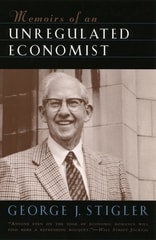
cover of Memoirs of an Unregulated Economist

Memoirs of an Unregulated Economist

George J. Stigler

University of Chicago Press, 2003

In this witty and modest intellectual autobiography, George J. Stigler gives us a fascinating glimpse into the little-known world of economics and the people who study it. One of the most distinguished economists of the twentieth century, Stigler was awarded the Nobel Prize in 1982 for his work on public regulation. He also helped found the Chicago School of economics, and many of his fellow Chicago luminaries appear in these pages, including Fredrich Hayek, Milton Friedman, Ronald Coase, and Gary Becker. Stigler's appreciation for such colleagues and his sense of excitement about economic ideas past and present make his Memoirs both highly entertaining and highly educational.
[more]
cover of Michigan at the Millennium: A Benchmark and Analysis of Its Fiscal and Economic Structure

Michigan at the Millennium

A Benchmark and Analysis of Its Fiscal and Economic Structure

Charles L. Ballard

Michigan State University Press, 2003

Michigan at the Millennium provides objective background and analysis on a wide variety of key economic and fiscal issues. The chapters are written by economists and policy analysts at leading universities and other institutions in Michigan. Written in clear, non-technical language, the articles are aimed at an audience that includes members of the legislative and executive branches of state government, members of the judicial system, local government officials, policy analysts, and informed citizens.
     This volume follows in the tradition of the landmark 1982 study, Michigan’s Fiscal and Economic Structure, edited by Harvey E. Brazer. The first section of the volume focuses on broad aspects of the economy, people, and land of Michigan, including chapters on demographics, the labor force, land use, the manufacturing sector, high-technology industries, and health care. Section two focuses on public expenditures and public services, and includes chapters on economic-development efforts, K–12 education, the transportation system, the welfare system, policies for low-wage workers and displaced workers, and pensions. The third section is concerned with taxes and other government revenues. It includes chapters on the Headlee Amendment, income taxes, sales and use taxes, property taxes, the Single Business Tax, intergovernmental fiscal relations, and other sources of revenue.

[more]
cover of Microeconomics: A Critical Companion

Microeconomics

A Critical Companion

Ben Fine

Pluto Press, 2016

The culmination of forty years of teaching, researching, and advising on political economy, Ben Fine’s Microeconomics offers a clear and concise exposition of mainstream microeconomics from a heterodox perspective. Covering topics from consumer and producer theory to general equilibrium to perfect competition, it sets the emergence and evolution of microeconomics in both its historical and interdisciplinary context. Fine critically exposes the methodological and conceptual content of dominant microeconomic models without sacrificing the technical detail required for those completing a first degree in economics or entering postgraduate study. The result is a book which is sure to establish a strong presence on undergraduate reading lists and in comparative literature on the subject.
[more]
cover of Microfoundations of Economic Growth: A Schumpeterian Perspective

Microfoundations of Economic Growth

A Schumpeterian Perspective

Gunnar Eliasson and Christopher Green, Editors; Charles R. McCann, Jr., Associate Editor

University of Michigan Press, 1998
The contributors to this volume seek further understanding of the microfoundations of economic growth. It focuses on three subjects that interested the great Austrian and Harvard economist, Joseph A. Schumpeter: innovation, technological change, and economic growth. The first part of the volume treats institutions, markets, and entrepreneurs, without which analysis of the firm makes little or no sense. The second part focuses on the firm as innovator, placing heavy emphasis on the role of knowledge formation. The subjects of innovation and knowledge formation are approached from three perspectives: theoretical; industry (case) studies; and empirical (cross section and panel data) analysis. In the third part of the book the action moves from the firm to the "macro" or economy-wide level. The volume's unique feature is combining institutions, the innovative behavior of firms, and an intuitively dynamic, macroeconomic analysis, all from a Schumpeterian perspective. It is argued that the study of micro-institutions such as firms and the evolving nature of markets are necessary ingredients to understanding macro-oriented phenomena such as economic growth. It is in this sense, then, that the book is concerned with microfoundations. Contributors are Daniele Archibugi, Spyros Arvanitis, David B. Audretsch, John R. Baldwin, Gerard Ballot, Pontus Braunerhjelm, Dagobert L. Brito, Uwe Cantner, Bo Carlsson, Robert W. Clower, Richard Day, Rinaldo Evangelista, Jan Glete, Horst Hanusch, Heinz Hollenstein, Michael D. Intrilgator, George Johnson, Joanne Johnson, Aija Leiponen, Staffan Laestadius, Richard N. Langlois, Frank M. Machovec, Maureen McKelvey, Valentina Meiciani, Douglass C. North, Giulio Perani, Andreas Pyka, Fabio Rapiti, Roberto Simonetti, Frank Stafford, Paula E. Stephan, Erol Taymaz, Clas Wihlborg, Erica R. Worth, and S. Y. Wu. Gunnar K. Eliasson is Professor of Industrial Economics, Royal Technical Institute (KTH), Stockholm. Christopher Green is Professor of Economics, McGill University. Charles R. McCann, Jr., is Research Associate, Department of Economics, University of Pittsburgh.
[more]
cover of Microfoundations of Economic Growth: A Schumpeterian Perspective

Microfoundations of Economic Growth

A Schumpeterian Perspective

Gunnar Eliasson and Christopher Green, Editors, and Charles R. McCann Jr., Associate Editor

University of Michigan Press, 1998
The contributors to this volume seek further understanding of the microfoundations of economic growth. It focuses on three subjects that interested the great Austrian and Harvard economist, Joseph A. Schumpeter: innovation, technological change, and economic growth. The first part of the volume treats institutions, markets, and entrepreneurs, without which analysis of the firm makes little or no sense. The second part focuses on the firm as innovator, placing heavy emphasis on the role of knowledge formation. The subjects of innovation and knowledge formation are approached from three perspectives: theoretical; industry (case) studies; and empirical (cross section and panel data) analysis. In the third part of the book the action moves from the firm to the "macro" or economy-wide level. The volume's unique feature is combining institutions, the innovative behavior of firms, and an intuitively dynamic, macroeconomic analysis, all from a Schumpeterian perspective. It is argued that the study of micro-institutions such as firms and the evolving nature of markets are necessary ingredients to understanding macro-oriented phenomena such as economic growth. It is in this sense, then, that the book is concerned with microfoundations. Contributors are Daniele Archibugi, Spyros Arvanitis, David B. Audretsch, John R. Baldwin, Gerard Ballot, Pontus Braunerhjelm, Dagobert L. Brito, Uwe Cantner, Bo Carlsson, Robert W. Clower, Richard Day, Rinaldo Evangelista, Jan Glete, Horst Hanusch, Heinz Hollenstein, Michael D. Intrilgator, George Johnson, Joanne Johnson, Aija Leiponen, Staffan Laestadius, Richard N. Langlois, Frank M. Machovec, Maureen McKelvey, Valentina Meiciani, Douglass C. North, Giulio Perani, Andreas Pyka, Fabio Rapiti, Roberto Simonetti, Frank Stafford, Paula E. Stephan, Erol Taymaz, Clas Wihlborg, Erica R. Worth, and S. Y. Wu. Gunnar K. Eliasson is Professor of Industrial Economics, Royal Technical Institute (KTH), Stockholm. Christopher Green is Professor of Economics, McGill University. Charles R. McCann, Jr., is Research Associate, Department of Economics, University of Pittsburgh.
[more]
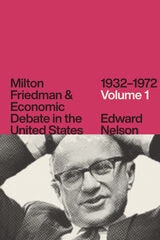
cover of Milton Friedman and Economic Debate in the United States, 1932–1972, Volume 1

Milton Friedman and Economic Debate in the United States, 1932–1972, Volume 1

Edward Nelson

University of Chicago Press, 2020

Milton Friedman is widely recognized as one of the most influential economists of the twentieth century. Yet no previous study has distilled Friedman’s vast body of writings into an authoritative account of his research, his policy views, and his interventions in public debate. With this ambitious new work, Edward Nelson closes the gap: Milton Friedman and Economic Debate in the United States is the defining narrative on the famed economist, the first to grapple comprehensively with Friedman’s research output, economic framework, and legacy.

This two-volume account provides a foundational introduction to Friedman’s role in several major economic debates that took place in the United States between 1932 and 1972. The first volume, which takes the story through 1960, covers the period in which Friedman began and developed his research on monetary policy. It traces Friedman’s thinking from his professional beginnings in the 1930s as a combative young microeconomist, to his wartime years on the staff of the US Treasury, and his emergence in the postwar period as a leading proponent of monetary policy. The second volume covers the years between 1960 and 1972— years that saw the publication of Friedman and Anna Schwartz’s Monetary History of the United States. The book also covers Friedman’s involvement in a number of debates in the 1960s and 1970s, on topics such as unemployment, inflation, consumer protection, and the environment.

As a fellow monetary economist, Nelson writes from a unique vantage point, drawing on both his own expertise in monetary analysis and his deep familiarity with Friedman’s writings. Using extensive documentation, the book weaves together Friedman’s research contributions and his engagement in public debate, providing an unparalleled analysis of Friedman’s views on the economic developments of his day.
[more]
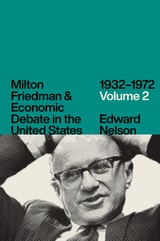
cover of Milton Friedman and Economic Debate in the United States, 1932–1972, Volume 2

Milton Friedman and Economic Debate in the United States, 1932–1972, Volume 2

Edward Nelson

University of Chicago Press, 2020

Milton Friedman is widely recognized as one of the most influential economists of the twentieth century. Yet no previous study has distilled Friedman’s vast body of writings into an authoritative account of his research, his policy views, and his interventions in public debate. With this ambitious new work, Edward Nelson closes the gap: Milton Friedman and Economic Debate in the United States is the defining narrative on the famed economist, the first to grapple comprehensively with Friedman’s research output, economic framework, and legacy.

This two-volume account provides a foundational introduction to Friedman’s role in several major economic debates that took place in the United States between 1932 and 1972. The first volume, which takes the story through 1960, covers the period in which Friedman began and developed his research on monetary policy. It traces Friedman’s thinking from his professional beginnings in the 1930s as a combative young microeconomist, to his wartime years on the staff of the US Treasury, and his emergence in the postwar period as a leading proponent of monetary policy. The second volume covers the years between 1960 and 1972— years that saw the publication of Friedman and Anna Schwartz’s Monetary History of the United States. The book also covers Friedman’s involvement in a number of debates in the 1960s and 1970s, on topics such as unemployment, inflation, consumer protection, and the environment.

As a fellow monetary economist, Nelson writes from a unique vantage point, drawing on both his own expertise in monetary analysis and his deep familiarity with Friedman’s writings. Using extensive documentation, the book weaves together Friedman’s research contributions and his engagement in public debate, providing an unparalleled analysis of Friedman’s views on the economic developments of his day.

[more]
cover of Milton Friedman and Economic Debate in the United States, 1973–1976, Vol. 3

Milton Friedman and Economic Debate in the United States, 1973–1976, Vol. 3

Edward Nelson

University of Chicago Press, 2027

The third installment in the definitive account of the famed economist's role in economic debate—and his lasting influence on economic policy.

Milton Friedman is widely recognized as one of the most significant contributors to economics in the modern age. Yet no previous study has distilled Friedman’s vast body of writings into an authoritative account of his research, his policy views, and his interventions in public debate. Through his sweeping series on the most influential economist of the second half of the twentieth century, Edward Nelson closes this gap: Milton Friedman and EconomicDebate in the United States is the defining narrative on the famed public intellectual—the first to grapple comprehensively with Friedman’s research output, economic framework, and legacy.

Volume 3 chronicles Friedman’s activities from 1973 to 1976, encompassing his final years at the University of Chicago and a period that saw his further ascension in national prominence. In the mid-1970s, economic news dominated American political discourse as the nation endured double-digit inflation and recession. It was during this time that Friedman’s views became a center of economic debate in both the research world and public debate, while his explanation for “stagflation” formed part of the critique of stabilization policy that would lead to his 1976 Nobel Prize. Nelson details the controversies that Friedman faced in the media—including his contrarian stances on inflation’s cure, the economic implications of oil price shocks, and the social responsibility of business—and how Friedman concluded that the world needed a “new Adam Smith” to press the case for free markets. Drawing upon a large body of documentary sources, interviews with dozens of the people closest to Friedman, and his own expertise in Friedman’s research area of monetary analysis, Nelson provides the definitive account of the formative (and uneven) events in Friedman’s foray into life as a public intellectual and how his research permanently shifted economic thinking.

[more]
cover of Milton Friedman and Economic Debate in the United States, 1977–1979, Vol. 4

Milton Friedman and Economic Debate in the United States, 1977–1979, Vol. 4

Edward Nelson

University of Chicago Press, 0

The fourth installment of the sweeping account of the most influential economist in modern times, focusing on his crossover into the public sphere.

Milton Friedman is widely recognized as one of the most significant contributors to economics in the modern age. Yet no previous study has distilled Friedman’s vast body of writings into an authoritative account of his research, his policy views, and his interventions in public debate. Through his sweeping series on the most influential economist of the second half of the twentieth century, Edward Nelson closes this gap: Milton Friedman and EconomicDebate in the United States is the defining narrative on the famed public intellectual—the first to grapple comprehensively with Friedman’s research output, economic framework, and legacy.

Volume 4 of Nelson’s intellectual and policy biography offers an exacting portrait of Friedman’s career following his departure from the University of Chicago. Spanning 1977 to 1979, Nelson’s narrative details Friedman’s move to California and his greater immersion in public policy, including his project with Rose Friedman and television professionals to create a TV series giving his viewpoint. Nelson details the successes and failures of Friedman’s years of extraordinary influence, including:

  • His warnings about US inflation returning to double digits in 1979;
  • The changes in professional thinking in the US economics profession and policymaking toward acceptance of Friedman's view that inflation is a monetary phenomenon;
  • The rise of Paul Volcker to head of the Federal Reserve and his integration of monetarist ideas into US monetary policy;
  • Friedman's proposal to phase in a zero-tariff arrangement in the United States; 
  • His role in the tax revolt of the 1970s—including his break with the emerging supply-side economics movement on the effects of tax cuts;
  • The second oil-price shock and Friedman's critique of the Carter Administration's energy policy;
  • The resilience after 1976 of Ronald Reagan's presidential ambitions and Friedman's 1979 endorsement of Reagan for president in the 1980 election.

Drawing upon a large body of documentary sources, interviews with dozens of the people closest to Friedman, and his own expertise in Friedman’s research area of monetary analysis, Nelson offers the definitive account of what proved to be pivotal years for Friedman and the field of economics.
[more]
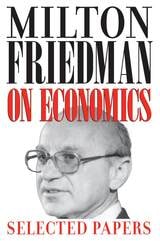
cover of Milton Friedman on Economics: Selected Papers

Milton Friedman on Economics

Selected Papers

Milton Friedman

University of Chicago Press, 2007

On his death in the autumn of 2006, Milton Friedman was lauded as “the grandmaster of free-market economic theory in the postwar era” by the New York Times and “the most influential economist of the second half of the 20th century” by the Economist. Winner of the Nobel Prize in Economics in 1976, Friedman was both a highly respected economist and a prominent public intellectual, the leader of a revolution in economic and political thought that argued robustly in favor of virtues of free markets and laissez-faire policies.

Milton Friedman on Economics: Selected Papers collects a variety of Friedman’s papers on topics in economics that were originally published in the Journal of Political Economy. Opening with Friedman’s 1977 Nobel Lecture, the volume spans nearly the whole of his career, incorporating papers from as early as 1948 and as late as 1990. An excellent introduction to Friedman’s economic thought, Milton Friedman will be essential for anyone tracing the course of twentieth-century economics and politics. 
[more]
cover of Milton Friedman: Economics in Theory and Practice

Milton Friedman

Economics in Theory and Practice

Abraham Hirsch and Neil de Marchi

University of Michigan Press, 1991

Contrasts Friedman's statements on methodology with his practice as an economist
[more]
cover of Mining in Africa: Regulation and Development

Mining in Africa

Regulation and Development

Bonnie Campbell

Pluto Press, 2009

The continent of Africa is rich in minerals needed by Western economies, but rather than forming the basis for economic growth the mining industry contributes very little to African development

Investigating the impact of the 2003 Extractive Industries Review on a number of African countries, the contributors find that a key dimension of the problem lies in the regulatory frameworks imposed on the African countries by the IMF and World Bank. They aim to convince academics, governments and industry that regulation needs to be reformed to create a mining industry favourable to social and economic development and environmental protection.

The book takes a multidisciplinary approach and provides a historical perspective of each country, making it ideal for students of development studies and development organisations.
[more]
cover of Modeling the Distribution and Intergenerational Transmission of Wealth

Modeling the Distribution and Intergenerational Transmission of Wealth

James D. Smith

University of Chicago Press, 1980

This pioneering volume uses modern statistical and simulation techniques to explain the process of wealth transmission and the persistent problem of the unequal distribution of wealth. These papers reflect a shift from the traditional cross-sectional measurement to an intertemporal focus by attempting to model mathematically the actual process by which wealth is acquired and transmitted. There are many questions to be answered: What are the factors influencing saving? What is the role of mating? What decides ownership between spouses? How are rare assets distributed by divorce? What are the patterns of behavior in making gifts and bequests? And what is the effect of the relative ages of the persons involved?
[more]
cover of Models of Strategic Choice in Politics

Models of Strategic Choice in Politics

Peter C. Ordeshook, Editor

University of Michigan Press, 1989

Discusses the sophisticated application of game theory to the development of contemporary political theory
[more]
cover of Modern Autocracy: The Rise of Authoritarian Economies—and Why Only Some Can Succeed

Modern Autocracy

The Rise of Authoritarian Economies—and Why Only Some Can Succeed

Simon Commander and Saul Estrin

University of Chicago Press, 2027

Strongman governments are back. What becomes of their economies?

Autocracy has once again become a rising force. Today, two thirds of the world’s population live under regimes where electoral democracy is either absent or debased. Moreover, even many functioning democracies are now facing a significant share of their citizens who favor switching to authoritarian rule. But as states return to their old authoritarian ways, what happens to their still-modernized economies?

Simon Commander and Saul Estrin examine the scale of this change—and the unevenly distributed economic consequences that will soon accompany it. Modern Autocracy reveals how authoritarian economies generally perform worse than economies in democratic states, in part because many authoritarian states are centralized around a leader whose economic stewardship facilitates political favor and cronyism. In all, these features, combined with the likelihood of repression, sap economic vitality and stymie competition, innovation, and, ultimately, growth.

The exception, the authors reveal, is that autocracies can perform better when they’re built around an institutional framework rather than simply a leader. That is because they can pursue strategic goals, including innovation; even so, their autocratic foundations open up major vulnerabilities and tensions. Brimming with political relevance, Modern Autocracy is a defining taxonomy of economies and their natures in this century.
[more]
cover of Monetary Interpretations of the Great Depression

Monetary Interpretations of the Great Depression

Frank G. Steindl

University of Michigan Press, 1996
Frank Steindl asks why, despite much monetary work in the intervening years, it was not until Friedman and Schwartz put forward their monetary interpretation of the depth of the Great Depression that the monetary approach was rescued from disrepute and established as one of the most widely held explanations for the Depression. To answer this question, the author explores the work of economists writing before Friedman and Schwartz. Among those investigated are Angell, Currie, Fisher, Hawtrey, Simons, Snyder, and Viner -- economists of the first rank. Other approaches examined include those of Harry G. Brown, C. O. Hardy, Lionel Edie, Willford King, Arthur Marget, Lloyd Mints, Lionel Robbins, James Harvey Rogers, and H. Parker Willis. These analyses are examined in relation to the central elements of Friedman and Schwartz's framework, an analytical core that includes a money supply mechanism and an interpretation of the Federal Reserve's role in bringing about a dramatic decline in the money supply. A central finding is that their monetary interpretation stands alone and was not anticipated. The notable exception is Warburton, whose work was largely ignored because of its lack of clarity. Professor Steindl goes on to explore in terms of the nature of scientific inquiry why the other interpretations did not anticipate Friedman and Schwartz. This book will be of interest to monetary economists, especially historians of monetary thought, students of the Great Depression, and philosophers of science.
[more]
cover of Monetary Policy

Monetary Policy

Edited by N. Gregory Mankiw

University of Chicago Press, 1994

In Monetary Policy, leading monetary economists discuss applied aspects of monetary policy and offer practical new research on the timing, magnitude, and channels of central banking actions.

Some of the papers in this volume evaluate a variety of policy rules based on monetary aggregates, nominal income, commodity prices, and other economic variables. Others analyze price behavior and inflation, particularly the short-run behavior of prices. Still others examine the monetary transmission mechanism—the channel through which the central bank's actions affect spending on goods and services—with a special focus on the reduction in bank lending that must accompany a reduction in reserves.
This new research will be of special interest to central bankers and academic economists.
[more]
cover of Money Talks: Media, Markets, Crisis

Money Talks

Media, Markets, Crisis

Edited by Graham Murdock andJostein Gripsrud

Intellect Books, 2014
Money Talks explores the ways the concepts of money and capital are understood and talked about by a range of people, from traders to ordinary investors, and how these accounts are framed and represented across a range of media. This collection brings together leading writers and emerging researchers to demonstrate how work in media and cultural studies can contribute to debates around the meanings of money, the operations of capital, and the nature of the current crisis. Drawing on a range of work from across disciplines, Money Talks offers a provocative and pathbreaking demonstration of the value of incorporating approaches from media and cultural studies into an understanding of economic issues.
[more]
cover of Money and Modernity: Pound, Williams, and the Spirit of Jefferson

Money and Modernity

Pound, Williams, and the Spirit of Jefferson

Alec Marsh

University of Alabama Press, 1998

Marsh locates Pound and Williams firmly in the Jeffersonian tradition and examines their epic poems as manifestations of a Jeffersonian ideology in modernist terms.

The modernist poets William Carlos Williams and Ezra Pound were latter-day Jeffersonians whose politics and poetry were strongly marked by the populism of the late 19th century. They were sharply aware of the social contradictions of modernization and were committed to a highly politicized, often polemical poetry that criticized finance capitalism and its institutions--notably banks--in the strongest terms.

Providing a history of the aesthetics of Jeffersonianism and its collision with modernism in the works of Pound and Williams, Alec Marsh traces "the money question" from the republican period through the 1940s. Marsh can thus read two modernist epics--Pound's Cantos and Williams's Paterson--as the poets hoped they would be read, as attempts to break the hold of "false" financial values on the American imagination.

Marsh argues that Pound's and Williams's similar Jeffersonian outlooks were the direct result of the political battles of the 1890s concerning the meaning of money. Although Pound's interest in money and economics is well known, few people are aware that both poets were active in the Social Credit monetary-reform movement of the 1930s and 1940s, a movement shown by Marsh to have direct links to Jeffersonianism via American populism.  Ultimately, the two poets took divergent paths, with Pound swerving toward Italian fascism (as exemplified in his Jefferson and/or Mussolini) and Williams becoming deeply influenced by the American pragmatism of John Dewey. Thus, Marsh concludes, Pound embraced the fascist version of state-capitalism whereas his old friend proclaimed a pragmatic openness to the new selves engendered by corporate capitalism.

Money and Modernity exemplifies the best of recent literary criticism in its incorporation of American studies and cultural studies approaches to bring new insight to modern masterworks.
[more]