Results by title
313 books match the query 'Environmental policy' and 11 start with m

Making Peace with the Earth
Vandana Shiva
Pluto Press, 2013
In this compelling and rigorously documented exposition, Vandana Shiva demolishes the myths propagated by corporate globalisation in its pursuit of profit and power and shows its devastating environmental impact.
Shiva argues that consumerism lubricates the war against the earth and that corporate control violates all ethical and ecological limits. She takes the reader on a journey through the world's devastated eco-landscape, one of genetic engineering, industrial development and land-grabs in Africa, Asia and South America. She concludes that exploitation of this order is incurring an ecological and economic debt that is unsustainable.
Making Peace with the Earth outlines how a paradigm shift to earth-centred politics and economics is our only chance of survival and how collective resistance to corporate exploitation can open the way to a new environmentalism.
Managing Land Use Conflicts
Case Studies in Special Area ManagementDavid J. Brower and Daniel S. Carol, eds.
Duke University Press, 1987
Managing the Environmental Crisis
Incorporating Competing Values in Natural Resource AdministrationWilliam R. Mangun and Daniel H. Henning
Duke University Press, 1999
With a new foreword by Lynton Keith Caldwell
In Managing the Environmental Crisis William R. Mangun and Daniel H. Henning provide a balanced and comprehensive guide to the management of complex environmental and natural resource policy issues. Taking into account new developments, trends, and issues that have arisen in recent years, the authors begin with the recognition, often overlooked, that it is not the environment that needs to be managed but human action relating to the environment.
The authors review issues associated with a range of environmental policy concerns, including energy considerations, renewable and non renewable resource management, pollution control, wilderness management, and urban and regional policy. The history of these issues, recent actions pertaining to their management, difficulties associated with their continued presence, and the consequences of a failure to address these concerns are explored. Though focused on specific political issues, Mangun and Henning direct their attention to two large-scale trends—globalization and the political polarization of the environmental movement. At the level of the decision-making process, the incorporation of values—specifically addressed from multicultural and cross-disciplinary perspectives—is also discussed. International in scope, the book provides descriptions of the roles of both governmental and nongovernmental organizations in the formulations and implementation of national and global environmental policy.
This thoroughly revised second edition discusses various successes in the arenas of environmental cooperation and management strategy while pointing to the new challenges that have emerged in the last decade.
Measuring and Accounting for Environmental Public Goods
A National Accounts PerspectiveEdited by Nicholas Z. Muller, Eli P. Fenichel, and Mary Bohman
University of Chicago Press, 2025
Provides strategies and approaches for integrating natural capital into environmental statistics.
While the importance of natural resources and the contributions of the environment to welfare are apparent, traditional national income and wealth accounting practices do not measure or value environmental public goods. This volume examines the conceptual and empirical basis for integrating natural capital—forests, oceans, and air—into the economic and environmental statistics that inform public policy. It offers innovative approaches to valuing nonmarket environmental goods and services, including strategies for capturing heterogeneity in measurement across types of capital, geography, and individuals.
The chapters focus on measuring productivity with adjustments for pollution damage, developing a microdata infrastructure to advance our understanding of the distribution of environmental amenities and hazards, and estimating long-run sustainable development indicators. Case studies consider coastal assets, forests, and marine ecosystems, and develop strategies for implementing specific environmental-economic accounts such as environmental activity accounts and natural capital accounts for forests and the marine economy. As national income accounting standards are updated to incorporate expanded guidance on issues related to natural capital, this timely book will help inform decisions on the measurement and treatment of climate, air, water, and other public goods.

Mexican Americans and the Environment
Tierra y VidaDevon G. Peña
University of Arizona Press, 2005
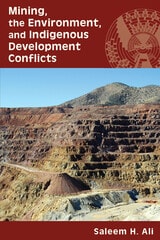
Mining, the Environment, and Indigenous Development Conflicts
Saleem H. Ali
University of Arizona Press, 2003
This book gets to the heart of resource conflicts and environmental impact assessment by asking why indigenous communities support environmental causes in some cases of mining development but not in others. Saleem Ali examines environmental conflicts between mining companies and indigenous communities and with rare objectivity offers a comparative study of the factors leading to those conflicts.
Mining, the Environment, and Indigenous Development Conflicts presents four cases from the United States and Canada: the Navajos and Hopis with Peabody Coal in Arizona; the Chippewas with the Crandon Mine proposal in Wisconsin; the Chipewyan Inuits, Déné and Cree with Cameco in Saskatchewan; and the Innu and Inuits with Inco in Labrador. These cases exemplify different historical relationships with government and industry and provide an instance of high and low levels of Native resistance in each country. Through these cases, Ali analyzes why and under what circumstances tribes agree to negotiated mining agreements on their lands, and why some negotiations are successful and others not.
Ali challenges conventional theories of conflict based on economic or environmental cost-benefit analysis, which do not fully capture the dynamics of resistance. He proposes that the underlying issue has less to do with environmental concerns than with sovereignty, which often complicates relationships between tribes and environmental organizations. Activist groups, he observes, fail to understand such tribal concerns and often have problems working with tribes on issues where they may presume a common environmental interest.
This book goes beyond popular perceptions of environmentalism to provide a detailed picture of how and when the concerns of industry, society, and tribal governments may converge and when they conflict. As demands for domestic energy exploration increase, it offers clear guidance for such endeavors when native lands are involved.

Mobilizing Science
Movements, Participation, and the Remaking of KnowledgeSabrina McCormick
Temple University Press, 2009
Mobilizing Science theoretically and empirically explores the rise of a new kind of social movement—one that attempts to empower citizens through the use of expert scientific research. Sabrina Mccormick advances theories of social movements, development, and science and technology studies by examining how these fields intersect in cases around the globe.
Mccormick grounds her argument in two very different case studies: the anti-dam movement in Brazil and the environmental breast cancer prevention movement in the U.S. These, and many other cases, show that the scientization of society, where expert knowledge is inculcated in multiple institutions and lay people are marginalized, give rise to these new types of movements. While activists who consequently engage in science often instigate new methods that result in new findings and scientific tools, these movements still often fail due to superficial participatory institutions and tightly knit corporate/government relationships.
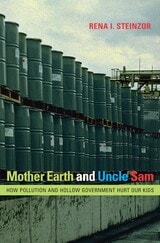
Mother Earth and Uncle Sam
How Pollution and Hollow Government Hurt Our KidsBy Rena I. Steinzor
University of Texas Press, 2007
In this compelling study, Rena Steinzor highlights the ways in which the government, over the past twenty years, has failed to protect children from harm caused by toxic chemicals. She believes these failures—under-funding, excessive and misguided use of cost/benefit analysis, distortion of science, and devolution of regulatory authority—have produced a situation in which harm that could be reduced or eliminated instead persists.
Steinzor states that, as a society, we are neglecting our children's health to an extent that we would find unthinkable as individual parents, primarily due to the erosion of the government's role in protecting public health and the environment. At this pace, she asserts, our children will inherit a planet under grave threat. We can arrest these developments if a critical mass of Americans become convinced that these problems are urgent and the solutions are near at hand.
By focusing on three specific case studies—mercury contamination through the human food chain, perchlorate (rocket fuel) in drinking water, and the effects of ozone (smog) on children playing outdoors—Steinzor creates an analysis grounded in law, economics, and science to prove her assertions about the existing dysfunctional system.
Steinzor then recommends a concise and realistic series of reforms that could reverse these detrimental trends and serve as a blueprint for restoring effective governmental intervention. She argues that these recommendations offer enough material to guide government officials and advocacy groups toward prompt implementation, for the sake of America's—and the world's—future generations.
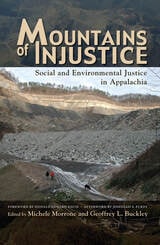
Mountains of Injustice
Social and Environmental Justice in AppalachiaMichele Morrone
Ohio University Press, 2011
Research in environmental justice reveals that low-income and minority neighborhoods in our nation’s cities are often the preferred sites for landfills, power plants, and polluting factories. Those who live in these sacrifice zones are forced to shoulder the burden of harmful environmental effects so that others can prosper. Mountains of Injustice broadens the discussion from the city to the country by focusing on the legacy of disproportionate environmental health impacts on communities in the Appalachian region, where the costs of cheap energy and cheap goods are actually quite high.
Through compelling stories and interviews with people who are fighting for environmental justice, Mountains of Injustice contributes to the ongoing debate over how to equitably distribute the long-term environmental costs and consequences of economic development.
Contributors:
Laura Allen, Brian Black, Geoffrey L. Buckley, Donald Edward Davis, Wren Kruse, Nancy Irwin Maxwell, Chad Montrie, Michele Morrone, Kathryn Newfont, John Nolt, Jedediah S. Purdy, and Stephen J. Scanlan.
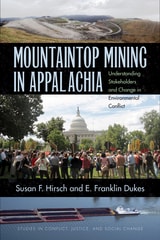
Mountaintop Mining in Appalachia
Understanding Stakeholders and Change in Environmental ConflictSusan F. Hirsch
Ohio University Press, 2014
Residents of the Appalachian coalfields share a history and heritage, deep connections to the land, and pride in their own resilience. These same residents are also profoundly divided over the practice of mountaintop mining—that is, the removal and disposal in nearby valleys of soil and rock in order to reach underlying coal seams. Companies and some miners claim that the practice has reduced energy prices, earned income for shareholders, and provided needed jobs. Opponents of mountaintop mining argue that it poisons Appalachia’s waters and devastates entire communities for the sake of short-term gains.
This conflict is emblematic of many other environmental disputes in the United States and around the world, disputes whose intensity derives not only from economic and environmental stakes but also from competing claims to individual and community identity. Looking beyond the slogans and seemingly irreconcilable differences, however, can reveal deeper causes of conflict, such as flawed institutions, politics, and inequality or the strongly held values of parties for whom compromise is difficult to achieve.
Mountaintop Mining in Appalachia focuses on the people of the region, the people who have the most at stake and have been the most active in trying to shift views and practices. By examining the experiences of these stakeholders and their efforts to effect change, Susan F. Hirsch and E. Franklin Dukes introduce key concepts and theories from the field of conflict analysis and resolution. They provide a compelling case study of how stakeholders challenge governance-as-usual, while offering insight into the causes of conflict over other environmental issues.
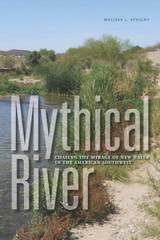
Mythical River
Chasing the Mirage of New Water in the American SouthwestMelissa L. Sevigny
University of Iowa Press, 2016
In contrast to this fantasy of abundance, Sevigny explores acts of restoration. From a dismantled dam in Arizona to an accidental wetland in Mexico, she examines how ecologists, engineers, politicians, and citizens have attempted to secure water for desert ecosystems. In a place scarred by conflict, she shows how recognizing the rights of rivers is a path toward water security. Ultimately, Sevigny writes a new map for the future of the American Southwest, a vision of a society that accepts the desert’s limits in exchange for an intimate relationship with the natural world.