Results by title
118 books match the query 'Epistemology' and 7 start with m
Making Truth
Metaphor in ScienceTheodore L. Brown
University of Illinois Press, 2002
To illustrate the roles of metaphor in science, Brown presents a series of studies of scientific systems. These range from the atom, historically one of the most important ideas in science, through models in chemistry and biology, including current “hot” topics such as protein folding, chaperone proteins, and global warming. The case studies in Making Truth illustrate the deeply metaphorical nature of scientific reasoning and communication. They provide the basis for far-reaching conclusions about science as an intellectual and social practice and about the nature of scientific truth.
Manifesto of a Passionate Moderate
Unfashionable EssaysSusan Haack
University of Chicago Press, 1998
"The virtue of Haack's book, and I mean virtue in the ethical sense, is that it embodies the attitude that it exalts. . . Haack's voice is urbane, sensible, passionate—the voice of philosophy that matters. How good to hear it again."—Jonathan Rauch, Reason
"A tough mind, confident of its power, making an art of logic . . . a cool mastery."—Paul R. Gross, Wilson Quarterly
"Few people are better able to defend the notion of truth, and in strong, clear prose, than Susan Haack . . . a philosopher of great distinction."—Hugh Lloyd-Jones, National Review
"If you relish acute observation and straight talk, this is a book to read."—Key Reporter (Phi Beta Kappa)
"Everywhere in this book there is the refreshing breeze of common sense, patiently but inexorably blowing."—Roger Kimball, Times Literary Supplement
"A refreshing alternative to the extremism that characterizes so much rhetoric today."—Kirkus Reviews
Meaning
Michael Polanyi and Harry Prosch
University of Chicago Press, 1977
Establishing that science is an inherently normative form of knowledge and that society gives meaning to science instead of being given the "truth" by science, Polanyi contends here that the foundation of meaning is the creative imagination. Largely through metaphorical expression in poetry, art, myth, and religion, the imagination is used to synthesize the otherwise chaotic and disparate elements of life. To Polanyi these integrations stand with those of science as equally valid modes of knowledge. He hopes this view of the foundation of meaning will restore validity to the traditional ideas that were undercut by modern science. Polanyi also outlines the general conditions of a free society that encourage varied approaches to truth, and includes an illuminating discussion of how to restore, to modern minds, the possibility for the acceptance of religion.
Memory, History, Forgetting
Paul Ricoeur
University of Chicago Press, 2004
Why do major historical events such as the Holocaust occupy the forefront of the collective consciousness, while profound moments such as the Armenian genocide, the McCarthy era, and France's role in North Africa stand distantly behind? Is it possible that history "overly remembers" some events at the expense of others? A landmark work in philosophy, Paul Ricoeur's Memory, History, Forgetting examines this reciprocal relationship between remembering and forgetting, showing how it affects both the perception of historical experience and the production of historical narrative.
Memory, History, Forgetting, like its title, is divided into three major sections. Ricoeur first takes a phenomenological approach to memory and mnemonical devices. The underlying question here is how a memory of present can be of something absent, the past. The second section addresses recent work by historians by reopening the question of the nature and truth of historical knowledge. Ricoeur explores whether historians, who can write a history of memory, can truly break with all dependence on memory, including memories that resist representation. The third and final section is a profound meditation on the necessity of forgetting as a condition for the possibility of remembering, and whether there can be something like happy forgetting in parallel to happy memory. Throughout the book there are careful and close readings of the texts of Aristotle and Plato, of Descartes and Kant, and of Halbwachs and Pierre Nora.
A momentous achievement in the career of one of the most significant philosophers of our age, Memory, History, Forgetting provides the crucial link between Ricoeur's Time and Narrative and Oneself as Another and his recent reflections on ethics and the problems of responsibility and representation.
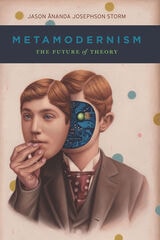
Metamodernism
The Future of TheoryJason Ananda Josephson Storm
University of Chicago Press, 2021
Metamodernism works through the postmodern critiques and uncovers the mechanisms that produce and maintain concepts and social categories. In so doing, Storm provides a new, radical account of society’s ever-changing nature—what he calls a “Process Social Ontology”—and its materialization in temporary zones of stability or “social kinds.” Storm then formulates a fresh approach to philosophy of language by looking beyond the typical theorizing that focuses solely on human language production, showing us instead how our own sign-making is actually on a continuum with animal and plant communication.
Storm also considers fundamental issues of the relationship between knowledge and value, promoting a turn toward humble, emancipatory knowledge that recognizes the existence of multiple modes of the real. Metamodernism is a revolutionary manifesto for research in the human sciences that offers a new way through postmodern skepticism to envision a more inclusive future of theory in which new forms of both progress and knowledge can be realized.
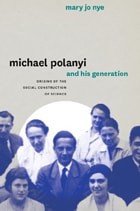
Michael Polanyi and His Generation
Origins of the Social Construction of ScienceMary Jo Nye
University of Chicago Press, 2011
Motivation and the Primacy of Perception
Merleau-Ponty's Phenomenology of KnowledgePeter Antich
Ohio University Press, 2021