162 books match the query 'Europe, Eastern' and 14 start with m
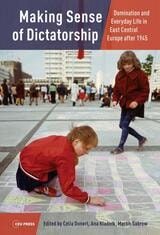
cover of Making Sense of Dictatorship: Domination and Everyday Life in East Central Europe after 1945

Making Sense of Dictatorship

Domination and Everyday Life in East Central Europe after 1945

Celia Donert

Central European University Press, 2022

How did political power function in the communist regimes of East Central Europe after 1945? Making Sense of Dictatorship addresses this question with a particular focus on the acquiescent behavior of the majority of the population until, at the end of the 1980s, their rejection of state socialism and its authoritarian world.

The authors refer to the concept of Sinnwelt, the way in which groups and individuals made sense of the world around them. The essays focus on the dynamics of everyday life and the extent to which the relationship between citizens and the state was collaborative or antagonistic. Each chapter addresses a different aspect of life in this period, including modernization, consumption and leisure, and the everyday experiences of “ordinary people,” single mothers, or those adopting alternative lifestyles.

Empirically rich and conceptually original, the essays in this volume suggest new ways to understand how people make sense of everyday life under dictatorial regimes.
[more]
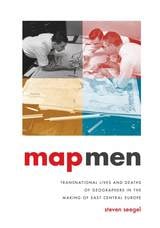
cover of Map Men: Transnational Lives and Deaths of Geographers in the Making of East Central Europe

Map Men

Transnational Lives and Deaths of Geographers in the Making of East Central Europe

Steven Seegel

University of Chicago Press, 2018

More than just colorful clickbait or pragmatic city grids, maps are often deeply emotional tales: of political projects gone wrong, budding relationships that failed, and countries that vanished. In Map Men, Steven Seegel takes us through some of these historical dramas with a detailed look at the maps that made and unmade the world of East Central Europe through a long continuum of world war and revolution. As a collective biography of five prominent geographers between 1870 and 1950—Albrecht Penck, Eugeniusz Romer, Stepan Rudnyts’kyi, Isaiah Bowman, and Count Pál Teleki—Map Men reexamines the deep emotions, textures of friendship, and multigenerational sagas behind these influential maps.

Taking us deep into cartographical archives, Seegel re-creates the public and private worlds of these five mapmakers, who interacted with and influenced one another even as they played key roles in defining and redefining borders, territories, nations­—and, ultimately, the interconnection of the world through two world wars. Throughout, he examines the transnational nature of these processes and addresses weighty questions about the causes and consequences of the world wars, the rise of Nazism and Stalinism, and the reasons East Central Europe became the fault line of these world-changing developments.

At a time when East Central Europe has surged back into geopolitical consciousness, Map Men offers a timely and important look at the historical origins of how the region was defined—and the key people who helped define it.
 
[more]
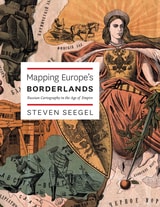
cover of Mapping Europe's Borderlands: Russian Cartography in the Age of Empire

Mapping Europe's Borderlands

Russian Cartography in the Age of Empire

Steven Seegel

University of Chicago Press, 2012

The simplest purpose of a map is a rational one: to educate, to solve a problem, to point someone in the right direction. Maps shape and communicate information, for the sake of improved orientation. But maps exist for states as well as individuals, and they need to be interpreted as expressions of power and knowledge, as Steven Seegel makes clear in his impressive and important new book.
Mapping Europe’s Borderlands takes the familiar problems of state and nation building in eastern Europe and presents them through an entirely new prism, that of cartography and cartographers. Drawing from sources in eleven languages, including military, historical-pedagogical, and ethnographic maps, as well as geographic texts and related cartographic literature, Seegel explores the role of maps and mapmakers in the East Central European borderlands from the Enlightenment to the Treaty of Versailles. For example, Seegel explains how Russia used cartography in the aftermath of the Napoleonic Wars and, later, formed its geography society as a cover for gathering intelligence. He also explains the importance of maps to the formation of identities and institutions in Poland, Ukraine, and Lithuania, as well as in Russia. Seegel concludes with a consideration of the impact of cartographers’ regional and socioeconomic backgrounds, educations, families, career options, and available language choices. 
[more]
cover of Masterpieces of History: The Peaceful End of the Cold War in Europe, 1989

Masterpieces of History

The Peaceful End of the Cold War in Europe, 1989

The National Security Archive Savranskaya

Central European University Press, 2010
Twenty years in the making, this collection presents 122 top-level Soviet, European and American records on the superpowers' role in the annus mirabilis of 1989. Consisting of Politburo minutes; diary entries from Gorbachev's senior aide, Anatoly Chernyaev; meeting notes and private communications of Gorbachev with George H.W. Bush, Margaret Thatcher, Helmut Kohl and François Mitterrand; and high-level CIA analyses, this volume offers a rare insider's look at the historic, world-transforming events that culminated in the collapse of communism in Eastern Europe and the end of the Cold War. Most of these records have never been published before.
[more]
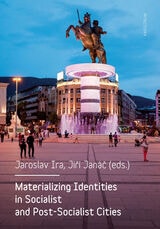
cover of Materializing Identities in Socialist and Post-Socialist Cities

Materializing Identities in Socialist and Post-Socialist Cities

Edited by Jaroslav Ira and Jirí Janác

Karolinum Press, 2017

Following the so-called “Material Turn” of historiography, this book explores the materialization of identity in urban space—specifically in Eastern Europe and Central Asia. Urban spaces played an important role in the formation of national identities in post-socialist successor states across the region, while at the same time the articulation of national identities markedly affected the appearance of these post-socialist cities. Beginning with an overview of socialist and post-socialist cities in recent urban history, contributors trace the post-socialist intertwining of space and identities in case studies that include Astana and Almaty in Kazakhstan, Chișinău and Tiraspol in Moldova, and Skopje in Macedonia, while also linking this phenomenon to socialist urbanism, as in postwar Minsk, Belarus.
[more]
cover of Meddling in Middle Europe: Britain and the 'Lands Between' 1919-1925

Meddling in Middle Europe

Britain and the 'Lands Between' 1919-1925

Miklos Lojkó

Central European University Press, 2006
This work addresses the much-ignored history of British policy towards Hungary, Czechoslovakia and Poland following the creation of nation states in Central Europe at the end of the First World War. Lojkó convincingly argues that the absence of trust in the new political settlement and the discrediting of the traditional channels of diplomacy resulted in British influence in the region, being exerted mainly in the form of commercial and financial undertakings. While not always successful, the emergence of this new policy affected the development of diplomatic ties with these new nations.Yet no lasting diplomatic leverage resulted from this British involvement, and the absence of such influence proved fatal in the late 1930's when the new system of nations was disintegrating under the pressure of escalating violence.
[more]
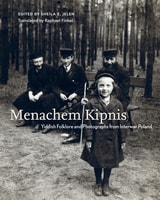
cover of Menachem Kipnis: Yiddish Folklore and Photographs from Interwar Poland

Menachem Kipnis

Yiddish Folklore and Photographs from Interwar Poland

Sheila E. Jelen

Rutgers University Press, 2026

Menachem Kipnis (1878–1942) was one of the early twentieth-century’s greatest Jewish eastern European ethnomusicologists, folklorists, and photographers. He had a weekly column in the Warsaw Yiddish newspaper Haynt, retelling humorous old folk stories about the fictional Polish town of Chelm, populated exclusively by fools. At the same time, his photographs of Jewish life in eastern Europe regularly appeared in the Forverts (Forward), the most popular Yiddish daily newspaper in the United States. Now, for the first time, Kipnis’s stories and photographs are published together in a single book.

Menachem Kipnis brings these photographs and stories into dialogue with one another, bridging the Jewish communities in Poland and in America during the interwar period. This dialogue, between image and text, between European metropolis and American metropolis, captures a key historical moment when American Jews sought to imagine the lives of their coreligionists in the “Old Country” and eastern European urban Jews sought to distinguish themselves from their Jewish compatriots who were still living in the shtetl. Including an introductory essay, annotations, and an epilogue by Sheila E. Jelen, Menachem Kipnis suggests new ways of understanding both visual and literary depictions of eastern European Jewish culture between the two world wars.
[more]
cover of Minimum Wages in Central and Eastern Europe: From Protection to Destitution

Minimum Wages in Central and Eastern Europe

From Protection to Destitution

Guy Standing

Central European University Press, 1995
Since the late 1980s, incomes have fallen sharply in most countries of Central and Eastern Europe, while unemployment and poverty rates have risen dramatically. In most countries during that period, the statutory minimum wage has been supposed to be an anchor of the social protection system and the wage structure, protecting the low-paid and those dependent on state benefits. Unfortunately for those affected, the level of the minimum wage has been allowed to drop to well below the "poverty level" and has ceased to protect anyone. This book considers the evidence and the implications of this development, and recommends a series of reforms.
[more]
cover of Mission Accomplished: On Founding Constitutional Adjudication in Central Europe

Mission Accomplished

On Founding Constitutional Adjudication in Central Europe

Radoslav Procházka

Central European University Press, 2002
Examines constitutional jurisdiction in the so-called Visegrad Four: Poland, Hungary, the Czech Republic and Slovakia. The creation of constitutional courts was one of the major milestones in the re-creation of the democratic system in these countries. In Europe constitutional courts exert much of the functions of the Supreme Court of the US. However, the immediate western European samples showed marked differences, which is why besides similarities, the theory and practice of constitutional law show differences in these four countries. Procházka analyses and explains these similarities and differences. 

Mission Accomplished contributes to the literature on comparative constitutional law by offering insights into the constitutional discourses that go beyond the discussion of notorious cases and events in these four countries. Procházka argues that the various historical, cultural, socio-psychological, political and institutional contexts have translated into different modes of constitutional adjudication and interpretation.
[more]
cover of Modernism: Representations of National Culture

Modernism

Representations of National Culture

Ahmet Ersoy

Central European University Press, 2010
Fifty-one texts illustrate the evolution of modernism in Eastern Europe. Essays, articles, poems, or excerpts from longer works offer new opportunities of possible comparisons of the respective national cultures. The volume focuses on the literary and scientific attempts at squaring the circle of individual and collective identities. Often outspokenly critical of the romantic episteme, these texts reflect a more sophisticated and critical stance than in the preceding periods. At the same time, rather than representing a complete rupture, they often continue and confirm the romantic identity narratives, albeit with "other means". The volume also presents the ways national minorities sought to legitimize their existence with reference to their cultural and institutional peculiarity.
[more]
cover of Modernism: The Creation of Nation-States

Modernism

The Creation of Nation-States

Michal Kopecek

Central European University Press, 2010
This volume presents and illustrates the development of the ideologies of nation states, the "modern" successors of former empires. They exemplify the use modernist ideological framaeworks, from liberalism to socialism, in the context of the fundamental reconfiguration of the political system in this part of Europe between the 1860s and the 1930s. It also gives a panorama of the various solutions proposed for the national question in the region.
[more]
cover of Multicultural Cities of the Habsburg Empire, 1880–1914: Imagined Communities and Conflictual Encounters

Multicultural Cities of the Habsburg Empire, 1880–1914

Imagined Communities and Conflictual Encounters

Catherine Horel

Central European University Press, 2023

Catherine Horel has undertaken a comparative analysis of the societal, ethnic, and cultural diversity in the last decades of the Habsburg Monarchy as represented in twelve cities: Arad, Bratislava, Brno, Chernivtsi, Lviv, Oradea, Rijeka, Sarajevo, Subotica, Timișoara, Trieste, and Zagreb. By purposely selecting these cities, the author aims to counter the disproportionate attention that the largest cities in the empire receive.

With a focus on the aspects of everyday life faced by the city inhabitants (associations, schools, economy, and municipal politics) the book avoids any idealization of the monarchy as a paradise of peaceful multiculturalism, and also avoids exaggerating conflicts. The author claims that the world of the Habsburg cities was a dynamic space where many models coexisted and created vitality, emulation, and conflict. Modernization brought about the dissolution of old structures, but also mobility, the progress of education, the explosion of associative life, and constantly growing cultural offerings.

[more]
cover of Muslim Communities Reemerge: Historical Perspectives on Nationality, Politics, and Opposition in the Former Soviet Union and Yugoslavia

Muslim Communities Reemerge

Historical Perspectives on Nationality, Politics, and Opposition in the Former Soviet Union and Yugoslavia

Andreas Kappeler, Gerhard Simon, and Georg Brunner, eds.

Duke University Press, 1994

The terrible events afflicting Muslims in Bosnia-Herzegovina and Tajikistan fill the news, commanding the world's attention. This timely volume offers rare insight into the background of these catastrophic conflicts. First published in German on the eve of the breakup of the Yugoslav and Soviet republics, it is one of the few books in any language to analyze, in detail and in depth, the historical and contemporary situation of Muslims in former communist states and thus clarifies the sources, development, and implications of the events that dominate today's foreign news.

In fourteen chapters and an updated introduction, European and North American specialists examine the recent evolution of Islamic expression and practice in these former Communist regions, as well as its political significance within officially atheistic regimes. Representing a wide range of disciplines and perspectives, the authors detail how the modern ethno-religious situation developed and matured in hostile circumstances, the degree of latitude the local Muslims achieved in religious expression, and what prospect the future seemed to offer just before the breakup of the Soviet Union and the Federal Republic of Yugoslavia. Overall, the book provides a thorough analysis of the coincidence and tension between ethnic and religious identity in two countries officially devoted to the separation of ethnic groups in domestic cultural arrangements but not in the social or political realm.

Contributors. Edward Allworth, Hans Bräker, Marie Broxup, Georg Brunner, Bert G. Fragner, Uwe Halbach, Wolfgang Höpken, Andreas Kappeler, Edward J. Lazzerini, Richard Lorenz, Alexandre Popovi´c, Sabrina Petra Ramet, Azade-Ayse Rorlich, Gerhard Simon, Tadeusz Swietochowski

[more]
cover of My Life's Travels and Adventures: An Eighteenth-Century Oculist in the Ottoman Empire and the European Hinterland

My Life's Travels and Adventures

An Eighteenth-Century Oculist in the Ottoman Empire and the European Hinterland

Regina Salomea Pilsztynowa

Iter Press, 2020

In her never-finished My Life’s Travels and Adventures, the eighteenth-century Polish doctor Regina Salomea Pilsztynowa plays a myriad of roles, including child bride, wife, mother, lover, adventuress, slave trader, writer, and home-taught physician. She successfully carved out a viable niche for herself, navigating the multicultural, multiethnic, and varied religious environment of Europe’s eastern periphery. Despite limited expectations for female professionals, she became a highly sought after and well-respected practitioner of the medical arts and rose to the position of court physician to Turkish pashas and Hungarian princes, and even to Sultan Mustafa III. My Life’s Travels and Adventures—part memoir, part autobiography, and part travelogue—provides a view into eighteenth-century social, professional, and gender interactions and weaves a rich narrative replete with vignettes of love, travel, and popular superstitions important to our historical, ethnographic, and religious understanding of the era.

This edition brings the entirety of this personal and idiosyncratic memoir to English for the first time.
 
[more]