Results by title
421 books match the query 'Evolution' and 18 start with m

Major Evolutionary Transitions in Flowering Plant Reproduction
Edited Spencer C. H. Barrett
University of Chicago Press, 2008

Making Room in the Clinic
Nurse Practitioners and the Evolution of Modern Health CareFairman, Julie
Rutgers University Press, 2009

Making Sense of Evolution
The Conceptual Foundations of Evolutionary BiologyMassimo Pigliucci and Jonathan Kaplan
University of Chicago Press, 2006
Making Sense of Evolution explores contemporary evolutionary biology, focusing on the elements of theories—selection, adaptation, and species—that are complex and open to multiple possible interpretations, many of which are incompatible with one another and with other accepted practices in the discipline. Particular experimental methods, for example, may demand one understanding of “selection,” while the application of the same concept to another area of evolutionary biology could necessitate a very different definition.
Spotlighting these conceptual difficulties and presenting alternate theoretical interpretations that alleviate this incompatibility, Massimo Pigliucci and Jonathan Kaplan intertwine scientific and philosophical analysis to produce a coherent picture of evolutionary biology. Innovative and controversial, Making Sense of Evolution encourages further development of the Modern Synthesis and outlines what might be necessary for the continued refinement of this evolving field.
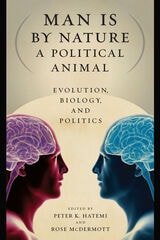
Man Is by Nature a Political Animal
Evolution, Biology, and PoliticsEdited by Peter K. Hatemi and Rose McDermott
University of Chicago Press, 2011
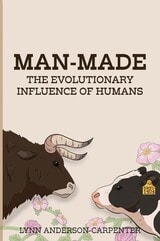
Man-Made
The Evolutionary Influence of HumansLynn Carpenter
Michigan Publishing Services, 2023
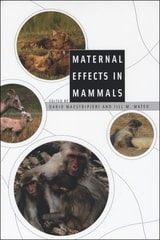
Maternal Effects in Mammals
Edited by Dario Maestripieri and Jill M. Mateo
University of Chicago Press, 2009
Evolutionary maternal effects occur whenever a mother’s phenotypic traits directly affect her offspring’s phenotype, independent of the offspring’s genotype. Some of the phenotypic traits that result in maternal effects have a genetic basis, whereas others are environmentally determined. For example, the size of a litter produced by a mammalian mother—a trait with a strong genetic basis—can affect the growth rate of her offspring, while a mother’s dominance rank—an environmentally determined trait—can affect the dominance rank of her offspring.
The first volume published on the subject in more than a decade, Maternal Effects in Mammals reflects advances in genomic, ecological, and behavioral research, as well new understandings of the evolutionary interplay between mothers and their offspring. Dario Maestripieri and Jill M. Mateo bring together a learned group of contributors to synthesize the vast literature on a range of species, highlight evolutionary processes that were previously overlooked, and propose new avenues of research. Maternal Effects in Mammals will serve as the most comprehensive compendium on and stimulus for interdisciplinary treatments of mammalian maternal effects.
Mathematical Models of Social Evolution
A Guide for the PerplexedRichard McElreath and Robert Boyd
University of Chicago Press, 2007
Over the last several decades, mathematical models have become central to the study of social evolution, both in biology and the social sciences. But students in these disciplines often seriously lack the tools to understand them. A primer on behavioral modeling that includes both mathematics and evolutionary theory, Mathematical Models of Social Evolution aims to make the student and professional researcher in biology and the social sciences fully conversant in the language of the field.
Teaching biological concepts from which models can be developed, Richard McElreath and Robert Boyd introduce readers to many of the typical mathematical tools that are used to analyze evolutionary models and end each chapter with a set of problems that draw upon these techniques. Mathematical Models of Social Evolution equips behaviorists and evolutionary biologists with the mathematical knowledge to truly understand the models on which their research depends. Ultimately, McElreath and Boyd’s goal is to impart the fundamental concepts that underlie modern biological understandings of the evolution of behavior so that readers will be able to more fully appreciate journal articles and scientific literature, and start building models of their own.
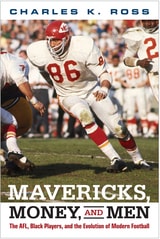
Mavericks, Money, and Men
The AFL, Black Players, and the Evolution of Modern FootballCharles Ross
Temple University Press, 2016
The American Football League, established in 1960, was innovative both in its commitment to finding talented, overlooked players—particularly those who played for historically black colleges and universities—and in the decision by team owners to share television revenues.
In Mavericks, Money and Men, football historian Charles Ross chronicles the AFL’s key events, including Buck Buchanan becoming the first overall draft pick in 1963, and the 1965 boycott led by black players who refused to play in the AFL-All Star game after experiencing blatant racism. He also recounts how the success of the AFL forced a merger with the NFL in 1969, which arguably facilitated the evolution of modern professional football.
Ross shows how the league, originally created as a challenge to the dominance of the NFL, pressured for and ultimately accelerated the racial integration of pro football and also allowed the sport to adapt to how African Americans were themselves changing the game.
Media, Technology, and Society
Theories of Media EvolutionW. Russell Neuman
University of Michigan Press, 2010
"This book is the perfect primer for understanding media in the digital age. We are in an era when newspaper, radio, and television are fast becoming archeological concepts. Herein are the reasons why."
---Nicholas Negroponte, founder and chairman of One Laptop per Child and cofounder of the MIT Media Laboratory
"Congratulations to Neuman and colleagues for a fascinating exploration of how previous new media were constructed, whether things could have been otherwise, and what can be learned for future media."
---Sonia Livingstone, Department of Media and Communications, the London School of Economics and Political Science
In Media, Technology, and Society, some of the most prominent figures in media studies explore the issue of media evolution. Focusing on a variety of compelling examples in media history, ranging from the telephone to the television, the radio to the Internet, these essays collectively address a series of notoriously vexing questions about the nature of technological change. Is it possible to make general claims about the conditions that enable or inhibit innovation? Does government regulation tend to protect or thwart incumbent interests? What kinds of concepts are needed to address the relationship between technology and society in a nonreductive and nondeterministic manner? To what extent can media history help us to understand and to influence the future of media in constructive ways? The contributors' historically grounded responses to these questions will be relevant to numerous fields, including history, media and communication studies, management, sociology, and information studies.
W. Russell Neuman is John Derby Evans Professor of Media Technology and Research Professor, Center for Political Studies, Institute for Social Research, at the University of Michigan.
DIGITALCULTUREBOOKS: a collaborative imprint of the University of Michigan Press and the University of Michigan Library
Messages from Islands
A Global Biodiversity TourIlkka Hanski
University of Chicago Press, 2016
Beginning each chapter on a particular island, Hanski dives into reflections on his own field studies before going on to pursue a variety of ecological questions, including: What is the biodiversity crisis? What are extinction thresholds and extinction debts? What can the biodiversity hypothesis tell us about rapidly increasing allergies, asthma, and other chronic inflammatory disorders? The world’s largest island, Greenland, for instance, is the starting point for a journey into the benefits that humankind acquires from biodiversity, including the staggering biodiversity of microbes in the ecosystems that are closest to us—the ecosystems in our guts, in our respiratory tracts, and under our skin. Conceptually oriented but grounded in an adventurous personal narrative, Messages from Islands is a landmark work that lifts the natural mysteries of islands from the sea, bringing to light the thrilling complexities and connections of ecosystems worldwide.
Metaphysics, Materialism, and the Evolution of Mind
The Early Writings of Charles DarwinCharles Darwin
University of Chicago Press, 1980
First published in 1974 as a companion volume to Darwin on Man by Howard E. Gruber, Paul Barrett’s transcriptions of Darwin’s M and N notebooks served to shed new light on the evolutionist’s methods and motivation.
According to Stephen Jay Gould in the New York Times Book Review, “Darwin kept [these notebooks] primarily in 1838, when he was 29 years old. In them, he recorded his early conviction of evolutionary continuity between humans and all other animals. . . . These notebooks display all the features of humanistic intellect that his detractors denied. We find erudition in his comments on Plato, Locke, Hume, Adam Smith, Whewell, Burke, Montaigne, Lessing and Spencer. . . . We appreciate an artistic bent in his delight with nature and her prophet Wordsworth. . . . We grasp the breadth of his bold attempt to clothe all human thought and behaviour in a new evolutionary garb. . . . Charles Darwin was reconstructing the world and he knew exactly what he was doing.”

Microbes from Hell
Patrick Forterre
University of Chicago Press, 2016
In Microbes from Hell, one of the world’s leading experts on archaea and hyperthermophiles, or organisms that have evolved to flourish in extreme temperatures, offers a colorful, engaging account of this taxonomic upheaval. Blending tales of his own search for thermophiles with discussions of both the physiological challenges thermophiles face and the unique adaptations they have evolved to live in high-temperature environments, Forterre illuminates our developing understanding of the relationship between archaea and the rest of Earth’s organisms. From biotech applications to the latest discoveries in thermophile research, from microbiomes to the communities of organisms that dwell on deep-sea vents, Forterre’s exploration of life-forms that seem to thrive at the mouth of hell provides a glimpse into the early days of Earth, offering deep insight into what life may have looked like in the extreme environments of our planet’s dawn.

Military Intervention after the Cold War
The Evolution of Theory and PracticeAndrea Kathryn Talentino
Ohio University Press, 2005
Military Intervention After the Cold War explores how and why this change took place, looking at how both ideas and actions changed in the post-Cold War period to make military intervention a tool of international security and a defining characteristic of the international system. Although it is often touted as a strategy to rebuild collapsed states, the examples of success are few and far between. Andrea Kathryn Talentino argues that standards of human rights and responsible governance have become part of the definition of international security. She addresses questions that are vital in the post-9/11 world, where weak and collapsed states are recognized as permissive and at times supportive environments for criminal actors.
The specter of terrorism has placed even greater emphasis on the need to understand why military intervention happens and how it could be more effective. With the news full of stories on intervention and nation-building, scholars, graduate and undergraduate students, and readers interested in understanding global interdependence will find Military Intervention After the Cold War an indispensable book.Andrea Kathryn Talentino is an assistant professor of international relations at Tulane University, New Orleans.The author of numerous articles on military intervention and post- conflict rebuilding, she is currently focusing on the link between nation-building and political violence.

Mindful Movement
The Evolution of the Somatic Arts and Conscious ActionMartha Eddy
Intellect Books, 2016
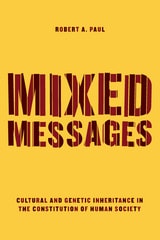
Mixed Messages
Cultural and Genetic Inheritance in the Constitution of Human SocietyRobert A. Paul
University of Chicago Press, 2015
Examining a wide array of cultures, Paul reveals how the inherent tensions between these two modes of transmission generate many of the features of human society, such as marriage rules, initiation rituals, gender asymmetry, and sexual symbolism. Exploring differences in the requirements, range, and agendas of genetic and symbolic reproduction, he shows that a properly conceived dual inheritance model does a better job of accounting for the distinctive character of actual human societies than either evolutionary or socio-cultural construction theories can do alone. Ultimately this book offers a powerful call for a synthesis of the traditions inspired by Darwin, Durkheim, and Freud—one that is critically necessary if we are to advance our understanding of human social life.
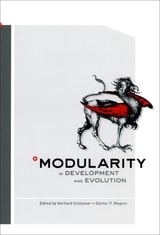
Modularity in Development and Evolution
Edited by Gerhard Schlosser and Günter P. Wagner
University of Chicago Press, 2004
A timely synthesis of a crucial topic, Modularity in Development and Evolution shows the invaluable insights modules can give into both developmental complexities and their evolutionary origins.
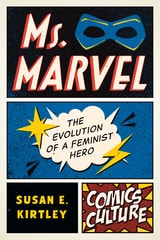
Ms. Marvel
The Evolution of a Feminist HeroSusan E. Kirtley
Rutgers University Press, 2027
Since her first appearance as a superhero in 1977, Ms. Marvel’s most frequent foe has, unfortunately, been herself. In the character’s earliest years, Carol Danvers struggled with two personalities that could not coexist. Later, Sharon Ventura wrestled with choosing between two bodies, one her preferred form and one deemed acceptable by society. Then Carol Danvers returned to the title and fought with a bevy of alternative versions of herself from various dimensions before battling the Dark Avenger version of Ms. Marvel, Karla Sofen. Upon assuming the title after Danvers took on the mantle of Captain Marvel, Kamala Khan inherited this seemingly endless ordeal: clashing with alternate versions of herself, as well as the doppelgänger Stormranger, and even with her own reanimated corpse.
In every iteration, the iconic hero associated with the honorific of women’s liberation continues to act as her own archnemesis, and the self remains the ultimate foe, suggesting that in every universe, women are their own worst enemy.

Multiplicity in Unity
Plant Subindividual Variation and Interactions with AnimalsCarlos M. Herrera
University of Chicago Press, 2009
Plants produce a considerable number of structures of one kind, like leaves, flowers, fruits, and seeds, and this reiteration is a quintessential feature of the body plan of higher plants. But since not all structures of the same kind produced by a plant are identical—for instance, different branches on a plant may be male or female, leaf sizes in the sun differ from those in the shade, and fruit sizes can vary depending on patterns of physiological allocation among branches—a single plant genotype generally produces a multiplicity of phenotypic versions of the same organ.
Multiplicity in Unity uses this subindividual variation to deepen our understanding of the ecological and evolutionary factors involved in plant-animal interactions. On one hand, phenotypic variation at the subindividual scale has diverse ecological implications for animals that eat plants. On the other hand, by choosing which plants to consume, these animals may constrain or modify plant ontogenetic patterns, developmental stability, and the extent to which feasible phenotypic variants are expressed by individuals.
An innovative study of the ecology, morphology, and evolution of modular organisms, Multiplicity in Unity addresses a topic central to our understanding of the diversity of life and the ways in which organisms have coevolved to cope with variable environments.