Results by title
56 books match the query 'Faculty' and 4 start with m
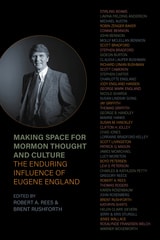
Making Space for Mormon Thought and Culture
The Enduring Influence of Eugene EnglandRobert A. Rees
Signature Books, 2025
This intimate collection brings together a broad array of tributes to Eugene England, a leading Latter-day Saint scholar–teacher of the late twentieth century. It includes the voices of those who knew Gene and his work—family, friends, students, and colleagues—to illuminate the profound impact of one of Mormonism’s most influential thinkers. Through personal narratives and thoughtful reflections, these essays reveal Gene not just as a brilliant theologian and beloved professor, but as a compassionate mentor, faithful questioner, and dedicated disciple.
England’s influence on Latter-day Saint thought, culture, and religion was not only indelible but lasting. His legacy as a founding figure in modern Mormon intellectual life emerges through stories of his classroom teachings, his founding of Dialogue: A Journal of Mormon Thought, and his courageous exploration of difficult questions within a framework of faith. Contributors share how England modeled a life devoted to both unflinching inquiry and deep spiritual commitment—demonstrating that devotion and intellectualism could strengthen rather than threaten one another.
These personal accounts paint a portrait of a man whose theological insights and generous spirit continue to influence Mormon studies and whose example inspires those seeking to harmonize faith with intellectual honesty. For both those who knew England and those discovering him for the first time, this collection offers a window into the heart and mind of a remarkable Mormon thinker and his enduring influence.
Manufacturing Morals
The Values of Silence in Business School EducationMichel Anteby
University of Chicago Press, 2013
In an era when many organizations are focused on principles of responsibility, Harvard Business School has long tried to promote better business standards. Anteby’s rich account reveals the surprising role of silence and ambiguity in HBS’s process of codifying morals and business values. As Anteby describes, at HBS specifics are often left unspoken; for example, teaching notes given to faculty provide much guidance on how to teach but are largely silent on what to teach. Manufacturing Morals demonstrates how faculty and students are exposed to a system that operates on open-ended directives that require significant decision-making on the part of those involved, with little overt guidance from the hierarchy. Anteby suggests that this model—which tolerates moral complexity—is perhaps one of the few that can adapt and endure over time.
Manufacturing Morals is a perceptive must-read for anyone looking for insight into the moral decision-making of today’s business leaders and those influenced by and working for them.
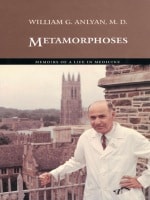
Metamorphoses
Memoirs of a Life in MedicineWilliam G. Anlyan, M. D.
Duke University Press, 2004
Born in Alexandria, Egypt, in 1925, and schooled in the British tradition, Anlyan attended Yale University as an undergraduate and medical student before coming to the relatively unknown medical school at Duke University in 1949 for an internship in general and thoracic surgery. He stayed on, first as a resident, then as a staff surgeon. By 1961, he was a full professor of surgery. In 1964, Anlyan was named dean of the medical school, the first in a series of administrative posts at the medical school and hospital. Anlyan’s role in the transformation of the Duke University Medical Center into an internationally renowned health system is manifest: he restructured the medical school and hospital and supervised the addition of almost four million square feet of new or renovated space. He hired outstanding administrators and directed a staff that instituted innovative programs and groundbreaking research centers, such as the Cancer Center and the Physician’s Assistant Program.
Anlyan describes a series of metamorphoses in his own life, in the world of medicine, in Durham, and at Duke. At the time of his prep school upbringing in Egypt, medicine was a matter of controlling infectious diseases like tuberculosis and polio. As he became an immigrant medical student and then a young surgeon, he observed vast advances in medical practice and changes in the financing of medical care. During his tenure at Duke, Durham was transformed from a sleepy mill and tobacco town into the “City of Medicine,” a place where patients routinely travel for open-heart surgery and cutting-edge treatments for cancer and other diseases.
Anyone interested in health care, medical education, and the history of Duke University will find Anlyan’s memoir of interest.

My Iowa Journey
Philip G. Hubbard
University of Iowa Press, 1999
Philip Hubbard's life story begins in 1921 in Macon, a county seat in the Bible Belt of north central Missouri, whose history as a former slave state permeated the culture of his childhood. When he was four his mother moved her family 140 miles north to Des Moines in search of the greater educational opportunity that Iowa offered African American students. In this recounting of the effects of that journey on the rest of his life, Phil Hubbard merges his private and public life and career into an affectionate, powerful, and important story.
Hubbard graduated from the University of Iowa with a degree in electrical engineering in 1946; by 1954 he had received his Ph.D. in hydraulics. The College of Engineering extended a warm academic welcome, but nonacademic matters were totally different: Hubbard was ineligible for the housing and other amenities offered to white students. Intelligent, patient, keenly aware of discrimination yet willing to work from within the university system, he advanced from student to teacher to administrator, retiring in 1991 after decades of leadership in the classroom and the conference room.
Hubbard's major accomplishments included policies that focused on human rights; these policies transformed the makeup of students, faculty, and staff by seeking to eliminate discrimination based on race, religion, or other nonacademic factors and by substituting affirmative action for the traditional old-boy methods of selecting faculty and administrators. At the same time that he was advancing the cause of human rights and cultural diversity in education, his family was growing and thriving, and his descriptions of home life reveal one source of his strength and inspiration.
The decades that Hubbard covers were vital in the evolution of the nation and its educational institutions. His dedication to the agenda of public higher education has always been matched by his sensitivity to the negative effects of discrimination and his gentle perseverance toward his goals of inclusion, acceptance, and fairness. His vivid personal and institutional story will prove valuable at this critical juncture in America's racial history.