Results by title
520 books match the query 'Family' and 33 start with m
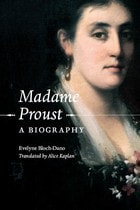
Madame Proust
A BiographyEvelyne E. Bloch-Dano
University of Chicago Press, 2007
Now Evelyne Bloch-Dano’s touching biography acquaints Proust fans with the real Jeanne Weil Proust. Written with the imaginative force of a novel, but firmly grounded in Jeanne and Marcel Proust’s writings, Madame Proust skillfully captures the life and times of Proust’s mother, from her German-Jewish background and her marriage to a Catholic grocer’s son to her lifelong worries about her son’s sexuality, health problems, and talent. As well as offering intimate glimpses of the Prousts’ daily life, Madame Proust also uses the family as a way to explore the larger culture of fin-de-siècle France, including high society, spa culture, Jewish assimilation, and the Dreyfus affair. Throughout, Bloch-Dano offers sensitive readings of Proust’s work, drawing out the countless interconnections between his mother, his life, and his magnum opus.
Those coming to In Search of Lost Time for the first time will find in Madame Proust a delightful primer on Marcel Proust’s life and times. For those already steeped in the pleasures of Proust, this gem of a biography will give them a fresh understanding of the rich, fascinating background of the writer and his art.
Man Killed by Pheasant and Other Kinships
John T. Price
University of Iowa Press, 2012
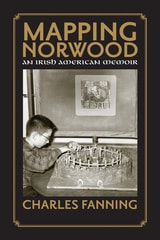
Mapping Norwood
An Irish-American MemoirCharles Fanning
University of Massachusetts Press, 2010
This memoir is an act of map making, of plotting out overlapping territories—topographical, temporal, and psychological. Centered on family life in a Massachusetts town from the 1920s to the 1960s, the author's investigation extends outward to include the Boston area from colonial times to the recent past, encounters with Boston's Museum of Fine Arts and with Harvard College, the American Civil War, and Ireland and Germany in the nineteenth century.
Charles Fanning re-creates the landscape of childhood and adolescence in a place and time both ordinary and rich with possibility. An expert on Irish immigration, he was born and raised in Norwood, Massachusetts, twelve miles outside of Boston, where Yankee and Irish cultures bumped against each other. The narrative traces his personal growth, shaped by family, school, baseball, radio drama, and art. He was the first in his family to attend college, and the book ends with his undergraduate experience at Harvard, class of 1964.
Along with this coming-of-age story, Mapping Norwood features forays back in time, including chapters on each of Fanning's parents and historical excavations and meditations on three ancestors. Guided by his own experience as a scholar, the pressure of these chapters is epistemological—the thrill of the hunt toward knowing. Fanning's great-grandfather, John Fanning, disappeared from the family in the late 1880s, and a chapter chronicles the discovery of “Walking John's” fifty years of hidden later life in East St. Louis, Illinois, where he died alone in 1946. Fanning's great-great-grandfather, Winslow Radcliffe, was a veteran of the 35th Massachusetts Infantry in the Civil War, and the author traces this regiment through the horrors of Antietam and Fredericksburg, by means of diaries and letters by four men from Winslow's company. The evidence gleaned helps explain Winslow's suicide after the war. An Irish immigrant ancestor, Phillip Fanning, came to Boston from County Monaghan just after the Great Famine of the late 1840s. Relying on historical research, Fanning imagines vividly the lives led by Phillip's family and thousands like them in the wake of Ireland's nineteenth-century catastrophe.

Mark Twain and Orion Clemens
Brothers, Partners, StrangersPhilip Ashley Fanning
University of Alabama Press, 2003
One became America’s greatest writer. The other died in obscurity and failure. As brothers, they shaped each other's lives and work.
In a compelling way, Philip Fanning traces the fraternal relationship of Orion and Samuel Clemens from its beginning in Hannibal, Missouri, in the 1830s to Orion's death in Iowa in 1897. He demonstrates that Orion’s influence on the writer known as Mark Twain was profound, pervasive, and prolonged.
In some respects, Samuel defined himself against Orion’s formidable background. It was Orion who became the chief financial and spiritual support of the Clemens family following the father's controversial death in 1847. It was Orion who led the way for his brother into printing, journalism, and mine speculation. And it was Orion who served as Sam’s first real editor and literary mentor, recognizing and encouraging his younger brother’s talents as a writer.
The two siblings had much in common, and they often appeared to be codependent, so much so that their attitudes veered sharply from mutual admiration to mutual disdain and rivalry. Whereas Orion was self-effacing, easygoing, humble, and adventurous in his politics and progressive in his views, Twain was often ill-tempered and antagonistic toward those around him and conservative in his outlook. He frequently portrayed his older brother in autobiographical writings and letters as a buffoon and a laughingstock.
Fanning—who drew upon extensive archival sources, unpublished letters between the two brothers, and the Mark Twain Papers at the University of California, Berkeley—charts these divergences in their characters and in their fortunes. As Twain rose to become a national celebrity and a financial success, Orion's finances and self-esteem disintegrated, and Twain’s treatment of his brother became evermore harsh and mocking. Fanning’s study stands as both a biography of a fractious fraternal relationship and a work of scholarship that highlights for the first time how significantly Orion Clemens influenced Twain’s psychic and artistic economy.
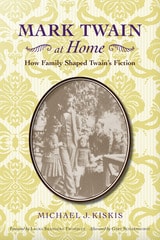
Mark Twain at Home
How Family Shaped Twain’s FictionMichael J. Kiskis, Foreword by Laura Skandera Trombley, Afterword by Gary Scharnhorst
University of Alabama Press, 2016
Mark Twain was the child of a loveless marriage and a homelife over which hovered the constant specter of violence. Informed by his difficult childhood, orthodox readings of The Adventures of Tom Sawyer and Adventures of Huckleberry Finn frame these canonical literary figures as nostalgic—autobiographical fables of heroic individualists slipping the bonds of domestic life.
Kiskis, however, presents a wealth of biographical details about Samuel Clemens and his family that reinterpret Twain’s work as a robust affirmation of domestic spheres of life. Among Kiskis’s themes are that, as the nineteenth century witnessed high rates of orphanhood and childhood mortality, Clemens’s work often depicted unmoored children seeking not escape from home but rather seeking the redemption and safety available only in familial structures. Similarly, Mark Twain at Home demonstrates that, following the birth of his first daughter, Twain began to exhibit in his writing an anxiety with social ills, notably those that affected children.
In vigorous and accessible descriptions of Twain’s life as it became reflected in his prose, Kiskis offers a compelling and fresh understanding of this work of this iconic American author.
Market Friendly or Family Friendly?
The State and Gender Inequality in Old AgeMadonna Harrington Meyer
Russell Sage Foundation, 2007
Mary Lincoln's Insanity Case
A Documentary HistoryJason Emerson
University of Illinois Press, 2012
In 1875 Mary Lincoln, the widow of a revered president, was committed to an insane asylum by her son, Robert. The trial that preceded her internment was a subject of keen national interest. The focus of public attention since Abraham Lincoln's election in 1860, Mary Lincoln had attracted plentiful criticism and visible scorn from much of the public, who perceived her as spoiled, a spendthrift, and even too much of a Southern sympathizer. Widespread scrutiny only increased following her husband's assassination in 1865 and her son Tad's death six years later, after which her overwhelming grief led to the increasingly erratic behavior that led to her being committed to a sanitarium. A second trial a year later resulted in her release, but the stigma of insanity stuck. In the years since, questions emerged with new force, as the populace and historians debated whether she had been truly insane and subsequently cured, or if she was the victim of family maneuvering.
In this volume, noted Lincoln scholar Jason Emerson provides a documentary history of Mary Lincoln's mental illness and insanity case, evenhandedly presenting every possible primary source on the subject to enable a clearer view of the facts. Beginning with documents from the immediate aftermath of her husband's assassination and ending with reminiscences by friends and family in the mid-twentieth century, Mary Lincoln's Insanity Case: A Documentary History compiles more than one hundred letters, dozens of newspaper articles, editorials, and legal documents, and the daily patient progress reports from Bellevue Place Sanitarium during Mary Lincoln's incarceration. Including many materials that have never been previously published, Emerson also collects multiple reminiscences, interviews, and diaries of people who knew Mary Lincoln or were involved in the case, including the first-hand recollection of one of the jurors in the 1875 insanity trial.
Suggesting neither accusation nor exoneration of the embattled First Lady, Mary Lincoln's Insanity Case: A Documentary History gives scholars and history enthusiasts incomparable access to the documents and information crucial to understanding this vexing chapter in American history.
Meanings of Mobility
Family, Education, and Immigration in the Lives of Latino YouthLeah Schmalzbauer
Russell Sage Foundation, 2023
To better understand these experiences, Schmalzbauer draws on interviews with 60 low-income Latino youth who graduated or were set to graduate from Amherst College, one of the most selective private colleges in the United States. The vast majority of these students were the first in their immigrant families to go to college in the U.S. She finds that while most of the students believed attending Amherst provided them with previously unimaginable opportunities, adjusting to life on campus came with significant challenges. Many of the students Schmalzbauer spoke with had difficulties adapting to the cultural norms at Amherst as well as with relating to their non-Latino, non-low-income peers. The challenges these students faced were not limited to life on campus. As they attempted to adapt to Amherst, many felt distanced from the family and friends they left behind who could not understand the new challenges they faced.
The students credit their elite education for access to extraordinary educational and employment opportunities. However, their experiences while in college and afterward reveal that the relationship between educational and social mobility is much more complicated and less secure than popular conversations about the “American Dream” suggest. Many students found that their educational attainment was not enough to erase the core challenges of growing up in a marginalized immigrant family: many were still poor, faced racism, and those who were undocumented or had undocumented family members still feared deportation.
Schmalzbeauer suggests ways elite colleges can better support low-income Latino students and lower the emotional price of educational mobility, including the creation of immigration offices on campus to provide programming and support for undocumented students and their families. She recommends educating staff to better understand the centrality of family for these students and the challenges they face, as well as educating more privileged students about inequality and the life experiences of their marginalized peers.
Meanings of Mobility provides compelling insights into the difficulties faced by low-income Latinos pursuing educational and social mobility in America’s elite institutions.
Mental Traveler
A Father, a Son, and a Journey through SchizophreniaW. J. T. Mitchell
University of Chicago Press, 2020
Gabriel Mitchell was diagnosed with schizophrenia at age twenty-one and died by suicide eighteen years later. He left behind a remarkable archive of creative work and a father determined to honor his son’s attempts to conquer his own illness. Before his death, Gabe had been working on a film that would show madness from inside and out, as media stereotype and spectacle, symptom and stigma, malady and minority status, disability and gateway to insight. He was convinced that madness is an extreme form of subjective experience that we all endure at some point in our lives, whether in moments of ecstasy or melancholy, or in the enduring trauma of a broken heart. Gabe’s declared ambition was to transform schizophrenia from a death sentence to a learning experience, and madness from a curse to a critical perspective.
Shot through with love and pain, Mental Traveler shows how Gabe drew his father into his quest for enlightenment within madness. It is a book that will touch anyone struggling to cope with mental illness, and especially for parents and caregivers of those caught in its grasp.
Mesmerizingly Sadly Beautiful
Matthew Lippman
Four Way Books, 2020
Metabolics
PoemsJessica E. Johnson
Acre Books, 2023
Metabolics, a book-length poem, borrows the movements of metabolic pathways to consider how nature accomplishes both balance and deep transformation. In visual figures and prose blocks that bridge the divide between poetry and nonfiction, Jessica E. Johnson employs scientific idioms to construct an allegory about a family in the Pacific Northwest. The region becomes a character in its own right, with cedars, moss, and heavy cloud knitting the mother, father, boy, and girl into their setting.
This far-reaching volume also serves as a study of the ecologies of contemporary parenting, with adults and children affected by “feeds” both on screen and off as their bodies metabolize food, the environment, and excess feelings such as rage. From climate change to kombucha to smartphones and curated produce, the smallest details of daily life in “Plasticland” catalyze a larger examination of selfhood: “Despite so many attempts to resolve this tension, sometimes you are you and also sometimes mother just as light can be both particle and wave.”
Middletown families
fifty years of change and continuityTheodore. Caplow
University of Minnesota Press, 1982
Midflight
David Corcoran
Four Way Books, 2022
A posthumous collection, Midflight collects the poems written by beloved science editor and journalist David Corcoran in the latter part of his life. Idling in a space between the pastoral and the ordinary, Corcoran’s lyrical world maps the sublime mundanity of nature while exploring memory, dreams, and consciousness itself. Corcoran’s lines abound with figures living and long deceased, with the dead walking onstage as if they never left. Describing the accident that killed his father when he was a toddler in “Here,” Corcoran writes, “the door [opens] in midflight / and [pitches] him out.” In “Last Questions,” he asks, “Are you my brother or / a mockingbird?” While these haunting, vivid poems have an aching prescience, imbued as they are with the awareness of human ephemerality, the gift they proffer, to the writer and the reader at once, is the sense of finding oneself midflight, in midair, betwixt sky and ground, in the free fall of being—going and going and never gone.

Miracle Fruit
Aimee Nezhukumatathil
Tupelo Press, 2003
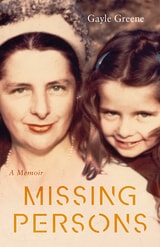
Missing Persons
A MemoirGayle Greene
University of Nevada Press, 2017
The memoir is structured as an account of her mother's and aunt’s final days and the year that follows, a year in which she reconstructs her life. This is a powerful story about family, what it means to have one, to lose one, never to have made one, and what, if anything, might take its place. It’s the story of a vexed mother-daughter relationship that mellows with age. It is also a search for home, as the very landscape shifts around her and the vast orchards are dug up and paved over for tract housing, strip malls, freeways, and the Santa Clara Valley, once known as the Valley of Heart’s Delight, is transformed to “Silicon.”
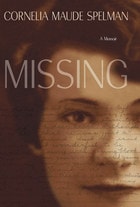
Missing
A MemoirCornelia Maude Spelman
Northwestern University Press, 2010
Acclaimed children’s book author Cornelia Maude Spelman’s memoir of her family springs from a meeting and subsequent friendship with the late, legendary New Yorker editor William MaxwellIn the 1920s, he and her parents had been friends as undergraduates at the University of Illinois at Urbana-Champaign. When Spelman hints at what she thinks of as the failure of her parents’ lives, he counters that “in a good novel one doesn’t look for a success story, but for a story that moves one with its human drama and richness of experience.”
At their final meeting, Maxwell encourages her to tell her mother’s story. Missing is Spelman’s response to Maxwell’s wisdom. With the pacing of the mystery novels her mother loved, and using everything from letters and interviews to the family’s quotidian paper trail—medical records, telegrams, and other oft-overlooked clues to a family’s history—Spelman reconstructs her mother’s life and untimely death. Along the way, she unravels mysteries of her family, including the fate of her long lost older brother.
Spelman skillfully draws the reader into the elation and sorrow that accompany the discovery of a family’s past. A profoundly loving yet honest elegy, Missing is, like the woman it memorializes, complex and beautiful.
Mistaken for an Empire
A Memoir in TonguesChristine Imperial
The Ohio State University Press, 2023
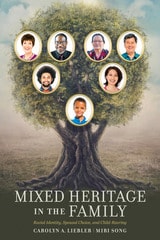
Mixed Heritage in the Family
Racial Identity, Spousal Choice, and ChildrearingCarolyn Liebler
Russell Sage Foundation, 2025
Liebler and Song break new ground by being the first to combine and integrate the study of three aspects of life for people of mixed racial heritage – identity, spouse choice, and childrearing. This integrated approach reveals how complicated racial identification can be, and how it can be expressed in one’s choice of partner or in how one raises their children. The authors draw on census data and interviews with Asian-White, Black-White, and American Indian/Alaska Native-White mixed people to better understand how their identity choices are related to their choice of spouse and how they racially identify and raise their children.
Increasingly, mixed people in the United States are identifying with multiple races. However, the authors find that mixed-race people are not a monolith and that how and why they identify varies considerably between and within each group. They found several common factors that influenced whether mixed-race people choose to identify as biracial, solely White, or solely as a racial minority. These factors include the history of the specific minority race in the U.S., the racial demographics of where they were raised, their social and cultural exposure to their White and non-White backgrounds, their attachment to their racial backgrounds, and how they are seen racially by others.
The way mixed-heritage people identify was closely tied to the race of their spouse. However, having a White spouse did not necessarily mean the mixed-race person felt disconnected from their non-White heritage. White spouses varied in their racial consciousness and their interest in the culture of their mixed-race spouse’s minority ancestry. The spouse’s race, and the nature of racial overlap between the spouses, was also key in the racial upbringing of a mixed-heritage person’s child. In families where the parents share a minority racial heritage, couples lean into their shared ‘family race’, which guides their parenting choices and family life. Many mixed heritage parents found it important to foster racial pride in their children and combat negative racial stereotypes.
Liebler and Song caution against making superficial predictions about the state of race relations in the U.S. based on an increase in the multiracial population. They show that race has not become less salient in the lives of many mixed-race people—American society is not post-racial.
Mixed Heritage in the Family breaks new ground, provides compelling insights in its examination of the lives of mixed-race people, and shows how complicated racial identification can be.
Monsters In The Woods
Backpacking With ChildrenTim Hauserman
University of Nevada Press, 2007
How and why you should take your children backpacking
Despite America’s enthusiasm for outdoors activities like hiking and backpacking, most books on these subjects focus on adults. Backpacking, however, is an ideal activity for the entire family. Tim Hauserman, who is both an experienced outdoors guide and the father of two daughters, now offers a handbook for parents who would like to introduce their children to backpacking and camping. Hauserman provides practical, humorous advice for families new to the outdoors and for trail-savvy parents planning to take their children along for the first time: how to prepare, what to bring, who carries what, how far to walk, what to do in camp, safety precautions, dealing with mishaps, and proper trail and campground etiquette. He includes guidance about appropriate distances and pack weights for every age level of child, as well as tips about backpacking with an infant and bringing the family dog along on the adventure. He even suggests appealing destinations in the Sierra Nevada appropriate for various age groups and recounts some of his (and his daughters’) favorite hikes. Hauserman’s down-to-earth encouragement is based on decades of backpacking and camping with his own children, their friends, and other groups of youngsters. He is candid about his experiences and the lessons he learned from his own mistakes and how he dealt with them. Ultimately, the reward of sharing a special adventure and the peace and beauty of the outdoors makes all the effort worthwhile.
Morafe
Person, Family, and Nation in Colonial Bechuanaland, 1880s–1950sKhumisho Moguerane
Ohio University Press, 2024
In Morafe, Khumisho Moguerane has written a luminous exploration of two generations of the prominent Molema family. They were “border people” who straddled what would become present-day South Africa and Botswana. The book begins in the 1880s at the frontier of the new British territories of Bechuanaland (North West and Northern Cape provinces) and the Bechuanaland Protectorate (Botswana), where the political boundary between these two territories was negligible and where skin color did not yet necessarily connect with a particular social or political status or affect economic opportunity.
Morafe ends in the 1950s, when the political boundary mattered profoundly, dividing two very different colonial dispensations of racial ordering and classification, and two separate traditions of nationalist politics. With this landmark publication, Moguerane reveals that “the nation” is less “out there,” in public institutions and political struggles, and more “in here,” in the everyday drama of personal and ordinary lives.
Mother Archive
A Dominican Family MemoirErika Morillo
University of Iowa Press, 2024
2024 NBCC Award Finalist, Autobiography
A family murder kept secret, the mysterious disappearance of her father, the systematic erasing of family photographs, a turbulent relationship with her mother, layers of trauma and abuse. In Mother Archive, Erika Morillo reconciles these demons of her past by searching for and seeking out the roots of her family. Intertwining memories with archival family photographs, news clippings, film stills, and artistic images, Morillo revisits her childhood growing up in the Dominican Republic, a place and time riddled with a history of violence and a tradition of erasure.
Spanning three generations across three different countries, this memoir works as a map in which the author traces incidents in her family history to help her understand herself and her own experience as a mother.
Mud in Our Mouths
PoemsLuiza Flynn-Goodlett
Northwestern University Press, 2025
An award-winning poet writing through violence, solace, and hope
Luiza Flynn-Goodlett’s Mud in Our Mouths illuminates how we are all enmeshed in a web of violence and love. As the speaker of the collection drives cross-country to visit her family of origin in Tennessee, she reckons with the tensions between her current and past selves and the many ways violence—interpersonal, societal, and environmental—has shaped her life. She struggles to find meaning, questioning the ethics of locating faith in a natural world she is unintentionally destroying, and grapples with her complicity in systems of power and oppression as a white Southern woman. Ultimately, she rejects the idea of genetic family as a place of solace; instead, she cleaves to the liberation and joy of connections forged outside those strictures, where intimacy is freely chosen rather than preordained.
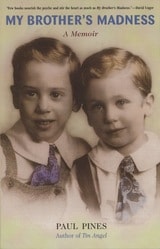
My Brother's Madness
A MemoirPaul Pines
Northwestern University Press, 2007
My Brother's Madness is part thriller, part exploration that not only describes the causes, character, and journey of mental illness, but also makes sense of it. It is ultimately a story of our own humanity, and answers the question, Am I my brother's keeper?
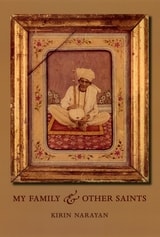
My Family and Other Saints
Kirin Narayan
University of Chicago Press, 2007
A touching, funny, and always affectionate memoir, My Family and Other Saints traces the reverberations of Rahoul's spiritual journey through the entire family. As their beachside Bombay home becomes a crossroads for Westerners seeking Eastern enlightenment, Kirin’s sari-wearing American mother wholeheartedly embraces ashrams and gurus, adopting her son’s spiritual quest as her own. Her Indian father, however, coins the term “urug”—guru spelled backward—to mock these seekers, while young Kirin, surrounded by radiant holy men, parents drifting apart, and a motley of young, often eccentric Westerners, is left to find her own answers. Deftly recreating the turbulent emotional world of her bicultural adolescence, but overlaying it with the hard-won understanding of adulthood, Narayan presents a large, rambunctious cast of quirky characters. Throughout, she brings to life not just a family but also a time when just about everyone, it seemed, was consumed by some sort of spiritual quest.
“A lovely book about the author's youth in Bombay, India. . . . The family home becomes a magnet for truth-seekers, and Narayan is there to affectionately document all of it.”—Body + Soul
My Father's Name
A Black Virginia Family after the Civil WarLawrence P. Jackson
University of Chicago Press, 2012
My Father’s Name is a family story full of twists and turns—and one of haunting familiarity to many Americans, who may question whether the promises of emancipation have ever truly been fulfilled. It is also a resolute look at the duties that come with reclaiming and honoring Americans who survived slavery and a thoughtful meditation on its painful and enduring history.
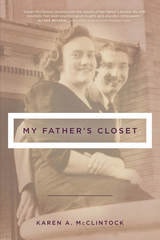
My Father’s Closet
Karen McClintock
The Ohio State University Press, 2017
“Karen McClintock reconstructs the details of her father’s double life with novelistic flair, keen psychological insight, and graceful compassion.” —Alison Bechdel
Thirty years after her father’s death, Karen McClintock sets out to find the gay father she never really knew. As we follow the unraveling family secret, we find ourselves drawn into her story as they stumble into infidelity, grieve heartbreaking losses, and remain loyal in love.
Set in Columbus, Ohio, My Father’s Closet tells the story of how just before the war, McClintock’s parents fell in love and married, while overseas in Germany the man whom she believes became her father’s lover was concealing his Jewish and gay identities in order to escape to America. A set of her father’s journals, letters her parents sent to each other during the Second World War, and a mysterious painting all lead her toward the truth about her gay father. McClintock weaves a complex secret into the fabric of lives we truly care about. And in the process, she leads us out of her father’s closet.
This gripping memoir captures the longing children feel for a distant or hidden parent and taps into the complexity of human connection and abandonment. The characters are resilient and vibrant. The hidden lovers, the nosey neighbors, and surprise lovers all show up. In the end, this extraordinary family finds ways to connect and freedom to love. Anyone who grew up with a family secret will appreciate the dynamics afoot in this fast-paced and compelling story.
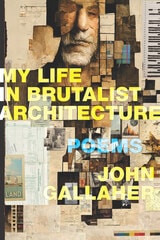
My Life in Brutalist Architecture
John Gallaher
Four Way Books, 2024
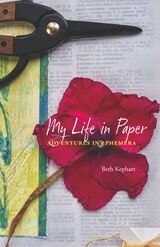
My Life in Paper
Adventures in EphemeraBeth Kephart
Temple University Press, 2023
Kephart’s obsession with paper began in the wake of her father’s death, when she began to handcraft books and make and marble paper in his memory. But it was when she read My Life with Paper, an autobiography by the late renowned paper hunter and historian Dard Hunter, that she felt she had found a kindred spirit, someone to whom she might address a series of one-sided letters about life and how we live it. Remembering and crafting, wanting and loving, doubting and forgetting—the spine and weave of My Life in Paper came into view.
Paper, for Kephart, provides proof of our yearning, proof of our failure, proof of the people who loved us and the people we have lost. It offers, too, a counterweight to the fickle state of memory.
My Life in Paper, illustrated by the author herself, is an intimate and poignant meditation on life’s most pressing questions.
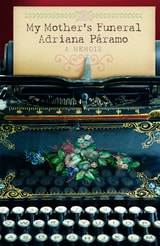
My Mother’s Funeral
Adriana Páramo
CavanKerry Press, 2013
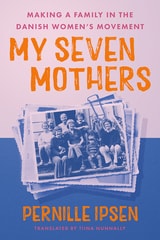
My Seven Mothers
Making a Family in the Danish Women's MovementPernille Ipsen
University of Minnesota Press, 2025
Seven women raise a child together while redefining their place in society at the beginning of the Women’s Movement in Denmark in the 1970s
On New Year’s Eve in Copenhagen in 1972, seven women had a child together: one gave birth and six others attended. They had met a year earlier at a feminist women’s camp on a small island and now, with about twenty other women’s liberationists, they occupied three dilapidated apartment buildings in the center of Copenhagen. One became the country’s first Women’s House, the nerve center of the Women’s Movement in Denmark, and the other two were women-only communal living spaces that were Pernille Ipsen’s first home. In this intimate portrait of life during the exhilarating early days of women’s liberation in Scandinavia and dramatic social change around the globe, she tells the stories of these seven women, her seven mothers.
Recounting her mothers’ history—from the passions and beliefs they shared to the political divisions over sexual identity that ultimately split them apart—Ipsen captures the individuality of each of her mothers as well as the common experiences that drew them together. As she deftly reflects the practical and emotional realities of her mothers’ women-centered life, Ipsen presents an engrossing picture of intersecting lives that, half a century ago, raised questions we still grapple with today: What is a family? Who is a woman? And who gets to decide?
A chronicle of gender, sexuality, and feminism as it was constructed, contested, and lived, My Seven Mothers is an eye-opening account of the challenges and possibilities connected with liberation and radical social change during the 1970s. In this time of fierce struggles over family, sexuality, and child-rearing, it reminds us that new worlds are always possible.
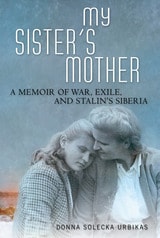
My Sister's Mother
A Memoir of War, Exile, and Stalin’s SiberiaDonna Solecka Urbikas
University of Wisconsin Press, 2019
In 1940, Janina Ślarzynska and her five-year-old daughter Mira were taken by Soviet secret police (NKVD) from their small family farm in eastern Poland and sent to Siberia with hundreds of thousands of others. So began their odyssey of hunger, disease, cunning survival, desperate escape across a continent, and new love amidst terrible circumstances.
But in the 1950s, baby boomer Donna yearns for a “normal” American family while Janina and Mira are haunted by the past. In this unforgettable memoir, Donna recounts her family history and her own survivor’s story, finally understanding the damaged mother who had saved her sister.
Finalist, Best Traditional Non-Fiction Book, Chicago Writers Association
Mycocosmic
Lesley Wheeler
Tupelo Press, 2025
“Good things come to you through fire,” a Tarot reader told Lesley Wheeler as she was composing what became her sixth poetry collection, Mycocosmic. But how could that be true, while the planet was burning and life slamming her with one loss after another? Then she learned about pyrophilic fungi that lurk in soil until activated by fire. Enter mycelia and a teeming underground world that metabolizes death, changing what remains so that life can begin anew.
Mycocosmic offers intricately woven spell poems—prayers, hexes, charms, and invocations—that call for transformation. A parent’s death gives Wheeler the freedom to reveal difficult truths about family violence and her sexuality; a midlife mental health crisis transforms her sense of self. Incantatory language channeled through a wide variety of forms—including free verse, litany, sonnets, the bref double, the golden shovel, and the villanelle—empowers these shifts.
Beneath these poems runs a book-length essay in verse, “Underpoem [Fire Fungus],” sending tendrils across the footer of each page. This poetic mycelium nourishes metamorphosis and highlights its urgency. As Merlyn Sheldrake writes in Entangled Life, “Mycelium describes the most common of fungal habits, better thought of not as a thing but as a process: an exploratory, irregular tendency.” Poetry is rooted in real and imagined communities and conversations. Mycocosmic demonstrates how interdependence binds us together.
music from behind a stone wall
Steven Rood
Omnidawn, 2024
The poems in Steven Rood’s newest collection take on a musical sensibility as they flow from the poet’s sixty years as a classical guitarist who remains preoccupied with the tonalities of daily life. Each poem in music from behind a stone wall comes together to build a multi-layered symphony that reveals the delights and travails of family life and moments of intimate connection with animals and plants. At the core of the book are poems considering the overwhelming task of trying to communicate the essence of musical experience via the written word. This is a book of grief and joy sung with lyric acuity, vivid images, and formal variation.