Results by title
455 books match the query 'Feminism' and 16 start with m

M Archive
After the End of the WorldAlexis Pauline Gumbs
Duke University Press, 2018
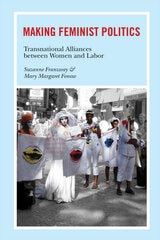
Making Feminist Politics
Transnational Alliances between Women and LaborSuzanne Franzway and Mary Margaret Fonow
University of Illinois Press, 2011
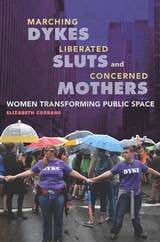
Marching Dykes, Liberated Sluts, and Concerned Mothers
Women Transforming Public SpaceElizabeth Currans
University of Illinois Press, 2017

Margaret Fuller and Her Circles
Brigitte Bailey
University of New Hampshire Press, 2013
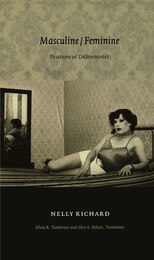
Masculine/Feminine
Practices of Difference(s)Nelly Richard
Duke University Press, 2004
Richard helped to organize the 1987 International Conference on Latin American Women’s Literature in Santiago, one of the most significant literary events to take place under the Pinochet dictatorship. Published in Chile in 1993, Masculine/Feminine develops some of the key issues brought to the fore during that landmark meeting. Richard theorizes why the feminist movement has been crucial not only to the liberation of women but also to understanding the ways in which power operated under the military regime in Chile. In one of her most widely praised essays, she explores the figure of the transvestite, artistic imagery of which exploded during the Chilean dictatorship. She examines the politics and the aesthetics of this phenomenon, particularly against the background of prostitution and shantytown poverty, and she argues that gay culture works to break down the social demarcations and rigid structures of city life. Masculine/Feminine makes available, for the first time in English, one of Latin America’s most significant works of feminist theory.
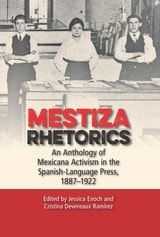
Mestiza Rhetorics
An Anthology of Mexicana Activism in the Spanish-Language Press, 1887-1922Edited by Jessica Enoch and Cristina Devereaux Ramirez
Southern Illinois University Press, 2019
Mestiza Rhetorics is the first anthology dedicated to mexicana rhetors and provides unmatched access to mexicana rhetorics. This collection puts forward the work of mexicana newspaperwomen in Spanish and English, provides evidence of their participation in political and educational debates at the turn of the twentieth century, and demonstrates how the Spanish-language press operated as a rhetorical space for mexicanas.
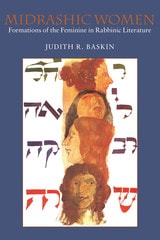
Midrashic Women
Formations of the Feminine in Rabbinic LiteratureJudith R. Baskin
Brandeis University Press, 2002

Mixed Feelings
Feminism, Mass Culture, and Victorian SensationalismCvetkovich, Ann
Rutgers University Press, 1992
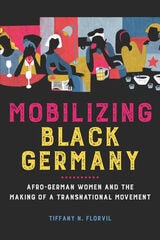
Mobilizing Black Germany
Afro-German Women and the Making of a Transnational MovementTiffany N. Florvil
University of Illinois Press, 2020
Tiffany N. Florvil examines the role of queer and straight women in shaping the contours of the modern Black German movement as part of the Black internationalist opposition to racial and gender oppression. Florvil shows the multifaceted contributions of women to movement making, including Audre Lorde’s role in influencing their activism; the activists who inspired Afro-German women to curate their own identities and histories; and the evolution of the activist groups Initiative of Black Germans and Afro-German Women. These practices and strategies became a rallying point for isolated and marginalized women (and men) and shaped the roots of contemporary Black German activism.
Richly researched and multidimensional in scope, Mobilizing Black Germany offers a rare in-depth look at the emergence of the modern Black German movement and Black feminists’ politics, intellectualism, and internationalism.
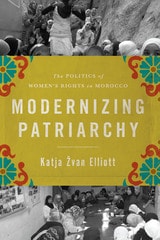
Modernizing Patriarchy
The Politics of Women's Rights in MoroccoBy Katja Žvan Elliott
University of Texas Press, 2015
Morocco is hailed by academics, international NGO workers, and the media as a trailblazer in women’s rights and legal reforms. The country is considered a model for other countries in the Middle East and North African region, but has Morocco made as much progress as experts and government officials claim? In Modernizing Patriarchy, Katja Žvan Elliott examines why women’s rights advances are lauded in Morocco in theory but are often not recognized in reality, despite the efforts of both Islamist and secular feminists.
In Morocco, female literacy rates remain among the lowest in the region; many women are victims of gender-based violence despite legal reforms; and girls as young as twelve are still engaged to adult men, despite numerous reforms. Based on extensive ethnographic research and fieldwork in Oued al-Ouliya, Modernizing Patriarchy offers a window into the life of Moroccan Muslim women who, though often young and educated, find it difficult to lead a dignified life in a country where they are expected to have only one destiny: that of wife and mother. Žvan Elliott exposes their struggles with modernity and the legal reforms that are supposedly ameliorating their lives. In a balanced approach, she also presents male voices and their reasons for criticizing the prevailing women’s rights discourse. Compelling and insightful, Modernizing Patriarchy exposes the rarely talked about reality of Morocco’s approach toward reform.
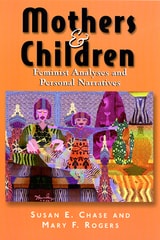
Mothers and Children
Feminist Analyses and Personal NarrativesEdited by Susan E Chase and Mary F. Rogers
Rutgers University Press, 2001
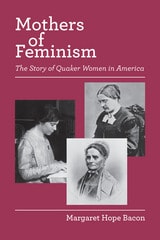
Mothers of Feminism
Margaret Hope Bacon
QuakerPress, 1986

Moving the Mountain
The Women's Movement in America since 1960Flora Davis
University of Illinois Press, 1999
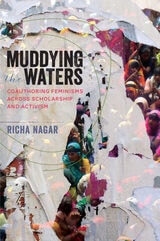
Muddying the Waters
Coauthoring Feminisms across Scholarship and ActivismRicha Nagar
University of Illinois Press, 2014
With stories, encounters, and anecdotes as well as methodological reflections, Nagar grapples with the complexity of working through solidarities, responsibility, and ethics while involved in politically engaged scholarship. Experiences that range from the streets of Dar es Salaam to farms and development offices in North India inform discussion of the labor and politics of coauthorship, translation, and genre blending in research and writing that cross multiple--and often difficult--borders. The author links the implicit assumptions, issues, and questions involved with scholarship and political action, and explores the epistemological risks and possibilities of creative research that bring these into intimate dialogue
Daringly self-conscious, Muddying the Waters reveals a politically engaged researcher and writer working to become ""radically vulnerable,"" and the ways in which such radical vulnerability can allow a re-imagining of collaboration that opens up new avenues to collective dreaming and laboring across sociopolitical, geographical, linguistic, and institutional borders.
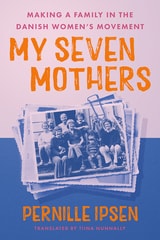
My Seven Mothers
Making a Family in the Danish Women's MovementPernille Ipsen
University of Minnesota Press, 2025
Seven women raise a child together while redefining their place in society at the beginning of the Women’s Movement in Denmark in the 1970s
On New Year’s Eve in Copenhagen in 1972, seven women had a child together: one gave birth and six others attended. They had met a year earlier at a feminist women’s camp on a small island and now, with about twenty other women’s liberationists, they occupied three dilapidated apartment buildings in the center of Copenhagen. One became the country’s first Women’s House, the nerve center of the Women’s Movement in Denmark, and the other two were women-only communal living spaces that were Pernille Ipsen’s first home. In this intimate portrait of life during the exhilarating early days of women’s liberation in Scandinavia and dramatic social change around the globe, she tells the stories of these seven women, her seven mothers.
Recounting her mothers’ history—from the passions and beliefs they shared to the political divisions over sexual identity that ultimately split them apart—Ipsen captures the individuality of each of her mothers as well as the common experiences that drew them together. As she deftly reflects the practical and emotional realities of her mothers’ women-centered life, Ipsen presents an engrossing picture of intersecting lives that, half a century ago, raised questions we still grapple with today: What is a family? Who is a woman? And who gets to decide?
A chronicle of gender, sexuality, and feminism as it was constructed, contested, and lived, My Seven Mothers is an eye-opening account of the challenges and possibilities connected with liberation and radical social change during the 1970s. In this time of fierce struggles over family, sexuality, and child-rearing, it reminds us that new worlds are always possible.
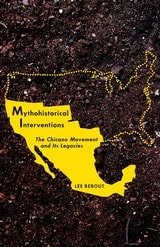
Mythohistorical Interventions
The Chicano Movement and Its LegaciesLee Bebout
University of Minnesota Press, 2010
Examining the deployment of the Aztec eagle by the United Farm Workers union, the poem Yo Soy Joaquín, the document El Plan de Santa Barbara, and icons like La Malinche and La Virgen de Guadalupe, Bebout reveals the centrality of culture to the Chicano movement. For Bebout, the active implementation of cultural narrative was strategically significant in several ways. First, it allowed disparate movement participants to imagine themselves as part of a national, and nationalist, community of resistance. Second, Chicano use of these narratives contested the images that fostered Anglo-American hegemony.
Bringing his analysis up to the present, Bebout delineates how demographic changes have, on the one hand, encouraged the possibility of a panethnic Latino community, while, on the other hand, anti-Mexican nativists attempt to resurrect Chicano myths as a foil to restrict immigration from Mexico.