Results by title
1726 books match the query 'Film' and 107 start with m
Mad to Be Saved
The Beats, the 50's, and FilmDavid Sterritt
Southern Illinois University Press, 1998
Film critic David Sterritt presents an interdisciplinary exploration of the Beat Generation, its intersections with main-stream and experimental film, and the interactions of all of these with American society and the culture of the 1950s. Sterritt balances the Beat countercultural goal of rebellion through both artistic creation and everyday behavior against the mainstream values of conformity and conservatism, growing worry over cold-war hostilities, and the "rat race" toward material success.
After an introductory overview of the Beat Generation, its history, its antecedents, and its influences, Sterritt shows the importance of "visual thinking" in the lives and works of major Beat authors, most notably Jack Kerouac, Allen Ginsberg, and William S. Burroughs. He turns to Mikhail Bakhtin's dialogic theory to portray the Beat writers-who were inspired by jazz and other liberating influences-as carnivalesque rebels against what they perceived as a rigid and stifling social order.
Showing the Beats as social critics, Sterritt looks at the work of 1950s photographers Robert Frank and William Klein; the attack against Beat culture in the pictures and prose of Life magazine; and the counterattack in Frank's film Pull My Daisy, featuring key Beat personalities. He further explores expressions of rebelliousness in film noir, the melodramas of director Douglas Sirk, and other Hollywood films.
Finally, Sterritt shows the changing attitudes toward the Beat sensibility in Beat-related Hollywood movies like A Bucket of Blood and The Beat Generation; television programs like Route 66 and The Many Loves of Dobie Gillis; nonstudio films like John Cassavetes's improvisational Shadows and Shirley Clarke's experimental The Connection; and radically avant-garde works by such doggedly independent screen artists as Stan Brakhage, Ron Rice, Bruce Connor, and Ken Jacobs, drawing connections between their achievements and the most subversive products of their Beat contemporaries.
Made to Be Seen
Perspectives on the History of Visual AnthropologyEdited by Marcus Banks and Jay Ruby
University of Chicago Press, 2011
Made to be Seen brings together leading scholars of visual anthropology to examine the historical development of this multifaceted and growing field. Expanding the definition of visual anthropology beyond more limited notions, the contributors to Made to be Seen reflect on the role of the visual in all areas of life. Different essays critically examine a range of topics: art, dress and body adornment, photography, the built environment, digital forms of visual anthropology, indigenous media, the body as a cultural phenomenon, the relationship between experimental and ethnographic film, and more.
The first attempt to present a comprehensive overview of the many aspects of an anthropological approach to the study of visual and pictorial culture, Made to be Seen will be the standard reference on the subject for years to come. Students and scholars in anthropology, sociology, visual studies, and cultural studies will greatly benefit from this pioneering look at the way the visual is inextricably threaded through most, if not all, areas of human activity.
Made-Up Asians
Yellowface During the Exclusion EraEsther Kim Lee
University of Michigan Press, 2022
Magnificent Méliès
The Authorized BiographyMadeleine Malthête-Méliès, translated by Kel Pero, edited by Matthew Solomon
University of Michigan Press, 2022
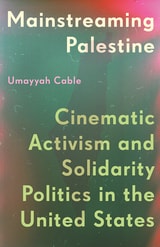
Mainstreaming Palestine
Cinematic Activism and Solidarity Politics in the United StatesUmayyah Cable
University of Minnesota Press, 2025
A history of cinema’s role in popularizing the politics of Palestinian liberation
For decades, Arab American activists and allies have used film, video, and multimedia to mobilize support for the Palestinian cause in the United States. In this detailed history of cinema’s role within the broader solidarity movement, Umayyah Cable analyzes the various strands of cinematic activism that have helped move Palestinian liberation politics from the periphery and into the mainstream.
Cable charts the shifting discourse around Palestine as it has been shaped by grassroots film production and alternative media distribution networks as well as more conventional outlets. Ranging from the circulation of educational filmstrips by the Association of Arab American University Graduates in the 1970s to the treatment of Palestinian solidarity at contemporary Hollywood awards ceremonies and film festivals, Mainstreaming Palestine tells the story of how cinema has promoted Palestinian liberation and solidarity politics. While highlighting various public controversies and struggles against censorship, Cable also acknowledges the drawbacks of the Palestinian cause being subsumed by the mainstream, discussing how activism risks becoming fashionable, undermining the radical potential of the very tools that helped bring it there.
Combining archival research, ethnographic observation and interviews, text analysis, and visual analysis of film, video, and multimedia, Mainstreaming Palestine encourages readers to critically assess the relationship between the politics of liberation and the all-consuming engine of contemporary capitalism. By underscoring the impact of visual media on the evolution of the Palestinian solidarity discourse, this book offers both a treatise on the practical power of cinema and a necessary historicization of an urgent issue in American politics.
Retail e-book files for this title are screen-reader friendly with images accompanied by short alt text and/or extended descriptions.
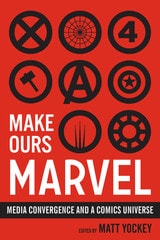
Make Ours Marvel
Media Convergence and a Comics UniverseEdited by Matt Yockey
University of Texas Press, 2017
The creation of the Fantastic Four effectively launched the Marvel Comics brand in 1961. Within ten years, the introduction (or reintroduction) of characters such as Spider-Man, the Hulk, Iron Man, Captain America, and the X-Men catapulted Marvel past its primary rival, DC Comics, for domination of the comic book market. Since the 2000s, the company’s iconic characters have leaped from page to screens with the creation of the Marvel Cinematic Universe, which includes everything from live-action film franchises of Iron Man and the Avengers to television and streaming media, including the critically acclaimed Netflix series Daredevil and Jessica Jones. Marvel, now owned by Disney, has clearly found the key to transmedia success.
Make Ours Marvel traces the rise of the Marvel brand and its transformation into a transmedia empire over the past fifty years. A dozen original essays range across topics such as how Marvel expanded the notion of an all-star team book with The Avengers, which provided a roadmap for the later films, to the company’s attempts to create lasting female characters and readerships, to its regular endeavors to reinvigorate its brand while still maintaining the stability that fans crave. Demonstrating that the secret to Marvel’s success comes from adeptly crossing media boundaries while inviting its audience to participate in creating Marvel’s narrative universe, this book shows why the company and its characters will continue to influence storytelling and transmedia empire building for the foreseeable future.
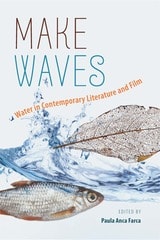
Make Waves
Water in Contemporary Literature and FilmPaula Anca Farca
University of Nevada Press, 2019
In this edited collection, contributors tackle current water issues in the era of climate change using a wide variety of recent literature and film. At its core, this collection demonstrates that water is an immense reservoir of artistic potential and an agent of historical and cultural exchange. Creating familiar and relatable contexts for water dilemmas, authors and directors of contemporary literary texts and films present compelling stories of our relationships to water, water health, ecosystems, and conservation. They also explore how global water problems affect local communities around the world and intersect with social and cultural aspects such as health, citizenship, class, gender, race, and ethnicity.
This transformative work highlights the cultural significance of water—the source of life and a powerful symbol in numerous cultures. It also raises awareness about global water debates and crises.
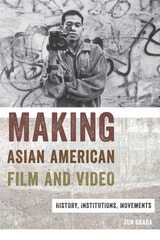
Making Asian American Film and Video
History, Institutions, MovementsOkada, Jun
Rutgers University Press, 2015
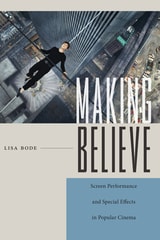
Making Believe
Screen Performance and Special Effects in Popular CinemaBode, Lisa
Rutgers University Press, 2017
Making Believe incorporates North American film reviews and editorials, actor and crew interviews, trade and fan magazine commentary, actor training manuals, and film production publicity materials to discuss the shifts in screen acting practice and philosophy around transfiguring makeup, doubles, motion capture, and acting to absent places or characters. Along the way it considers how performers and visual and special effects crew work together, and struggle with the industry, critics, and each other to define the aesthetic value of their work, in an industrial system of technological reproduction. Bode opens our eyes to the performing illusions we love and the tensions we experience in wanting to believe in spite of our knowledge that it is all make believe in the end.
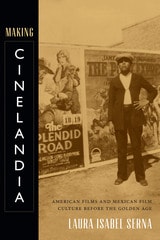
Making Cinelandia
American Films and Mexican Film Culture before the Golden AgeLaura Isabel Serna
Duke University Press, 2014
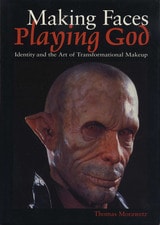
Making Faces, Playing God
Identity and the Art of Transformational MakeupBy Thomas Morawetz
University of Texas Press, 2001
Wearing a mask—putting on another face—embodies a fundamental human fantasy of inhabiting other bodies and experiencing other lives. In this extensively illustrated book, Thomas Morawetz explores how the creation of transformational makeup for theatre, movies, and television fulfills this fantasy of self-transformation and satisfies the human desire to become "the other."
Morawetz begins by discussing the cultural role of fantasies of transformation and what these fantasies reveal about questions of personal identity. He next turns to professional makeup artists and describes their background, training, careers, and especially the techniques they use to create their art. Then, with numerous before-during-and-after photos of transformational makeups from popular and little-known shows and movies, ads, and artist's demos and portfolios, he reveals the art and imagination that go into six kinds of mask-making—representing demons, depicting aliens, inventing disguises, transforming actors into different (older, heavier, disfigured) versions of themselves, and creating historical or mythological characters.
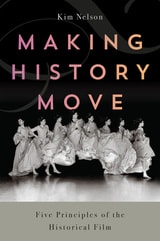
Making History Move
Five Principles of the Historical FilmKim Nelson
Rutgers University Press, 2024
Making Hollywood Happen
Seventy Years of Film FinancesCharles Drazin
University of Wisconsin Press, 2022
Enter Film Finances. The company was founded in London in 1950 to insure against the risk that a film would exceed its original budget or not be completed on time. Its pioneering development of the “completion guarantee”—the financial instrument that provides the essential security for investors to support independent filmmaking—ultimately led to the creation of many thousands of films, including some of the most celebrated ever made: Moulin Rouge (1953), Dr. No (1962), The Outsiders (1982), Pulp Fiction (1994), Slumdog Millionaire (2008), La La Land (2016), and more.
Film Finances’s role in filmmaking was little known outside the industry until 2012, when it opened its historical archive to scholars. Drawing on these previously private documents as well as interviews with its executives, Making Hollywood Happen tells the company’s story through seven decades of postwar cinema history and chronicles the growth of the international independent film industry. Focusing on a business that has operated at the meeting point between money and art for more than seventy years, this lavishly illustrated book goes to the heart of how the movie business works.
Making Sex Public and Other Cinematic Fantasies
Damon R. Young
Duke University Press, 2018
Making The Best Years of Our Lives
The Hollywood Classic That Inspired a NationBy Alison Macor
University of Texas Press, 2022
2023 Wall Award Finalist, Theatre Library Association
How a Hollywood gem transformed the national discourse on post-traumatic stress disorder.
Released in 1946, The Best Years of Our Lives became an immediate success. Life magazine called it “the first big, good movie of the post-war era” to tackle the “veterans problem.” Today we call that problem PTSD, but in the initial aftermath of World War II, the modern language of war trauma did not exist. The film earned the producer Samuel Goldwyn his only Best Picture Academy Award. It offered the injured director, William Wyler, a triumphant postwar return to Hollywood. And for Harold Russell, a double amputee who costarred with Fredric March and Dana Andrews, the film provided a surprising second act.
Award-winning author Alison Macor illuminates the film’s journey from script to screen and describes how this authentic motion picture moved audiences worldwide. General Omar Bradley believed The Best Years of Our Lives would help “the American people to build an even better democracy” following the war, and the movie inspired broad reflection on reintegrating the walking wounded. But the film’s nuanced critique of American ideals also made it a target, and the picture and its creators were swept up in the anti-Communist witch hunts of the late 1940s. In this authoritative history, Macor chronicles the making and meaning of a film that changed America.
Making a Promised Land
Harlem in Twentieth-Century Photography and FilmMassood, Paula J.
Rutgers University Press, 2013
Making a Promised Land examines the interconnected histories of African American representation, urban life, and citizenship as documented in still and moving images of Harlem over the last century. Paula J. Massood analyzes how photography and film have been used over time to make African American culture visible to itself and to a wider audience and charts the ways in which the “Mecca of the New Negro” became a battleground in the struggle to define American politics, aesthetics, and citizenship. Visual media were first used as tools for uplift and education. With Harlem’s downturn in fortunes through the 1930s, narratives of black urban criminality became common in sociological tracts, photojournalism, and film. These narratives were particularly embodied in the gangster film, which was adapted to include stories of achievement, economic success, and, later in the century, a nostalgic return to the past. Among the films discussed are Fights of Nations (1907), Dark Manhattan (1937), The Cool World (1963), Black Caesar (1974), Malcolm X (1992), and American Gangster (2007). Massood asserts that the history of photography and film in Harlem provides the keys to understanding the neighborhood’s symbolic resonance in African American and American life, especially in light of recent urban redevelopment that has redefined many of its physical and demographic contours.
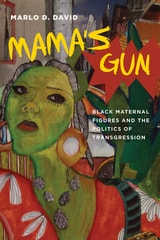
Mama's Gun
Black Maternal Figures and the Politics of TransgressionMarlo D. David
The Ohio State University Press, 2016
Taking inspiration from African American fiction, historical accounts of black life, Afrofuturism, and black popular culture in music and on screen, David turns her attention to Sapphire’s Push, Octavia Butler’s Dawn, and Suzan-Lori Parks’s Getting Mother’s Body as well as the performance art of Erykah Badu and the films of Tyler Perry. She draws out the implications of black maternal figures in these texts who balk at tradition and are far from “ideal.” David’s study shows how representations of blackness are deeply embedded in the neoliberal language of contemporary American politics and how black writers and performers resist such mainstream ideologies with their own transgressive black maternal figures.
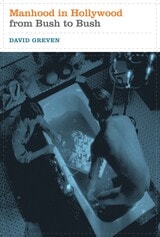
Manhood in Hollywood from Bush to Bush
By David Greven
University of Texas Press, 2009
A struggle between narcissistic and masochistic modes of manhood defined Hollywood masculinity in the period between the presidencies of George H. W. Bush and George W. Bush. David Greven's contention is that a profound shift in representation occurred during the early 1990s when Hollywood was transformed by an explosion of films that foregrounded non-normative gendered identity and sexualities. In the years that have followed, popular cinema has either emulated or evaded the representational strategies of this era, especially in terms of gender and sexuality.
One major focus of this study is that, in a great deal of the criticism in both the fields of film theory and queer theory, masochism has been positively cast as a form of male sexuality that resists the structures of normative power, while narcissism has been negatively cast as either a regressive sexuality or the bastion of white male privilege. Greven argues that narcissism is a potentially radical mode of male sexuality that can defy normative codes and categories of gender, whereas masochism, far from being radical, has emerged as the default mode of a traditional normative masculinity. This study combines approaches from a variety of disciplines—psychoanalysis, queer theory, American studies, men's studies, and film theory—as it offers fresh readings of several important films of the past twenty years, including Casualties of War, The Silence of the Lambs, Fight Club, The Passion of the Christ, Auto Focus, and Brokeback Mountain.
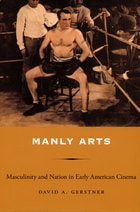
Manly Arts
Masculinity and Nation in Early American CinemaDavid A. Gerstner
Duke University Press, 2006
Gerstner provides in-depth readings of several early American films, illuminating their connections to a wide range of artistic traditions and cultural developments, including dance, poetry, cubism, realism, romanticism, and urbanization. He shows how J. Stuart Blackton and Theodore Roosevelt developed The Battle Cry of Peace (1915) to disclose cinema’s nationalist possibilities during the era of the new twentieth-century urban frontier; how Paul Strand and Charles Sheeler positioned a national avant-garde through the fusion of “American Cubism” and industrialization in their film, Manhatta (1921); and how Oscar Micheaux drew on slave narratives and other African American artistic traditions as he grappled with the ideological terms of African American and white American manhood in his movie Within Our Gates (1920). Turning to Vincente Minnelli’s Cabin in the Sky (1943), Gerstner points to the emergence of an aesthetic of cultural excess that brought together white and African American cultural producers—many of them queer—and troubled the equation of national arts with masculinity.
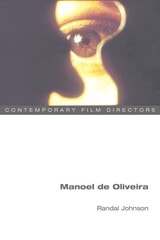
Manoel de Oliveira
John Randal Johnson
University of Illinois Press, 2006
Understanding the iconoclastic work of a lifelong cinematic pioneer
Manoel de Oliveira's eighty-five year career made him a filmmaking icon and a cultural giant in his native Portugal. A lifelong cinematic pioneer, Oliveira merged distinctive formal techniques with philosophical treatments of universal themes--frustrated love, aging, nationhood, evil, and divine grace--in films that always moved against mainstream currents.
Randal Johnson navigates Oliveira's massive feature film oeuvre. Locating the director's work within the broader context of Portuguese and European cinema, Johnson discusses historical and political influences on Oliveira's work, particularly Portugal's transformation from dictatorship to social democracy. He ranges from Oliveira's early concerns with cinematic specificity to hybrid discourses that suggest a tenuous line between film and theater on the one hand, and between fiction and documentary on the other.
A rare English-language portrait of the director, Manoel de Oliveira invites students and scholars alike to explore the work of one of the cinema's greatest and most prolific artists.

Mapping Warsaw
The Spatial Poetics of a Postwar CityEwa Wampuszyc
Northwestern University Press, 2018
Juxtaposing close readings of photo books, socialist-era newsreels called the Polska Kronika Filmowa, the comedies of Leonard Buczkowski and Jan Fethke, the writing and films of Tadeusz Konwicki, and a case study on the Palace of Culture and Science—a "gift" from none other than Stalin—this study investigates the rhetorical and visual, rather than physical, reconstruction of Warsaw in various medias and genres.
Ewa Wampuszyc roots her analysis in the historical context of the postwar decade and shows how and why Poland's capital became an essential part of a propaganda program inspired by communist ideology and the needs of a newly established socialist People's Republic. Mapping Warsaw demonstrates how physical space manifests itself in culture, and how culture, history, and politics leave an indelible mark on places. It points out ways in which we take for granted our perception of space and the meanings we assign to it.
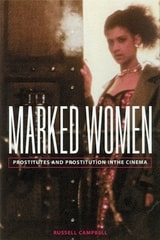
Marked Women
Prostitutes and Prostitution in the CinemaRussell Campbell
University of Wisconsin Press, 2006
Julia Roberts played a prostitute, famously, in Pretty Woman. So did Jodie Foster in Taxi Driver, Jane Fonda in Klute, Anna Karina in Vivre sa vie, Greta Garbo in Anna Christie, and Charlize Theron, who won an Academy Award for Monster. This engaging and generously illustrated study explores the depiction of female prostitute characters and prostitution in world cinema, from the silent era to the present-day industry. From the woman with control over her own destiny to the woman who cannot get away from her pimp, Russell Campbell shows the diverse representations of prostitutes in film.
Marked Women classifies fifteen recurrent character types and three common narratives, many of them with their roots in male fantasy. The “Happy Hooker,” for example, is the liberated woman whose only goal is to give as much pleasure as she receives, while the “Avenger,” a nightmare of the male imagination, represents the threat of women taking retribution for all the oppression they have suffered at the hands of men. The “Love Story,” a common narrative, represents the prostitute as both heroine and anti-heroine, while “Condemned to Death” allows men to manifest, in imagination only, their hostility toward women by killing off the troubled prostitute in an act of cathartic violence.
The figure of the woman whose body is available at a price has fascinated and intrigued filmmakers and filmgoers since the very beginning of cinema, but the manner of representation has also been highly conflicted and fiercely contested. Campbell explores the cinematic prostitute as a figure shaped by both reactionary thought and feminist challenges to the norm, demonstrating how the film industry itself is split by fascinating contradictions.
Marketing to Moviegoers
A Handbook of Strategies and Tactics, Second EditionRobert Marich
Southern Illinois University Press, 2009
While Hollywood executives spend millions of dollars making movies, even more money is poured into selling those films to the public. In the second edition of his comprehensive guidebook, Marketing to Moviegoers, veteran film and TV journalist Robert Marich plumbs the depths of the strategies and tactics used by studios to market their films to consumers. Packed with real life examples and useful data, this new edition blends practical, up-to-date information with theory to clearly explain all aspects of promoting motion pictures.
Marketing to Moviegoers: A Handbook of Strategies and Tactics takes readers carefully through all of the key components of film marketing. From creative strategy, market research, and advertising to publicity, product placement, and distribution to theaters, Marich's book covers everything film professionals need to know to mount a successful marketing campaign. Each chapter contains a wealth of useful information—including the historical background of the business, sample market research documents and advertising budgets, comments from successful industry insiders, and over thirty-five tables—and offers intriguing insight into the strategies of modern promotion.
Most other film marketing books focus mainly on marketing by independent distributors, but Marich specifically outlines the marketing methods of the six major Hollywood studios, which are notoriously secretive about these methods, while also detailing the marketing plans of the independent and foreign film sectors. In addition, he examines in depth the effectiveness of both new and old media, especially the ways in which the advent of the Internet has both helped and hindered the movie marketing process.
While many books have been written on the business-to-business aspect of film promotion, Marich's volume is one of the few that focuses on the methods used to sell motion pictures to those who truly make or break a film's success—the public.
This essential reference contains detailed examples, more than twenty illustrations, and a comprehensive glossary of marketing terms. A highly navigable handbook that breaks down a complicated process into manageable strategies in an easy-to-read style, Marketing to Moviegoers is a must for all film professionals and filmmaking students.
Marketing to Moviegoers
A Handbook of Strategies and Tactics, Third EditionRobert Marich
Southern Illinois University Press, 2013
While Hollywood executives spend millions of dollars making movies, even more money is poured into selling those films to the public. In the third edition of his comprehensive guidebook, Marketing to Moviegoers: A Handbook of Strategies and Tactics, veteran film and TV journalist Robert Marich plumbs the depths of the methods used by studios to market their films to consumers. Updates to the third edition include a chapter on marketing movies using digital media; an insightful discussion of the use of music in film trailers; new and expanded materials on marketing targeted toward affinity groups and awards; fresh analysis of booking contracts between theaters and distributors; a brief history of indie film marketing; and explorations of the overlooked potential of the drive-in theater and the revival of third-party-financed movie campaigns.
While many books have been written on the business-to-business aspect of film promotion, Marich’s volume is one of the few that focuses on the techniques used to sell motion pictures to those in a position to truly make or break a film—the public. A highly navigable handbook that breaks down a complicated process into manageable strategies in an easy-to-read style, Marketing to Moviegoers is a must for all professionals and students in today’s rapidly evolving film industry.
Martin Scorsese and the American Dream
Jim Cullen
Rutgers University Press, 2021
This book is the first study of Scorsese’s profound ambivalence toward the American Dream, the ways it drives some men and women to aspire to greatness, but leaves others seduced and abandoned. Showing that Scorsese understands the American dream in terms of a tension between provincialism and cosmopolitanism, Jim Cullen offers a new lens through which to view such seemingly atypical Scorsese films as The Age of Innocence, Hugo, and Kundun. Fast-paced, instructive, and resonant, Martin Scorsese and the American Dream illuminates an important dimension of our national life and how a great artist has brought it into focus.
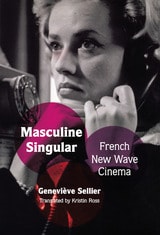
Masculine Singular
French New Wave CinemaGeneviève Sellier
Duke University Press, 2008
Sellier draws on sociological surveys, box office data, and popular magazines of the period, as well as analyses of specific New Wave films. She examines the development of the New Wave movement, its sociocultural and economic context, and the popular and critical reception of such well-known films as Jules et Jim and Hiroshima mon amour. In light of the filmmakers’ focus on gender relations, Sellier reflects on the careers of New Wave’s iconic female stars, including Jeanne Moreau and Brigitte Bardot. Sellier’s thorough exploration of early New Wave cinema culminates in her contention that its principal legacy—the triumph of a certain kind of cinephilic discourse and of an “auteur theory” recognizing the director as artist—came at a steep price: creativity was reduced to a formalist game, and affirmation of New Wave cinema’s modernity was accompanied by an association of creativity with masculinity.

Material Media-Making in the Digital Age
Daniel Binns
Intellect Books, 2024
Today’s world offers no shortage of media for us to consume, and the ever-expanding array of available media has changed the way scholars think about its production and reception. Missing from these conversations about new media, however, is the maker—the one with the power to produce media from their own pocket.
In Material Media-Making in the Digital Age, Daniel Binns looks at the current media landscape in order to understand his own media practice. The result is a personal journey through media theory, history, and technology, furnished with practical lessons on the digital form for teachers, students, professionals, and enthusiasts. A refreshing combination of theory and practice written in a personal, engaging style, this book will enable readers to understand how a personal creative practice might unlock deeper thinking about media and its place in the world.
Materializing New Media
Embodiment in Information AestheticsAnna Munster
Dartmouth College Press, 2006
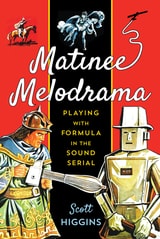
Matinee Melodrama
Playing with Formula in the Sound SerialHiggins, Scott
Rutgers University Press, 2016
Matinee Melodrama is the first book about the adventure serial as a distinct artform, one that uniquely encouraged audience participation and imaginative play. Media scholar Scott Higgins proposes that the serial’s incoherent plotting and reliance on formula, far from being faults, should be understood as some of its most appealing attributes, helping to spawn an active fan culture. Further, he suggests these serials laid the groundwork not only for modern-day cinematic blockbusters like Star Wars and Raiders of the Lost Ark, but also for all kinds of interactive media that combine spectacle, storytelling, and play.
As it identifies key elements of the serial form—from stock characters to cliffhangers—Matinee Melodrama delves deeply into questions about the nature of suspense, the aesthetics of action, and the potentials of formulaic narrative. Yet it also provides readers with a loving look at everything from Zorro’s Fighting Legion to Daredevils of the Red Circle, conveying exactly why these films continue to thrill and enthrall their fans.
Matt Saunders
Parallel PlotMatt Saunders
University of Chicago Press, 2013
Maurice Tourneur
Weaver of DreamsChristine Leteux, Foreword by Robert Byrne
University of Wisconsin Press, 2026
In 1914, an unknown French filmmaker arrived in New York; within four years, Maurice Tourneur (1876–1961) would become one of America’s most acclaimed directors. In this masterful biography, Christine Leteux shows how intimately connected Tourneur’s life was to major events of the twentieth century as well as to the profound transformations in movie making. A master of directing silent films, he quickly managed the transition to sound. His last major work was created for Continental Films, the German-owned firm that controlled the French film industry during the Nazi Occupation. His son, Jacques, followed in his footsteps, also becoming an acclaimed director.
Drawing heavily on previously unpublished archival documents, Leteux reinvigorates film history and demonstrates that we know far less about this era of filmmaking than we often assume. She reveals not only how Tourneur jumped from France to the United States and back again but also how he shifted from one company to another, moving quickly up the ladder to bigger productions and ever larger studios. Tourneur’s drive, insight, technical proficiency, skill with actors, ability to create new forms of storytelling, and fame on both sides of the Atlantic make it all the more surprising that he is not better known today—an oversight that has now been corrected thanks to Leteux’s impressively detailed research and nuanced storytelling.
Max Ophuls in the Hollywood Studios
Bacher, Lutz
Rutgers University Press, 1996
Max Ophuls, who is considered one of the greatest film directors of all time, has long been seen as an “auteur”––the artist in complete control of his work. Lutz Bacher’s examination of his American career gives us a unique perspective on the workings of the Hollywood system and the struggle of a visionary to function within it. He thus establishes clear connections between the production contexts of Ophuls' American films and their idiosyncratic style.
Drawing on documents in many archives and on interviews with more than sixty of Ophuls' contemporaries, Bacher traces the European director's struggle to find a niche in the U.S. film industry. He describes how Ophuls ran the gamut from ghost writing to substitute directing, to a debilitating association with Preston Sturges and Howard Hughes, to making four films––Letter from an Unknown Woman and Caught among them––in thirty months, and then returning to Europe with a runaway production that was to have starred Greta Garbo. Throughout, Bacher demonstrates that Ophuls' bending of conventional Hollywood methods to his own will through compromise and subversion allowed him to achieve a style that was both uniquely American and a point of departure for his later work. A rare synthesis of production history, stylistic analysis, and biography, this book is essential reading for serious film scholars and fans of the director’s work.
Maximum Movies—Pulp Fictions
Film Culture and the Worlds of Samuel Fuller, Mickey Spillane, and Jim ThompsonStanfield, Peter
Rutgers University Press, 2011
Mean Girl Feminism
How White Feminists Gaslight, Gatekeep, and GirlbossKim Hong Nguyen
University of Illinois Press, 2024
Mean girl feminism encourages girls and women to be sassy, sarcastic, and ironic as feminist performance. Yet it coopts its affect, form, and content from racial oppression and protest while aiming meanness toward people in marginalized groups.
Kim Hong Nguyen’s feminist media study examines four types of white mean girl feminism prominent in North American popular culture: the bitch, the mean girl, the power couple, and the global mother. White feminists mime the anger, disempowerment, and resistance felt by people of color and other marginalized groups. Their performance allows them to pursue and claim a special place within established power structures, present as intellectually superior, substitute nonpolitical playacting for a politics of solidarity and community, and position themselves as better, more enlightened masters than patriarchy. But, as Nguyen shows, the racialized meanness found across pop culture opens possibilities for building an intersectional feminist politics that rejects performative civility in favor of turning anger into liberation.
Meaninglessness
Time, Rhythm, and the Undead in Postcolonial CinemaVlad Dima
Michigan State University Press, 2023

Mechademia 3
Limits of the HumanFrenchy Lunning
University of Minnesota Press, 2008
Limits of the Human—the third volume in the Mechademia series—maps the terrain of posthumanity using manga and anime as guides and signposts to understand how to think about humanity’s new potentialities and limits. Through a wide range of texts—the folklore-inspired monsters that populate Mizuki Shigeru’s manga; Japan’s Gothic Lolita subculture; Tezuka Osamu’s original cyborg hero, Atom, and his manga version of Fritz Lang’s Metropolis (along with Ôtomo Katsuhiro’s 2001 anime film adaptation); the robot anime, Gundam; and the notion of the uncanny in Ghost in the Shell 2: Innocence, among others—the essays in this volume reject simple human/nonhuman dichotomies and instead encourage a provocative rethinking of the definitions of humanity along entirely unexpected frontiers.
Contributors: William L. Benzon, Lawrence Bird, Christopher Bolton, Steven T. Brown, Joshua Paul Dale, Michael Dylan Foster, Crispin Freeman, Marc Hairston, Paul Jackson, Thomas LaMarre, Antonia Levi, Margherita Long, Laura Miller, Hajime Nakatani, Susan Napier, Natsume Fusanosuke, Sharalyn Orbaugh, Ôtsuka Eiji, Adèle-Elise Prévost and MUSEbasement; Teri Silvio, Takayuki Tatsumi, Mark C. Taylor, Theresa Winge, Cary Wolfe, Wendy Siuyi Wong, and Yomota Inuhiko.

Mechademia 5
FanthropologiesFrenchy Lunning
University of Minnesota Press, 2010
Media Crossroads
Intersections of Space and Identity in Screen CulturesPaula J. Massood, Angel Daniel Matos, and Pamela Robertson Wojcik, editors
Duke University Press, 2021
Contributors. Amy Corbin, Desirée J. Garcia, Joshua Glick, Noelle Griffis, Malini Guha, Ina Rae Hark, Peter C. Kunze, Paula J. Massood, Angel Daniel Matos, Nicole Erin Morse, Elizabeth Patton, Matthew Thomas Payne, Merrill Schleier, Jacqueline Sheean, Sarah Louise Smyth, Erica Stein, Kirsten Moana Thompson, John Vanderhoef, Pamela Robertson Wojcik
Media Heterotopias
Digital Effects and Material Labor in Global Film ProductionJean Hye Chung
Duke University Press, 2018
Media Laboratories
Late Modernist Authorship in South AmericaSarah Ann Wells
Northwestern University Press, 2017
Media Laboratories explores a pivotal time for South American literature of the 1930s and ’40s. Cinema, radio, and the typewriter, once seen as promising catalysts for new kinds of writing, began to be challenged by authors, workers, and the public. What happens when media no longer seem novel and potentially democratic but rather consolidated and dominant? Moving among authors from Brazil, Argentina, and Uruguay, and among the genres of fiction, the essay, popular journalism, and experimental little magazines, Sarah Ann Wells shows how writers on the periphery of global modernity were fashioning alternative approaches to these media. Analyzing authors such as Clarice Lispector, Jorge Luis Borges, and Felisberto Hernández, along with their lesser-known contemporaries, Media Laboratories casts a wide net: from spectators of Hollywood and Soviet montage films, to inventors of imaginary media, to proletarian typists who embodied the machine-human encounters of the period. The text navigates contemporary scholarly and popular debates about the relationship of literature to technological innovation, media archaeology, sound studies, populism, and global modernisms. Ultimately, Wells underscores a question that remains relevant: what possibilities emerge when the enthusiasm for new media has been replaced by anxiety over their potentially pernicious effects in a globalizing, yet vastly unequal, world?
Media Theory in Japan
Marc Steinberg and Alexander Zahlten, editors
Duke University Press, 2017
Media and the Affective Life of Slavery
Allison Page
University of Minnesota Press, 2022
How media shapes our actions and feelings about race
Amid fervent conversations about antiracism and police violence, Media and the Affective Life of Slavery delivers vital new ideas about how our feelings about race are governed and normalized by our media landscape. Allison Page examines U.S. media from the 1960s to today, analyzing how media culture instructs viewers to act and feel in accordance with new racial norms created for an era supposedly defined by an end to legal racism.
From the classic television miniseries Roots to the edutainment video game Mission 2: Flight to Freedom and the popular website slaveryfootprint.org, Media and the Affective Life of Slavery provides an in-depth look at the capitalist and cultural artifacts that teach the U.S. public about slavery. Page theorizes media not only as a system of representation but also as a technology of citizenship and subjectivity, wherein race is seen as a problem to be solved. Ultimately, she argues that visual culture works through emotion, a powerful lever for shaping and managing racialized subjectivity.
Media and the Affective Life of Slavery delivers compelling, provocative material and includes a wealth of archival research into such realms as news, entertainment, television, curricula, video games, and digital apps, providing new and innovative scholarship where none currently exists.
Mel Gibson's Bible
Religion, Popular Culture, and "The Passion of the Christ"Edited by Timothy K. Beal and Tod Linafelt
University of Chicago Press, 2005
In this volume, biblical scholars Timothy K. Beal and Tod Linafelt—along with an esteemed group of contributors—offer a provocative range of views on The Passion of the Christ. Their book is organized in three parts. The first analyzes the film in terms of its religious foundations, including the Gospels and nonbiblical religious texts: What are the film's literary sources and how does it use them? In what ways does the medium of film require a radically different way of representing gospel narrative? The second group of essays focuses on the ethical and theological implications of the film's presentation of the Christian gospel: What do we make of its representations of female sexuality? What are the implications of focusing on the Passion in terms of atonement rather than social justice? Finally, the third section explores the film as a pop cultural phenomenon: How has the film worked to create a sense of insider status for some and alienated so many others? What can we learn about the religious dimensions of contemporary mass culture from the film's reception?
Whether one is inspired or appalled by The Passion of the Christ, there can be no question that it is a defining moment in the cultural afterlife of the Bible. This volume tries to make sense of that moment and will prove to be a touchstone for adherents and detractors of the film alike.
Melancholy Drift
Marking Time in Chinese CinemaJean Ma
Hong Kong University Press, 2010
Melodrama
An Aesthetics of ImpossibilityJonathan Goldberg
Duke University Press, 2016
Memoirs from the Beijing Film Academy
The Genesis of China's Fifth GenerationZhen Ni
Duke University Press, 2002
Memories Of Underdevelopment
Chanan, Michael
Rutgers University Press, 1990
This double volume includes the complete continuity script of Memories, as well as the complete novel, Inconsolable Memories, upon which the film is based. An interview with Alea is reproduced here, as well as documentation of the political controversy that surrounded the film in this country. Michael Chanan's introduction places the film in the context of Cuban political and cultural history. The volume also includes a biographical sketch of Alea, a chronology of the Cuban Revolution, reviews, commentary, a filmography, and a bibliography.Michael Chanan lives in England, where he teaches and writes on film. He is the author of The Cuban Image: Cinema and Cultural Politics in Cuba.
Men, War and Film
The Calling Blighty Films of World War IISteve Hawley
Intellect Books, 2025
The Calling Blighty series of films produced by the Combined Kinematograph Service around the end of World War II were one-reel films in which soldiers of the “Forgotten Army” gave short spoken messages to the camera as a means of connecting the front line and the home front. Shown in local cinemas, these were the first films in which men spoke openly in their regional accents, and they hold profound meaning for remembrance, documentary representation, and the ecology of film in wartime. Of the four hundred films made on the Far Eastern Front, only sixty-four survive. Until now, however, these films have barely been researched, despite being a valuable source of social history. This book expands the history of Calling Blighty, placing it in a broader context for contemporary audiences.
Mervyn LeRoy Comes to Town
Murray Pomerance
Rutgers University Press, 2025
Metafilm
Materialist Rhetoric and Reflexive CinemaChristopher Carter
The Ohio State University Press, 2018
Ultimately, Metafilm reframes materialism as a multimodal composing-in-action, or reflexive materialism, focusing on movies that dramatize their entanglement in economic and historical trauma while provoking forms of resistance during and after viewing. Carter contends that even as we recognize the division of social power in the films, we must also recognize how the concept is subversive and eludes control. In looking at the interplay between the films’ content and their production, circulation, and reception, Carter explores how the films persuade us to identify with onscreen worlds before probing our expectations—validating some, rejecting others, and sometimes proposing new ways of watching altogether.