Results by title
208 books match the query 'Finance' and 9 start with m
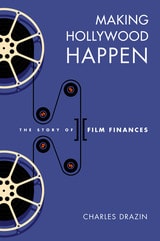
Making Hollywood Happen
Seventy Years of Film FinancesCharles Drazin
University of Wisconsin Press, 2022
Enter Film Finances. The company was founded in London in 1950 to insure against the risk that a film would exceed its original budget or not be completed on time. Its pioneering development of the “completion guarantee”—the financial instrument that provides the essential security for investors to support independent filmmaking—ultimately led to the creation of many thousands of films, including some of the most celebrated ever made: Moulin Rouge (1953), Dr. No (1962), The Outsiders (1982), Pulp Fiction (1994), Slumdog Millionaire (2008), La La Land (2016), and more.
Film Finances’s role in filmmaking was little known outside the industry until 2012, when it opened its historical archive to scholars. Drawing on these previously private documents as well as interviews with its executives, Making Hollywood Happen tells the company’s story through seven decades of postwar cinema history and chronicles the growth of the international independent film industry. Focusing on a business that has operated at the meeting point between money and art for more than seventy years, this lavishly illustrated book goes to the heart of how the movie business works.
Making Sense of Social Security Reform
Daniel Shaviro
University of Chicago Press, 2000
But what is the average person to make of all this? How many Americans know where the money for Social Security benefits really comes from, or who wins and loses from the system's overall operations? Few people understand the current Social Security system in even its broadest outlines. And yet Social Security reform is ranked among the most important social issues of our time.
With Making Sense of Social Security Reform, Daniel Shaviro makes an important contribution to the public understanding of the issues involved in reforming Social Security. His book clearly and straightforwardly describes the current system and the pressures that have been brought to bear upon it, before dissecting and evaluating the various reform proposals. Accessible to anyone who has an interest in the issue, Shaviro's new work is unique in offering a balanced, nonpartisan account.
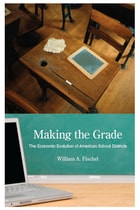
Making the Grade
The Economic Evolution of American School DistrictsWilliam A. Fischel
University of Chicago Press, 2009
A significant factor for many people deciding where to live is the quality of the local school district, with superior schools creating a price premium for housing. The result is a “race to the top,” as all school districts attempt to improve their performance in order to attract homebuyers. Given the importance of school districts to the daily lives of children and families, it is surprising that their evolution has not received much attention.
In this provocative book, William Fischel argues that the historical development of school districts reflects Americans’ desire to make their communities attractive to outsiders. The result has been a standardized, interchangeable system of education not overly demanding for either students or teachers, one that involved parents and local voters in its governance and finance. Innovative in its focus on bottom-up processes generated by individual behaviors rather than top-down decisions by bureaucrats, Making the Grade provides a new perspective on education reform that emphasizes how public schools form the basis for the localized social capital in American towns and cities.
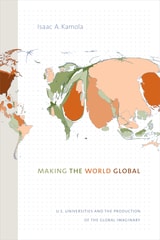
Making the World Global
U.S. Universities and the Production of the Global ImaginaryIsaac A. Kamola
Duke University Press, 2019
Measuring and Managing Federal Financial Risk
Edited by Deborah Lucas
University of Chicago Press, 2010
This book contains new research, both empirical and methodological, on the measurement and management of these costs and risks. The analyses encompass a broad spectrum of federal programs, including housing, catastrophe insurance, student loans, social security, and environmental liabilities. Collectively, the contributions gathered in Measuring and Managing Federal Financial Risk demonstrate that the logic of financial economics can be a useful tool for studying a range of federal activities.
Mission and Margin
A Practical Guide to University FinancesDaniel Diermeier and Brett C. Sweet
University of Chicago Press, 2025
An insider’s guide to university finances, for non-insiders.
The finances of higher education have never been more challenging. From two-year institutions to the Ivy Leagues, from department chairs to provosts, administrators face revenue shortfalls and financial insecurity. A fundamental understanding of financial management is more essential than ever for university leaders at every level—as is a true partnership between academic leaders and their CFOs.
In Margin and Mission, Daniel Diermeier and Brett Sweet distill the principles for successful financial management in higher education, based on their work together at Vanderbilt University. Their concise, practical guide develops the reader’s understanding step-by-logical-step with the help of real-world examples. Margin and Mission aims to give university leaders, from board members to department chairs, the knowledge to make sound economic decisions that preserve their institutions’ purpose—even in the face of uncertainty.
Money For Change
Social Movement Philanthropy at the Haymarket People's FundSusan A. Ostrander
Temple University Press, 1997
Within this fascinating behind-the-scenes account, Ostrander argues that the "social relations of philanthropy" are more important and more varied than previously understood. Written at a time when Haymarket was dealing with crisis, this book tells a story of organizational change as the Fund moved from an informal collective to a more formal structure; it is also the story of a struggle to build a multi-race, multi-class, gender-equal organization. Ostrander details these ongoing struggles and addresses the larger issue of how fundraising can itself be a kind of social movement organizing among the progressive people with wealth who continue to be Haymarket's main donors.
Money, Mandates, and Local Control in American Public Education
Bryan Shelly
University of Michigan Press, 2013
Pointing to the disparities between wealthy and impoverished school districts in areas where revenue depends primarily upon local taxes, reformers repeatedly call for the centralization of school funding. Their proposals meet resistance from citizens, elected officials, and school administrators who fear the loss of local autonomy.
Bryan Shelly finds, however, that local autonomy has already been compromised by federal and state governments, which exercise a tremendous amount of control over public education despite their small contribution to a school system's funding. This disproportionate relationship between funding and control allows state and federal officials to pass education policy yet excuses them from supplying adequate funding for new programs. The resulting unfunded and underfunded mandates and regulations, Shelly insists, are the true cause of the loss of community control over public education.
Shelly outlines the effects of the most infamous of underfunded federal mandates, the No Child Left Behind Act of 2001 (NCLB), and explores why schools implemented it despite its unpopularity and out-of-pocket costs. Shelly's findings hold significant implications for school finance reform, NCLB, and the future of intergovernmental relations.
Municipal Finance Journal, volume 45 number 2-3 (Summer 2024)
The University of Chicago Press
University of Chicago Press Journals, 2024