Results by title
70 books match the query 'Folk music' and 9 start with m

Mario Barradas and Son Jarocho
The Journey of a Mexican Regional MusicYolanda Broyles-González, Rafael Figueroa Hernández, and Francisco González
University of Texas Press, 2022
Son Jarocho was born as the regional sound of Veracruz but over time became a Mexican national genre, even transnational, genre—a touchstone of Chicano identity in the United States. Mario Barradas and Son Jarocho traces a musical journey from the Gulf Coast to interior Mexico and across the border, describing the transformations of Son Jarocho along the way.
This comprehensive cultural study pairs ethnographic and musicological insights with an oral history of the late Mario Barradas, one of Son Jarocho’s preeminent modern musicians. Chicano musician Francisco González offers an insider’s account of Barradas’s influence and Son Jarocho’s musical qualities, while Rafael Figueroa Hernández delves into Barradas’s recordings and films. Yolanda Broyles-González examines the interplay between Son Jarocho’s indigenous roots and contemporary role in Mexican and US society. The result is a nuanced portrait of a vital and evolving musical tradition.
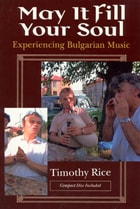
May It Fill Your Soul
Experiencing Bulgarian MusicTimothy Rice
University of Chicago Press, 1994
In the context of this history, Rice brings Bulgarian folk music to life by focusing on the biography of the Varimezov family, including the musician Kostadin and his wife Todora, a singer. Combining interviews with his own experiences of learning how to play, sing and dance Bulgarian folk music, Rice presents one of the most detailed accounts of traditional, aural learning processes in the ethnomusicological literature.
Using a combination of traditionally dichotomous musicological and ethnographic approaches, Rice tells the story of how individual musicians learned their tradition, how they lived it during the pre-Communist era of family farming, how the tradition changed with industrialization brought under Communism, and finally, how it flourished and evolved in the recent, unstable political climate.
This work—complete with a compact disc and numerous illustrations and musical examples—contributes not only to ethnomusicological theory and method, but also to our understanding of Slavic folklore, Eastern European anthropology, and cultural processes in Socialist states.
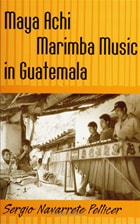
Maya Achi Marimba Music In Guatemala
Sergio Navarrete Pellicer
Temple University Press, 2005
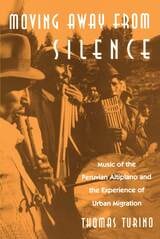
Moving Away from Silence
Music of the Peruvian Altiplano and the Experience of Urban MigrationThomas Turino
University of Chicago Press, 1993
Turino's ethnography is the first large-scale study to concentrate on the pervasive effects of migration on Andean people and their music. Turino uses the musical traditions of Conima, Peru as a unifying thread, tracing them through the varying lives of Conimeos in different locales. He reveals how music both sustains and creates meaning for a people struggling amid the dramatic social upheavals of contemporary Peru.
Moving Away from Silence contains detailed interpretations based on comparative field research of Conimeo musical performance, rehearsals, composition, and festivals in the highlands and Lima. The volume will be of great importance to students of Latin American music and culture as well as ethnomusicological and ethnographic theory and method.
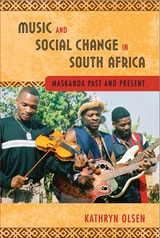
Music and Social Change in South Africa
Maskanda Past and PresentKathryn Olsen
Temple University Press, 2014
Working closely with translated song lyrics and musical notation-and applying musical and socio-political analysis to this music and its cultural context-Olsen argues that maskanda offers insight into how the post-apartheid ideal of social transformation is experienced by those who were marginalized for most of the twentieth century.
Drawing on a decade of research, Olsen strives to demystify the Zulu part of contemporary experience in South Africa and to reveal some of the complexities of the social, economic, and political landscape of contemporary South Africa.
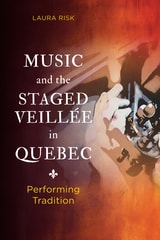
Music and the Staged Veillée in Quebec
Performing TraditionLaura Risk
University of Illinois Press, 2026
Fiddlers, step dancers, storytellers, traditional singers, and folklorists staged Montreal’s first veillée in 1919. All that was missing, announced one of the organizers, was a magic carpet to transport the audience into the countryside and a kiss of forgetfulness to erase the woes of modern life.
Laura Risk tells the story of the veillées and explores how these commercial performances of idealized rural life became part of Quebec’s cultural heritage. Her in-depth examinations of key performances and recordings follow traditional music and dance from the stage onto radio, records and other audio media, and television. Throughout, Risk documents how veillées redefined folklore in twentieth-century Quebec and illuminates how their distinctive framing of traditional musicians and repertoire impacts the performance and reception of the music to the present day.
Astute and evocative, Music and the Staged Veillée in Quebec reveals the music, dancing, call-and-response songs, and extramusical associations winding through century-long conversations about nation, culture, and identity in Quebec.

Music, Culture, and Experience
Selected Papers of John BlackingJohn Blacking
University of Chicago Press, 1995
This volume brings together in one convenient source eight of Blacking's most important theoretical papers along with an extensive introduction by the editor. Drawing heavily on his fieldwork among the Venda people of South Africa, these essays reveal his most important theoretical themes such as the innateness of musical ability, the properties of music as a symbolic or quasi-linguistic system, the complex relation between music and social institutions, and the relation between scientific musical analysis and cultural understanding.
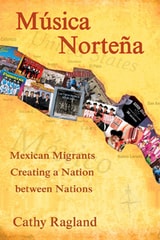
Musica Nortena
Mexican Americans Creating a Nation Between NationsCathy Ragland
Temple University Press, 2009
Música norteña, a musical genre with its roots in the folk ballad traditions of northern Mexico and the Texas-Mexican border region, has become a hugely popular musical style in the U.S., particularly among Mexican immigrants. Featuring evocative songs about undocumented border-crossers, drug traffickers, and the plight of immigrant workers, música norteña has become the music of a "nation between nations." Música Norteña is the first definitive history of this transnational music that has found enormous commercial success in norteamérica.
Cathy Ragland, an ethnomusicologist and former music critic, serves up the fascinating fifty-year story of música norteña, enlivened by interviews with important musicians and her own first-hand observations of live musical performances. Beyond calling our attention to musical influences, ragland shows readers the social and economic forces at work behind the music. By comparing música norteña with other popular musical forms, including conjunto tejano, she helps us understand and appreciate the musical ties that bind the Mexican diaspora.

My Curious and Jocular Heroes
Tales and Tale-Spinners from AppalachiaLoyal Jones
University of Illinois Press, 2017
We stopped, and we heard the biggest racket you ever heard up in the house.
“What’s the matter, son?”
“Why, Maw and Paw are up there fightin’.”
“Who is your Paw, son?”
“Well, that’s what they are fightin’ over.”
Brimming with ballads, stories, riddles, tall tales, and great good humor, My Curious and Jocular Heroes pays homage to four people who guided and inspired Loyal Jones’s own study of Appalachian culture. His sharp-eyed portraits introduce a new generation to Bascom Lunsford, the pioneer behind the “memory collections” of song and story at Columbia University and the Library of Congress; the Sorbonne-educated collector and performer Josiah H. Combs; Cratis D. Williams, the legendary father of Appalachian studies; and the folklorist and master storyteller Leonard W. Roberts. Throughout, Jones highlights the tales, songs, jokes, and other collected nuggets that define the breadth of each man’s research and repertoire.