Results by title
153 books match the query 'Genres' and 10 start with m
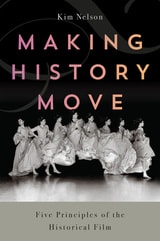
Making History Move
Five Principles of the Historical FilmKim Nelson
Rutgers University Press, 2024

Mechademia 3
Limits of the HumanFrenchy Lunning
University of Minnesota Press, 2008
Limits of the Human—the third volume in the Mechademia series—maps the terrain of posthumanity using manga and anime as guides and signposts to understand how to think about humanity’s new potentialities and limits. Through a wide range of texts—the folklore-inspired monsters that populate Mizuki Shigeru’s manga; Japan’s Gothic Lolita subculture; Tezuka Osamu’s original cyborg hero, Atom, and his manga version of Fritz Lang’s Metropolis (along with Ôtomo Katsuhiro’s 2001 anime film adaptation); the robot anime, Gundam; and the notion of the uncanny in Ghost in the Shell 2: Innocence, among others—the essays in this volume reject simple human/nonhuman dichotomies and instead encourage a provocative rethinking of the definitions of humanity along entirely unexpected frontiers.
Contributors: William L. Benzon, Lawrence Bird, Christopher Bolton, Steven T. Brown, Joshua Paul Dale, Michael Dylan Foster, Crispin Freeman, Marc Hairston, Paul Jackson, Thomas LaMarre, Antonia Levi, Margherita Long, Laura Miller, Hajime Nakatani, Susan Napier, Natsume Fusanosuke, Sharalyn Orbaugh, Ôtsuka Eiji, Adèle-Elise Prévost and MUSEbasement; Teri Silvio, Takayuki Tatsumi, Mark C. Taylor, Theresa Winge, Cary Wolfe, Wendy Siuyi Wong, and Yomota Inuhiko.

Mechademia 5
FanthropologiesFrenchy Lunning
University of Minnesota Press, 2010

Men, War and Film
The Calling Blighty Films of World War IISteve Hawley
Intellect Books, 2025
The Calling Blighty series of films produced by the Combined Kinematograph Service around the end of World War II were one-reel films in which soldiers of the “Forgotten Army” gave short spoken messages to the camera as a means of connecting the front line and the home front. Shown in local cinemas, these were the first films in which men spoke openly in their regional accents, and they hold profound meaning for remembrance, documentary representation, and the ecology of film in wartime. Of the four hundred films made on the Far Eastern Front, only sixty-four survive. Until now, however, these films have barely been researched, despite being a valuable source of social history. This book expands the history of Calling Blighty, placing it in a broader context for contemporary audiences.

Middle English Prose
A Critical Guide to Major Authors and GenresEDWARDS, ANTHONY
Rutgers University Press, 1984

Mission Unaccomplished
American War Films in the Twenty-First CenturyAlan Nadel
University of Texas Press, 2025
An analysis of how post-9/11 war movies changed from following soldiers on specific missions to chronicling war as a day-to-day occupation.
In 2003, the United States began a war in Iraq without a mission. Instead of fighting to restore peace—the traditional objective of warfare—servicemembers faced the grim reality that there was no goal. Lacking even certainty as to who was the enemy, soldiers discovered that their task was simply to survive.
Mission Unaccomplished explores how Hollywood grasped the experience of Iraq from the perspective of US soldiers, reinventing the war film in the process. Historically, films such as Saving Private Ryan valorized the goals of war by chronicling missions that unambiguously contribute to the defeat of the enemy and the restoration of peace. But in The Hurt Locker, American Sniper, Green Zone, and other recent dramas, soldiers just try to outlast the chaos. Dramatizing the aimlessness of the war, events occur in random order, and soldiers have no sense of how their actions contribute to victory or peace. Looking to recent WWII movies such as Dunkirk and Hacksaw Ridge, which use this same cinematic vocabulary to position soldiering as merely a deadly job to be endured, Alan Nadel argues that the disillusionment of Iraq has influenced cinema broadly, inspiring a newly critical war film genre.
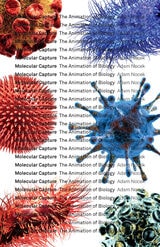
Molecular Capture
The Animation of BiologyAdam Nocek
University of Minnesota Press, 2021
How computer animation technologies became vital visualization tools in the life sciences
Who would have thought that computer animation technologies developed in the second half of the twentieth century would become essential visualization tools in today’s biosciences? This book is the first to examine this phenomenon. Molecular Capture reveals how popular media consumption and biological knowledge production have converged in molecular animations—computer simulations of molecular and cellular processes that immerse viewers in the temporal unfolding of molecular worlds—to produce new regimes of seeing and knowing.
Situating the development of this technology within an evolving field of historical, epistemological, and political negotiations, Adam Nocek argues that molecular animations not only represent a key transformation in the visual knowledge practices of life scientists but also bring into sharp focus fundamental mutations in power within neoliberal capitalism. In particular, he reveals how the convergence of the visual economies of science and entertainment in molecular animations extends neoliberal modes of governance to the perceptual practices of scientific subjects. Drawing on Alfred North Whitehead’s speculative metaphysics and Michel Foucault’s genealogy of governmentality, Nocek builds a media philosophy well equipped to examine the unique coordination of media cultures in this undertheorized form of scientific media. More specifically, he demonstrates how governmentality operates across visual practices in the biosciences and the popular mediasphere to shape a molecular animation apparatus that unites scientific knowledge and entertainment culture.
Ultimately, Molecular Capture proposes that molecular animation is an achievement of governmental design. It weaves together speculative media philosophy, science and technology studies, and design theory to investigate how scientific knowledge practices are designed through media apparatuses.
Monster Cinema
Grant, Barry Keith
Rutgers University Press, 2018
Armed with an encyclopedic knowledge of film history, Grant presents us with an eclectic array of monster movies, from Nosferatu to Get Out. As he discovers, although monster movies might claim to be about Them!, they are really about the capacity for horror that lurks within each of us.
Monster Theory Returns
Jeffrey Jerome Cohen
University of Minnesota Press, 2027
Exploring monsters as critical guides to understanding what it means to be human in a perilous world
Thirty years after the publication of Jeffrey Jerome Cohen’s groundbreaking Monster Theory, the field it helped create has grown into a dynamic and influential area of interdisciplinary scholarship. Monster Theory Returns gathers twenty-six original essays exploring an extraordinary range of monstrous figures, from demons and vampires to microbes and emerging posthuman forms, illuminating urgent questions of belonging, political violence, environmental change, and the boundaries of the human itself.
Combining historical depth with a global perspective, these lively essays show that monsters are far more than figures of fear. They are powerful cultural tools for thinking through crises in a perilous and rapidly changing world.
Contributors: U. Melissa Anyiwo, U of Scranton; Benjamin Ash, Arizona State U; Stephen T. Asma, Columbia College, Chicago; Michael M. Chemers, U of California, Santa Cruz; Eli Cumings, Columbia U; Rebecca Duncan, Linnaeus U; Michael Dylan Foster, U of California, Davis; Renée Fox, U of California, Santa Cruz; Kaja Franck, U of Hertfordshire; Rosemarie Garland-Thomson, Emory U; Brandon R. Grafius, Ecumenical Theological Seminary; Anya Heise-von der Lippe, U of Tübingen; Mary Kate Hurley, Ohio U; Anson Koch-Rein, U of North Carolina; Agnieszka Kotwasińska, U of Warsaw; Riva Lehrer; Sherry C.M. Lindquist, Western Illinois U; Iyad Malouf, Tel Aviv U; Asa Simon Mittman, California State U, Chico; Kirsten Møllegaard, U of Hawai‘i at Hilo; Alan S. Montroso, U of Maryland; David Robinson; Margrit Shildrick, Stockholm U; Jeffrey Andrew Weinstock, Central Michigan U; Emily Zarka, Arizona State U
Retail e-book files for this title are screen-reader friendly with images accompanied by short alt text and/or extended descriptions.
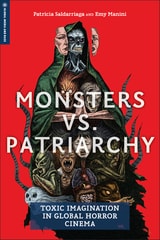
Monsters vs. Patriarchy
Toxic Imagination in Global Horror CinemaPatricia Saldarriaga
Rutgers University Press, 2025
Monsters vs. Patriarchy examines female monstrosity as it appears in horror films from around the world and considers specific political, scientific, and historical contexts to better understand how we construct and reconstruct monstrosity, using an intersectional approach to examine the imposition of gender and racial hierarchies that support national power structures. The authors contend that monstrous female cinematic subjects, including ghosts, witches, cannibals, and posthuman beings, are becoming empowered, using the tools of their monstrification to smash the colonial, white supremacist, and misogynist structures that created them.