Results by title
54 books match the query 'Great Plains' and 2 start with m
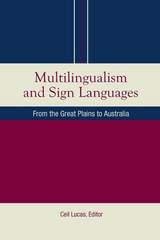
Multilingualism and Sign Languages
From the Great Plains to AustraliaCeil Lucas
Gallaudet University Press, 2006
The 12th Volume in the Sociolinguistics in Deaf Communities Series
The latest entry in the Sociolinguistics in Deaf Communities series continues to mine the rich resources found in signing communities throughout the world. Divided into four parts, this collection features 16 internationally renowned linguistics experts whose absorbing studies reflect an astonishing range of linguistic diversity.
The sole essay in Part One: Multilingualism describes historic and contemporary uses of North American Indian Sign Language. Part Two: Language Contact examines language-contact phenomena between Auslan/English interpreters and Deaf people in Australia, and the features of bimodal bilingualism in hearing, Italian, native signers. Part Three: Variation reports the results of a study on location variation in Australian Sign Language.
Part Four: Discourse Analysis begins with an analysis of how deaf parents and their hearing toddlers establish and maintain sight triangles when conducting signed conversations. The ensuing chapter explores the use of evaluation within an informal narrative in Langue des Signes Québécoise. The final chapter explicates how a signer depersonalizes the concept of “self” in an American Sign Language narrative through the use of signs for “he” and “I.”
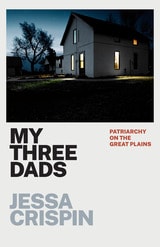
My Three Dads
Patriarchy on the Great PlainsJessa Crispin
University of Chicago Press, 2022
For many Americans, Kansas represents a vision of Midwestern life that is good and wholesome and evokes the American ideals of god, home, and country. But for those like Jessa Crispin who have grown up in Kansas, the realities are much harsher. She argues that the Midwestern values we cling to cover up a long history of oppression and control over Native Americans, women, and the economically disadvantaged.
Blending personal narrative with social commentary, Crispin meditates on why the American Midwest still enjoys an esteemed position in our country's mythic self-image. Ranging from The Wizard of Oz to race, from chastity to rape, from radical militias and recent terrorist plots to Utopian communities, My Three Dads opens on a comic scene in a Kansas rent house the author shares with a (masculine) ghost. This prompts Crispin to think about her intellectual fathers, her spiritual fathers, and her literal fathers. She is curious to understand what she has learned from them and what she needs to unlearn about how a person should be in a family, as a citizen, and as a child of god—ideals, Crispin argues, that have been established and reproduced in service to hierarchy, oppression, and wealth.
Written in Crispin’s well-honed voice—smart, assured, comfortable with darkness—My Three Dads offers a kind of bleak redemption, the insight that no matter where you go, no matter how far from home you roam, the place you came from is always with you, “like it or not.”