Results by title
54 books match the query 'Grief' and 5 start with m
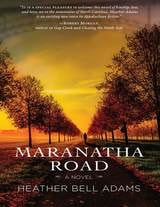
Maranatha Road
Heather Bell Adams
West Virginia University Press, 2017
Sadie knows Tinley must be lying because Mark was engaged and never would have betrayed his fiancée. So she refuses to help, and she doesn’t breathe a word about it to anybody. But in a small, southern town like Garnet, nothing stays secret for long.
Once Sadie starts piecing together what happened to Mark, she discovers she was wrong about Tinley. And when her husband is rushed to the hospital, Sadie must hurry to undo her mistake before he runs out of time to meet their grandchild.

Mishkan Aveilut
Where Grief ResidesRabbi Eric Weiss
Central Conference of American Rabbis, 2019
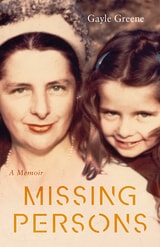
Missing Persons
A MemoirGayle Greene
University of Nevada Press, 2017
The memoir is structured as an account of her mother's and aunt’s final days and the year that follows, a year in which she reconstructs her life. This is a powerful story about family, what it means to have one, to lose one, never to have made one, and what, if anything, might take its place. It’s the story of a vexed mother-daughter relationship that mellows with age. It is also a search for home, as the very landscape shifts around her and the vast orchards are dug up and paved over for tract housing, strip malls, freeways, and the Santa Clara Valley, once known as the Valley of Heart’s Delight, is transformed to “Silicon.”
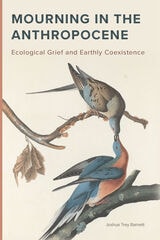
Mourning in the Anthropocene
Ecological Grief and Earthly CoexistenceJoshua Trey Barnett
Michigan State University Press, 2022

My Radio Radio
Jessie van Eerden
West Virginia University Press, 2016
The members of Dunlap Fellowship of All Things in Common share everything from their meager incomes to the only functioning toilet in the community house— everything, that is, except secrets. When Omi Ruth Wincott, the youngest member of the disintegrating common-purse community in this small Indiana town, loses her only brother, Woodrun, she withdraws from everyone and fixates on a secret desire: She wishes only for an extravagant head- stone to mark Woodrun’s grave, an expense that the strict, parsimonious community can’t—or won’t—pay for. In her loneliness, Omi Ruth’s only ties to the world remain her National Geographic magazines and a new resident in the house, Northrop, an old man caught between living and dying, maintained in a vegetative state by hospice care.
Observing everything with the keen eye of a girl with a photographic memory, Omi Ruth finds herself learning to grieve in the company of unlikely strangers. With the help of a homeless and pregnant Tracie Casteel, a rebellious Amish boy named Spencer Frye, and the smooth-talking Vaughn Buey who works third shift at Dunlap’s RV plant, Omi Ruth discovers that there are two things of which there is no shortage in the world’s common purse—love and loss.