Results by title
64 books match the query 'Haiti' and 5 start with m
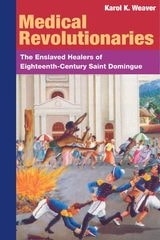
MEDICAL REVOLUTIONARIES
The Enslaved Healers of Eighteenth-Century Saint DomingueKarol K. Weaver
University of Illinois Press, 2006
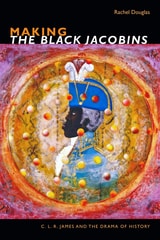
Making The Black Jacobins
C. L. R. James and the Drama of HistoryRachel Douglas
Duke University Press, 2019

Maroon
Danielle Legros Georges
Northwestern University Press, 2001
Maroon is the debut collection of Haitian-American poet Danielle Legros Georges, who writes of the pain of exile, the beauty of nature, and the delights of love in highly rhythmic, highly original language. The range of her voice is remarkable— from the comic to the tragic to the lyric. Her poetry is electric with an overpowering zest for life and vitality of language, as she examines the traumatic experiences that brought her parents to America and searches for a more complete understanding of self.
Modernity Disavowed
Haiti and the Cultures of Slavery in the Age of RevolutionSibylle Fischer
Duke University Press, 2004
Fischer draws on history, literary scholarship, political theory, philosophy, and psychoanalytic theory to examine a range of material, including Haitian political and legal documents and nineteenth-century Cuban and Dominican literature and art. She demonstrates that at a time when racial taxonomies were beginning to mutate into scientific racism and racist biology, the Haitian revolutionaries recognized the question of race as political. Yet, as the cultural records of neighboring Cuba and the Dominican Republic show, the story of the Haitian Revolution has been told as one outside politics and beyond human language, as a tale of barbarism and unspeakable violence. From the time of the revolution onward, the story has been confined to the margins of history: to rumors, oral histories, and confidential letters. Fischer maintains that without accounting for revolutionary antislavery and its subsequent disavowal, Western modernity—including its hierarchy of values, depoliticization of social goals having to do with racial differences, and privileging of claims of national sovereignty—cannot be fully understood.
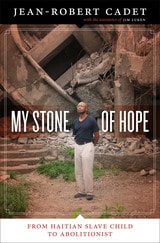
My Stone of Hope
From Haitian Slave Child to AbolitionistBy Jean-Robert Cadet
University of Texas Press, 2011
There are 27 million slaves living in the world today—more than at any time in history. Three hundred thousand of them are impoverished children in Haiti, who "stay with" families as unpaid and uneducated domestic workers, subject to physical, emotional, and sexual abuse. This practice, known locally as restavek ("staying with"), is so widespread that one in ten Haitian children is caught up in this form of slavery.
Jean-Robert Cadet was a restavek in Haiti from the late 1950s until the early 1970s. He told the harrowing story of his youth in Restavec: From Haitian Slave Child to Middle-Class American—a landmark book that exposed ongoing child slavery in Haiti. Now in My Stone of Hope, Cadet continues his story from his early attempts to adjust to freedom in American society to his current life mission of eliminating child slavery through advocacy and education. As he recounts his own struggles to surmount the psychological wounds of slavery, Cadet puts a human face on the suffering that hundreds of thousands of Haitians still endure daily. He also builds a convincing case that child slavery is not just one among many problems that Haiti faces as the Western Hemisphere's poorest nation. Rather, he argues that the systematic abuse of so many of its children is Haiti's fundamental problem, because it creates damaged adults who seem incapable of governing the country justly or managing its economy productively.
For everyone concerned about the fate of Haiti, the welfare of children, and the freedom of people around the globe, My Stone of Hope sounds an irresistible call to action.