Results by title
81 books match the query 'Handbook' and 3 start with m
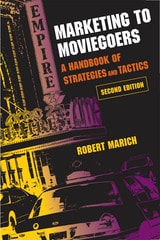
Marketing to Moviegoers
A Handbook of Strategies and Tactics, Second EditionRobert Marich
Southern Illinois University Press, 2009
While Hollywood executives spend millions of dollars making movies, even more money is poured into selling those films to the public. In the second edition of his comprehensive guidebook, Marketing to Moviegoers, veteran film and TV journalist Robert Marich plumbs the depths of the strategies and tactics used by studios to market their films to consumers. Packed with real life examples and useful data, this new edition blends practical, up-to-date information with theory to clearly explain all aspects of promoting motion pictures.
Marketing to Moviegoers: A Handbook of Strategies and Tactics takes readers carefully through all of the key components of film marketing. From creative strategy, market research, and advertising to publicity, product placement, and distribution to theaters, Marich's book covers everything film professionals need to know to mount a successful marketing campaign. Each chapter contains a wealth of useful information—including the historical background of the business, sample market research documents and advertising budgets, comments from successful industry insiders, and over thirty-five tables—and offers intriguing insight into the strategies of modern promotion.
Most other film marketing books focus mainly on marketing by independent distributors, but Marich specifically outlines the marketing methods of the six major Hollywood studios, which are notoriously secretive about these methods, while also detailing the marketing plans of the independent and foreign film sectors. In addition, he examines in depth the effectiveness of both new and old media, especially the ways in which the advent of the Internet has both helped and hindered the movie marketing process.
While many books have been written on the business-to-business aspect of film promotion, Marich's volume is one of the few that focuses on the methods used to sell motion pictures to those who truly make or break a film's success—the public.
This essential reference contains detailed examples, more than twenty illustrations, and a comprehensive glossary of marketing terms. A highly navigable handbook that breaks down a complicated process into manageable strategies in an easy-to-read style, Marketing to Moviegoers is a must for all film professionals and filmmaking students.
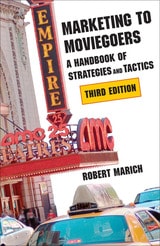
Marketing to Moviegoers
A Handbook of Strategies and Tactics, Third EditionRobert Marich
Southern Illinois University Press, 2013
While Hollywood executives spend millions of dollars making movies, even more money is poured into selling those films to the public. In the third edition of his comprehensive guidebook, Marketing to Moviegoers: A Handbook of Strategies and Tactics, veteran film and TV journalist Robert Marich plumbs the depths of the methods used by studios to market their films to consumers. Updates to the third edition include a chapter on marketing movies using digital media; an insightful discussion of the use of music in film trailers; new and expanded materials on marketing targeted toward affinity groups and awards; fresh analysis of booking contracts between theaters and distributors; a brief history of indie film marketing; and explorations of the overlooked potential of the drive-in theater and the revival of third-party-financed movie campaigns.
While many books have been written on the business-to-business aspect of film promotion, Marich’s volume is one of the few that focuses on the techniques used to sell motion pictures to those in a position to truly make or break a film—the public. A highly navigable handbook that breaks down a complicated process into manageable strategies in an easy-to-read style, Marketing to Moviegoers is a must for all professionals and students in today’s rapidly evolving film industry.
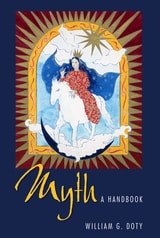
Myth
A HandbookWilliam G. Doty
University of Alabama Press, 2007
An accessible introduction to the role of myth historically and in popular culture.
Myth: A Handbook by William G. Doty is a foundational and wide-ranging exploration of myth as one of humanity’s most enduring and powerful forms of expression. Designed for students and scholars across the humanities and social sciences, this authoritative volume offers both a comprehensive introduction to myth studies and a sophisticated framework for interpreting myth in diverse cultural contexts.
Doty approaches myth not as a static body of ancient stories, but as a dynamic and evolving system of meaning—one that reflects the values, beliefs, and psychological structures of the societies that produce and preserve it. Drawing from a rich interdisciplinary base that includes anthropology, literary criticism, psychology, religious studies, and cultural theory, the book examines how myths operate symbolically, structurally, and socially. Readers are guided through major theoretical approaches to myth, from classical interpretations to modern critical frameworks, enabling them to engage thoughtfully with myth as both narrative and cultural artifact.
One of the book’s central strengths is its emphasis on methodology. Rather than presenting myth as a fixed subject, Doty equips readers with analytical tools to interpret myths across different traditions and historical periods. He explores how myths encode meaning through symbols and archetypes, how they reinforce or challenge cultural norms, and how they adapt over time to address shifting social realities. By emphasizing interpretation over simple retelling, Doty transforms myth from a collection of stories into a living field of inquiry.
The handbook also addresses key questions that continue to resonate in contemporary scholarship: What distinguishes myth from legend or folklore? How do myths shape identity—individual, communal, and national? In what ways do myths persist in modern literature, film, and popular culture? Through clear explanations and carefully structured discussions, Doty demonstrates that myth remains deeply relevant, not only in understanding ancient civilizations but also in analyzing modern narratives and cultural expressions.
Accessible yet intellectually rigorous, Myth: A Handbook has become a widely respected resource in university classrooms, providing students with the conceptual grounding needed to engage critically with mythological material. At the same time, its clarity and breadth make it valuable for general readers interested in the deeper meanings behind the stories that have shaped human thought across time and place.
Ultimately, Doty’s work reveals that myth is not confined to the past—it is an essential framework through which humans interpret experience, construct meaning, and understand their place in the world. This handbook stands as an indispensable guide to that process, illuminating the enduring significance of myth in both ancient traditions and contemporary life.