Results by title
73 books match the query 'Health Care Delivery' and 5 start with m
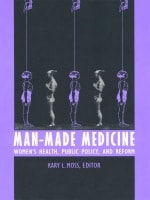
Man-Made Medicine
Women’s Health, Public Policy, and ReformKary L. Moss, ed.
Duke University Press, 1996
These essays by physicians, lawyers, activists, and scholars present a rare interdisciplinary approach to a complex set of issues. Gender stereotyping and bias in the collection, analysis, and reporting of scientific data and in the ways health-related news is covered by the media are examined. The exclusion of women from the health care policy-making process and the effect such exclusion has on the determination of priorities among potential areas of research are also explored. With discussions of the plight of specific populations of women whose health care needs are not being sufficiently met—for example, immigrants, prisoners, the mentally ill, or women with HIV/AIDS, disabilities, or reproductive health problems—this book considers matters of race and class within the parameters of gender as it builds a fundamental challenge to the existing health care system. A range of current reform proposals are also evaluated in terms of their potential impact on women.
Suggesting no less than a radical rethinking of women’s medicine, Man-Made Medicine gives essential direction to the discussions that will shape the future of health care in this country. It will be of great interest to a wide audience, including health care advocates, policymakers, scholars, and readers generally concerned with women’s health issues.
Contributors. Ellen Barry, Laurie Beck, Joan Bertin, Janet Calvo, Wendy Chavkin, Kay Dickersin, Abigail English, Elizabeth Fee, Carol Gill, Nancy Krieger, Joyce McConnell, Judy Norsigian, Ann Scales, Susan Stefan, Lauren Schnaper, Catherine Teare
Mapping Medical Anthropology for the Twenty-First Century
Matthew J. Wolf-Meyer
Rutgers University Press, 2026
Mapping Medical Anthropology for the Twenty-First Century provides readers with a comprehensive survey of topics, methodologies, and theories in the discipline, drawing on contributions from leading anthropologists around the world. As a discipline, medical anthropology provides situational analysis of health, disease, and disability to show how the experiences of medical experts, patients, and their broader communities are informed by their social and cultural contexts. Adopting a keywords-driven approach, Mapping Medical Anthropology for the Twenty-First Century provides readers with an introduction to the concepts and approaches that have animated medical anthropology over the course of the twentieth century. Authors put these keywords into dialogue with their ethnographic and archival research to demonstrate how these concepts can be expanded to address contemporary phenomena related to health, disease, and disability. Mapping Medical Anthropology for the Twenty-First Century provides newcomers to medical anthropology with a robust introduction to the discipline, while providing experienced readers a set of chapters that explore the discipline in novel and exciting ways.

Measuring Functioning and Well-Being
The Medical Outcomes Study ApproachAnita L. Stewart and John E. Ware Jr., eds.
Duke University Press, 1992
The contributors address conceptual and methodological issues involved in measuring such important health status concepts as: physical, social, and role functioning; psychological distress and well-being; general health perceptions; energy and fatigue; sleep; and pain. The authors present psychometric results and explain how to administer, score, and interpret the measures.
Comprising the work of a number of highly respected scholars in the field of health assessment, Measuring Functioning and Well-Being will be of great interest and value to the growing number of researchers, policymakers, and clinicians concerned with the management and evaluation of health care.
Measuring the Gains from Medical Research
An Economic ApproachEdited by Kevin M. Murphy and Robert H. Topel
University of Chicago Press, 2003
From an economic perspective, they find, the answer is a resounding "yes": in fact, considering the extraordinary value of improvements to health, we may even be spending too little on medical research. The evidence these papers present and the conclusions they reach are both surprising and convincing: that growth in longevity since 1950 has been as valuable as growth in all other forms of consumption combined; that medical advances producing 10% reductions in mortality from cancer and heart disease alone would add roughly $10 trillion-a year's GDP-to the national wealth; or that the average new drug approved by the FDA yields benefits worth many times its cost of development.
The papers in this book are packed with these and many other surprising revelations, their sophisticated analysis persuasively demonstrating the massive economic benefits we can gain from investments in medical research. For anyone concerned about the cost and the value of such research-from policy makers to health care professionals and economists-this will be a landmark book.
Medical Care Output and Productivity
Edited by David M. Cutler and Ernst R. Berndt
University of Chicago Press, 2001
This volume takes aim at that problem, while taking stock of where we are in our attempts to solve it. Much of this analysis focuses on the capacity to measure the value of technological change and other health care innovations. A key finding suggests that growth in health care spending has coincided with an increase in products and services that together reduce mortality rates and promote additional health gains. Concerns over the apparent increase in unit prices of medical care may thus understate positive impacts on consumer welfare. When appropriately adjusted for such quality improvements, health care prices may actually have fallen. Provocative and compelling, this volume not only clarifies one of the more nebulous issues in health care analysis, but in so doing addresses an area of pressing public policy concern.